If you want to start career in trucking, transportation, driving a bus or operating any other type of large commercial vehicle, what is the first step?
Everything starts with getting your Commercial Learner’s Permit (CDL permit).
Your CDL permit is your legal authorization to begin hands-on commercial driver training. Without it, you can’t practice driving a commercial vehicle, you cannot take your CDL skills test, and you can’t move forward in the licensing process.
At Driving Academy, we help future drivers understand the process and get into training quickly so you can start building a real career, not just collecting paperwork.
This guide breaks down everything clearly from how to get your CDL permit to what tests you must pass, so you can move forward confidently and start your training the right way.
What Is A CDL Permit?
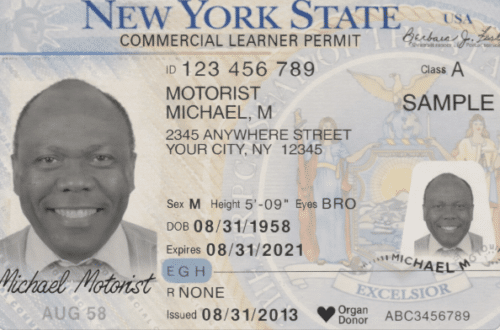
Just like when you were learning to drive a regular car, you needed to get a permit before you could get your driver’s license.
Similarly, a commercial learners permit, also called a CLP or CDL permit, is a permit issued by your state’s licensing agency. This official certification allows you to legally operate a commercial motor vehicle while supervised by a qualified CDL holder in order to train for your CDL license road test.
A permit is required before you can:
- Begin behind-the-wheel driving training
- Practice essential driving maneuvers on public roads
- Schedule your CDL skills (road) test
Think of the CLP as your training phase license. It’s the bridge between having a regular driver’s license and earning your full Commercial Driver’s License (CDL).
Why Do you Need A Permit Before You Can Start Training For Your Commercial Driver's License?
A Commercial Learner’s Permit helps ensure you are familiar with the rules of the road and other practical knowledge that will be needed to safely get behind the wheel of a large truck to practice for your CDL road test.
CLP Restrictions
Just like when you had a regular learner’s permit, there are a number of CLP restrictions and things you can’t yet do.
- No transporting any passengers other than your instructor
- You can only drive vehicles that match your CLP class
- No driving vehicles that require endorsements
How to Get a CDL Permit (Step-by-Step)
Step 1: Decide what you’re getting licensed for (Class A vs. Class B + endorsements)
Before you touch the DMV, decide what you plan to drive:
- Class A CDL: Tractor-trailers / big rigs / combination vehicles
- Class B CDL: Straight trucks like box trucks, dump trucks, buses (depending on endorsements)
Learn more about the difference between Class A and Class B CDL.
After picking your class you’ll need to consider CDL endorsements and if they apply to your career goals. These include (examples: Passenger, School Bus, Tanker, Hazmat). Your choices here determine which written tests you must take.
Why this matters: If you don’t tell the DMV which tests you need to take you’ll be sent home and may have to pay extra retesting fees.
Step 2: Collect the documents you’ll need before your DMV visit
Most DMVs will require some variation of:
- Valid driver’s license
- Proof of legal presence / identity
- Proof of Social Security number (or approved SSN documentation)
- Proof of residency (often 1–2 documents)
Pro tip: Every state is picky in its own special way. Confirm the exact document list on your state DMV site before you go, and make sure to bring originals.
Step 3: Get your DOT medical card (MedCert)
Most CDL permit applicants need a DOT physical performed by a certified medical examiner. Once you pass, you’ll receive your Medical Examiner’s Certificate.
The exam typically includes checks like:
- Vision and hearing
- Blood pressure
- General health history and physical evaluation
Why this matters: Many states won’t allow you to take the CDL permit tests without medical qualification on file.
Step 4: Self-certify your type of driving (intrastate vs. interstate)
When you apply, you’ll typically “self-certify” what kind of driving you plan to do:
- Interstate (across state lines): usually requires age 21+
- Intrastate (within one state): allowed at 18+, depending on state rules
Why this matters: This step matters because it tells the government what you’re legally allowed to do once you get your license.
Step 5: Study the right CDL manual sections (don’t just “read the book”)
Most students waste time here.
You want to study based on the tests you’re taking, usually:
- General Knowledge (almost always required)
- Air Brakes (if operating vehicles with air brakes)
- Combination Vehicles (typically for Class A)
If you’re doing endorsements, study those sections too, but only if you actually need them.
Make sure to take CLP practice exams before you schedule the CLP test.
Step 6: Schedule your DMV CLP appointment (or walk in if your state allows it)
Many states require appointments for CDL-related testing. Book early, and choose a location that actually offers commercial permit testing services.
Bring:
- Your documents
- Your MedCert (if required at this stage)
- Payment method (fees vary)
Make sure to bring all the documents needed for the CPL permit test.
Step 7: Take the written CDL permit tests
At the DMV, you’ll take your knowledge exams. If you pass, you’ll pay the fee and receive your Commercial Learner’s Permit (CLP).
Important: If you fail one test, you may only need to retake that section, but it can still delay training and cost extra.
Step 8: Start training ASAP and keep your timeline tight
Once you have your permit, the smartest move is to start CDL training immediately, so you don’t lose momentum or risk your permit expiring before your skills test.
If you’re earning your CDL for the first time, you’ll also need to complete ELDT (Entry-Level Driver Training) through an FMCSA-approved provider like Driving Academy.
If you want the quickest route, the real secret is having someone tell you:
- Which tests you actually need
- What documents your state accepts
- What to study (and what to ignore)
- How to avoid permit delays that push back training
That’s exactly what we help with at Driving Academy. Feel free to contact us now for help getting your permit.

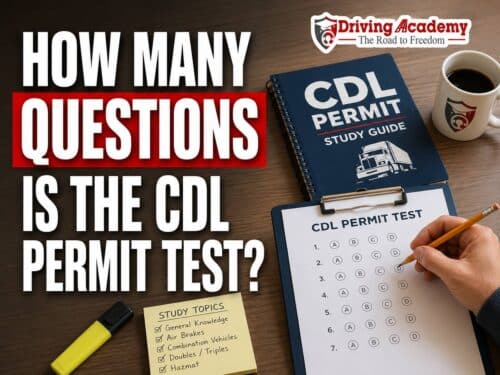
How Many Questions Are on the CDL Permit Test?
The number of questions depends on the specific test:
- General Knowledge: typically around 50 questions
- Air Brakes: usually around 25 questions
- Combination Vehicles: typically around 20 questions
Most states require a score of at least 80% to pass.
Failing one section usually means retaking only that section, but repeated failures can cause delays and extra fees.
What You Can and Cannot Do With a CDL Permit
✅ Practice driving with a qualified CDL holder in the vehicle
✅ Train for your CDL road test
✅ Prepare for endorsement exams
You cannot:
❌ Drive alone
❌ Operate commercially unsupervised
❌ Skip federally required training like ELDT
FAQ
How many questions are on the CDL permit test?
The number of questions on the CDL permit test depends on the specific exam you are taking. In most states:
- General Knowledge Test: about 50 questions
- Air Brakes Test: about 25 questions
- Combination Vehicles Test: about 20 questions
To pass, you typically need to score at least 80% on each test. If you fail one section, you usually only need to retake that specific exam rather than the entire test.
How long does a CDL permit last?
Can I get my CDL permit online?
What are the 3 tests for a CDL permit?
Most Class A CDL applicants must pass three main knowledge tests:
- General Knowledge Test
- Air Brakes Test
- Combination Vehicles Test
How much is a CDL permit?
The cost of a CDL permit varies by state but usually ranges between $20 and $100. The total cost may depend on:
- State permit fees
- Testing fees
- Endorsement exams
- Medical certification requirements
It’s best to check your state’s DMV website for the exact CDL permit cost in your area.