So you know you want to become a professional truck driver? In order to do that, you’re going to need to get a commercial driver’s license.
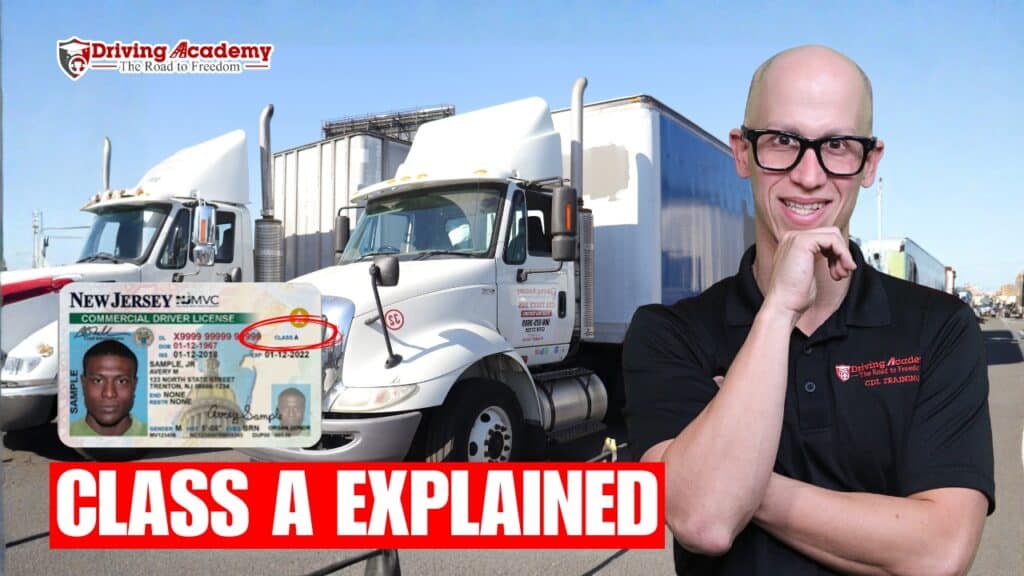
Now, for us here at Driving Academy, we always recommend students get a Class A Commercial Drivers license. And in response it’s not uncommon to get asked the question “What is a CDL Class A license?”
Class A CDL License
A Class A CDL is the often regarded as the most valuable commercial driver’s license.
To sum it up, having a Class A Driver’s License allows you to operate a combination vehicle (a truck with a trailer) with a gross combination weight rating (GCWR) of 26,001 pounds or more, and a trailer of more than 10,000 pounds.
In simple terms, this is the license most drivers need if they want to operate a tractor-trailer, semi-truck or other large truck-and-trailer combination.
For many future truck drivers, class A CDL is the best license to pursue since it gives access to the widest range of commercial driving jobs as well as the most flexibility in the trucking industry.
In this blog post we’re going to explain why!
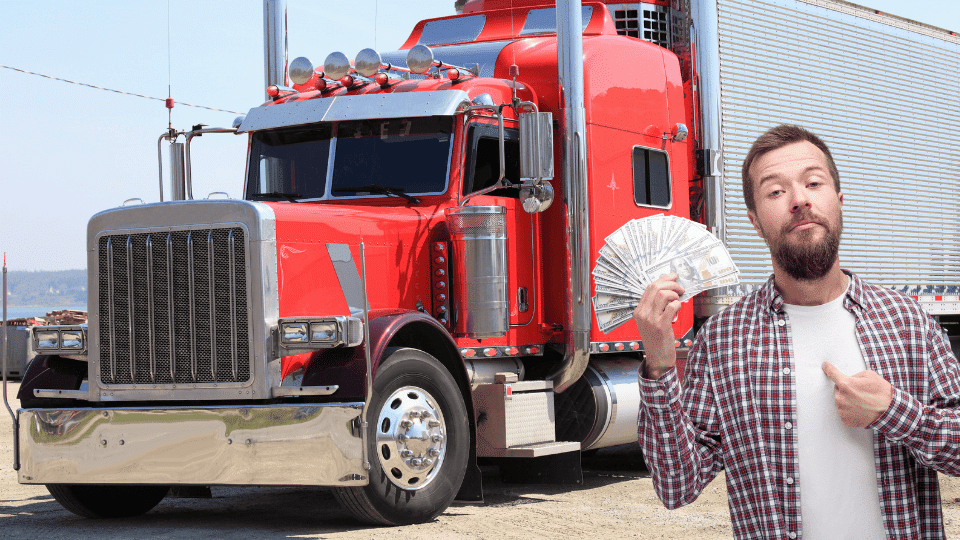
What Is a CDL License?
Before we dive into the different classes of CDL, lets go over what a CDL is.
A CDL, or Commercial Driver’s License, is a special type of driver’s license required to operate certain large, heavy or specialized vehicles for commercial purposes. Federal rules divide CDLs into Class A, Class B and Class C, depending on the type and weight of the vehicle being driven.
Here are the 3 types of CDL Classes:
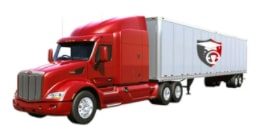
CDL Class A license is for tractor-trailers or large vehicles that weigh over 26,000 lbs. and have a trailer that weighs and/or holds over 10,000 lbs.
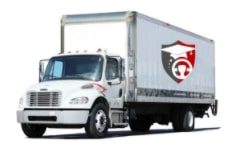
CDL Class B is for box trucks, work trucks and buses. Class B vehicles weigh over 26,000 lbs. with/without a trailer, weighing less than 10,000 lbs.
Class C CDL
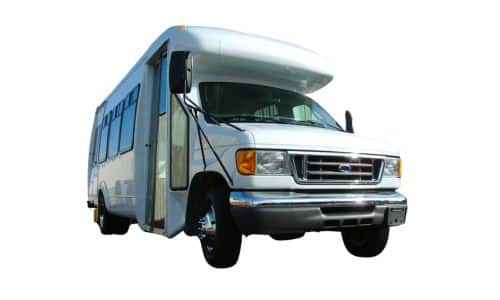
A CDL Class C allows a driver to operate any smaller commercial vehicle designed to carry 16 or more passengers or to transport hazardous materials.
Despite what you may have heard, air brakes are not required for a truck to be considered a CDL class vehicle.
What Can You Drive With a Class A CDL?
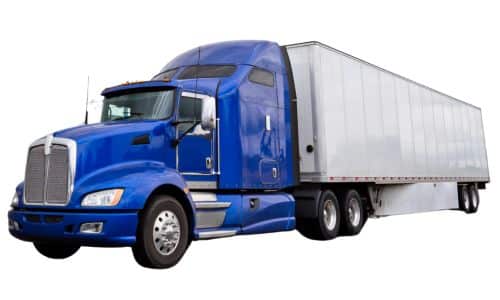
Tractor-Trailers
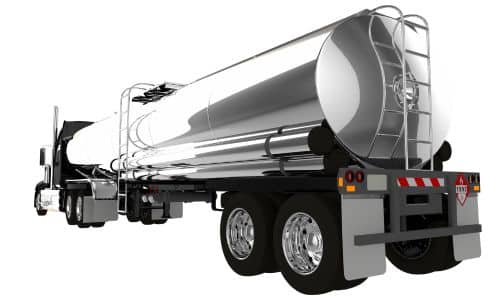
Chemical Tanker
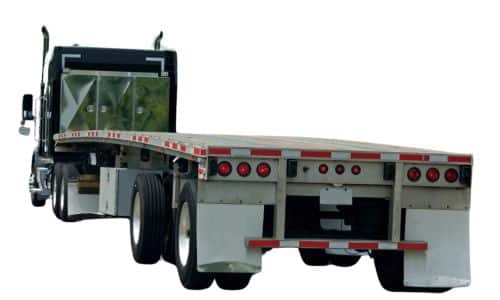
Flatbed Trailers
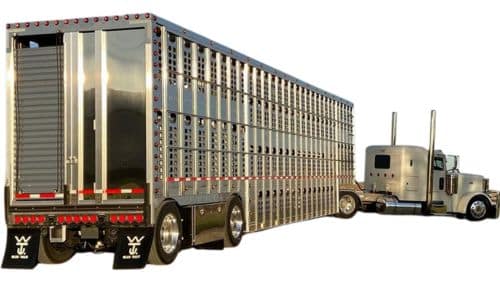
Livestock Carriers
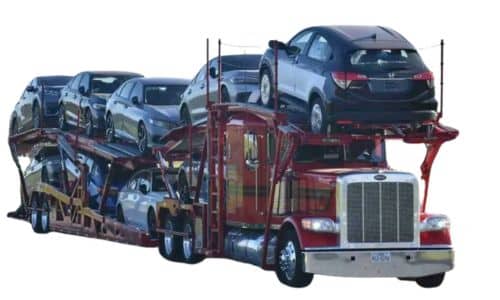
Car Transporters
The main reason Driving Academy recommends our student to go after a Class A CDL is because it qualifies them for jobs involving large combination vehicles AND any Class B vehicles (besides passenger buses).
Not only that you have more job opportunity but also the average pay for a Class A CDL driver is much more than a Class B.
Here’s a closer look at the most common combination vehicles associated with a Class A CDL:
- Tractor-trailers – These are the standard semi-trucks most people think of when they picture a professional truck driver. They are commonly used for long-haul, regional, and freight transportation jobs.
- Dry vans – Dry vans are enclosed trailers used to haul general freight such as retail goods, packaged products, and non-perishable items. This is one of the most common trailer types in trucking.
- Reefers – Reefer trailers are refrigerated trailers used to transport temperature-sensitive freight like food, beverages, and medical supplies. These jobs may require more attention because the cargo needs to stay at specific temperatures.
- Flatbeds – Flatbed trailers are open trailers used to haul oversized or irregularly shaped freight such as lumber, steel, machinery, or construction materials. Drivers may need to know how to secure loads properly.
- Tanker trucks – Tanker vehicles are used to haul liquids or gases. Some tanker jobs require additional endorsements and may involve more careful driving because liquid cargo can shift during transport.
- Livestock haulers – These trailers are designed to transport animals. This type of work may require extra care, timing, and specialized handling depending on what is being moved.
- Doubles and triples – With the proper endorsement, a Class A CDL can also allow you to pull double or triple trailers. These setups are more specialized and are not used in every type of trucking job, but this endorsement can expand your driving options (and pay) even more.
How Much Does A Class A CDL Driver Make?

Class A CDL drivers are among the highest-paid professionals in the trucking industry, with average annual earnings typically ranging from about $76,000 on the low end to $123,000 on the high end according to Indeed’s salary database.
Experienced tractor-trailer drivers or specialized haulers often making well over six figures. Pay can vary based on factors like experience, location, and the type of freight being hauled, but the biggest driver of higher income is larger load with more responsibility.
An average Class A CDL driver can make around $97,000/year
Furthermore, Larger, heavier, or more complex loads (such as oversized freight, hazardous materials or long-haul cross-country shipments) require additional skills, certifications and attention to safety.
Because of this increased responsibility and risk, these jobs come with significantly higher pay, rewarding drivers who are willing and qualified to handle the demands of bigger loads.
Class A CDL Qualification
In order to qualify for a Class A CDL, make sure you meet these requirements before taking the skills test. FMCSA says first-time Class A applicants are generally subject to Entry-Level Driver Training (ELDT) rules, and drivers must complete applicable training before becoming eligible for the CDL skills test.
In general, Class A CDL applicants need to:
- Meet their state’s identification and licensing requirements
- Get a Commercial Learner’s Permit (CLP)
- Hold the CLP for at least 14 days before taking the skills test
- Complete applicable ELDT from a provider listed in FMCSA’s Training Provider Registry
These requirements varies state by state, but the federal framework is pretty much the same: permit first, training second, skills test last.
Do you qualify to get a Class A CDL?
How To Get a CDL Class A License?
To get a Class A CDL and start making good money, drivers must pass both the knowledge tests and the CDL skills test. This is why choosing a good school like Driving Academy for your Class A CDL training is very important. Passing the written exam is only part of the process, you also need real vehicle practice to be ready for the road test.
Step 1: CDL Knowledge Tests (Permit Tests)
You must first pass the required written knowledge tests and receive your CLP.
The knowledge tests cover topics like:
- General Knowledge
- Combination Vehicles
- Air Brakes
CDL Endorsements
Endorsements are needed when you want to haul certain types of cargo or transport passengers. These “endorsements” shows that you have a specialized knowledge to operate these vehicles safely.
What Are The Endorsements You Can Get?
There are 4 truck driving endorsements that you can get on your license that allow you to legally transport different types of vehicles and cargo.
| Endorsement | Purpose | Special Requirement | Knowledge Test |
|---|---|---|---|
| T - Double & Triple Trailer | Pulling 2 or 3 trailers. (Where legally allowed) | Class A license is required | ✔️ |
| N - Tanker Vehicle | Transporting liquids or gas in a tanker | Just pass Knowledge Test | ✔️ |
| H - Hazardous Materials | Transporting hazardous materials |
Must be trained & retested every 2 years. Note: Federal Requirements | ✔️ |
| X - Combination Hazardous Materials & Tank Vehicles | Transporting hazardous materials in a tank | Earned automatically with both "H" & "N" Endorsements. |
Note: For a HazMat (H) endorsement, you must complete your TSA background check before taking the written test.
Step 2: ELDT(Entry-Level Driver Training)
In order to take the road test for you Class A CDL, you mush first complete your ELDT which stands for Entry-Level Driver Training.
Now there are two parts to the ELDT truck drive training: ELDT Theory and Behind-The-Wheel. In order to take your road test, you’ll need to complete both portions of the training at a federally licensed CDL school like Driving Academy.
ELDT Theory
ELDT theory is the curriculum required by the Federal Motor Carrier Safety Administration (FMCSA) for those looking to get their Class A CDL.
The government wanted to make sure that everyone had a standard piece of knowledge so they mandated that every student take an ELDT theory course.
This program covers things you need to know to drive a Class A CDL truck.
There are no required minimum teaching hours for theory training,
Because there isn’t a single format, it’s up to the schools to build a curriculum that gets approved by the FMCSA. This leeway with the CDL program means the coursework can be done in a live classroom, online or through a collection of recorded videos.
Once you complete the training, you need to take another test to prove your knowledge.
Once you pass the ELDT theory exam you’re ready to rock and roll. You’re now up to the fun part, practicing on a real truck!
Behind-The-Wheel Training
The second part of training is where you get to practice driving a Class A truck. This Behind-The-Wheel training is done at a certified truck driving school like Driving Academy.
You might be thinking, “Hey, why can’t I just practice on my uncle/brother/friend’s truck. I’ll just learn with them and get my Class A CDL.”
…Nope.
You Must Complete Behind-The-Wheel Training In-Person At A Licensed CDL School!
According to § 380.609 of the Federal Code regarding entry-level driver training requirements:
“An individual who applies, for the first time, for a Class A or Class B CDL, or who upgrades to a Class A or B CDL, must complete driver training from a provider listed on the Training Provider Registry (TPR).”
This means that truck driver training can only be done by a licensed instructor at a federally approved school.
So, if you haven’t already, you’ve got to enroll at a CDL driving school like Driving Academy for yard training.
Class A Yard Training
Your behind-the-wheel training will take place in a yard or lot, which is why it’s often referred to as yard training.
Yard training at a certified trucking school is a crucial part of a commercial driver’s license training program.
Not only is it federally mandated but it takes place in a controlled environment (the “yard”) where students learn to safely operate and maneuver a truck before heading out on public roads.
This CDL yard training helps you become a truck driver by preparing you for the road test.
Different schools have different set ups, but a training yard typically consists of four sections that mirror the parts of the CDL road test.
Truck Yard Training
Pre-Trip Inspection
Where you practice the external inspection typically on a stationary truck
In-Cab Inspection / Air Brake Test
Where you practice the inside inspection on a truck that can move enough to do the tug test
Parking Maneuvers
Where you practice backing up and parking the truck
Road Driving
An instructor takes you out on the public road to practice driving and shifting gears
Step 3: CDL Skills Test (Road Test)
The skills test has three parts:
1) Pre-Trip Inspection
The first stage of the Class A CDL road test is the Pre-Trip Inspection. In this section you’re going to have to know how to inspect both the outside and then inside of the vehicle.
2)Basic Control
The second stage of the Class A CDL road test is the Parking Maneuvers. These are going to test your Basic Vehicle Control.
You’ll just need to do things like Forward Stop, Straight Line Backing, Forward Offset and Reverse Offset.
You’ll need to demonstrate your ability to control the truck by guiding it into a defined area marked with traffic cones and painted lines.
You will fail your CDL skill test if you miss or go over the lines. It might seem unfair but in the real world, if you go over the line, then “BAM!” you’ve hit a car or building.
3) Road Test
The final part of the CDL exam is driving the truck on the road itself. This CDL road test is just like the road test you took when you got your regular license.
Your examiner will tell you where to drive and put you in a variety of traffic situations. This would include:
- Left and Right Turns
- Intersections
- Railroad Crossings
- Up and Down grades
- Single and Multi-Lane Roads, Streets, and Highways
Note: The main difference between the Class A CDL road test and a regular car road test is that you’ll also need to point out signs like speed limits and bridge heights.
Is a Class A CDL Better Than a Class B CDL?
For many students here at the Driving Academy, the biggest benefit of a Class A CDL is flexibility. Compared with other CDL classes, Class A usually opens the door to more types of vehicles, more employers and more pay.
Why many students choose Class A CDL:
- Higher pay
- Access to more trucking jobs
- Ability to drive large combination vehicles
- Stronger long-term career flexibility
- Opportunity to add endorsements and expand job options
- Potential to move into regional, local, or over-the-road work depending on goals
If you are still not sure about which CDL to get, you can check out our previous article Class A vs. Class B CDL.
FAQ: Class A CDL
Yes, Class A covers a broader category of commercial vehicle operation. However it also depends on endorsements and state rules. Specifically you would need a passenger endorsement to drive a bus.
A Class A CDL is for combination vehicles with a gross combination weight rating of 26,001 pounds or more, as long as the towed unit is over 10,000 pounds. A Class B CDL is for a single vehicle with a gross vehicle weight rating of 26,001 pounds or more, or that same vehicle towing 10,000 pounds or less. In simple terms, Class A is usually for tractor-trailers and semi-trucks, while Class B is more common for straight trucks, box trucks, dump trucks, and some buses.
Yes, Class A is generally considered the highest and most flexible CDL class because it covers large combination vehicles and usually opens the door to the broadest range of commercial driving jobs. Federal CDL group definitions place Class A above Class B in terms of vehicle combinations and towing capacity.
In many cases, Class A drivers tend to make more because they can qualify for more long-haul, regional, and specialized freight jobs. Class B jobs can still pay well, but they are often tied to more local or straight-truck roles, which may have a different pay structure.