If you’ve been driving a truck for a company and you’re hungry for more money and freedom, then there’s a good chance you’ve heard the term owner-operator thrown around. But what does it actually mean? And is it the right move for you?
Here at Driving Academy, we’ve helped over 10,000 students get their CDL license and build real careers in trucking. We know this industry inside and out.
So let’s break down everything you need to know about owner-operators: what they are, how they operate, how much they make, and whether stepping up to this level is the right call for your future.
Ready to stop making a wage and start building real wealth?
Let Driving Academy help you take control of your future.
What Is an Owner-Operator Truck Driver?
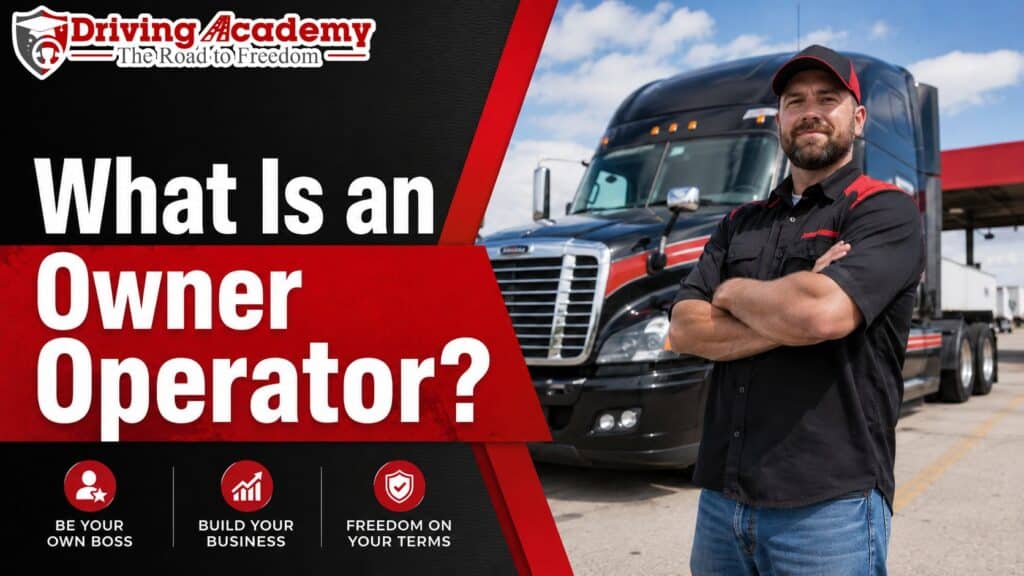
An owner-operator is a truck driver who owns their own truck and runs their own trucking business. That’s the simple version. But the full picture is much bigger than that.
When you’re a company driver, you show up, drive someone else’s truck, and clock out. Easy. Predictable. But limited. As an owner-operator, you are the business. You make the decisions. You negotiate the loads. You set your schedule. And most importantly, you keep a much larger share of the revenue.
Think of it this way: a company driver makes a wage. An owner-operator builds wealth.
Owner-operators have the freedom to decide:
- Which loads they haul, and which ones they turn down
- What routes they run and what states they drive through
- How often they want to be home
- Whether they lease their truck or own it outright
- Whether they contract with a carrier or run under their own authority
That level of control is exactly why so many experienced drivers make the jump to owner-operator, and why the ones who do it right can earn $150,000 to $350,000 or more per year based on data from Indeed.
Owner-Operator vs. Company Truck Driver: What's the Real Difference?
This is the question we get all the time at Driving Academy, and the answer goes a lot deeper than just “you own the truck.” Let’s break it down category by category.
Responsibilities:
Company Driver:
As a company driver, your job is to drive. That’s it. You haul the freight, deliver on time, stay safe, and go home. You don’t worry about repairs, insurance, finding loads, or doing the books. It’s a great place to start, and honestly, for a lot of people, it’s a great place to stay.
Owner-Operator:
As an owner-operator, you’ve got all of the above plus everything that comes with running a business:
- Finding and negotiating loads
- Managing fuel costs and expenses
- Handling truck maintenance and repairs
- Keeping up with insurance coverage
- Filing taxes as a self-employed business owner
- Building relationships with brokers and shippers
- Making strategic decisions about your business growth
It’s more work. No question. But the upside? You’re building something that’s yours.
Equipment:
Company Driver:
You drive the truck the company gives you. You pull the trailer the company assigns. When something breaks, the company fixes it. Zero cost to you, but also zero ownership.
Owner-Operator:
You own (or lease) your truck. That means you’re responsible for every mile on that engine and every dollar in repairs. But you’re also building equity in a real business asset. Owner-operators typically get their trucks one of three ways:
- Buying a used semi-truck from a dealership or private seller
- Buying a brand-new truck and financing it
- Leasing a truck through a carrier or leasing company
When it comes to trailers, owner-operators either haul their own trailer, lease one, or use the carrier’s trailers when they contract with a carrier.
Expenses: The Big Reality Check
This is the part people don’t always talk about openly, but at Driving Academy, we want to be straight with you.
Company Driver:
Zero out-of-pocket for the big stuff. No fuel costs, no insurance premiums, no maintenance bills, no truck payments. Your employer handles all of it. You get your paycheck and you’re done.
Owner-Operator:
You’re paying for everything. Here’s an example of what that looks like in the real world:
| Expense | Estimated Annual Cost |
|---|---|
| Fuel | $50,000 – $70,000+ |
| Truck payment (if financed) | $15,000 – $30,000 |
| Truck insurance | $10,000 – $16,000 |
| Maintenance & repairs | $10,000 – $20,000 |
| Permits & licensing | $3,000 – $6,000 |
| ELD & technology | $1,000 – $2,000 |
| Accounting/bookkeeping | $1,000 – $3,000 |
| Example Total Expense | $95,000 to $164,000+ |
That might look scary at first. But here’s the key: a good owner-operator running the right loads can gross $300,000+ per year. Even after all those expenses, the net take-home is dramatically higher than a company driver’s salary.
If that expense sounds too much for you, don’t worry! At Driving Academy, we don’t just train you to drive, we give you lifetime job placement assistance to kickstart your career safely.

How Do Owner-Operators Get Paid?
Owner-operators don’t get a weekly paycheck the way company drivers do. They generate revenue based on the loads they haul, and there are a few different models for how that works.
1. Flat Rate Per Load
Some carriers pay owner-operators a flat dollar amount for each load they haul. This model is common when working through a carrier’s load board or through a freight broker. The rate is set upfront so you know exactly what you’re getting before you accept the load. This makes budgeting and planning easier, especially when you’re just starting out.
2. Percentage of Revenue
Some carrier partnerships pay owner-operators a percentage of the total line haul revenue on each load. This model can be very lucrative on high-value loads and is popular with owner-operators who want to take advantage of peak market rates.
3. Rate Per Mile
When pulling freight off a public or private load board, most loads are priced by the mile. The rate per mile varies widely based on the route, the freight type, the time of year, and market conditions. A strong owner-operator knows how to read the market and cherry-pick the highest-paying lanes.
Pro Tip from Driving Academy: No matter which revenue model you’re working under, the key is knowing your cost per mile. If it costs you $1.80/mile to operate and you’re accepting loads at $1.75/mile, you’re losing money. Successful owner-operators track their numbers obsessively.
How Much Does an Owner-Operator Make?
Let’s get to the number everyone wants to know.
The average company truck driver in the U.S. earns around $82,000 per year. That’s a solid living, but there’s a ceiling.
A good owner-operator? We’re talking $150,000 to $350,000 per year and the ones who really dial in their business do even better than that.
The jump from company driver to owner-operator is essentially the jump from earning a salary to running a business. The risk goes up. But so does the ceiling.
Learn more about owner operator jobs that pays well.
Should You Contract With a Carrier or Run Under Your Own Authority?
This is one of the biggest decisions an owner-operator has to make, and there’s no one-size-fits-all answer. Here’s how to think about it:
Contracting With a Carrier
When you contract with a carrier, you’re still your own boss and you still own your truck, but you’re running loads under their authority and, in many cases, accessing their freight network.
The two biggest advantages:
- Access to existing freight. The carrier already has customers. You don’t have to build a sales pipeline from scratch. You just log into the load board and pick your freight.
- Potentially cheaper insurance. Carriers manage large fleets, which often means they can offer owner-operators access to group insurance rates that are significantly lower than what you’d pay on your own.
This is the path most owner-operators take when they first make the jump. It’s a great way to learn the business side of trucking without having to figure everything out at once.
Running Under Your Own Authority
This is the full independence model. You have your own DOT number, your own MC number, and you’re building your own business from the ground up. The upside is maximum control and maximum earning potential. The downside is that everything like finding freight, managing insurance, handling compliance is entirely on you.
Many experienced operators recommend spending at least 1–2 years as a contract owner-operator before making the leap to full authority. Get your business legs under you first.
The Three Levels of Trucking
There are three levels of trucking. Understanding where the owner-operator path fits into that picture is key to planning your career.
- Level 1 — Company Driver
Get your CDL, drive for a company, earn around $82,000/year on average. Local, regional, or over-the-road — great options, steady money, low risk. This is where almost everyone starts. - Level 2 — Owner-Operator
Own your truck, run your own business, earn $150,000–$350,000/year. More responsibility, more headaches, but dramatically higher earning potential. This is the level where real wealth starts to build. - Level 3 — Carrier
Own multiple trucks, hire company drivers or owner-operators, run a full trucking company. This is where you build generational wealth — and where the ceiling is truly unlimited.
What they all have in common? It all starts with the same thing: a CDL license. Whether your goal is a steady $82,000 company salary or building a multi-truck fleet, Level 1 starts right here. See how our flexible 7-day training schedules fit your life.
Is Becoming an Owner-Operator Right for You?
- You’ve been driving for at least a year or two and feel confident behind the wheel
- You’re money-motivated and want to earn more than a company driver’s salary
- You have business sense or you’re willing to learn
- You’re comfortable taking on financial risk for greater reward
- You want more control over your schedule, routes, and loads
- You’re disciplined with money and understand the importance of tracking expenses
- You value the simplicity of clocking in, driving, and clocking out
- You’re not ready to take on the financial responsibility of truck ownership
- You want predictable income without worrying about repairs, insurance, or finding loads
- You’re still early in your driving career and want more experience first
If you’re not sure, you can speak with a CDL advisor for free.
How to Become an Owner-Operator?
Here’s what the path to owner-operator looks like in the real world:
- Get your CDL license. This is step one, full stop. Without your CDL, none of the rest is possible. At Driving Academy, we offer flexible day and night training, 7 days a week, with just $500 down to get started — and lifetime job placement assistance to help you land that first job fast.
- Get experience as a truck driver. Most lenders, carriers, and insurance companies want to see at least 1–2 years of clean driving history before they’ll work with you as an owner-operator.
- Use this time to build your skills, save money, and learn the industry.
Start planning your finances. Research truck costs, insurance rates, and what your operating costs will look like. Know your numbers before you commit. - Decide: carrier contract or own authority? For most first-time owner-operators, contracting with a carrier is the smarter first move. It gives you freight access and support while you find your footing.
- Get your truck. Whether you buy used, buy new, or lease, just make sure the payments make sense given your projected revenue. Don’t overspend on your first truck.
- Start hauling. Build your reputation. Run good loads. Manage your costs. Grow from there.
Frequently Asked Questions For Owner Operator
For many truck drivers, becoming an owner-operator can be worth it because it offers greater independence, flexibility, and earning potential. However, owner-operators are responsible for fuel costs, maintenance, insurance, taxes, and finding freight. Success often depends on strong business management skills and industry experience.
The main difference is ownership and independence. A company driver operates a truck owned by a carrier company, receives a regular paycheck (usually per mile), and has their fuel, maintenance, and insurance covered by the company. An owner-operator owns or leases their truck, runs their own business, sets their own schedule, and must pay for all operating expenses out of pocket.
Yes. Fuel is usually an owner-operator's largest single ongoing expense.
There is no single right answer, as both options have distinct financial trade-offs
Technically yes, but it is generally not recommended. Most successful owner-operators spend time working as company drivers first to gain experience, learn the industry, and build financial stability before purchasing or leasing a truck.
Learn More About Owner Operator
Disclaimer: The cost and earnings figures listed above are industry estimates based on average market conditions. Actual revenues and operating expenses vary widely based on individual business choices, market fluctuations, and geographic location.