If you’ve finally received your CDL license from the DMV and noticed a “Z” printed in the restrictions column, you’re probably wondering what it means and whether it’s going to affect your career.
The short answer is yes, it does limit you, but it’s one of the more straightforward CDL restrictions to remove, and you’re not going to have to start from scratch to do take it off your commercial driver’s license.
This guide covers exactly what the Z restriction is, how it differs from the similar L restriction, how it affects your job options, and the exact steps to take to get it cleared from your license.
Not Sure Where To Start? Driving Academy Can Help!
What Is The Z Restriction On A CDL License?
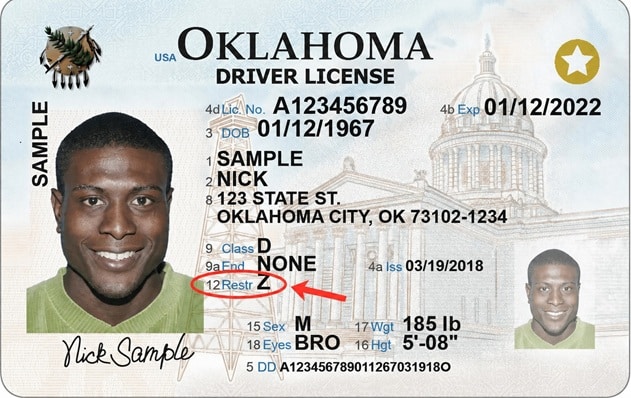
A “Z” restriction on a Commercial Driver’s License indicates that the driver is not authorized to operate a commercial motor vehicle with a full air brake system.
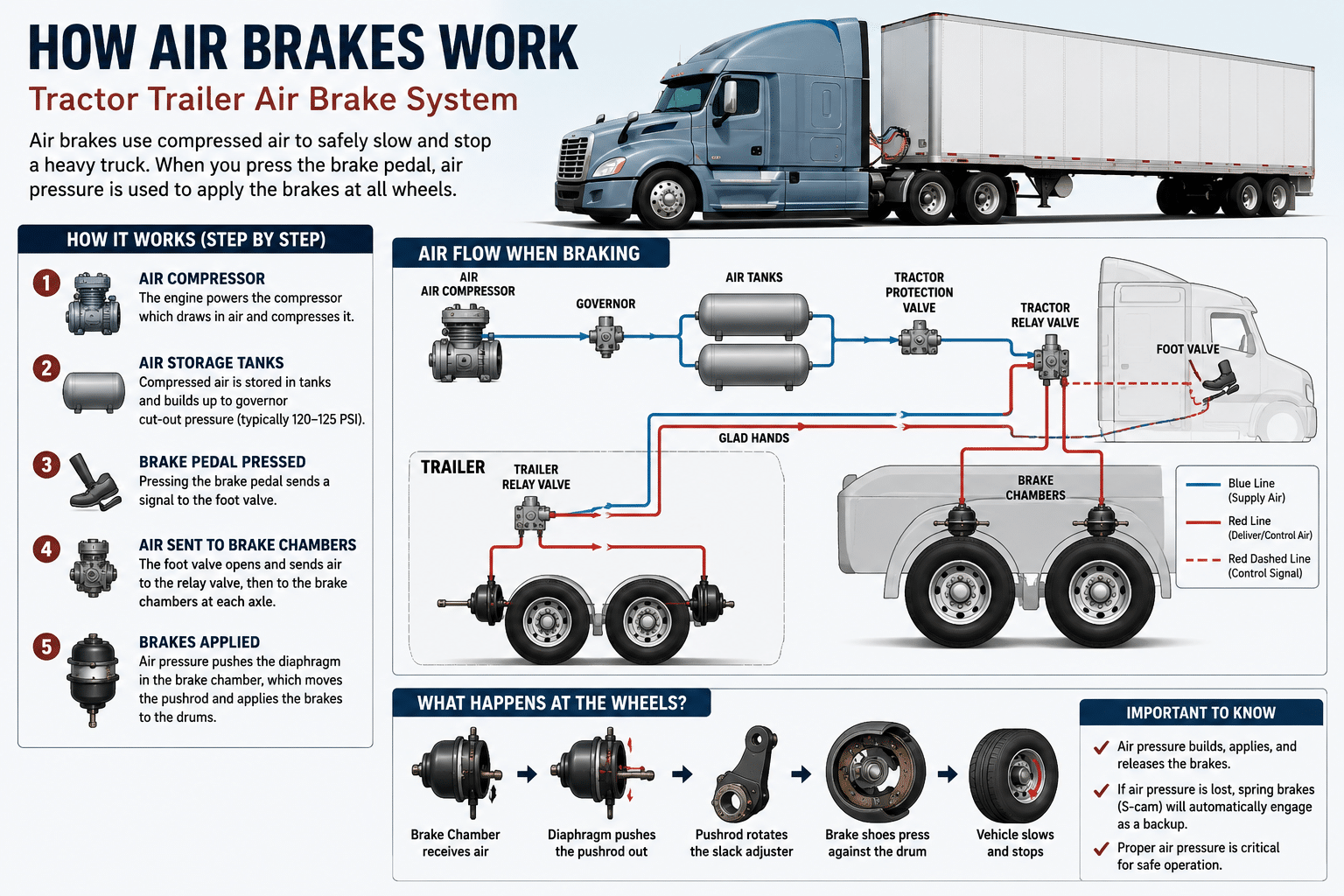
What Are Air Brakes?
Air brakes are a braking system that uses compressed air instead of hydraulic fluid to slow or stop large commercial vehicles like trucks, buses, and trailers. When the driver presses the brake pedal, compressed air activates the brake components at each wheel, providing reliable stopping power. Because they are designed for heavy loads and frequent use, air brakes are the standard braking system for most commercial vehicles requiring a CDL.
How Do You Get An Air Brake Restriction?
In plain terms: You get a Z Restriction if you passed the Air Brakes permit test but took the CDL road test in a vehicle that didn’t have air brakes.
The restriction is saying,
“We haven’t seen you operate a full air brake system yet, so we can’t authorize you to drive one.”
The Z restriction specifically bars you from operating vehicles equipped with a full, dedicated air brake system. That distinction matters, and we’ll break down exactly what it means for what you can and can’t drive.
Z Restriction vs. L Restriction: What's The Actual Difference?
These two CDL restrictions are closely related and frequently confused.
Both prevent you from driving large vehicles with full air brakes, but they have different sources and carry slightly different implications.
Understanding which one you have matters because the while removal process is the same, but your current driving situation may be different.
| L Restriction | Z Restriction | |
|---|---|---|
| What it means | No air brake vehicles at all | No full air brake vehicles |
| How it's triggered | Failed air brake test OR tested in a hydraulic brake vehicle | Tested in an air-over-hydraulic (partial air) vehicle |
| What you CAN drive | Hydraulic brake vehicles only | Some partial air-assisted platforms |
| What you CAN'T drive | Any vehicle with air brakes as the primary system | Full air brake tractor-trailers and large CMVs |
| How to remove it | Pass air brake knowledge test + skills test in full air brake vehicle | Pass skills test in a full air brake vehicle |
What Causes The Z Restriction?
The Z restriction is applied when a driver completes the CDL skills test in a vehicle with partial air brakes or a hydraulic braking system. This means that the driver hasn’t yet shown proficiency in operating a vehicle with a full air brake system.
Here are some common scenarios:
- You tested in an air-over-hydraulic vehicle: This is the most common cause. Air-over-hydraulic braking systems use compressed air to assist a hydraulic braking mechanism which is not the same as a dedicated air brake system. Many smaller commercial vehicles, certain medium-duty trucks, and older equipment use this setup. If that’s what was available at your training school or test site, you got the Z restriction without anyone necessarily telling you it would happen.
- You tested in a pickup truck with a trailer attached: In order to save money on vehicle rental cost, you took the road test in a hotshot pickup truck that uses hydraulic brakes. Without realizing it you got a Z restriction on your license.
- Your CDL school used hydraulic-braked trucks: Some schools, especially smaller or budget-friendly operations, train students on vehicles with hydraulic brakes because that was the cheapest truck they could find. If your road test vehicle didn’t have a full air brake system, the restriction went on automatically.
- You weren’t told to specifically request an air brake vehicle for the test: This happens more than it should. You may have gone to a truck rental place and were given a non-air brake truck. If nobody walked you through this requirement, you ended up with the Z through no real fault of your own.
How The Z Restriction Affects Your Job Options
What you CAN drive with a Z restriction:
- Hydraulic brake commercial vehicles (lighter box trucks, certain medium-duty delivery vehicles)
- Hotshot setups
- Certain Class C commercial vehicles
- Vehicles with air-over-hydraulic systems (since the restriction only bars full air brake vehicles, you can still legally operate those with a Z restriction)
If your goal is to work in the mainstream commercial trucking industry, the Z restriction needs to come off.The good news is that the removal process is targeted and doesn’t require starting over
Does Removing The Z Restriction Require ELDT?
This is one of the most commonly misunderstood aspects of CDL restriction removal, and it’s important to get right.
Drivers applying for removal of a restriction from their CDL in accordance with 49 CFR 383.135(b)(7), which includes the no air brake (L), no full air brake (Z), and no manual transmission (E) restriction, are not subject to the Entry-Level Driver Training regulations.
The federal ELDT requirement doesn’t apply to restriction removal. That means you do not need to enroll in a federally registered ELDT program or complete a full CDL training course through a Training Provider Registry school just to remove your Z restriction.
What you do need is to pass the skills test in a vehicle equipped with full air brakes, and potentially pass the air brakes knowledge test if you haven’t already done so.
Whether you get professional practice time before that test is up to you, but it’s strongly recommended. Showing up to a skills test in an unfamiliar air brake vehicle without enough practice is a good way to fail.
Driving Academy Can Provide You With The Training Needed To Pass!
How To Remove The Z Restriction?
Here's the exact process to clear the Z restriction from your CDL license.
Requirements
Steps To Remove Z Restriction
- If you passed your Air Brakes Knowledge Exam within the past year you can skip to step 3
- If you passed the test more than a year ago you'll likely need to retake just the Air Brakes Knowledge Exam since it may have expired
Check your original permit documentation or contact your local DMV to find out if you need to retake it.
- Study for the exam
- Schedule to take ONLY the Air Brake Written Test at your local DMV
- Pass the written exam by scoring 80% or above
Start training to pass the Entire CDL Road Test
You'll need to retake all three portions of the CDL Skills Exam; including Pre-Trip, Parking Maneuvers and Road Driving, so make sure you're practicing everything!- Pre-trip vehicle inspection: with complete air brake system walkthrough
- Basic vehicle control: parking maneuvers (typically straight-line backing, forward stop, reverse offset and forward offset)
- Road test: On-road driving test
- A vehicle equipped with full air brakes (make sure it's the same class as your license)
- Your valid CDL license
- Valid registration and insurance for the test vehicle
- Your accompanying CDL holder's license (if required)
If You Need Help With This Process, Driving Academy Can Help!
Frequently Asked Questions
No, though they're closely related. Both prevent you from driving full air brake vehicles. The difference is in the cause: the L restriction typically results from failing the air brakes knowledge test or testing in a non-air brake vehicle, while the Z restriction results specifically from testing in a partial air or hydraulic brake vehicle, not from failing a test. The removal process is similar for both, but the Z may not require retaking the knowledge test if you already passed it within the past year.
Yes, you need to retake the entire skills test in a full air brake vehicle. You don't have to retake the general knowledge test or restart the CDL process from scratch. It's a targeted retest, not a full redo.
Yes. Once the Z restriction is removed from your CDL, you're authorized to operate commercial vehicles with full air brake systems. No further steps are required as long as your CDL class covers the vehicles you want to drive.
Yes. According to the FMCSA, the air brake restriction applies only to the vehicle's principal braking system. A vehicle that stops using hydraulic brakes but uses a small air-assisted mechanism to release the parking brake is still legal to drive with a Z restriction.