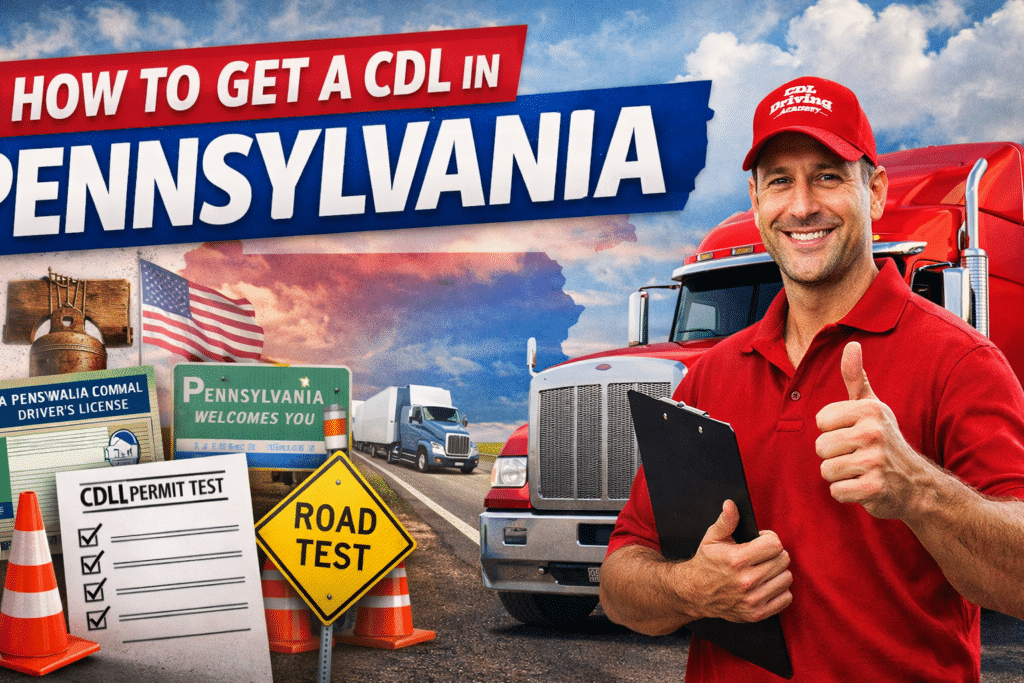
Getting a CDL in Pennsylvania can feel like a lot to take on, especially when you start looking into everything PennDOT requires: the permit tests, training hours, skills test, it adds up fast. Most people don’t know where to begin, and that’s completely normal.
The good news? You don’t have to figure it all out on your own. At Driving Academy, we walk students through the process step by step, so you’re not left guessing what comes next or scrambling to meet a deadline you didn’t know existed. This guide covers everything you need to know about how to get a CDL in PA!
Before You Start: Choose The Right CDL Type
Before starting the process of getting a CDL in Pennsylvania, it’s important to decide which CDL class fits your career goals. The type of CDL you choose determines the vehicles you can drive and the types of jobs available to you.
Class A CDL (Most Popular Option)
Best if you want:
- Tractor-trailer driving (combination vehicles)
- Access to the largest number of trucking jobs
- Flexibility between local, regional, and over-the-road (OTR) driving
A Class A CDL typically offers the most career opportunities and earning potential in the trucking industry.
Types of Class A Vehicles
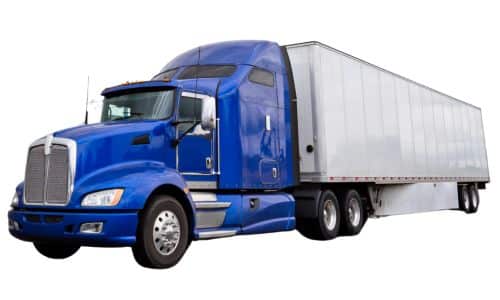
Tractor-Trailers
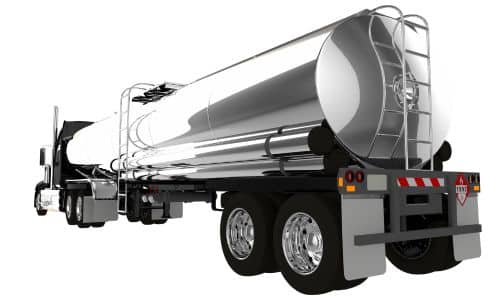
Chemical Tanker
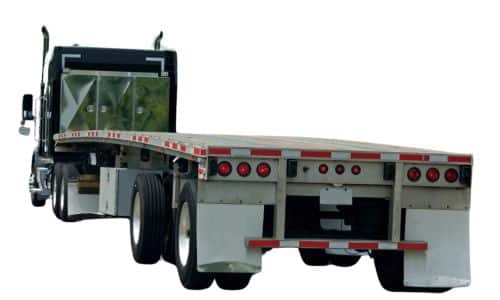
Flatbed Trailers
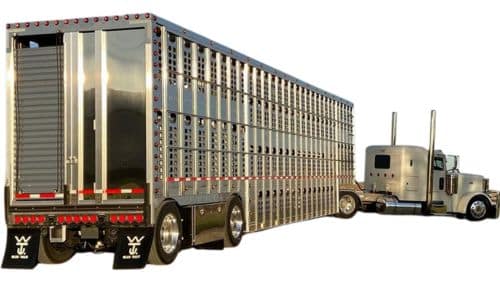
Livestock Carriers
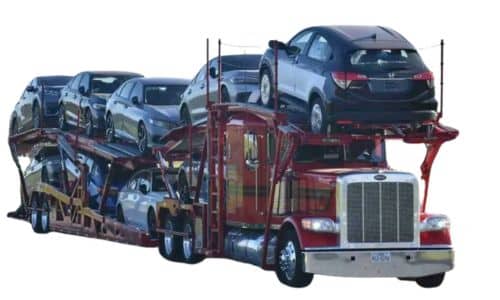
Car Transporters
Class B CDL
Best if you want:
- Straight truck jobs such as dump trucks, box trucks, or delivery trucks
- Certain local driving positions
- Municipal or fleet jobs
- School bus and city bus driving jobs (with a passenger endorsement)
Types of Class B Vehicles
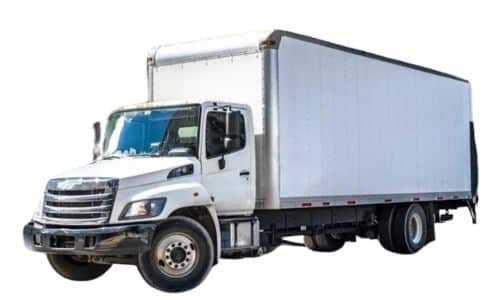
Box Truck
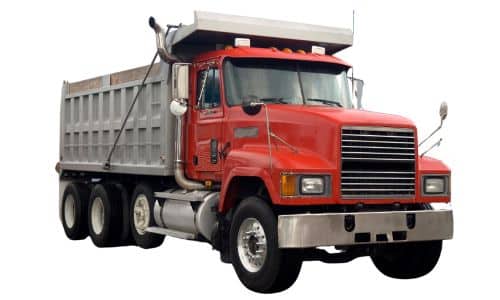
Dump Truck
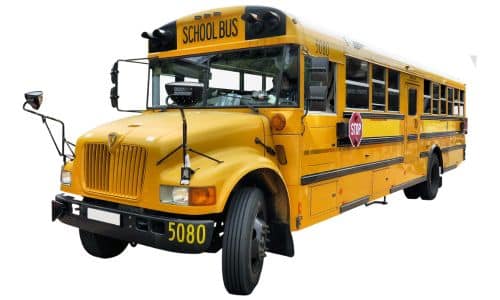
School Bus (S)
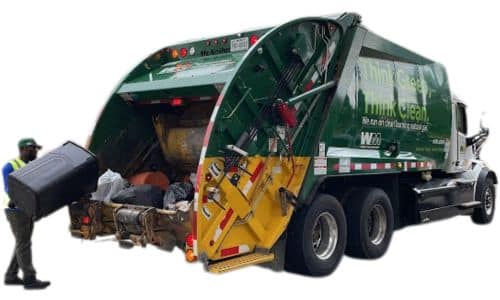
Garbage Truck
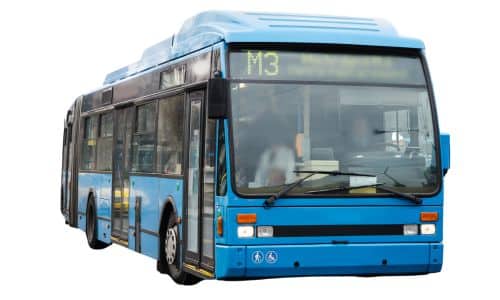
City Bus
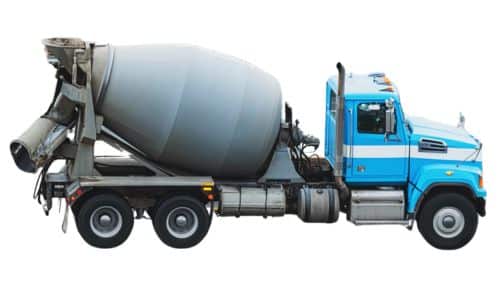
Cement Truck
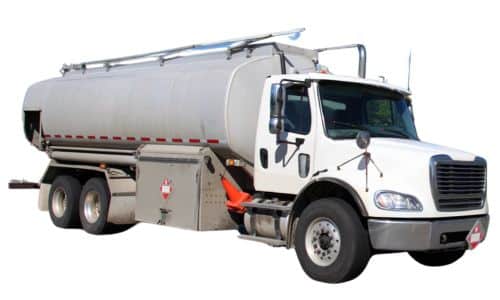
Tanker Truck
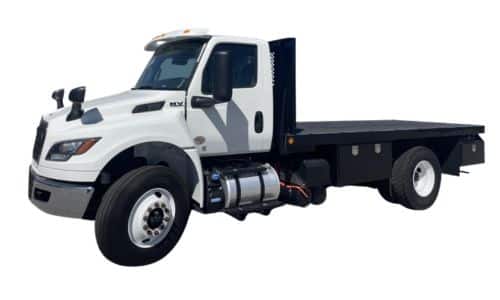
Flatbed
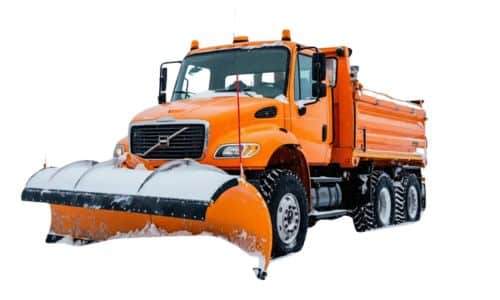
Snow Plow
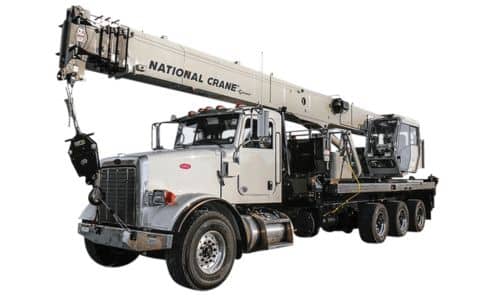
Crane
If you’re unsure which license is right for you, you can also learn more about the difference between a Class A and Class B CDL before starting the process in PA.
Pennsylvania CDL Requirements
Before applying for a CDL in Pennsylvania, you’ve got to meet several basic requirements.
These are the minimum qualifications to begin the process of becoming a commercial driver in the Keystone State:
- Have a valid Pennsylvania driver’s license
- Note: If your license expires within 6 months, you must renew your license before applying for a CDL learner’s permit.
- Be at least 18 years old to drive within Pennsylvania
- Be 21 years old to drive across state lines
- Be a US citizen or have a green card/permanent residency status
- Check out our CDL Immigrant Eligibility Checklist
- Be legally authorized to work in the United States
- Pass a DOT physical exam
Most CDL drivers are required to obtain a DOT Medical Examiner’s Certificate, which confirms they meet federal health standards for commercial drivers.
Even if you’re eager to start studying for your CDL permit tests right away, completing the physical early can help prevent delays later in the process.
Steps To Get A CDL In Pennsylvania
Step 1: Get Your Commercial Learner’s Permit (CLP)
The very first step of getting a CDL in Pennsylvania, you must obtain a Commercial Learner’s Permit aka CLP.
This permit allows you to practice driving a commercial vehicle while supervised by a licensed CDL driver.
To receive your CLP you will need to:
- Complete the CDL permit application
- Provide identification documents
- Submit your DOT medical certificate
- Pass the required written CDL tests
- Pay the permit fee
Before you study for the exam, make sure you understand the test subject you need for the type of CDL that you are getting:
CLP Permit Exams
| What it covers | # of Questions | CDL A Permit | CDL B Permit | |
|---|---|---|---|---|
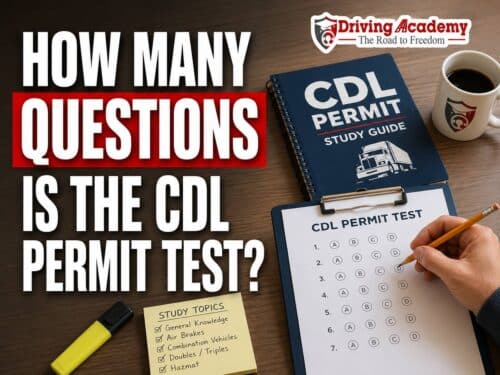
| General Knowledge | Basic trucking concepts, safe driving & CDL regulations | 50 | ✔️ | ✔️ |
| Combination | Covers driving vehicles with a tractor-trailer combination | 20 | ✔️ | ❌ |
| Air Brakes | Focuses on vehicles equipped with air brakes | 25 | ✔️ | ✔️ |
Where Do You Take The CDL Permit Tests In Pennsylvania?
For any PA resident, all of the permit exams must be taken at a DMV. It can be administered at any DMV in the state.
To take the CDL permit exams in Pennsylvania, you actually don’t need to schedule an appointment ahead of time. You can just walk in to any PennDot DMV with the Commercial Learner’s Permit From (DL-31CD).
CDL Endorsements
Besides the general subject for getting a CLP, there are certain types of “endorsements” that you would need on your Pennsylvania CDL license in order to haul special types of cargo or to transport passengers.
The endorsements means you have a specialized knowledge to operate these vehicles safely.
What Are The Endorsements You Can Get?
There are 6 truck driving endorsements that you can get on your license that allow you to legally transport different types of vehicles and cargo from Philadelphia to Pittsburgh and everywhere in between.
They are:
| Endorsement | Purpose | Special Requirement | Knowledge Test |
|---|---|---|---|
| T - Double & Triple Trailer | Pulling 2 or 3 trailers. (Where legally allowed) | Class A license is required | ✔️ |
| P - Passenger | Buses or vehicles used to transport passengers. | Requires Road Test in a bus or passenger vehicle | ✔️ |
| S - School Bus | Transporting children in a bus | Requires "P" endorsement, background check & Road Test in a school bus | ✔️ |
| N - Tanker Vehicle | Transporting liquids or gas in a tanker | Just pass Knowledge Test | ✔️ |
| H - Hazardous Materials | Transporting hazardous materials |
Must be trained & retested every 2 years. | ✔️ |
| X - Combination Hazardous Materials & Tank Vehicles | Transporting hazardous materials in a tank | Earned automatically with both "H" & "N" Endorsements. |
Step 2: ELDT (Entry-Level Driver Training)
Before you can take the CDL road test in Pennsylvania, you must complete Entry-Level Driver Training (ELDT). This training is required by the Federal Motor Carrier Safety Administration (FMCSA) and applies to new CDL applicants across the entire United States, including drivers applying for a commercial license through PennDOT in Pennsylvania.
The program has two required parts:
1) ELDT Theory (classroom instruction)
2) Behind-the-Wheel training
Both parts must be completed through an FMCSA-approved CDL school that is listed in the Training Provider Registry (TPR) before you can schedule your CDL road test in Pennsylvania.
In order to take your road test, you’ll need to complete both portions of the training at a federally licensed CDL school such as Driving Academy in Levittown, PA.
ELDT Theory
ELDT theory training is the classroom portion of the program and covers the core knowledge every commercial driver needs before operating a truck or bus on public roads.
The federal government introduced this requirement because passing the CDL permit test alone does not always guarantee that a driver fully understands everything needed to operate a commercial vehicle safely.
Unlike the CDL knowledge exams that are required to be taken at your local DMV , you can take the ELDT exam anywhere, even online.
To pass the ELDT exam, PA based students must score at least 80%. If you don’t pass the first time, you can simply retake the test.
Once you complete the ELDT theory portion, you’re ready to move on to the hands-on portion of the CDL training.
Behind-the-Wheel Training
The second (and more fun) part of ELDT training is Behind-the-Wheel instruction, where students learn to operate a commercial vehicle with a certified CDL instructor.
This training must be completed in person at a licensed CDL school like Driving Academy.
Some people assume they can learn to drive a truck from a friend or family member who already has a CDL. Unfortunately for you, but fortunately for safety reasons, that does not meet the federal training requirements.
According to federal regulations:
Anyone applying for a Class A or Class B CDL for the first time must complete training with a provider listed on the FMCSA Training Provider Registry.
So, if you haven’t already, make sure to enroll at a CDL driving school you can trust like Driving Academy for yard training.
Yard Training
Most of the behind-the-wheel portion of CDL training begins in a training yard, sometimes called the range.
Yard training takes place in a controlled environment where students practice important truck control skills before driving on public roads.
This portion of training helps prepare you for the Pennsylvania CDL skills test, which includes several vehicle control maneuvers.
The layout of a CDL training yard often mirrors the sections of the CDL road test, allowing students to practice the exact skills they will be tested on later.
Truck Yard Training
Pre-Trip Inspection
Where you practice the external inspection typically on a stationary truck
In-Cab Inspection / Air Brake Test
Where you practice the inside inspection on a truck that can move enough to do the tug test
Parking Maneuvers
Where you practice backing up and parking the truck
Road Driving
An instructor takes you out on the public road to practice driving and shifting gears
Step 3: CDL Skills Test (Road Test)
The final step in getting your CDL in Pennsylvania is passing the CDL Skills Test, also known as the CDL road test.
The test evaluates whether you can safely inspect and operate a commercial vehicle. In Pennsylvania, the CDL skills exam is divided into three main sections.
1) Pre-Trip Inspection
The first part of the CDL skills test is the Pre-Trip Inspection.
During this portion of the test, you’ll need to demonstrate that you understand how to inspect a commercial vehicle for safety issues before driving.
The examiner will expect you to identify and explain key components of the truck or bus and confirm that they are working properly.
The pre-trip inspection is usually broken into two sections:
Outside Inspection
You will walk around the vehicle and identify parts. You must also explain what you are checking for, such as leaks, damage, loose parts, or proper air pressure.
In-Cab Inspection
Inside the cab, you will demonstrate that you know how to check important systems.
The goal of this section is to prove that you understand how to ensure your vehicle is safe before driving.
2) Basic Vehicle Control (Parking Maneuvers)
The second portion of the CDL skills test evaluates your Basic Vehicle Control.
In this section, you will perform several parking and backing maneuvers inside a controlled testing area marked with cones and painted lines.
These exercises are designed to test your ability to control the vehicle in tight spaces, which is something truck drivers must do regularly at loading docks, yards, and warehouses.
During these exercises, you must guide the truck into the designated area without hitting cones or crossing boundary lines. The rules may seem strict, but the reason is simple: in the real world, crossing those lines could mean hitting a building, another vehicle, or a loading dock.
3) On-Road Driving Test
The final part of the CDL skills test is the on-road driving portion. This section is similar to the driving test you took for your regular driver’s license, but you’ll be operating a much larger vehicle.
Your examiner will guide you through a variety of real-world driving situations to evaluate how safely and confidently you operate the vehicle.
Note: One key difference between the CDL road test and a standard driver’s license test is that you will also be expected to actively identify road signs, such as speed limits, bridge clearances, and other safety signs relevant to commercial drivers.
Where Do You Take The CDL Road Test in Pennsylvania?
Drivers in Pennsylvania typically take their CDL skills test through PennDOT, but there is another option.
Driving Academy is a fully certified third-party CDL road test provider in Pennsylvania. This means you can complete your CDL road test with us instead of scheduling it through a PennDOT testing location.
Our Pennsylvania CDL testing center can administer road tests for drivers from anywhere in the United States, helping many students complete the final step of getting their CDL faster.
Pennsylvania CDL Costs
Here are some common PennDOT fees you can expect when getting your CDL in Pennsylvania:
- Knowledge Test Fee: $25
- CDL License Fee (4-year): approximately $94.50
– There’s also a $15.50 photo fee for new aplicants - Endorsements: additional fees may apply depending on the endorsement
– Endorsements are $6 each
– There is no cost for School Bus
– Hazmat Endorsement is $22 - DOT Physical: Varies depending on the medical clinic but is typically $75-$150
- CDL Training Tuition: Varies depending on the school and program. The average CDL school in Pennsylvania costs between $3,000-$10,000
These costs to get a commercial driver’s license in Pennsylvania can vary slightly depending on your situation and the type of CDL you are pursuing.
Note: When it comes to paying the PA CDL fees, PennDOT Driver License Centers do not accept cash.
How Much Does CDL School Cost in Pennsylvania?
The cost of CDL training in Pennsylvania can vary depending on the type of program, the length of training, and what is included in the course.
On average, CDL school in Pennsylvania typically costs between $3,000 and $10,000.
At Driving Academy, our PA CDL training programs are designed to be affordable and accessible. Our courses typically range between $3,000 and $5,600, with our Guaranteed CDL programs starting at just $4,600.
To make CDL training more accessible, we also offer flexible payment plans starting with as little as $500 down, helping students begin their trucking careers without a large upfront cost.
The total cost depends on PennDOT fees, your DOT physical, and CDL school tuition. Pennsylvania typically charges a commercial learner’s permit fee (about $25) and a CDL license fee (around $94.50 for a 4-year license), with additional fees if you add endorsements. On top of that, most students also pay for a DOT physical exam and CDL training, which can vary depending on the school, schedule, amount of driving time, and what is included in the program (such as ELDT training, road test preparation, and testing support).
Technically, you can attempt to get a CDL in Pennsylvania without attending a CDL school, but most new drivers are required to complete Entry-Level Driver Training (ELDT) before taking the CDL skills test. Federal regulations require that anyone applying for a Class A or Class B CDL for the first time complete training through a provider listed on the FMCSA Training Provider Registry. While the law doesn’t always require a traditional “school,” the ELDT requirement means you must complete both the theory training and behind-the-wheel instruction through an approved training provider before you can schedule your CDL road test.
The CDL test can be challenging if you are not properly prepared, but most students who complete professional CDL training and practice the required skills are able to pass. The test evaluates your knowledge of vehicle safety, your ability to control the truck during basic maneuvers, and your ability to safely operate the vehicle on public roads.
If you fail part of the CDL skills test, you usually only need to retake the portion that you failed. You do not need to restart the entire CDL process, but you will need to schedule another test and may need to pay an additional testing fee.
Yes. Driving Academy offers flexible training schedules, including weekend or part-time options, which allow students to complete CDL training while continuing to work. Full-time programs are usually the fastest way to complete training, but part-time options can help students balance work and training.