Want to become a truck driver but can’t afford to quit your current job? You’re not alone. Many people want to get their CDL and start making more money for a better life. However, they still have bills to pay, families to support, and responsibilities they can’t simply walk away from.
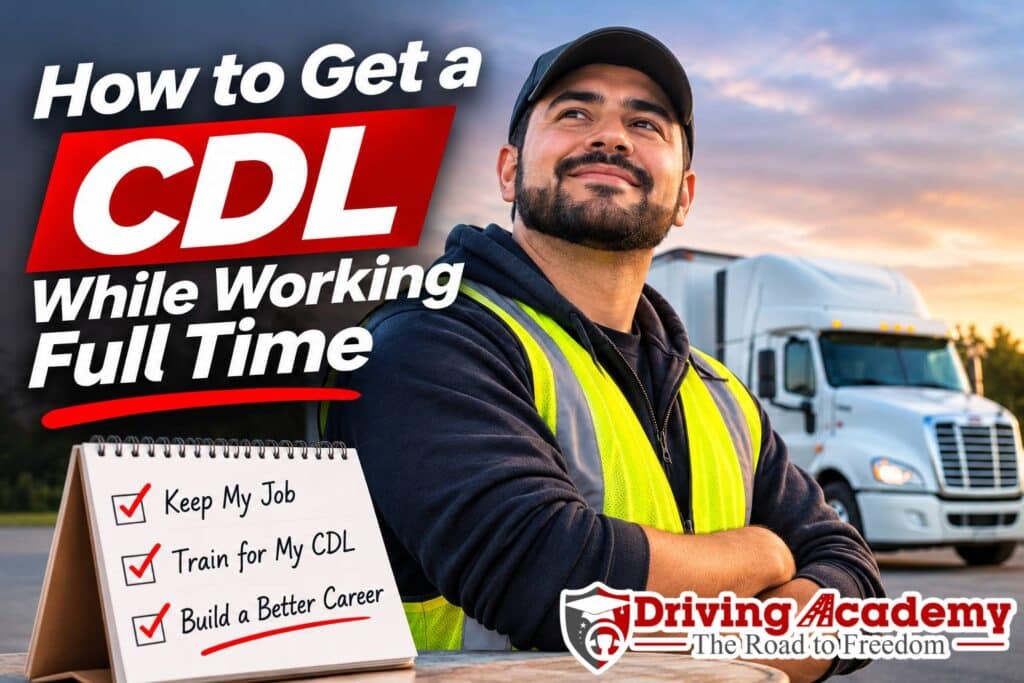
The good news is that you can get your CDL while working full time. You just need to find a truck driving school that offers part-time CDL training, including evening and weekend classes. Instead of taking weeks off work to attend school during the day, you can train during the hours you’re available.
At Driving Academy, we understand that not everyone can stop working to start a new career. That’s why we offer flexible CDL training schedules, including nights and weekends. Let’s go through how you can work toward your CDL without giving up your current paycheck.
Can You Really Get a CDL While Working Full Time?
Yes! There’s no federal rule saying you have to quit your job or attend CDL school full time. What matters is that you meet the licensing requirements, complete any required Entry-Level Driver Training (ELDT), and pass the CDL exams.
The biggest challenge for most working adults isn’t learning how to drive a truck. It’s finding enough time to attend training while keeping up with their regular schedules. Traditional CDL schools may require students to attend classes for several hours every weekday, which can be difficult for someone working a 9-to-5 job.
That’s where part-time CDL training makes a difference. Instead of committing to a full-time daytime schedule, you can look for schools that offer evening classes, weekend training, or flexible appointments. You’ll still need to complete the required training, but you may be able to spread it across several months.
At Driving Academy, students can choose from full-time and part-time options. Students can attend four-hour training sessions and arrange their classes around work or family responsibilities.

Why Driving Academy Offers Flexible CDL Training?
There’s actually a personal reason Driving Academy focuses so much on flexible scheduling.
Before opening Driving Academy, our founder, Jonathan Marques, was working a full-time job at a restaurant while trying to get his CDL. He wanted to improve his career opportunities, but the schools he looked at didn’t offer schedules that worked well with his job.
At times, Jonathan had to take an entire week off work just to attend CDL training. The problem was that his bills didn’t stop coming simply because he wasn’t working. Taking time off meant losing income at the very moment he needed money to pay for school.
That experience helped shape the way he built Driving Academy. Instead of expecting every student to arrange their entire life around CDL school, he wanted to create a system where students could train around their existing job and other responsibilities.

What Are Your Options for CDL Training While Working?
If you’re working full time, there are several ways to fit CDL classes into your schedule. The right option depends on your working hours, family responsibilities, and how quickly you want to finish training.
1. Night CDL Classes
If you work during the day, night CDL classes may be your best option. These programs allow you to finish your regular workday and attend CDL training afterward.
For example, someone who works from 8 AM to 4 PM might be able to attend an evening training session. This allows them to continue receiving their regular paycheck while making progress toward their CDL.
Before enrolling, confirm that the school offers actual behind-the-wheel training during evening hours, not just classroom lessons. You’ll need hands-on experience operating a commercial vehicle before taking your CDL skills test.
2. Weekend CDL Classes
Weekend CDL training is another good option for people who work Monday through Friday. Instead of attending classes during the workweek, you can use Saturday or Sunday to practice driving a truck.
This can be especially helpful if you have a demanding job or work long shifts. However, training only on weekends usually means it’ll take longer to complete your program compared with someone attending several days per week.
At Driving Academy, weekend training is available at participating locations. You can speak with a CDL advisor to find out which weekend sessions are offered near you.
3. Part-Time CDL Training With a Flexible Schedule
One of the biggest advantages of Driving Academy’s scheduling system is that students don’t necessarily have to attend training on the same day every week.
Let’s say you’re available on Saturday this week, but your boss changes your schedule and you have to work next Saturday. Instead of missing training completely, you may be able to schedule your next session for another available day, such as Tuesday evening or Wednesday morning.
This flexibility is a great fit if you are someone who:
- Works rotating shifts and needs a schedule that adapts with you.
- Has children and needs to balance work with family responsibilities.
- Has an unpredictable schedule that changes week to week.
That means you can plan training around your life rather than following the exact same weekly schedule throughout your entire course.
How Many Hours a Week Do You Need for CDL Training?
At Driving Academy, part-time training sessions are usually four hours, depending on your situation. This gives working students the option to make progress without attending school every day.
The more often you train, the faster you can generally complete your required hours.
Here’s an example of how different schedules might look:
| Training schedule | Weekly training time | Best for |
|---|---|---|
| One 4-hour session | 4 hours | People with very limited free time |
| Two 4-hour sessions | 8 hours | People working regular weekday jobs |
| Three 4-hour sessions | 12 hours | People wanting to finish sooner |
| More frequent sessions | Depends on schedule | People who wants CDL ASAP |
These are examples, not fixed enrollment packages. Your available schedule and total required training hours depend on the program and school.
Important Note: One thing to remember is that attending CDL school isn’t only about completing a certain number of hours. You also need to develop the skills to operate a commercial vehicle safely, understand vehicle inspections, and prepare for your licensing exams.
How Long Does It Take to Get a CDL While Working Full Time?
This is probably the biggest question people have when looking into part-time CDL training.
At Driving Academy, full-time students can often complete training in approximately four to six weeks, depending on the program. But if you’re only attending classes during evenings or weekends, you should expect the process to take longer.
For example, a student taking only one four-hour session per week could spend around 40 weeks completing one of the longer training courses. That’s why it’s important to think about both your weekly availability and your target completion date before enrolling.
Your timeline can also depend on how quickly you pass the CDL permit exams, your progress behind the wheel, the training package you choose, and the availability of a CDL road test.
You can talk to our CDL advisor to build a plan around your need
How to Get Your CDL While Keeping Your Current Job
Getting your CDL is a process, but it’s easier to manage when you break it into smaller steps. Here’s how to get started without immediately changing your work schedule.
Step 1: Decide Which CDL You Need
Before signing up for school, figure out what type of commercial vehicle you want to drive.
A Class A CDL is generally used for larger combination vehicles, such as tractor-trailers, while a Class B CDL is commonly used for certain straight trucks, buses, and other heavy vehicles.
The right license depends on the type of driving job you want. Choosing the right CDL from the beginning can help you avoid spending time and money on training that doesn’t match your career goals. Learn more about the difference between Class A and Class B CDL.
Step 2: Start Studying for Your CDL Permit
Before you can practice driving a commercial truck, you’re gonna need a Commercial Learner’s Permit (CLP).
The good news is that you can study for your CDL permit while working full time. You don’t need to spend an entire day studying. Even setting aside 30 minutes before work, after dinner, or on your lunch break can help you prepare.
You can start by reviewing your state’s CDL manual and using Driving Academy’s CDL practice permit tests.
Once you’re ready, schedule your required knowledge exams with your state’s licensing agency.
Step 3: Choose a CDL School With Flexible Training Hours
This is where your choice of CDL school really matters.
When you’re comparing schools, ask whether they offer part-time training, how late they’re open, whether weekend behind-the-wheel training is available, and what happens if your work schedule changes.
You’ll also want to confirm that the training provider is listed on the FMCSA Training Provider Registry like Driving Academy.
Driving Academy offers flexible CDL training options at locations across the country. You can explore our CDL school locations over 18 states and speak with an advisor about scheduling at the campus nearest you.
Step 4: Complete Your CDL Training Around Your Schedule
Once you’ve enrolled and met the requirements to begin behind-the-wheel training, you can start attending your scheduled classes.
CDL training includes more than learning how to drive forward on a highway. You’ll need to practice vehicle inspections, backing maneuvers, basic vehicle control, and safe driving on public roads.
Your goal should be to develop a consistent routine. Even if you can’t attend the same day every week, try to keep making progress so you don’t lose the skills you’ve already practiced.
Step 5: Pass Your CDL Skills Test
Once you’ve completed the required training and are ready, the final major step is passing your CDL skills test.
The test includes the following:
- Vehicle inspection
- Basic vehicle control
- On-road driving
After passing the required exams and meeting your state’s licensing requirements, you can receive your CDL.
And the best part? If you’ve continued working throughout the process, you can begin exploring trucking jobs without having given up months of income just to attend school.
Tips for Balancing CDL School, Work, and Family
Working full time while attending CDL school takes planning, especially if you have children or other responsibilities at home. The good news is that you don’t need a perfect schedule. You need one that you can realistically follow.
Start with a manageable commitment. It’s better to attend one or two training sessions consistently than to schedule more classes than you can handle and constantly cancel them.
Use small amounts of free time to study. Reviewing permit questions for 20 or 30 minutes can be easier than trying to find several uninterrupted hours at the end of a long workday.
Plan around your energy, not just your availability. If you’re exhausted after a long shift, scheduling behind-the-wheel training immediately afterward may not be the safest or most effective choice. Leave enough time to rest and stay alert.
Talk to your family and employer about your plans. You don’t necessarily have to quit your job, but you may need some flexibility for training sessions, exams, or appointments with the licensing agency.
Remember why you’re getting your CDL. The process may take longer when you’re working, but the goal is to build new career opportunities without putting your current financial responsibilities at unnecessary risk.
Frequently Asked Questions
Yes. You can earn your CDL while keeping your current job by choosing a school that offers part-time, night, or weekend CDL classes. You'll still need to complete the required training and pass your licensing exams, but you don't necessarily have to attend school during regular weekday working hours.
Yes. CDL schools such as Driving Academy offer weekend training for students who work during the week.
At Driving Academy, certain part-time training options allow students to schedule a four-hour session once a week. However, attending only one day per week can make the overall training process much longer.
Many part-time students at Driving Academy take approximately three to six months. The actual time can be shorter or longer depending on your schedule, required training hours, progress, and testing availability.
Night and daytime programs can cover the same required CDL skills and training standards. The main difference is when instruction takes place and how the school schedules sessions. Always confirm that an evening program includes the required behind-the-wheel training, not just classroom instruction. Also, make sure to work with a CDL school that has a well-lit yard so you don't practice driving in the dark.
Getting your CDL shouldn’t mean you have to put your entire life on hold. If you’re working full time, raising children, or managing a busy schedule, you may still be able to make progress toward a commercial driving career.
That’s exactly why Jonathan built Driving Academy around flexible training.
Today, Driving Academy offers part-time training, evening and weekend classes. We also provide flexible payment options, and lifetime job placement assistance for graduates.
Ready to get started?