Women make up roughly half of the U.S. labor force, yet they’re still a small minority in trades jobs such as construction, trucking, aviation, welding, and other jobs that keep the physical world running. That gap hasn’t closed on its own, but it is slowly narrowing, and the story looks different depending on which trade you look at.
Here’s a current snapshot of where women stand across the major blue-collar fields, what’s driving the slow progress, and where women can go for support if they’re trying to break in.
The Big Picture
The U.S. Department of Labor classifies any occupation where women hold fewer than 25% of jobs as “non-traditional.” By that measure, nearly every skilled trade still qualifies. But the trend line is moving in the same direction almost everywhere: up, just not quickly.
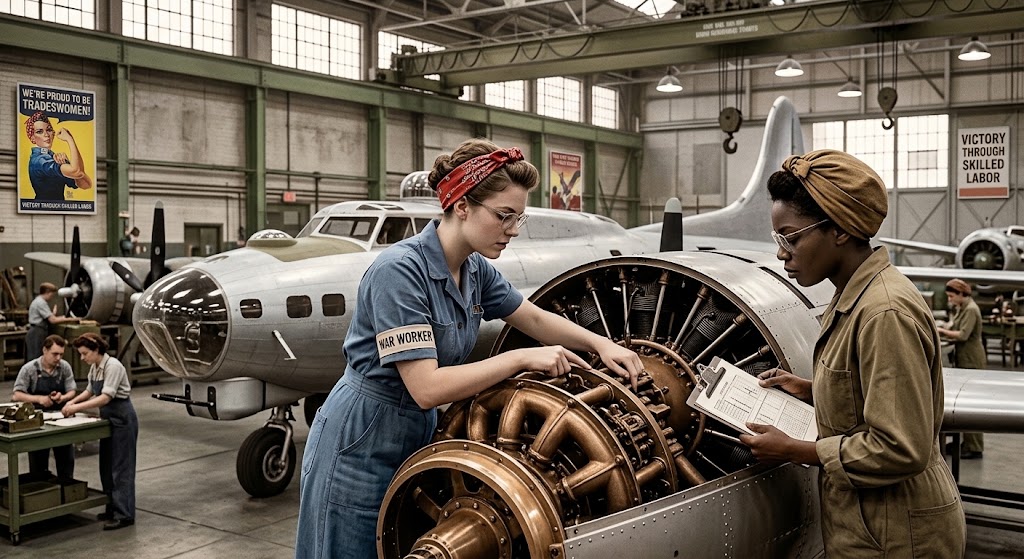
Women’s push into these fields isn’t new. It stretches back to World War II, when labor shortages pulled women into factories, machine shops, and driver’s seats that had been closed to them. Most of those jobs went back to men after the war, but the idea that women could do the work never fully went away. It just took decades for hiring practices, equipment design, and workplace culture to start catching up.
Trade-by-Trade Snapshot
Construction
Construction has seen some of the most visible movement. Bureau of Labor Statistics data puts women’s overall share of the construction workforce above 11%, a record high and a real climb from under 10% just a few years ago. But that headline number is misleading on its own: most of that growth is concentrated in office, estimating, and project-management roles. Out on the jobsite, in trades like electrical work, plumbing, and carpentry, women’s representation is still stuck in the low single digits around 3–4%.
Where to look for support: the National Association of Women in Construction (NAWIC) and Tools & Tiaras, a nonprofit focused on getting girls and women into mechanical and industrial trades.
Truck Driving
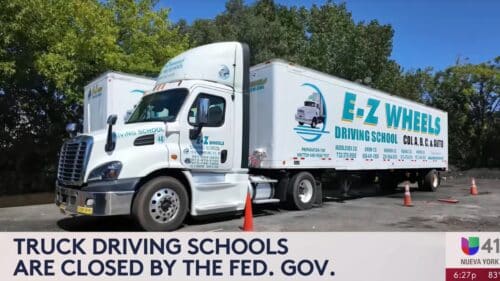
Long-haul and CDL-holding driver roles remain one of the more male-dominated corners of the trades. The Women In Trucking Association’s most recent industry index puts women at roughly 9–10% of professional CDL drivers, essentially flat over the past couple of years, even as women have made much bigger gains elsewhere in the industry (nearly half of dispatcher roles and over 40% of safety positions are now held by women).
Where to look for support: the Women In Trucking Association runs mentorship programs, scholarships, and a “Top Women to Watch” recognition list aimed at raising the profile of women behind the wheel.
Aviation
Aviation tells a similar two-speed story. FAA airmen data shows women now make up close to 12% of student pilots but only around 5–6% of Airline Transport Pilot certificate holders, the credential airline captains need. In other words, women are entering the field faster than they’re reaching its top ranks, a gap that will take years of career progression to close. On the maintenance side, women hold under 3% of aircraft mechanic certificates.
Where to look for support: Women in Aviation International offers scholarships, networking, and mentorship specifically for pilots and maintenance technicians.
Welding, Electrical Work, and Other Trades
Across the narrower occupations such as welding, electrical, plumbing, HVAC which representation is consistently the lowest of any trade category (typically in the 2–4% range depending on the specific job and region). These trades also tend to have the steepest apprenticeship pipelines, which means the barriers often start well before a woman ever reaches a jobsite: recruitment, training access, and mentorship gaps all play a role.
Where to look for support: Nontraditional Employment for Women (NEW) runs trade-specific training and placement programs, and the Coalition of Labor Union Women connects women already working inside union trades.
Why the Gap Persists?
The reasons show up again and again across every trade:
- Workplace culture. Being the only woman on a crew, flight deck, or loading dock can be isolating, and harassment remains a documented problem across construction, trucking, and aviation alike.
- Equipment and facilities built around men. Trucks, tools, PPE, and even restroom access are frequently designed without women in mind, which creates daily friction that men in the same job never encounter.
- Thin mentorship pipelines. Fields with very few women in senior roles struggle to offer the kind of mentorship that helps early-career women see a path upward, which in turn keeps the pipeline thin.
- Pay and advancement gaps. Even in trades with a relatively small wage gap, like construction, advancement into senior or supervisory roles for women lags behind hiring at entry level.
Where Things Are Headed
None of this is static. Apprenticeship enrollment among women has grown significantly over the past several years in construction and manufacturing, and industry groups like NAWIC, Women In Trucking, and Women in Aviation International have all expanded scholarship and mentorship programs aimed squarely at the trades.
The pattern across every field above is the same:
entry-level and training numbers are climbing faster than senior-role numbers, which means the current wave of women entering these trades will likely reshape leadership numbers over the next decade , if the industries keep investing in retention, not just recruitment.