| ID | Logo | Company Name | Hiring locations | Content | CDL class | Job Type | Contact name | Contact title | Contact Phone | Contact email | Date | Hiring website | |||||||||||||||||||||||||||||||||||||||||||||||||||||||||||||||||||||||||||||||||
|---|---|---|---|---|---|---|---|---|---|---|---|---|---|---|---|---|---|---|---|---|---|---|---|---|---|---|---|---|---|---|---|---|---|---|---|---|---|---|---|---|---|---|---|---|---|---|---|---|---|---|---|---|---|---|---|---|---|---|---|---|---|---|---|---|---|---|---|---|---|---|---|---|---|---|---|---|---|---|---|---|---|---|---|---|---|---|---|---|---|---|---|---|---|
| 46865 |  | How Many Questions Is the CDL Permit Test? | If you’re getting ready to head to the DMV for your CDL permit, one of the first things you want to know is exactly what you’re walking into. How many questions are on the test? This guide breaks down every section of the exam, the exact number of questions per section, the passing score you need, and what each section actually covers so there are zero surprises on test day. Feel free to contact us about the CDL permit test and learn more about how we can help you with passing the exam The CDL Permit Test BreakdownHere’s the first thing a lot of new applicants don’t realize: the CDL permit test isn’t a single exam. It’s a series of knowledge tests, and the specific tests you take depend on which CDL class you’re applying for and which endorsements you need.
The passing score for every single section is 80%. You must score 80% or higher on each test individually and a high score on one section doesn’t offset a low score on another. CDL Permit Test Questions by SectionHere’s the complete breakdown of every knowledge test module, how many questions it contains, how many you need to answer correctly, and what it covers. General Knowledge: Required for All CDL Classes
The General Knowledge test is the foundation of the CDL permit exam and is required for every applicant regardless of CDL class or endorsements. It’s the broadest section and covers a wide range of topics that every commercial driver needs to know. What it covers:
Tip: The General Knowledge section is the longest and broadest test. Don’t try to memorize everything at once but instead work through your state’s CDL Manual section by section and take practice tests as you go. Focus especially on numbers: following distances, speed limits in special situations, weight limits, and inspection intervals all show up repeatedly. Air Brakes: Required for Class A and Class B (and Anyone Driving Air Brake Vehicles)
The Air Brakes section is required for any driver who plans to operate a commercial vehicle equipped with an air brake system. If you skip this test or don’t pass it, you’ll receive an L restriction (or Z restriction) on your CDL, which bars you from driving most Class A and Class B vehicles. Don’t skip it. What it covers:
Study tip: The PSI numbers above come up constantly on the exam. Write them out and drill them until they’re automatic. Also practice the full pre-trip air brake inspection sequence out loud, because you’ll need to perform it during your road test too, and knowing it for the written exam and knowing it for the physical inspection are two different things. Combination Vehicles: Required for Class A CDL
The Combination Vehicles section is specific to Class A applicants. It covers the additional knowledge and skills required to safely operate a vehicle towing one or more trailers. What it covers:
Study tip: The coupling and uncoupling sequence is heavily tested. Know every step in order: approach, check, connect, test and understand why each step matters for safety rather than just memorizing the sequence blindly. Hazardous Materials (HazMat): Required for H Endorsement
The HazMat section is one of the longer and more detailed endorsement tests. It’s required for anyone who wants to transport hazardous materials that require placards under federal law. Important: For HazMat, you must also pass a TSA background check and complete ELDT theory training before you can take this test. The background check can take several weeks, so plan ahead if H endorsement is part of your goal. What it covers:
Study tip: The HazMat section has a lot of detail around the nine hazard classes and their specific rules. Make a reference card for each class (explosives, gases, flammables, oxidizers, poisons, radioactive, corrosives, miscellaneous) with the key restrictions for each. The exam will test scenario-based judgment, not just definitions. Tanker Vehicles: Required for N Endorsement
The Tanker section is required for drivers who will haul liquid or gaseous materials in a tank vehicle attached to or built into the truck. What it covers:
Study tip: Liquid surge is the central theme of the tanker test. Understand both types (front-to-back and side-to-side), when they’re most dangerous, and how to counteract them with driving technique. Questions will test your judgment in specific scenarios, not just definitions. Doubles and Triples: Required for T Endorsement
The Doubles and Triples section is required for drivers who want to pull two or three trailers in combination. What it covers:
Study tip: The converter dolly inspection and the proper order for coupling/uncoupling are heavily tested. Know the safety chain attachment sequence and always remember that heaviest trailer goes directly behind the cab. Passenger Transport: Required for P Endorsement
The Passenger Transport section is required for anyone who wants to drive a vehicle designed to carry 16 or more passengers including the driver (buses, charter coaches, airport shuttles). What it covers:
Study tip: Railroad crossing procedure for passenger vehicles is a guaranteed exam topic. Passenger-carrying vehicles must stop at all railroad crossings, open the door, look and listen, then proceed when safe and not just slow down like regular vehicles. Know this cold. School Bus: Required for S Endorsement
The School Bus section is required on top of the Passenger endorsement for anyone who wants to drive a school bus. You must already qualify for the P endorsement before adding the S endorsement. What it covers:
Study tip: The danger zone and mirror system are the two most tested topics in the school bus section. Know the danger zone distances in all directions around the bus and understand which mirror covers which zone. Full Summary: CDL Permit Test Questions at a GlanceThese question counts reflect New Jersey’s CDL permit testing structure. Many states use very similar totals for the main CDL knowledge tests, but some states may use different question counts, passing scores, or test formats.
Class A total (General Knowledge + Air Brakes + Combination Vehicles): 95 questions, all at 80% passing threshold Class B total (General Knowledge + Air Brakes): 75 questions, all at 80% passing threshold What Happens If You Fail a Section?Failing one section doesn’t mean you failed everything. You only need to retake the specific section you didn’t pass since you don’t lose credit for sections you already passed. Retake rules vary by state, but here’s what’s typical:
At Driving Academy, our permit prep resources are designed to get you through on the first attempt. The less time you spend retaking written tests, the faster you get to training and on the road. Frequently Asked Questions What’s the total number of questions for a Class A CDL permit? It’s not difficult if you’re prepared. The questions are straightforward and come directly from the CDL Manual. Most people who fail do so because they underestimated how specific the questions are, particularly around numbers, PSI levels, and procedural sequences. | 2026-07-10 | |||||||||||||||||||||||||||||||||||||||||||||||||||||||||||||||||||||||||||||||||||||||||
| 46656 |  | CDL Restriction | We all know getting that CDL license in your hand is an incredible feeling. But if you aren’t careful about the specific equipment you use during your state DMV exam, you might look at the front of your CDL license and notice a letter stamped under the “Restrictions” column. A cdl restriction acts as a legal boundary on your commercial driver’s license. It tells employers and law enforcement exactly what types of commercial motor vehicles you’re prohibited from driving. If you have a restriction code holding your career back, you’re leaving money on the table. Fortunately, these codes aren’t permanent. Below is a complete guide to understanding every major CDL restriction code, how they affect your job options, and the exact steps to remove them. What Is A CDL Restriction?A CDL restriction is a code placed on your commercial driver’s license that limits what you can legally drive. When you take your 3-part CDL skills test, the state requires you to test in a vehicle that accurately matches the type of truck you plan to operate out in the real world. If your test vehicle lacks critical mechanical systems such as a manual gearbox or full air brakes, the state automatically applies a restrictive code to your license. In simple terms, endorsements add privileges to your CDL, while restrictions take some privileges away. So you might have the right CDL class, but still be blocked from operating certain vehicles because of a restriction on the license. CDL Restriction Reference Table
Let’s look closer at the most common mechanical and operational restrictions that limit a driver’s day-to-day employment options. 1. E Restriction:Automatic Transmission Only The E restriction cdl code has become incredibly common because many modern trucking fleets and driving schools have shifted to automatic trucks. If you take your road skills exam in an automatic commercial vehicle, you are legally restricted from driving a manual transmission CMV. The Career Impact: While automatic trucks dominate long-haul logistics, holding an automatic transmission restriction cdl prevents you from taking higher-paying regional hauling roles, specialized heavy-haul cargo jobs, or working for carriers that maintain classic 10-speed or 13-speed manual fleets. 2. L Restriction:No Air Brake Equipped This is the most limiting restriction a driver can receive. The L restriction cdl indicates that you are legally barred from operating any commercial vehicle equipped with air brakes. This restriction is triggered if you fail the air brakes written exam module, miss air brake components during your pre-trip inspection, or take your road test in a truck utilizing standard hydraulic brakes. The Career Impact: Because virtually every standard Class A semi-truck and large Class B dump truck over 26,000 pounds relies completely on air brakes, a no air brakes restriction reduces your job options to light box trucks or basic hotshot setups. 3. Z Restriction:No Full Air Brake System Similar to the “L” code, a Z restriction means you tested in a truck that uses an air-over-hydraulic braking system rather than a dedicated, full-air setup. While you can drive certain light air-assisted platforms, you are banned from operating standard full-air brake tractor-trailers. 4. O Restriction:No Tractor-Trailer Connection If you test for a Class A CDL using a truck pulling a trailer with a pintle hook, ball hitch, or utility connection instead of a standard fifth-wheel kingpin setup, you receive an “O” restriction. This prohibits you from driving traditional semi-truck tractor-trailers, limiting you heavily to specialized utility or hotshot configurations. 5. M and N Restrictions:Passenger Class Limits These codes apply when you hold a higher-class baseline license but test for passenger permissions in a smaller vehicle class:
6. K Restriction:Intrastate Only The K Restriction restricts you from crossing state lines while hauling commercial freight. This restriction gets trigger when the driver is under 21, selected intrastate self-certification category, or lacks interstate medical clearance. 7. V Restriction:Medical Variance If you suffer from a physical condition (such as specific visual impairments or diabetes) that requires an official FMCSA regulatory waiver to operate a CMV, a “V” code is stamped on your license. You must carry your formal medical variance paperwork whenever you are on duty. Learn more about getting a CDL with diabetes. How To Remove A CDL RestrictionThe exact process depends on the restriction, but the general rule is simple: you usually have to pass the required test again in the correct vehicle or under the correct conditions. For example, to remove an L restriction, the driver must take the air brake written test and complete skills and drive testing in a vehicle equipped with the proper brake system. No restriction code on your license is permanent. If your career goals change or you lose a job opportunity because of a code limitation, you can follow a strategic plan to remove cdl restriction barriers completely. If you need help removing a restriction, Driving Academy can assist! Common Steps Needed To Remove A Restriction:
Step 1: Pinpoint the Correct Training EquipmentTo lift an equipment-based restriction, you must retest at the DMV using a vehicle that possesses the missing mechanical features. For an E restriction, you must supply a manual transmission truck. For an O restriction, you must supply a tractor-trailer with a standard fifth-wheel coupling.
Step 2: Get The Training Neededbecause you still have to pass a physical DMV road test using a specialized truck configuration, trying to do it without professional practice is incredibly risky. That’s where a premier school like Driving Academy comes in, by providing the equipment and hourly training you need without forcing you into an unnecessary full-length program.
Step 3: Pass the Target DMV Skills Exam ComponentsYou do not have to retake the entire CDL testing from scratch. To lift an equipment-based limitation, you only need to perform the specific exam modules associated with that component. For an automatic-to-manual shift upgrade, you will take a driving exam with an evaluator to demonstrate clean clutch control, downshifting, and double-clutching capabilities.
Step 4: Get your LicenseOnce the state examiner signs off on your proficiency using the correct equipment configuration, the DMV will process your paperwork and print a brand-new, restriction-free commercial driver’s license. 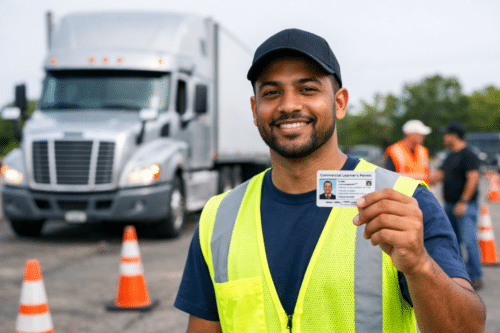 How To Avoid Getting The Wrong CDL Restriction?The best way to avoid the wrong restriction is to train and test in the same kind of vehicle you actually want to drive for work. If you want to drive a manual truck, do not test in an automatic. If you want full air brake privileges, make sure your testing setup covers that. If you want full Class A capability, do not test in a setup that triggers an O restriction. This is one reason a good CDL school matters. The right school helps you understand not just how to pass the test, but how to avoid walking away with a license that limits your career. That is why we highly recommend you talk to our free CDL advisor before you start your CDL training! FAQ About CDL Restrictions Can CDL restrictions be removed? Learn More About CDL Restriction | 2026-07-07 | |||||||||||||||||||||||||||||||||||||||||||||||||||||||||||||||||||||||||||||||||||||||||
| 46779 |  | Z Restriction on a CDL | If you’ve just received your CDL and noticed a “Z” printed in the restrictions column, you’re probably wondering what it means and whether it’s going to affect your career. The short answer is yes, it does limit you, but it’s one of the more straightforward restrictions to remove, and you’re not starting from scratch to do it. This guide covers exactly what the Z restriction is, how it differs from the similar L restriction, how it affects your job options, and the precise steps to get it cleared from your license. Not Sure Where To Start? Driving Academy Can Help! What Is The Z Restriction On A CDL?A Z restriction on a Commercial Driver’s License indicates that the driver is not authorized to operate a commercial motor vehicle with a full air brake system. The key distinction from the L restriction is that the Z restriction is applied when a driver completes the CDL skills test in a vehicle with partial air brakes or a hydraulic braking system, rather than failing the air brakes portion of the test. In plain terms: you didn’t necessarily do anything wrong on your test, you just took it in the wrong vehicle. The state is saying, “We haven’t seen you operate a full air brake system yet, so we can’t authorize you to drive one.” The Z restriction specifically bars you from operating vehicles equipped with a full, dedicated air brake system. That distinction matters, and we’ll break down exactly what it means for what you can and can’t drive. Z Restriction vs. L Restriction: What’s The Actual Difference?These two restrictions are closely related and frequently confused. Both prevent you from driving vehicles with full air brakes, but they come from different causes and carry slightly different implications. Understanding which one you have matters because the removal process is the same, but your current driving situation may be different.
The Z restriction is sometimes considered slightly less severe than the L restriction because it typically doesn’t require retaking the air brakes knowledge test, just the skills test in the right vehicle. However, the practical impact on your job options is nearly identical since most Class A and Class B commercial vehicles run on full air brake systems. One thing worth noting: taking the skills test using a vehicle that has only a partial air brake system will result in the Z restriction being placed on your license rather than clearing the air brake restriction entirely. This is how some drivers end up with a Z instead of a clean license even when they thought they were doing the right thing by testing in a vehicle with some air brake components. What Causes The Z Restriction?The Z restriction is applied when a driver completes the CDL skills test in a vehicle with partial air brakes or a hydraulic braking system. This ensures the driver has not yet demonstrated proficiency in operating a vehicle with a full air brake system. Here are some common scenarios:
How The Z Restriction Affects Your Job OptionsThe practical career impact of a Z restriction is significant, and it’s worth being honest about that so you can make an informed decision about how urgently to address it. What you CAN drive with a Z restriction:
That last point is worth clarifying. The Z restriction specifically bars full, dedicated air brake systems. A vehicle that uses a hydraulic primary brake system with air-assist components is not the same as a full air brake vehicle so you can still legally operate those with a Z restriction. Additionally, the air brake restriction applies only to the principal braking system used to stop the vehicle. It is not applicable to an air-assisted mechanism to release the parking brake. So if you’re operating a hydraulic-braked truck that uses a small air mechanism just to release the parking brake, that vehicle is still legal for you to drive. That said, if your goal is to work in mainstream commercial trucking, the Z restriction needs to come off. The good news is that the removal process is targeted and doesn’t require starting over. Does Removing The Z Restriction Require ELDT?This is one of the most commonly misunderstood aspects of restriction removal, and it’s important to get right. Drivers applying for removal of a restriction from their CDL in accordance with 49 CFR 383.135(b)(7), which includes the no air brake (L), no full air brake (Z), and no manual transmission (E) restriction, are not subject to the Entry-Level Driver Training regulations. That means you do not need to enroll in a federally registered ELDT program or complete a full CDL training course through a Training Provider Registry school just to remove your Z restriction. The federal ELDT requirement doesn’t apply to restriction removal.
Driving Academy Can Provide You With The Training Needed To Pass! How To Remove The Z Restriction?Here’s the exact process to clear the Z restriction from your CDL. Step 1: Check Whether You Need to Retake the Air Brakes Knowledge TestThe first thing to confirm is whether you already passed the air brakes written knowledge test when you got your CLP. Check your original permit documentation or contact your state DMV. If you already passed the air brakes knowledge test: You may be able to proceed directly to the skills test without retaking the written exam. Check with your specific state DMV requirements which vary slightly by state. Step 2: Update Your CDL Permit (If Required)Some states require you to obtain an updated CLP that reflects air brake authorization before they’ll allow you to schedule the skills test. This typically involves visiting your state DMV, showing that you’ve passed the air brakes knowledge test, and paying a standard permit reissuance fee. Check your state’s specific requirements before scheduling a skills test to avoid showing up and being turned away. Step 3: Get Practice Time in a Full Air Brake VehicleThis step is critical and shouldn’t be rushed. There’s a meaningful difference between driving a hydraulic-braked truck and a full air brake system, and you need enough seat time to be comfortable before the examiner gets in the cab. Key things to practice:
Step 4: Pass the CDL Skills Test in a Full Air Brake VehicleSchedule your CDL skills test at your state DMV or through an approved third-party tester like Driving Academy. The test itself has the same three components regardless of which restriction you’re removing:
Bring to the test:
Step 5: Get Your New CDL IssuedOnce you pass the skills test, go to your state DMV and submit your passing results along with the standard CDL reissuance application and fee. Your updated CDL will be issued without the Z restriction.
If You Need Assistance With This Process, Driving Academy Can Help! Frequently Asked QuestionsIs the Z restriction the same as the L restriction? No, though they’re closely related. Both prevent you from driving full air brake vehicles. The difference is in the cause: the L restriction typically results from failing the air brakes knowledge test or testing in a non-air brake vehicle, while the Z restriction results specifically from testing in a partial air or hydraulic brake vehicle, not from failing a test. The removal process is similar for both, but the Z may not require retaking the knowledge test if you already passed it. Do I have to retake the full CDL skills test to remove the Z restriction? Yes. According to the FMCSA, the air brake restriction applies only to the vehicle’s principal braking system. A vehicle that stops using hydraulic brakes but uses a small air-assisted mechanism to release the parking brake is still legal to drive with a Z restriction. | 2026-07-09 | |||||||||||||||||||||||||||||||||||||||||||||||||||||||||||||||||||||||||||||||||||||||||
| 46721 |  | L Restriction on a CDL | Hey future trucker, if you’re looking at your CDL and you see the letter “L” printed under the Restrictions column, I want you to know two things right away.
In this guide we are going to break down exactly what the L restriction means, why you got it, how badly it limits your job options. Most importantly, we’re gonna talk about the exact step-by-step process to get it removed so nothing is standing between you and the career you want. Not sure where to start? Talk to a CDL Advisor What Is the L Restriction on a CDL?An L restriction on a Commercial Driver’s License indicates that the driver is not authorized to operate a commercial motor vehicle equipped with air brakes. In plain terms: If your CDL has an L restriction, you cannot legally get behind the wheel of any truck, bus, or commercial vehicle that uses an air brake system as its primary means of stopping. Since most CMVs over 26,000 pounds rely on air brakes, an L restriction can significantly limit employment opportunities for those pursuing a Class A or Class B CDL. Think about that for a second. If you want to drive a standard tractor-trailer, a large dump truck, a transit bus, or most Class A and Class B commercial vehicles, those all run on air brakes. The L restriction essentially closes the door on the majority of high-paying commercial driving jobs until you get it removed. What Causes the L Restriction?The L restriction is applied when a driver does not pass the air brakes knowledge test, or takes the CDL skills test in a vehicle that does not use air brakes. More specifically, here are all the ways you can end up with an L on your license:
Also there are technically two different air brake restriction codes which are the L restriction and the Z restriction, and they are slightly different. Let’s make sure you know which one you actually have. L Restriction vs. Z RestrictionThese two get confused constantly, and it matters because the removal process is slightly different.
If you have the L restriction, you will not be able to drive a vehicle with any type of air brake system. Taking the skills test using a vehicle that has only a partial air brake system will result in the Z restriction being placed on your license instead. How Does the L Restriction Affect Your Job Options?Let’s be completely straight with you here, because this is important if you’re job hunting right now with an L restriction on your license.
What you CAN drive with an L restriction:
The reality is that almost all vehicles over 26,000 pounds use air brakes, making the L restriction very limiting for those looking for Class A or B CDL jobs. There is one specific scenario worth knowing about that no other article covers: a driver with an air brake restriction may operate a CMV equipped with a hydraulic braking system that has an air-assisted parking brake release. The air brake restriction applies only to the principal braking system used to stop the vehicle, it is not applicable to an air-assisted mechanism to release the parking brake. So if you encounter a hydraulic-braked truck that uses a small air assist just for the parking brake release, that vehicle is still legal for you to drive. But bottom line is that if you want a real career in trucking, the L restriction needs to come off. The good news is it’s one of the most straightforward restrictions to remove. If you need help lifting the L restriction and make more money, Driving Academy can help! Does Removing the L Restriction Require ELDT?This is a question we get a lot, and the answer is worth knowing clearly before you start the process. Drivers applying for removal of a restriction from their CDL which includes the no air brake (L), no full air brake (Z), and no manual transmission (E) restriction are not subject to the Entry-Level Driver Training (ELDT) regulations. That means you do not need to enroll in a federally registered ELDT program or complete a full course with a Training Provider Registry school just to remove your L restriction. That said, practically speaking, you still need to actually know how to operate air brakes and pass both the written and skills tests. Getting professional training before you attempt the tests is absolutely worth it. Showing up to a skills test in an air brake truck without proper practice is how people fail and waste time. That’s where Driving Academy can help as we have half course that provides the equipment and training you need without forcing you through an unnecessary full-length CDL program. How to Remove the L RestrictionHere is the exact process. Follow these steps in order and nothing will slow you down. Step 1: Pass the Air Brakes Knowledge TestYour first stop is the DMV. You need to take and pass the Air Brakes written knowledge test. This is the written exam module that covers how air brake systems work, their components, inspection procedures, and safe operation. What the test covers:
Study the Air Brakes section of your state’s CDL Manual thoroughly. This is not a long section but it is specific. You need to know the inspection procedures and the federal limits (for example, air pressure loss rates, minimum pressure before driving) cold. The good news is that the air brakes test can be retaken as many times as necessary until the restriction is lifted. So if you don’t pass the first time, you can come back and try again. Step 2: Get Your Updated CLP/PermitIn most states, once you pass the air brakes written test, your CLP needs to be updated to reflect that you now have air brake testing authorization. The driver must purchase a CDL permit with the restriction removed before proceeding to the skills test. Step 3: Train in a Full Air Brake VehicleThis is where you prepare for the skills test. You need practice time behind the wheel of a commercial vehicle equipped with a full air brake system and not hydraulic, not air-over-hydraulic, but full air brakes. During your training, focus specifically on:
Step 4: Pass the CDL Skills Test in an Air Brake VehicleSchedule your CDL skills test at your state DMV or through an approved third-party tester. Complete the skills test in a vehicle equipped with air brakes, including both the vehicle inspection and on-road driving portions. The three parts of the skills test remain the same:
Make sure the vehicle you use for the test is properly documented — you’ll need the registration and insurance for the vehicle. If you are using a Driving Academy vehicle, we handle all of that for you. Step 5: Get Your New CDL IssuedOnce you complete the skills test successfully, obtain a new CDL with the L restriction removed. Standard licensing fees apply. Go to your state DMV, submit your passing test results, pay the standard CDL issuance fee, and your new license will be issued without the L restriction on it. Frequently Asked QuestionsWhat does L restriction mean on a CDL? It means you are not authorized to operate any commercial motor vehicle that uses air brakes as its primary braking system. It was either triggered by failing the air brakes knowledge test or by completing your CDL skills test in a vehicle without air brakes. Can I still drive with an L restriction on my CDL? Yes, you can still drive commercial vehicles that use hydraulic brakes. However, since the vast majority of Class A and Class B commercial vehicles use air brakes, the L restriction severely limits your job options in most segments of the industry. Do I have to retake the full CDL road test to remove the L restriction? You need to retake the skills test, but only in a vehicle with air brakes. You do not need to retake the general knowledge test or start the CDL process from scratch. The removal process is specifically targeted at the air brake components. Is ELDT required to remove an L restriction? No. Federal FMCSA rules specifically exempt L, Z, and E restriction removals from the ELDT requirement. You need to pass the air brakes knowledge test and the skills test in an air brake vehicle, but you do not need to complete a full ELDT program. What’s the difference between an L restriction and a Z restriction? The L restriction means no air brake vehicles at all, you tested in a hydraulic brake vehicle or failed the air brake test. The Z restriction means no full air brake vehicles, you tested in a vehicle with a partial or air-over-hydraulic system. The Z is slightly less restrictive than the L, but both need to be removed for full Class A and B driving privileges. Can a driver with an L restriction drive a truck with an air-assisted parking brake? Yes. According to the FMCSA, the air brake restriction applies only to the vehicle’s principal braking system. A truck that uses hydraulic brakes to stop but has an air-assisted mechanism to release the parking brake is still legal to drive with an L restriction. | 2026-07-08 | |||||||||||||||||||||||||||||||||||||||||||||||||||||||||||||||||||||||||||||||||||||||||
| 46545 | 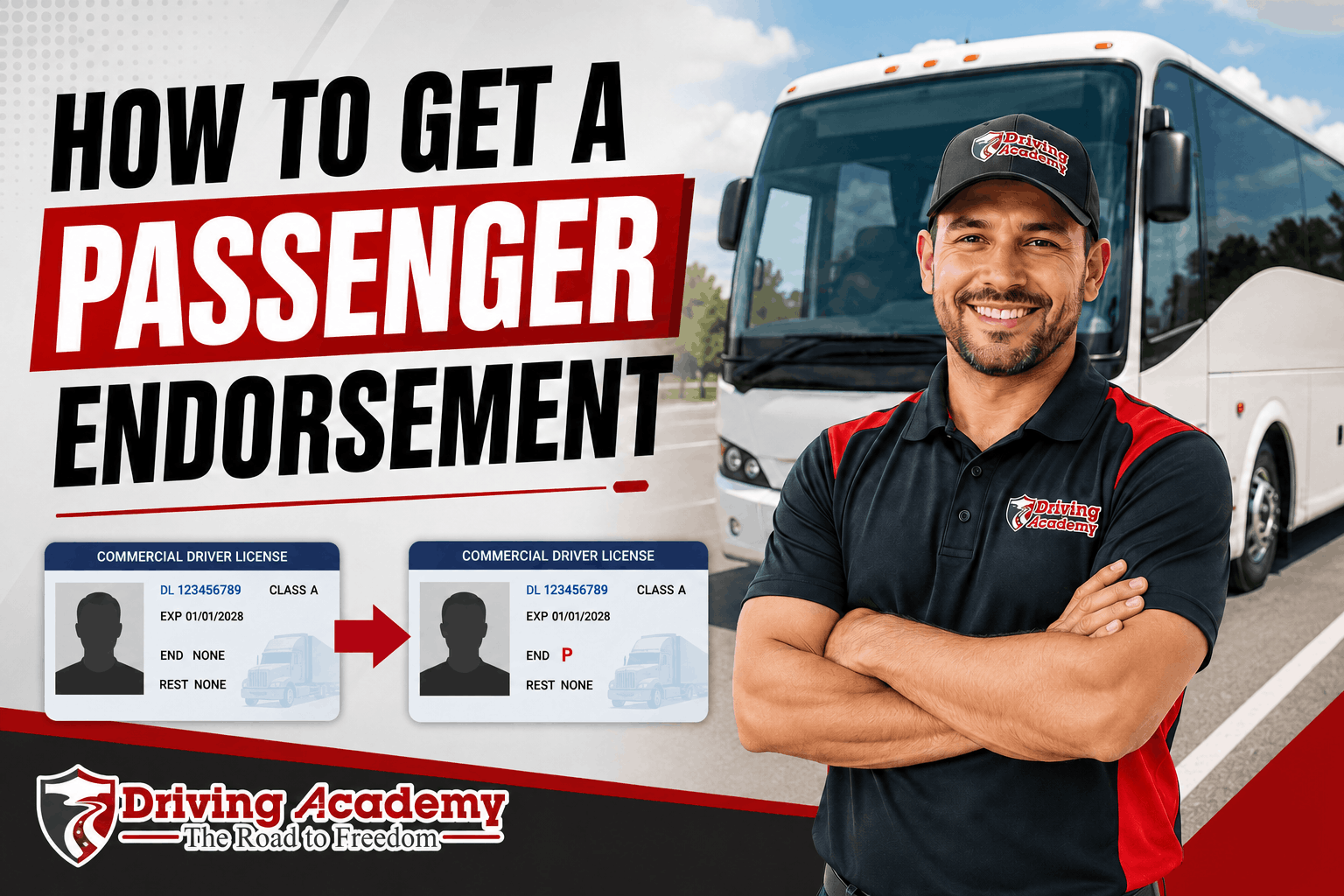 | How to Get a Passenger Endorsement | Hey future trucker, if you want to drive cargo that talks back to you, you’re going to need a Passenger endorsement (P endorsement). A lot of drivers get confused here because they already have a CDL and assume they can just take one test and call it a day. That is not how it works. In most first-time P endorsement cases, you need the right permit/testing setup, the right training, and a full road test in the right kind of passenger vehicle. The good news is that the process is not hard once you know the order. The bad news is that if you do the steps in the wrong order, you can waste time, money, and a whole lot of patience. So let’s break it down the simple way. Need help figuring out the right next step? Let us help you build the right plan for your Passenger endorsement. What Is a Passenger Endorsement?A Passenger endorsement is what lets a CDL driver operate certain passenger-carrying commercial vehicles. It is usually required for commercial vehicles designed to carry 16 or more people, including the driver. What Vehicles Usually Require a Passenger Endorsement?Usually, if the vehicle is built to carry a large group of passengers, there is a good chance a Passenger endorsement is part of the legal requirement. Common examples include:
So if your goal is to drive one of these, your regular CDL may not be enough. The P endorsement is the part that tells the state you passed the extra testing for passenger vehicles. Passenger (P) vs. School Bus (S) EndorsementsA frequent point of confusion for new drivers is the difference between the “P” and the “S” endorsements.
Important Regulatory Rule: You cannot obtain a School Bus endorsement without first passing the prerequisites for the standard Passenger endorsement. Think of the Passenger endorsement as the baseline foundation, while the School Bus qualification is a separate safety layer. Steps To Get A Passenger EndorsementStep 1: Get Your Permit Situation StraightThis is where a lot of people get thrown off. If you‘re adding a Passenger endorsement for the first time, you usually need to go through the permit and testing process tied to that endorsement. FMCSA’s CDL rules say a CLP holder with a P endorsement must have taken and passed the P endorsement knowledge test. They also say that the P endorsement on a CLP is class specific. Step 2: Complete Passenger ELDTUnder federal law, any driver seeking to obtain a passenger endorsement for the first time must successfully complete a standardized training program. Unlike Hazmat, Passenger ELDT includes both theory and behind-the-wheel training. In simple terms, that means you can’t just take the written test and expect to be done. You need training from a provider listed in the Training Provider Registry such as Driving Academy, and the state has to be able to verify that you completed it before certain endorsement testing can move forward. FMCSA also says theory and behind-the-wheel training can come from different listed providers, as long as both providers are in the registry and both submit the training records. If you want help getting your Passenger ELDT done the right way, contact Driving Academy and let us help you avoid the usual mistakes. Step 3: Pass the Passenger Written TestOnce your permit setup is right, the next step is the written test. The Passenger knowledge test covers topics such as loading and unloading passengers, emergency exits, emergency situations, and other passenger-safety issues. A lot of drivers think this is just “normal CDL stuff with a few extra questions.” It is not. Passenger vehicles come with different safety issues, and the state expects you to know them before you move on to the road test. Step 4: Pass the Passenger Road Test in a Bus or Other Passenger VehicleThis is the part many drivers underestimate. To get a Passenger endorsement, you have to pass the skills test in the right kind of passenger vehicle. Since Passenger endorsement is class specific, the vehicle you test in would matters. That means the road test is not just “do the same thing you did in a tractor-trailer, but on a bus.” Some parts are similar, but some parts are different. You still have:
Step 5: Get the Endorsement AddedOnce you complete the training, pass both the written and road tests. The final step would be going back to the DMV/MVC so the Passenger endorsement can be added to your CDL. That part doesn’t happen automatically. You still need to finish the state process and make sure the endorsement is actually added to your license record. We want to make sure you get your P endorsement, contact Driving Academy and we can help. Costs, Processing Timelines, and Endorsement MaintenanceEarning your professional credential requires an investment of both time and money. Mapping out a budget keeps your career transition moving smoothly without surprise financial roadblocks. Estimated Cost BreakdownWhile state DMV application fees are generally inexpensive, the mandated ELDT certification courses make up the largest share of your total investment.
Processing TimelinesIf you already possess a baseline CDL and simply need to add the passenger qualification, the process can often be completed in 2 to 3 weeks, provided you line up open slots for your ELDT training and DMV testing. If you are starting completely from scratch without a base commercial license, expect the comprehensive journey to span 6 to 8 weeks.
Keeping Your Endorsement ActiveA passenger endorsement remains active as long as your baseline license remains valid. However, you must continuously protect your status by maintaining an active medical certification. If you let your DOT medical card expire, your state DMV will systematically downgrade your commercial status to a standard passenger car license, automatically invalidating your passenger transport privileges until you re-comply. Frequently Asked Questions Can I get a passenger endorsement without a CDL? Yes. The FMCSA explicitly allows the classroom theory portion of your Entry-Level Driver Training to be fulfilled via an accredited online course provider, as long as they are officially listed on the Training Provider Registry. The practical behind-the-wheel training component, however, must be completed in-person with a certified instructor. Do I have to take a road test to add a passenger endorsement? Yes. If you do not currently hold a passenger endorsement, you must complete a practical skills road test at the DMV using a representative passenger vehicle. This ensures you can safely operate a vehicle carrying a large number of occupants. What happens if the vehicle I test in has air brakes? If the passenger vehicle you use for your practical road test does not have an air brake system, the DMV will place an air brake restriction on your commercial license. This restriction legally bars you from driving large commercial buses equipped with air brakes. To avoid this limitation, ensure you take your written air brake exam and use an air-brake-equipped vehicle for your final skills test. How many passengers can I drive with a standard license? Under federal guidelines, you can drive a vehicle designed to carry up to 15 passengers (including the driver) using a standard, non-commercial driver’s license. The moment a vehicle’s design configuration is rated to hold 16 or more occupants, it triggers commercial classification, requiring a CDL and a passenger endorsement. Learn More About Getting A Passenger Endorsement | 2026-06-01 | |||||||||||||||||||||||||||||||||||||||||||||||||||||||||||||||||||||||||||||||||||||||||
| 46426 |  | How to Change a CDL from Intrastate to Interstate (Removing the K Restriction) | If you look closely at your commercial driver’s license, you might see a small letter “K” printed under the restrictions section. For many truck drivers, that single letter is a major roadblock to their career. A “K” restriction locks you into driving within the borders of a single state, completely cutting you off from high-paying over-the-road (OTR) routes, regional freight lines, and interstate commerce. The good news? Removing a K restriction and upgrading your CDL from intrastate to interstate is surprisingly simple. It does not require going back to truck driving school or retaking your DMV road test. It is entirely a matter of updating your medical paperwork. Below is the complete, step-by-step guide on what a K restriction means and exactly how to remove it from your license. What is a K Restriction on a CDL?A K restriction is a legal limitation placed on a Commercial Driver’s License indicating that the driver is restricted to intrastate operation only.
Why do drivers get a K restriction in the first place?There are three common reasons the DMV or MVC applies a K restriction to a CDL:
Why You Should Change Your CDL to InterstateIf you are eligible to drive interstate, removing your K restriction should be a top priority. Limiting yourself to intrastate driving severely reduces your job options and earning potential. Most major logistics companies, freight lines, and high-paying private fleets operate across state lines. Furthermore, even local driving jobs often require hauling cargo that originated out-of-state or out-of-country. If your license has a K restriction, you are legally disqualified from taking those local routes, even if you never physically cross a state border. Removing a K restriction opens up state lines, but if you are still driving a Class B vehicle or lacking premium endorsements, you are still missing out on the biggest paychecks in the industry. At Driving Academy, we offer fast-track, FMCSA-approved courses designed specifically for existing drivers who want to maximize their license. How to Change Your CDL from Intrastate to Interstate?To transition your CDL from intrastate to interstate and remove the K restriction, you must update your status with your state’s DMV or MVC. Follow this exact checklist: Step 1: Secure a Valid DOT Medical CardInterstate commercial driving requires strict medical compliance under the Federal Motor Carrier Safety Administration (FMCSA). If you do not have a current DOT physical, or if your physical was only valid for intrastate driving, you must schedule an appointment with a certified medical examiner on the National Registry. Once you pass the physical, the doctor will hand you your Form MCSA-5876 (Medical Examiner’s Certificate). Step 2: Fill Out a New Medical Self-Certification FormThis is the paperwork where most drivers make mistakes. You must fill out your state’s official CDL Self-Certification form. To legally clear yourself for interstate driving, you must check the box for Category 1: Non-Excepted Interstate (NEI). * Tip: Checking this box explicitly tells the state that you operate across state lines and that you are subject to federal medical standards. Step 3: Submit Your Paperwork to the DMV/MVCTake your new DOT Medical Card and your completed Self-Certification form and submit them to your state licensing agency. Depending on your state, this can often be done online through their commercial driver portal, via email, or by visiting a local CDL licensing center in person. Step 4: Pay the Duplicate License FeeBecause a K restriction is physically printed on the face of your hard-plastic license, the DMV cannot simply update their computer system, they must issue you a new physical card. You will need to pay your state’s standard duplicate or corrected license fee to have a clean CDL printed without the “K” restriction code. Understanding the Four Self-Certification CategoriesThis is where most drivers make mistakes — and it’s the single most important thing to get right when removing a K restriction. When you fill out your state’s CDL Self-Certification form, you must declare which of the four federal operating categories applies to you. Picking the wrong one is exactly how drivers end up with a K restriction they didn’t intend to have. Here’s what each category actually means:
To remove your K restriction, you must select Category 1: Non-Excepted Interstate. Frequently Asked Questions (FAQs)Do I have to retake the CDL road test to remove a K restriction? No. As long as your CDL is currently active and in good standing, removing a K restriction is purely an administrative and medical paperwork update. You do not need to take any written or skills tests. Can I remove a K restriction if I am under 21? No. Federal safety regulations strictly prohibit drivers under the age of 21 from operating commercial motor vehicles in interstate commerce. If you are under 21, you must wait until your 21st birthday to submit your updated paperwork and remove the restriction. How much does it cost to change from intrastate to interstate? The medical exam itself usually costs between $75 and $120 depending on the clinic. Beyond the physical, the only DMV cost is your state’s local corrected/duplicate license fee, which typically ranges from $10 to $30. What happens if I drive across state lines with a K restriction? Driving outside your restricted territory is a serious federal and state violation. If you are caught by DOT enforcement crossing state lines with a K restriction, you can face hefty personal fines, your vehicle can be placed out of service immediately, and your CDL could face suspension. Unlock the Highest-Paying Jobs in TruckingRemoving a K restriction opens the door to regional and OTR routes, but do you have the right license class to back it up? Upgrading from a Class B to a Class A CDL is the fastest way to double your job opportunities. Feel free to talk to Driving Academy about options to unlock higher earning potential! | 2026-06-26 | |||||||||||||||||||||||||||||||||||||||||||||||||||||||||||||||||||||||||||||||||||||||||
| 44899 | 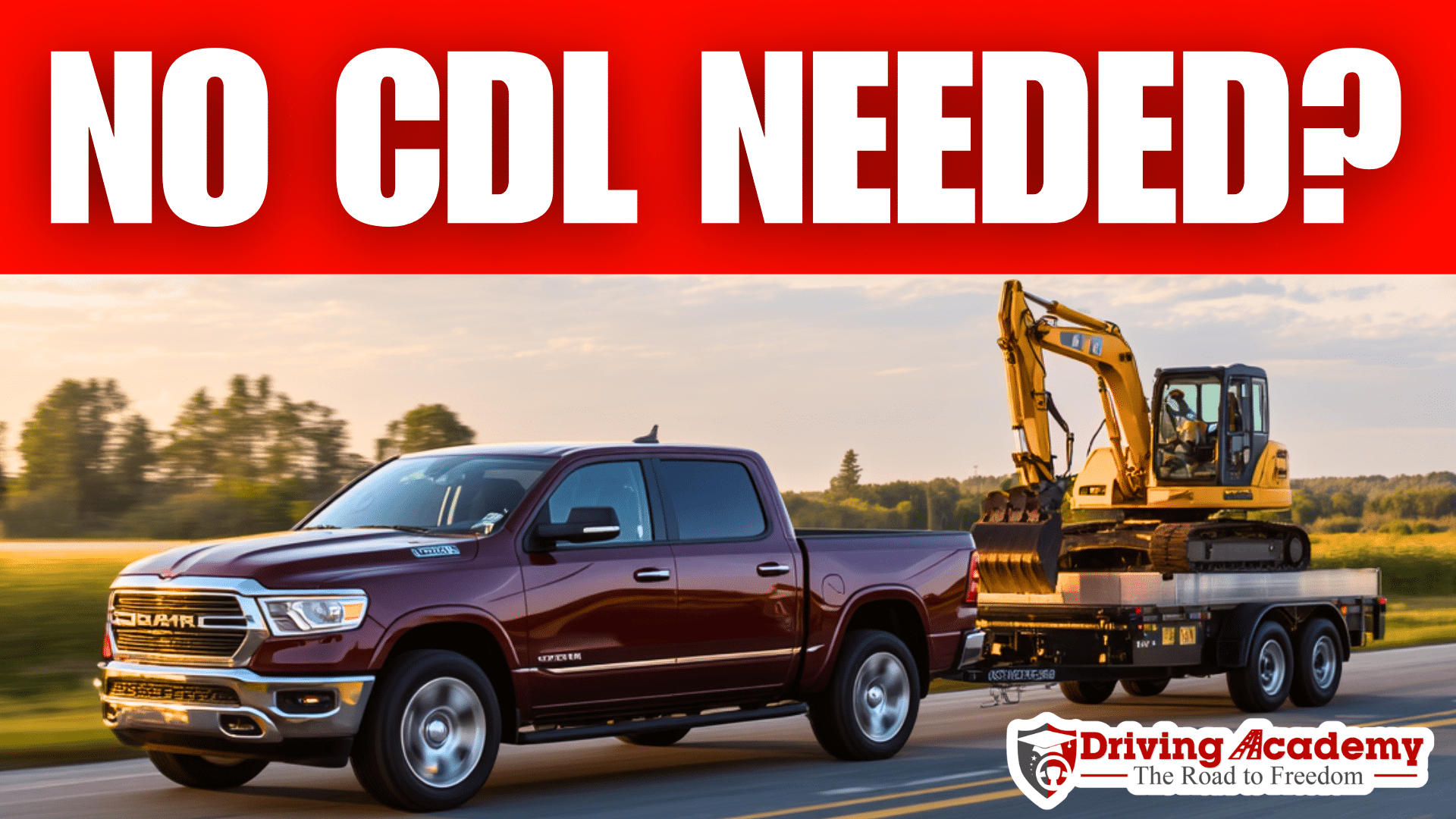 | What Is Hotshot Trucking? | Hey future trucker! Today, we’re gonna dive deep into a topic that has the whole industry talking: hot shot trucking. This is a “hot” topic for a lot of people (pun intended!), but there’s also a lot of mystery surrounding it. Most people don’t fully know what they’re getting themselves into before they actually get started. So, in this guide, we are going to talk about exactly what hot shot trucking is, what the rules are, what kind of freight you can haul, and answer the ultimate question: Do you need a CDL license for one? Let’s get rolling! What is Hot Shot Trucking?At its core, hot shot trucking is just the ability to transport things using a pickup truck. Now, you might be thinking, “Well, a pickup truck can’t really be transporting that many things, right?”
Correct! That’s where you attach a trailer to the back of a pickup truck, and you use that to transport things from Point A to Point B.
That is all hot shot trucking is. You aren’t driving a massive 18-wheeler, but you are still moving important freight! What Kind of Freight Do Hot Shot Truckers Haul?Because hot shot truckers don’t use massive 53-foot semi-trailers, they specialize in moving smaller, highly time-sensitive loads. Companies use hot shots when they need freight moved fast and can’t wait for a traditional freight hauler to fill up an entire semi-truck. If you become a hot shot driver, you will typically haul things like:
Types of Hot Shot TrailersThe type of freight you can carry depends heavily on the trailer you attach to your truck. The most common trailers used in the hot shot industry include:
Hot Shot Rules: Interstate vs. IntrastateThere are different rules when it comes to hot shot trucking depending on where you are driving. When you’re actually traveling across state lines, you’re going to be dealing with interstate commerce. This means there are going to be certain federal rules that you’re going to have to be aware of such as maintaining your time logs, especially if you are traveling more than a 150-mile radius around your starting destination. If you’re staying within your own state (intrastate commerce), there are generally fewer rules. You can see how complicated this can actually be right out of the gate! Do You Need a CDL for Hot Shot Trucking?One of the biggest things that people don’t understand is how much weight you can carry. When it comes to the weight, the rules are simple but strict. It all comes down to the Gross Combined Weight Rating (GCWR) of your truck and trailer:
The Heavy Trailer Trap ( $5,000 Fine)This is one of the biggest misunderstandings when it comes to hot shot truck drivers. In many cases, when you add the heavy trailer to the big pickup truck and you put the freight weight on top of it, you’re going to be over 26,000 lbs. This means you are legally required to get a CDL. Most people get into this field because they don’t want to get a CDL, but they can get in trouble down the road. If you’re caught operating a vehicle that’s over 26,000 lbs without a CDL license, the fine can be $5,000 or higher depending on the state that you’re in. It is super, super important that you don’t get yourself caught up in a situation that’s going to cost you thousands of dollars in the future. Pros and Cons of Hot Shot TruckingSo now you might be thinking: If I’m going to need a CDL license in most cases anyway, why would I go for a hot shot versus a tractor-trailer? The Pros
The Cons
Hot Shot vs. Tractor-Trailer: Which is the Better Investment?If you want to make more money because you want to transport a higher quantity of things, getting a CDL and driving a tractor-trailer is probably going to be the best option for you. While the startup costs for a tractor-trailer are going to be a little bit higher, think about it this way: if you take a used tractor-trailer compared to a brand new pickup truck with all the bells and whistles, the prices might be very similar. Furthermore, the used tractor-trailer is built to transport heavy things all day long! The maintenance costs will often be a lot lower than constantly fixing a brand new pickup truck. FAQs About Hotshot TruckingWhy is it called hotshot trucking? It is called hotshot trucking because the loads are usually urgent or important enough to need faster delivery. In many cases, hotshot drivers are hired to move freight that cannot wait for a standard shipping schedule. What kind of truck is used for hotshot trucking? Hotshot trucking is usually done with a heavy-duty pickup truck, such as a one-ton truck, paired with the right type of trailer. The exact setup depends on the weight and type of freight being hauled. What kind of trailer is used for hotshot trucking? The most common trailers used in hotshot trucking are gooseneck trailers, bumper pull trailers, and dovetail trailers. The right trailer depends on the type of cargo, how much weight needs to be carried, and how the freight needs to be loaded. What is the difference between hotshot trucking and regular trucking? The biggest difference is the size of the load and the vehicle being used. Hotshot trucking usually handles smaller loads with a pickup and trailer, while regular trucking often uses a semi-truck and full-size trailer for larger freight. Do you need a CDL for hotshot trucking? Not always. Whether you need a CDL for hotshot trucking depends on the combined weight rating of the truck and trailer, along with how the equipment is being used. Some hotshot setups are non-CDL, while heavier ones may require a CDL. Is hotshot trucking good for beginners? Hotshot trucking can be a good option for some beginners, but it still requires planning, safe driving, and a good understanding of equipment and freight. It may look simpler than big-rig trucking, but it still comes with real responsibility. Learn More About Hotshot Trucking | 2026-05-26 | |||||||||||||||||||||||||||||||||||||||||||||||||||||||||||||||||||||||||||||||||||||||||
| 43370 |  | How Much Does A Truck Driver Make In New Jersey? | If you’re thinking about becoming a truck driver, in the Garden State, one of the first questions you’ll almost certainly ask is: how much do CDL drivers make in New Jersey? It can be confusing because different sources give you very different numbers. That’s why we put together this article to clear up the confusion, and explain how much CDL drivers ACTUALLY make in New Jersey. Average New Jersey Truck Driver SalaryAverage Salary in US $ As a CDL Truck Driver, you will have job opportunities to earn an average of $70K per year or more, across the United States. *Indeed Average Salary in NJ $ Truck driver in New Jersey have access to jobs with annual earning averaged over $95,000 with top earners getting well over $150,000/year. Truckers in NJ 20 There’s a shortage of qualified drivers in the Garden State! CDL training can open the door to 3,800 to 5,300+ active CDL driver job openings in NJ and 1000’s more in NY, PA and DE. Truck Driver Salary In NJTruck driver salaries in New Jersey can range anywhere from $54,000 all the way up to $210,000 according to job listings on Indeed. In the great state of New Jersey the average trucker driver makes over $95,000 per year. That’s almost $20,000 more per year than the overall average salary is $76,320 in Jersey. And for those without college degrees that average drops down to just $35,468 in NJ.
With just a CDL license (which can often be earned in a matter of weeks) drivers can step into jobs that offer solid starting pay, consistent demand and clear paths to even higher earnings. Regardless of where you live, truck driving is one of the most lucrative careers you can pursue without a college degree. A High-Paying Career In Trucking Is Waiting For YouDon’t Miss Out! Save $200 Off Your Tuition Today! Learn More What Changes Truck Driver Pay in New Jersey?Truck driver pay in New Jersey can vary a lot from one job to another. Two drivers may have a very different paycheck based on the type of license they hold, the kind of freight they haul, the routes they run, or the company they work for. That is why there is no one-size-fits-all answer when people ask how much truck drivers make in New Jersey. Your pay usually depends on a combination of experience, job type, and the value you bring to an employer. The biggest things that can change your pay include:1. Your experience levelNew drivers usually start at the lower end of the pay range because they are still building time on the road and proving they can drive safely and consistently. As drivers gain experience, avoid accidents, and show they can handle different routes and equipment, they often qualify for better-paying jobs and stronger offers from employers. 2. Class A vs. Class B CDLOne of the biggest difference between Class A and Class B CDL is that a Class A CDL have access to more job opportunities and higher-paying routes than drivers with a Class B CDL. That is because Class A drivers can operate combination vehicles like tractor-trailers, which are often tied to long-haul, regional, and specialized freight jobs. 3. Local, regional, or over-the-road routesThe type of route you run can make a big difference in what you earn.
4. The type of freight you haulNot all freight pays the same. Jobs involving more difficult, time-sensitive, or specialized freight may pay more than standard dry van loads. Drivers who haul tanker loads, hazmat freight, oversized loads, or other specialized cargo may have access to higher-paying opportunities because the work requires more responsibility and, in some cases, extra endorsements. 5. Endorsements and extra qualificationsAdding endorsements to your CDL can open the door to better-paying jobs. For example, endorsements for hazmat, tanker, or passenger vehicles may qualify you for more specialized driving work. The more qualified you are, the more valuable you may become to employers looking for drivers with specific skills. 6. The company you work forPay can vary significantly from one trucking company to another. Some companies offer stronger starting pay, better bonuses, more consistent miles, or better-paying dedicated routes. Others may offer lower pay but more home time or a different work-life balance. That is why two drivers doing similar work may still earn different amounts depending on who employs them. Class A vs. Class B Truck Driver Salary in New JerseyA lot of our students here at Driving Academy ask about the difference in salary between Class A CDL and Class B CDL. The answer kind of depends on many factors, but in general Class A usually has the higher salary ceiling because it covers larger combination vehicles and more specialized freight.
Class B CDL drivers can still make very good money in New Jersey! However, the jobs are often tied to extra labor like for garbage and construction positions, or route-based work like deliveries and bus driving. These jobs are typically more than just driving from point a to point b. Below is some data on the average CDL salaries in NJ for different types of drivers. We’ve gather from various job posting sites around the web: Class A CDL
Class B CDL
The pattern is pretty clear, Class A CDL can get you into jobs that offer more upside, especially when you get into specialized freight like tanker, car hauling, or other combination-vehicle work. Class B jobs can still pay well and may offer more local schedules and home time, but they usually don’t have the same top-end earnings as many Class A roles. If you are not sure about which one to get, you can check out our article about Difference between Class A and Class B CDL, or just straight up give our CDL advisor a call! Job Outlook for Truck Drivers in New JerseyThe job outlook for truck drivers remains strong because trucking continues to be one of the largest transportation occupations in the country. The U.S. Bureau of Labor Statistics projects employment for heavy and tractor-trailer truck drivers to grow 4% from 2024 to 2034, which is significantly faster than other ocupations. BLS also projects about 237,600 openings per year nationally over that period, with many of those openings coming from retirements, career changes, and turnover. For New Jersey specifically, adding up active postings on job boards and company websites you get somewhere between 3,800 to 5,300+ active CDL driver job openings in New Jersey. That’s a lot of opportunities to make a lot of money in NJ! Truck Driver ShortageAccording to studies done by the American Trucking Association there is currently a 60,000 driver shortage! Many truck drivers are getting older and retiring, and not enough younger people are choosing this job. At the same time, more and more people are ordering things online, so we need more CDL drivers to deliver all those goods between warehouses and distribution centers. In New Jersey, this shortage is an extra big deal because a lot of goods come through the state’s roads and ports. When there are not enough drivers, deliveries can be late and stores might not get what they need on time. But it also means there are great job opportunities for people in New Jersey who want to become truck drivers. And when ever there is a shortage of CDL holders, that’s when the truck driver pay goes up a tremendous amount! Lifetime Job Placement AssistanceWhen You Train Here, We Help You Find Your Next CDL Job Until The Day You Die! Learn More | 2026-04-17 | |||||||||||||||||||||||||||||||||||||||||||||||||||||||||||||||||||||||||||||||||||||||||
| 45921 | 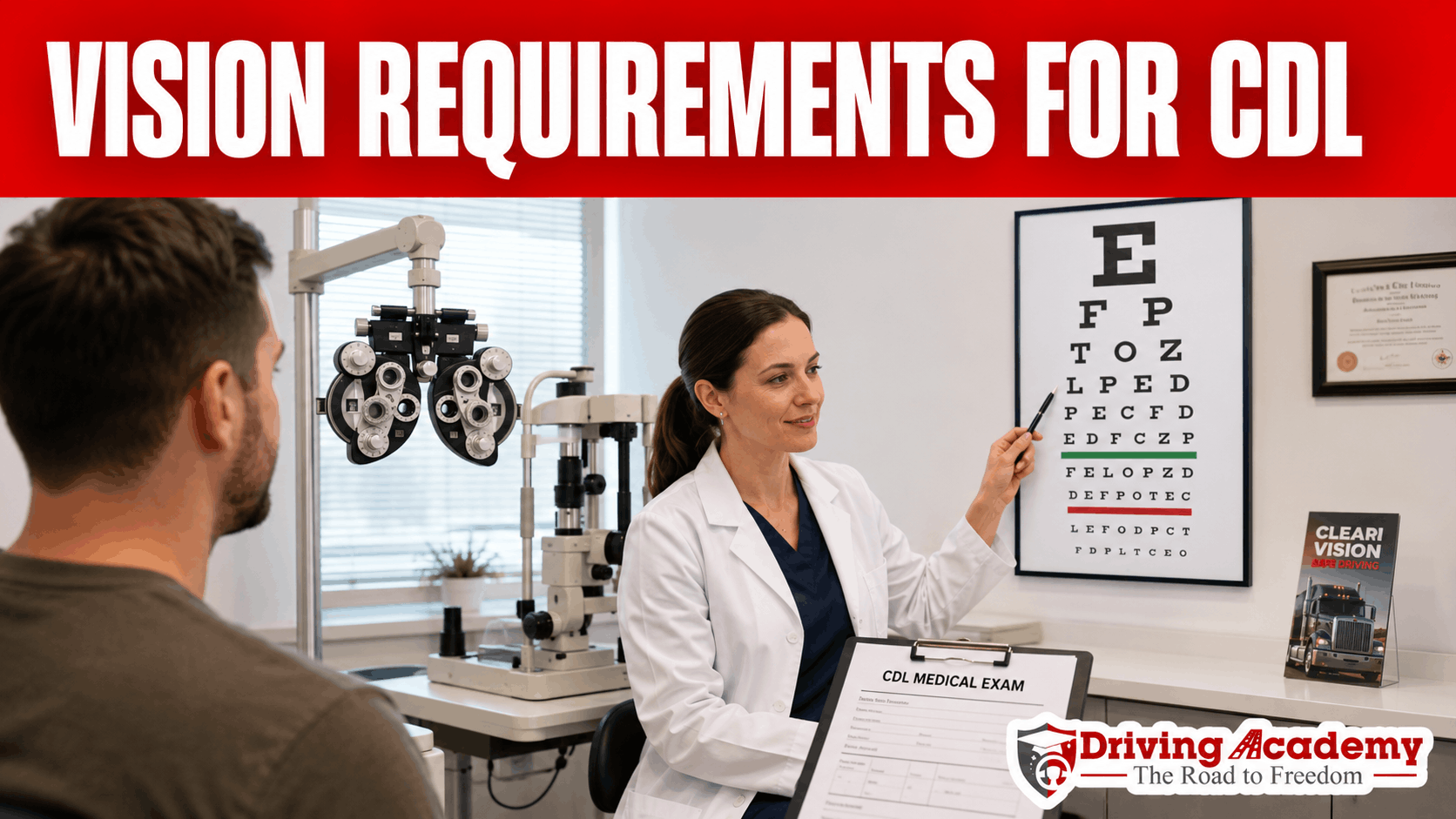 | Vision Requirements For CDL | Meeting the FMCSA vision requirements is a mandatory step in earning your CDL and obtaining your DOT medical card. Whether you have 20/20 vision or rely on prescription eyewear, you must demonstrate the ability to see clearly at distance. The good news? Most people pass without any issues at all. And even if your vision isn’t perfect, glasses and contacts are totally fine. Let me walk you through exactly what you need to know so there are zero surprises when you sit down for your DOT physical. Why Vision Requirements Matter for CDL DriversBefore we get into the numbers, let me give you some context on why this matters. When you’re behind the wheel of a tractor-trailer, you’re operating a vehicle that can weigh up to 80,000 pounds. You need to read road signs at highway speeds, spot hazards ahead of you, monitor your mirrors constantly, and react quickly to everything happening around you. Your eyesight is a fundamental part of doing this job safely. That’s why the Federal Motor Carrier Safety Administration (FMCSA) sets specific, mandatory vision standards that every commercial driver must meet before they can be certified to drive. These standards are evaluated during the DOT physical exam, which is the medical examination you’re required to pass in order to get your CDL.  What Is the DOT Physical?The DOT physical which stands for Department of Transportation physical is a medical exam conducted by a certified medical examiner who is registered with the FMCSA. The exam checks your overall health to make sure you’re physically qualified to operate a commercial motor vehicle (CMV). The vision test is one of the most important parts of this exam. It covers three specific areas:
Let’s break each one down. The Three CDL Vision Requirements1. Distance Visual AcuityRequirement: 20/40 in Each Eye This is the core vision requirement. You must have at least 20/40 vision in each eye individually, as well as with both eyes together. Glasses and contacts are completely fine as long as you are able to hit 20/40 with the correction you use. If you’re not familiar with the 20/40 scale: 20/20 is considered perfect vision. 20/40 means that what a person with normal vision can read from 40 feet away, you can read from 20 feet. It’s not perfect, but it’s more than enough to drive safely and it’s the federal minimum standard. During the exam, your doctor will use a Snellen eye chart (the classic chart with rows of letters that get progressively smaller) to test your acuity. The test is done on each eye separately, and then with both eyes open. What if you need glasses or contacts? No big deal at all. Millions of CDL holders drive every day with corrective lenses. If you need glasses or contacts to hit 20/40, the medical examiner will simply note it on your medical certificate, and your CDL will have what’s called a “B” restriction, meaning you’re required to wear corrective lenses whenever you’re operating a commercial vehicle. That’s it. It doesn’t limit where you can drive, what routes you can take, or how much you can earn. It just means wear your glasses. Common sense, right? What if you wear monovision contacts? This is worth knowing: monovision contact lenses where one lens is set for distance and the other for near vision aren’t permitted for CDL drivers during the DOT physical. If you wear monovision contacts, bring a standard pair of glasses or switch to regular contacts before your exam. 2. Peripheral VisionRequirement: At Least 70 Degrees in Each Eye Peripheral vision is your side vision, which what you can see out of the corner of your eye without moving your head. The federal requirement is a minimum 70-degree field of vision in the horizontal plane in each eye. Why does this matter so much for truck drivers specifically? Think about it. When you’re piloting a semi-truck down the highway, you’re constantly scanning your mirrors, watching for vehicles merging into your lane, spotting pedestrians at crossings, and monitoring what’s happening in your blind spots. That wide field of awareness is critical. The 70-degree minimum makes sure you have enough side vision to do that job safely. 3. Color RecognitionRequirement: Red, Green, and Amber You must be able to correctly distinguish between red, green, and amber which are the colors of standard traffic signals and road devices. This one is straightforward. There’s no formal color blindness test required and the examiner just needs to confirm that you can recognize and differentiate those three specific colors. Why those three? Because every traffic light in the country uses them. If you can’t tell a red light from a green light, you simply cannot safely operate a commercial vehicle. That’s a public safety issue, plain and simple. Most people with color vision deficiencies can still distinguish these colors in context, especially at traffic signals. But if you have any concerns about your color vision, it’s worth getting an eye exam before your DOT physical so you know where you stand. If you are not sure if you qualify, feel free to reach out to our CDL advisor What If You Only Have Vision in One Eye?This is a question a lot of people don’t think to ask but it’s important, and the rules changed significantly in 2022. Before March 22, 2022, drivers with monocular vision (meaning vision in only one eye) had to apply for a federal exemption from the FMCSA which is a lengthy, complicated process. That’s no longer the case. As of March 22, 2022, the FMCSA introduced an alternative vision standard that replaced the old exemption program. Under the new rules, drivers with monocular vision can be medically certified directly through a certified medical examiner, without going through the federal exemption process. Here’s how it works:
If you’ve been driving commercially with monocular vision for at least three years, or you held a federal vision exemption prior to the rule change, the road test requirement may be waived. The bottom line: having vision in only one eye no longer automatically disqualifies you from getting a CDL. The process is more involved than a standard physical, but it’s absolutely doable. What Happens If You Fail the Vision Test?Failing the DOT vision test doesn’t necessarily mean your CDL dreams are over. It depends entirely on why you failed.
The key takeaway is this if you don’t pass the first time, talk to your eye doctor before you assume the worst. Many vision issues are correctable. And if yours aren’t fully correctable, there may still be a pathway to certification depending on your specific situation. Tips to Prepare for the CDL Vision TestWant to walk into your DOT physical confident you’ll pass the vision portion? Here’s what I tell our students at Driving Academy:
Does Your Vision Have to Stay Perfect Forever?Your DOT medical certificate is typically valid for up to 24 months, though your examiner may issue a shorter certification period if you have certain health conditions being monitored. When it’s time to renew, you’ll go through the DOT physical process again including the vision test. This means if your vision changes over time, you’ll need to make sure you’re still meeting the standard at each renewal. That’s actually a good thing since it keeps everyone on the road held to the same consistent standard, and it’s an incentive to take care of your eye health throughout your career. What if your vision changes mid-certification period?If you have a significant vision change due to injury, surgery, or illness between your certification periods, you may need to be re-evaluated before your certificate expires. Don’t ignore it. If your vision drops below the standard and you’re still operating a CMV, you’re out of compliance with federal regulations. CDL Vision RequirementsHere’s everything in one place for easy reference:
Frequently Asked QuestionsCan I get a CDL if I wear glasses? Absolutely. Wearing glasses to meet the 20/40 standard is completely fine. Your CDL will have a “B” restriction requiring you to wear corrective lenses while driving. Can I get a CDL if I’m color blinded It depends on the type and severity of your color vision deficiency. You don’t need perfect color vision, you just need to be able to distinguish red, green, and amber, the three colors used in traffic signals. Many people with mild color blindness can still pass this part of the exam. If you have concerns, get an eye exam with your optometrist before your DOT physical to know exactly where you stand. Can I wear contacts for the DOT vision test? Yes, standard contacts are fine. Monovision contacts (one lens for distance, one for near) are not permitted for the DOT physical or for operating a commercial vehicle. What eye chart is used in the DOT physical? Most examiners use the standard Snellen eye chart How long is the DOT medical certificate good for? Up to 24 months, though your examiner may issue a shorter validity period depending on your health profile. You’ll need to renew and retest before it expires. If you have any other question, feel free to reach out Learn More About Vision Requirements For CDL | 2026-06-22 | |||||||||||||||||||||||||||||||||||||||||||||||||||||||||||||||||||||||||||||||||||||||||
| 43674 |  | Can You Get A CDL With Diabetes? | Can Someone With Diabetes Get A CDL License?If you have diabetes and you’re thinking about getting a CDL to become a truck driver, the answer is not always a simple yes or no. The real issue is whether you can meet the medical rules for commercial driving. FMCSA’s current rules definitely allow drivers with diabetes to qualify, but the exact path can vary based on your situation. Two people can both have diabetes and still have very different outcomes depending on how the condition is treated. That’s why many future drivers start by learning the basics by speaking with an CDL advisor about the training side of the CDL process. Don’t Guess! | 2026-04-20 | |||||||||||||||||||||||||||||||||||||||||||||||||||||||||||||||||||||||||||||||||||||||||
| 45469 |  | What Is an Owner-Operator Truck Driver? | If you’ve been driving a truck for a company and you’re hungry for more money and freedom, then there’s a good chance you’ve heard the term owner-operator thrown around. But what does it actually mean? And is it the right move for you? Here at Driving Academy, we’ve helped over 10,000 students get their CDL license and build real careers in trucking. We know this industry inside and out. So let’s break down everything you need to know about owner-operators: what they are, how they operate, how much they make, and whether stepping up to this level is the right call for your future. Ready to stop making a wage and start building real wealth? Let Driving Academy help you take control of your future. What Is an Owner-Operator Truck Driver?An owner-operator is a truck driver who owns their own truck and runs their own trucking business. That’s the simple version. But the full picture is much bigger than that.
That level of control is exactly why so many experienced drivers make the jump to owner-operator, and why the ones who do it right can earn $150,000 to $350,000 or more per year based on data from Indeed. Owner-Operator vs. Company Truck Driver: What’s the Real Difference?This is the question we get all the time at Driving Academy, and the answer goes a lot deeper than just “you own the truck.” Let’s break it down category by category. Responsibilities:Company Driver: Owner-Operator:
It’s more work. No question. But the upside? You’re building something that’s yours. Equipment:Company Driver: Owner-Operator:
When it comes to trailers, owner-operators either haul their own trailer, lease one, or use the carrier’s trailers when they contract with a carrier. Expenses: The Big Reality CheckThis is the part people don’t always talk about openly, but at Driving Academy, we want to be straight with you. Company Driver: Owner-Operator:
That might look scary at first. But here’s the key: a good owner-operator running the right loads can gross $300,000+ per year. Even after all those expenses, the net take-home is dramatically higher than a company driver’s salary. If that expense sounds too much for you, don’t worry! At Driving Academy, we don’t just train you to drive, we give you lifetime job placement assistance to kickstart your career safely.
A High-Paying Career In Trucking Is Waiting For YouDon’t Miss Out! Save $200 Off Your Tuition Today!Learn More How Do Owner-Operators Get Paid?Owner-operators don’t get a weekly paycheck the way company drivers do. They generate revenue based on the loads they haul, and there are a few different models for how that works. 1. Flat Rate Per LoadSome carriers pay owner-operators a flat dollar amount for each load they haul. This model is common when working through a carrier’s load board or through a freight broker. The rate is set upfront so you know exactly what you’re getting before you accept the load. This makes budgeting and planning easier, especially when you’re just starting out. 2. Percentage of RevenueSome carrier partnerships pay owner-operators a percentage of the total line haul revenue on each load. This model can be very lucrative on high-value loads and is popular with owner-operators who want to take advantage of peak market rates. 3. Rate Per MileWhen pulling freight off a public or private load board, most loads are priced by the mile. The rate per mile varies widely based on the route, the freight type, the time of year, and market conditions. A strong owner-operator knows how to read the market and cherry-pick the highest-paying lanes. Pro Tip from Driving Academy: No matter which revenue model you’re working under, the key is knowing your cost per mile. If it costs you $1.80/mile to operate and you’re accepting loads at $1.75/mile, you’re losing money. Successful owner-operators track their numbers obsessively. How Much Does an Owner-Operator Make?Let’s get to the number everyone wants to know. A good owner-operator? We’re talking $150,000 to $350,000 per year and the ones who really dial in their business do even better than that. The jump from company driver to owner-operator is essentially the jump from earning a salary to running a business. The risk goes up. But so does the ceiling. Learn more about owner operator jobs that pays well. Should You Contract With a Carrier or Run Under Your Own Authority?This is one of the biggest decisions an owner-operator has to make, and there’s no one-size-fits-all answer. Here’s how to think about it: Contracting With a CarrierWhen you contract with a carrier, you’re still your own boss and you still own your truck, but you’re running loads under their authority and, in many cases, accessing their freight network. The two biggest advantages:
This is the path most owner-operators take when they first make the jump. It’s a great way to learn the business side of trucking without having to figure everything out at once. Running Under Your Own AuthorityThis is the full independence model. You have your own DOT number, your own MC number, and you’re building your own business from the ground up. The upside is maximum control and maximum earning potential. The downside is that everything like finding freight, managing insurance, handling compliance is entirely on you. Many experienced operators recommend spending at least 1–2 years as a contract owner-operator before making the leap to full authority. Get your business legs under you first. The Three Levels of TruckingThere are three levels of trucking. Understanding where the owner-operator path fits into that picture is key to planning your career.
What they all have in common? It all starts with the same thing: a CDL license. Whether your goal is a steady $82,000 company salary or building a multi-truck fleet, Level 1 starts right here. See how our flexible 7-day training schedules fit your life. Is Becoming an Owner-Operator Right for You?Here’s the honest answer: owner-operator life isn’t for everyone, and that’s okay. Let’s look at who thrives in this role, and who might be better served staying at Level 1.
You Might Want to Stay a Company Driver If…
Neither path is the wrong path. Company driving is a great career. Owner-operating is a great business. The key is knowing which one fits where you are right now. If you’re not sure, you can speak with a CDL advisor for free. How to Become an Owner-Operator?Here’s what the path to owner-operator looks like in the real world:
Frequently Asked Questions For Owner OperatorIs being an owner-operator worth it? For many truck drivers, becoming an owner-operator can be worth it because it offers greater independence, flexibility, and earning potential. However, owner-operators are responsible for fuel costs, maintenance, insurance, taxes, and finding freight. Success often depends on strong business management skills and industry experience. What is the main difference between a company driver and an owner-operator? The main difference is ownership and independence. A company driver operates a truck owned by a carrier company, receives a regular paycheck (usually per mile), and has their fuel, maintenance, and insurance covered by the company. An owner-operator owns or leases their truck, runs their own business, sets their own schedule, and must pay for all operating expenses out of pocket. Do owner-operators pay for their own fuel? Yes. Fuel is usually an owner-operator’s largest single ongoing expense. Is it better to buy a new or used truck when starting out? There is no single right answer, as both options have distinct financial trade-offs Can I become an owner-operator with no experience? Technically yes, but it is generally not recommended. Most successful owner-operators spend time working as company drivers first to gain experience, learn the industry, and build financial stability before purchasing or leasing a truck. Learn More About Owner OperatorDisclaimer: The cost and earnings figures listed above are industry estimates based on average market conditions. Actual revenues and operating expenses vary widely based on individual business choices, market fluctuations, and geographic location. | 2026-06-10 | |||||||||||||||||||||||||||||||||||||||||||||||||||||||||||||||||||||||||||||||||||||||||
| 45764 | 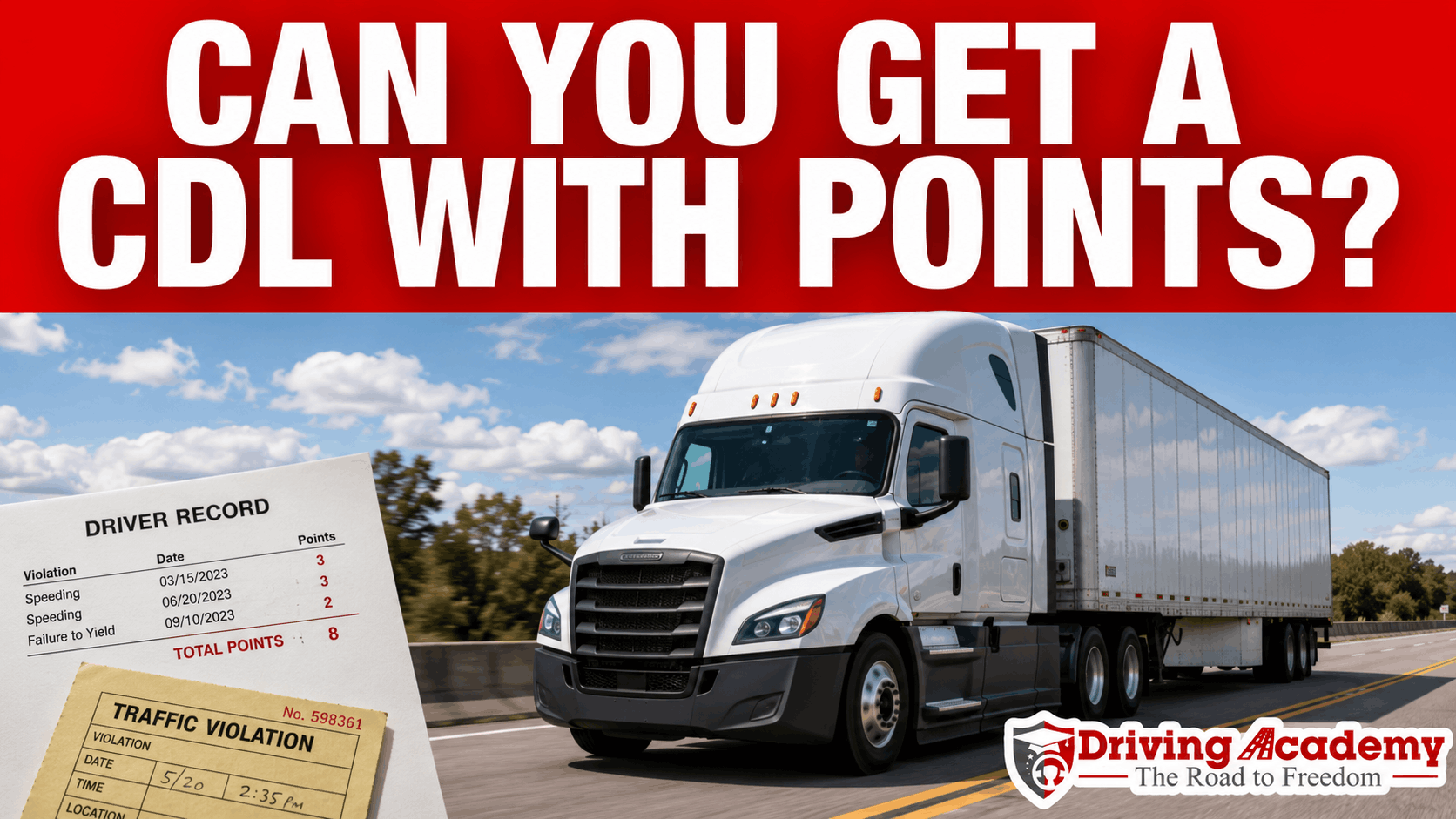 | Can You Get A CDL With Points On Your License | A common questions we get from people who want to get into trucking is: Can you get a CDL license if you already have points on your regular driver’s license? The short answer? Yes, in most cases, you can. But there’s a lot more to the story, and I want to make sure you understand the full picture before you walk into a DMV or enroll in a CDL program. Because knowing the rules isn’t just about getting the license. It’s about setting yourself up for a long, successful career in trucking. If you have any questions, feel free to discuss it with our CDL Advisor! The Basic Rule: Your License Must Be ValidHere’s the number one thing you need to understand. As long as your current driver’s license is valid, (meaning it is not suspended, revoked, or on a probationary status) you can apply for a CDL license. Whether you have two points on your license or five points , as long as that license is still valid and in good standing, you’re eligible to pursue your CDL. The points themselves don’t automatically disqualify you from getting licensed. There are a few minimum requirements you need to meet no matter what:
If you check all those boxes, the points on your license don’t stand between you and your CDL. You’re good to go! Not sure if you meet the requirements? Talk to one of our CDL advisors today and let’s get you started. What Will Actually Disqualify You From Getting a CDL?Now let’s be straight with you, because there ARE violations and circumstances that will prevent you from getting a CDL, and you need to know what they are. These are the hard disqualifiers:
On the flip side, things like minor speeding tickets, a parking violation, or a single lane-change infraction? Those kinds of everyday points are generally not going to stop you from getting your CDL. The key is the severity of the violations and the current status of your license. How the Point System Actually WorksLet me walk you through how points work because it’s important for your future as a professional driver and not just for getting your CDL, but for keeping it. Every state runs its own point system for regular driver’s licenses. When you get a traffic violation like speeding, reckless driving, following too closely, texting while driving, the state assigns a certain number of points to your record. Rack up too many points in a short window of time, and your license gets suspended. Once you have your CDL, there’s a second, stricter point system that applies to you specifically as a commercial driver. Common violations that add points to a CDL include:
Here’s where it gets serious. Under federal FMCSA rules, if a CDL holder gets two serious traffic violations within three years, they face a 60-day disqualification. Three serious violations in three years? That’s a 120-day disqualification. And certain offenses such as a DUI or leaving the scene of an accident will result in a one-year CDL disqualification on the first offense, and a lifetime disqualification on the second. How Points Affect Getting HiredOkay, so here’s the part I really want you to know, because this is where a lot of people get blindsided. Just because you can get a CDL with points on your license doesn’t mean finding a job will be easy. And I want to be upfront with you about that because I’d rather you know going in than be surprised later. Think about it from an employer’s perspective. A trucking company is handing you the keys to a piece of equipment worth $150,000 or more. They’re responsible for that truck, their cargo, the public on the road, and their insurance rates. If they’re looking at two candidates, one with a clean record and one with five points. Which one do you think they’re going to call back first? The clean record, every single time. That said, it is absolutely not impossible to get hired with points on your license. The trucking industry is one of the most forgiving industries in the world when it comes to people’s past. There are large national carriers like Werner, Western Express, and others that specifically offer second-chance hiring programs. They’re investing in your future because the driver shortage is real and the demand for qualified CDL holders is not going away. So if you’ve got points, is it harder? Yes. Is it impossible? Absolutely not! Companies That Will Hire Drivers With PointsIf you have points on your license and you’re worried about job placement after getting your CDL, here’s the good news: there are carriers out there built specifically for drivers in your situation. Large national carriers tend to have more flexibility than small regional fleets, for a few reasons. They have larger insurance programs, dedicated training departments, and the resources to onboard drivers with less-than-perfect records. Many of them use a 3-year or 5-year lookback window, meaning they’re only reviewing your recent history, not your entire record going back 20 years. When applying to companies with points on your record:
And here’s the thing nobody talks about enough: nobody is stopping you from buying your own truck and being your own boss. If companies won’t hire you right away, the owner-operator path is always open. As long as your license is valid and you’re willing to work for yourself, you can make money in trucking no matter what your history looks like. The road to ownership might just be your Level 2 move. How to Reduce Points on Your License Before ApplyingIf you’re not in a rush and you want to improve your standing before getting your CDL, there are a few legitimate paths to reducing your points.
Want a personalized plan for your situation? Our CDL advisors can talk through your options. Frequently Asked QuestionsCan I get a CDL if my license is suspended? No. A suspended or revoked license disqualifies you from applying for a CDL. You’ll need to resolve the suspension first, get your regular license reinstated, and then you can begin the CDL process. How many points are too many to get a CDL? There’s no single national number, it depends on your state’s rules and the current validity of your license. The key is that your license must be active and not suspended. Some states have specific restrictions around recent point accumulation (for example, 6 points within the last 2 years in some states), so check with your local DMV. Will points from my regular license carry over to my CDL? Your driving record follows you. When you get a CDL, your history doesn’t disappear, it’s all there on your MVR. The good news is that minor points from years past carry less and less weight the longer you drive clean. Does a speeding ticket in my personal car affect my CDL? Yes. If you hold a CDL, violations in your personal vehicle can still impact your commercial driving record. The license is what matters, not the vehicle. Can I get hired as a truck driver with points on my license? Yes, though it can be more challenging with some employers. Lifetime job placement assistance like what we offer here at Driving Academy will give you a better shot. Learn More About Getting a CDL License With Points | 2026-06-17 | |||||||||||||||||||||||||||||||||||||||||||||||||||||||||||||||||||||||||||||||||||||||||
| 45135 |  | Do You Need a CDL to Drive a Garbage Truck? | Are you a someone who doesn’t mind getting a little dirty whose looking for a career that offers incredible job security, great pay and gets you home every single night? Well driving a garbage truck can be one of the best moves you can make. The most common question we get from students looking to get into the waste management industry is: Do garbage men need a CDL license? The answer depends on what type of garbage man you are! If you’re the guy filling the truck, there’s no CDL license needed because you’re not driving anything. However, if you are the guy driving the truck, it is very likely that you’re going to need a Commercial Driver’s License (CDL). In this garbage truck CDL guide, we are going to break down exactly which CDL class you need, the federal weight rules, the types of garbage trucks and the exact steps to get your license. Let’s get rolling! Are You Looking To Get Your CDL?Why Most Garbage Trucks Require A CDL? If you want to drive a standard garbage truck in your local neighborhood, you will need to get at least a Class B CDL. Here is the legal reason why: The 26,000 Pound Rule (GVWR) Garbage trucks are built on heavy-duty, rigid frames designed to hold tons of compacted trash. Even when they are completely empty, most garbage trucks easily exceed this 26,000 lb threshold, which means you are legally required to hold a CDL. The Air Brakes Restriction If you want to drive a garbage truck, you must pass the Air Brakes portion of your CDL written exam, and you must take your behind-the-wheel road test in a truck equipped with air brakes. Otherwise, you will get an “L” restriction on your license, which bars you from driving any air-brake-equipped commercial vehicle. Types Of Garbage TrucksNot all garbage trucks are the same, and here is a breakdown of the vehicles in the industry and what license do you need to drive it:
Learn more about the difference between Class A and Class B CDL. Why Driving A Garbage Truck Is An Amazing Career?
The cool thing about getting a CDL Class B license is that you don’t just have to drive garbage trucks. You can drive many other types of trucks as well, like box trucks and cement trucks. But, that being said, the waste management industry is a goldmine. As they say, one man’s trash is another man’s treasure. Here is why you should consider making the jump:
How Much Does a Garbage Truck Driver Make?The average garbage truck driver is going to make anywhere from $53,000 to about $84,000 a year based on data from Glassdoor. CDL holders However, depending on the area that you live in, we’ve seen even higher numbers for experienced drivers! It all depends on your municipality, whether you are in a union, and how much overtime you are willing to take. If you’re ready to move into a career with stability, benefits, and daily home time, contact Driving Academy today and let us help you get your CDL. Step Process To Get Your Garbage Truck CDLSo, if you’re interested in getting yourself a CDL Class B license, what are the steps? There’s a simple three-step process: Step 1: Pass The CDL Permit TestsBefore you can drive a commercial vehicle, you must get your Commercial Learner’s Permit (CLP). You do this by passing written knowledge tests at your local DMV (or MVC). To get your Class B permit, you must pass the General Knowledge test. However, because 99% of garbage trucks use air brakes, you will also need to pass the Air Brakes exam so you do not get a restriction on your license. You can try studying for the permit test on your own. But lots of people actually fail when they try by themselves! By enrolling with Driving Academy, you’ll have access to our easy-to-use study guides, explanation videos, and custom practice quizzes so you can pass on the first try. Step 2: ELDT (Entry-Level Driver Training)You may have heard the phrase “ELDT training” before. ELDT stands for Entry-Level Driver Training. It is required by the federal government (FMCSA) before you can get your CDL license. In order to take your road test, you’ll need to complete training at a CDL school like Driving Academy who is listed on the Training Provider Registry (TPR). The ELDT is split into two parts:
Step 3: CDL Skills Test (Road Test)After holding your CLP for at least 14 days and finishing ELDT, you will take the state skills test. The skills test has three parts: 1) Pre-Trip Inspection 2) Parking Maneuvers 3) Road Test As long as you go through all three of those steps, you’re able to rock and roll and walk away with your CDL license and get yourself on the road to freedom! FAQ: Garbage Truck CDLCan I drive a garbage truck with a regular driver’s license? Lorem ipsum dolor sit amet, consectetur adipiscing elit. Ut elit tellus, luctus nec ullamcorper mattis, pulvinar dapibus leo. Do garbage men need a CDL? Lorem ipsum dolor sit amet, consectetur adipiscing elit. Ut elit tellus, luctus nec ullamcorper mattis, pulvinar dapibus leo. What class CDL do I need to drive a garbage truck? You need a Class B CDL to drive a standard residential garbage truck (like a rear-loader, side-loader, or front-loader). You only need a Class A CDL if you are driving a combination vehicle, such as a semi-truck pulling a massive roll-off dumpster or a heavy transfer trailer that exceeds 10,000 pounds. Do I need a Hazmat endorsement to drive a garbage truck? Learn More About Garbage Truck CDL | 2026-05-18 | |||||||||||||||||||||||||||||||||||||||||||||||||||||||||||||||||||||||||||||||||||||||||
| 45188 | 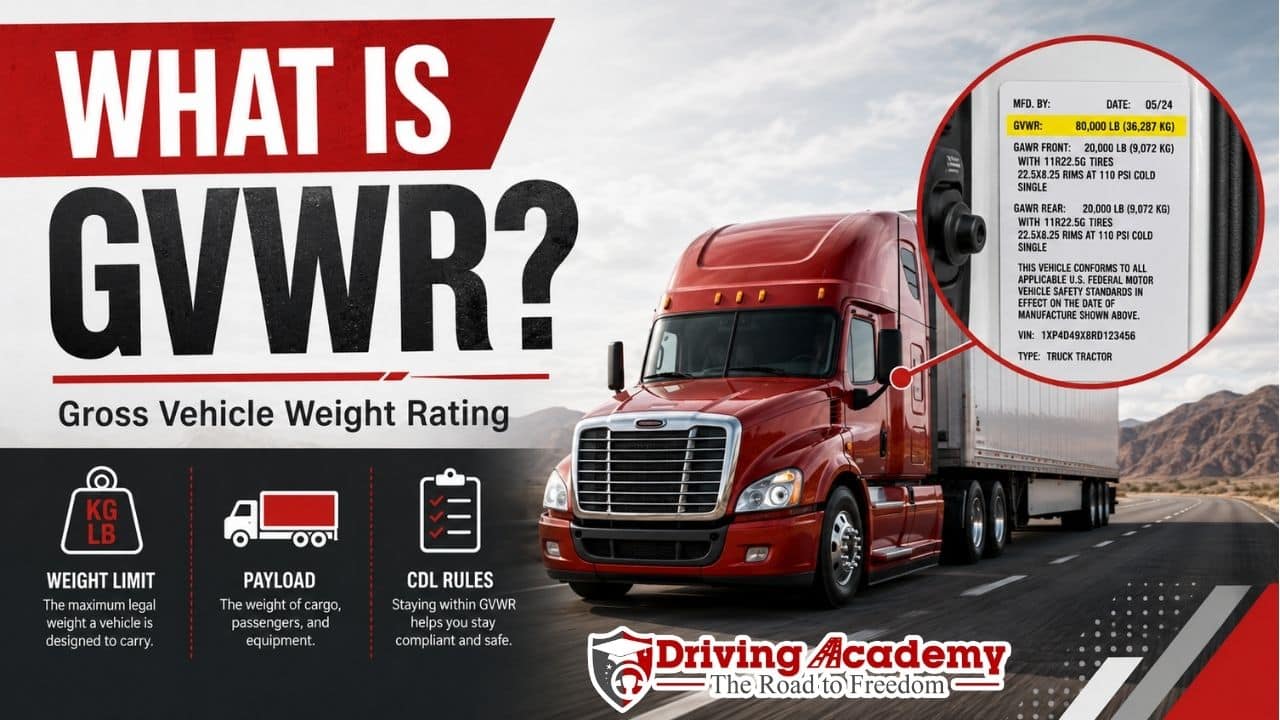 | What Is GVWR? | If you are asking what is GVWR, the short answer is this: GVWR stands for Gross Vehicle Weight Rating. It is the maximum loaded weight a vehicle is designed to handle safely, as set by the manufacturer. For people in the trucking industry, GVWR matters because it affects safety, payload, compliance, and even what class of CDL license you need. If you don’t understand and follow GVWR, you can overload a truck, reduce braking performance, damage equipment, put yourself at risk for violations or worst case scenario; get in a horrible accident! In this ultimate guide, we are going to break down the exact trucking definition, the federal weight rules and how to calculate your payload capacity so you can keep your truck safe and strictly legal on the road. Let’s get rolling! What Is GVWR?In the trucking world, the GVWR is the absolute maximum safe operating weight of a commercial vehicle, as determined by the manufacturer. It is the structural limit of what the truck’s frame, suspension, axles, and brakes can safely handle. Your GVWR includes the combined weight of:
It is critical to understand that your GVWR is a weight limit, not the actual weight of the truck as it sits right now. If a box truck has a GVWR of 33,000 lbs, that means the truck and everything inside of it can’t legally weigh a single pound over 33,000 lbs when you roll over a DOT scale. Where to Find the GVWR on a Commercial TruckYou don’t have to guess or do any complex math to find your truck’s GVWR. The manufacturer legally has to stamp it on the vehicle. If you are doing your pre-trip inspection, you can find the GVWR in a few specific spots:
GVWR And The 26,001 lb. CDL RuleThis is the most important section for anyone looking to enter the commercial driving industry. Your truck’s GVWR directly dictates whether or not you legally need a Commercial Driver’s License (CDL) to turn the key. By federal law, if a vehicle has a GVWR of 26,001 pounds or more, you must have a CDL to operate it. Here is how the DOT breaks down the classes based on GVWR:
GVWR vs. GCWR (Gross Combined Weight Rating)If you are going for your Class A CDL to drive tractor-trailers, you are going to see the acronym GCWR on your permit tests. It is easy to get them confused, but the difference is simple:
GVWR vs. Curb Weight vs. Tare WeightTrucking is full of jargon. When dealing with dispatchers and shipping receivers, you need to know the difference between these three weight terms:
How to Calculate Your Truck’s Payload CapacityAs a truck driver, you need to know exactly how much freight you can legally load into your box or trailer without getting an overweight ticket. This available cargo capacity is called your Payload Capacity.
Example: Let’s say your commercial box truck has a GVWR of 33,000 lbs. You look at the manufacturer specs, and the Curb Weight (empty truck) is 13,000 lbs. 33,000 lbs – 13,000 lbs = 20,000 lbs. You can legally load up to 20,000 lbs of freight into the back of your truck. What Happens If You Exceed Your Truck’s GVWR?You should never let a dispatcher pressure you into loading a truck past its GVWR. If you roll into a DOT weigh station and the scales show you are over your GVWR, the consequences are severe.
FAQ: GVWR in the Trucking Industry Does GVWR mean the actual weight of the truck? Understanding GVWR is one of the first steps to understanding how truck weight, payload, and CDL rules all connect. Once you know what GVWR means, it becomes much easier to see why weight ratings matter so much in the trucking industry. If you want help turning that knowledge into a real CDL plan, contact Driving Academy to speak with an advisor and find the right training path for your goals. | 2026-05-14 | |||||||||||||||||||||||||||||||||||||||||||||||||||||||||||||||||||||||||||||||||||||||||
| 44368 |  | How Often Are Truck Drivers Home? | If you are thinking about getting your CDL, you might have one question holding you back: Will I ever get to see my family if I drive a truck? There’s a good chance you want to support your family with a good paying trucking job, but does that mean you won’t get to spend time with your family? This is one of the most common questions we hear from new students. The truth is, truck driving is not a standard 9-to-5 desk job. Many driver positions work longer hours to get loads from point a to point b. However, the misconceptions that you have to always be out on the road for months at a time is also not true. So, how often are truck drivers actually home? The short answer is: It’s entirely up to you and the type of driving job you choose. Let’s break down exactly how truck driver home time works in 2026 so you can pick the perfect route for your lifestyle and career. Don’t feel like reading? You can also contact us and learn more from a CDL advisor. Types of Trucking JobsYour home time depends almost completely on the type of freight route you decide to run. Once you graduate from CDL school, you will generally have three main career paths to choose from:
1. Local Truck DriversHome Daily Local drivers typically stay within a 100-mile radius of their home terminal. You might deliver beverages to grocery stores, haul construction materials or manage local city freight.
2. Regional Truck Drivers:Home Weekly
3. Over-The-Road (OTR):Home Every 2 to 3 Weeks
What Else Controls Your Home Time?Aside from whether you choose a Local, Regional, or OTR route, there are a few other big factors that dictate how often you get to park the truck and relax: The Company You Work For:Every trucking company operates differently. Some carriers prioritize family time and have strict policies to get you home exactly when you request it. Other companies are mostly focused on keeping the wheels turning and might push you to stay out longer. When you are applying for jobs, always ask recruiters about their specific home-time policies! The Area You Live In:Your home zip code actually plays a massive role in your schedule. If you live near major shipping hubs, busy highways, or your company’s terminal, it is incredibly easy for a dispatcher to find a load that routes you right through your hometown. On the flip side, if you live far away from major freight lanes, getting you home takes more planning and can sometimes delay your time off. Your Experience Level:When you’re a brand-new driver, you often have to “pay your dues” and take the routes that are available. But after just one year of safe driving, you gain the leverage to demand better schedules and dedicated routes. The Pay:Sometimes, the choice to stay out longer is entirely yours! If freight rates are booming and a high-paying load pops up that takes you in the opposite direction of your house, you might choose to skip your weekend home to chase the money. Many truck drivers choose to stay on the road for a month at a time just to maximize their earning potential. The first step to controlling your schedule is getting your CDL. Let us help you get on the road to freedom!
A High-Paying Career In Trucking Is Waiting For YouDon’t Miss Out! Save $200 Off Your Tuition Today!Learn More Will You Have a Life Outside of the Truck?Yes, absolutely! The trucking industry has changed drastically over the last decade. There is a massive shortage of qualified CDL drivers, especially after the ELDT rule and the recent Non-Domiciled rule. Trucking companies are bending over backwards to keep their drivers happy. Many carriers now offer guaranteed weekend home time, generous vacation days, and flexible scheduling. Whether you want to maximize your income by living on the open road or you want a steady local job that lets you coach your kid’s little league team on the weekends, there is a trucking job out there built for your exact needs. Frequently Asked QuestionsCan I pick my own schedule as a truck driver? If you work as a standard company driver, your dispatcher will dictate your schedule. However, if you become an Owner-Operator (meaning you own your own truck), you are your own boss. You can choose exactly which loads you want to take and exactly when you want to go home! What is a typical truck driver schedule? There is no single “typical” schedule because it depends entirely on your specific job! Local drivers usually work a standard daytime shift (often 8 to 12 hours) and are home every night. However, Regional and Over-The-Road (OTR) drivers operate under strict federal “Hours of Service” (HOS) clocks. By law, long-haul drivers can be “on duty” for a maximum of 14 consecutive hours a day. Do truck drivers get weekends off? It completely depends on the type of route you choose. Local and regional drivers generally have standard weekends off. However, Over-The-Road (OTR) drivers might be out for three weeks at a time; they take their days off when their driving hour cycles reset, which doesn’t always line up with a Saturday or Sunday. Do I have to drive cross-country (OTR) for my first trucking job? Watch Our Student’s Storyhttps://www.youtube.com/watch?v=bukchOTPtf0 | 2026-05-14 | |||||||||||||||||||||||||||||||||||||||||||||||||||||||||||||||||||||||||||||||||||||||||
| 43841 |  | Do You Need High School Diploma For A CDL? | One of the questions we hear all the time is whether you need a high school diploma to get your CDL and start training.
The requirements to get a CDL license is based on age, licensing, medical qualification, training and passing the required truck driving tests. Here’s the best part, when it comes to CDL licenses academic background doesn’t matter. Every student’s situation is different. If you want help understanding whether you can move forward with CDL training, contact Driving Academy and talk with an advisor today. What You Do Need To Get A CDL?If you want a CDL, the bigger things to focus on are the actual licensing steps. 1. Age requirementsFederal rules say that before getting a Commercial Learner’s Permit, a person must be 18 years old or older and provide proof of age. Learn more about the Age Requirement for getting a CDL. 2. Knowledge testingFederal rules also say you must pass the required general knowledge test for the type of commercial vehicle you expect to operate. FMCSA requries CDL applicants must pass both the knowledge test and the skills test in order to get a CDL. 3.Entry-Level Driver TrainingSince 2022, ELDT applies to people who are obtaining a Class A or Class B CDL for the first time, upgrading from Class B to Class A, or getting certain endorsements for the first time. This is the yard and theory training that you must do at a FMCSA approved school like Driving Academy. 4. Medical QualificationDrivers subject to the federal medical rules must also be medically qualified to operate a commercial motor vehicle. In short they must be able to pass a DOT physical. Some Trucking Companies May Still Want High School GraduatesEven if the federal government doesn’t require a diploma for you to obtain CDL itself, some employers may still prefer one when they hire truck drivers. So not having a diploma may not stop you from getting a CDL, but it could affect your job hunting journey. For those without a GED it just means you may need to put in a bit more effort on searching for employer who doesn’t require one, so you can start making a better living. What To Do Next if You Don’t Have a Diploma?If you do not have a diploma or GED, don’t assume your trucking career is over. All you’ve got to do is make sure you can meet the federal CDL steps: age, testing, training, and medical qualification. After you get your CDL you can worry if a specific employer has any extra rules of their own. If you want help understanding your CDL path, contact Driving Academy and speak with an advisor about your options. We have free job placement assistance that might help you out! FAQs About Getting a CDL Without a DiplomaDo you need a high school diploma for a CDL? Luckily no you don’t need to graduate high school to get your diploma. Federal CDL rules focus on age, testing, training, and medical qualification rather than a HS diploma requirement. Can you get a CDL without a GED? Yes! Not having a GED does not block you from getting a CDL. Do trucking companies care if you have a diploma? Some do. Even when the CDL itself does not require one, some employers may still prefer or require a diploma or GED when hiring. What do you actually need to get a CDL? You usually need to meet age requirements, pass the required tests, complete ELDT when applicable, and meet medical standards. | 2026-06-09 | |||||||||||||||||||||||||||||||||||||||||||||||||||||||||||||||||||||||||||||||||||||||||
| 45286 |  | How to Get a Hazmat Endorsement | Getting a Hazmat endorsement can open the door to better trucking jobs, but you do have to do it the right way. It is not only about passing a test. You also have to complete the required training and clear the TSA background process before the endorsement can be added to your CDL. That may sound like a hassle, but it is actually pretty simple once you know the drill. In this article, we will walk you through exactly how to get your Hazmat endorsement. You could also learn about the process directly from our CDL Advisor! What a Hazmat Endorsement Actually Does?A Hazmat endorsement lets a CDL driver haul hazardous materials in situations where federal rules require placarding. In CDL language, this is the H endorsement. FMCSA lists the hazardous materials endorsement as one of the first-time endorsement categories that triggers ELDT requirements. A lot of drivers also end up looking at the X endorsement, which combines tanker and Hazmat. That usually comes up for drivers who want to haul fuel or other hazardous liquids. What Materials Count as Hazmat?Not every dangerous-looking substance requires a Hazmat endorsement. The federal government has a specific definition, and it comes down to whether the cargo requires placarding under DOT regulations.
The key takeaway: it is not just chemicals in drums. Hazmat loads show up across all kinds of freight: fuel, agriculture, construction, and even consumer goods. If your load requires a placard on the trailer, you need the endorsement. How Much More Can You Earn With a Hazmat Endorsement?Adding a Hazmat endorsement to your CDL makes you eligible for a category of loads that most drivers simply cannot touch. That scarcity works in your favor. The Numbers Why the Pay Is Higher?
Jobs That Pay a Premium for Hazmat
The Hazmat endorsement’s return on investment, measured over even a single year of driving, is significant. For most CDL drivers serious about increasing their earning potential, it is one of the best endorsements worth adding. Want To Learn More About Hazmat Endorsement? Steps To Get A Hazmat EndorsementStep 1: Make Sure Your CDL Situation Is StraightBefore you worry about Hazmat, make sure your CDL plan makes sense for the type of truck you want to drive. The Hazmat endorsement is not a separate license by itself. It gets added onto a CDL. So the endorsement does not replace your Class A or Class B. It sits on top of it. That means:
The truck class depends on the vehicle. The Hazmat endorsement depends on the cargo. Step 2: Complete Hazmat ELDT TrainingBefore 2022, you could just walk into the DMV, take a test, and get your endorsement. That is no longer the case. By federal law, you must complete an approved Entry-Level Driver Training (ELDT) theory course specific to hazardous materials before you are allowed to take the written test at the DMV. This training covers critical safety protocols, including how to read placards, how to properly load and segregate dangerous chemicals, and what to do in a roadside emergency. You must ensure the school you use is listed on the FMCSA Training Provider Registry (TPR). If they aren’t on the list, your training won’t count. Step 3: Apply for the TSA Background CheckAfter training, you still have another major step: TSA. TSA runs the Hazardous Materials Endorsement Threat Assessment Program for drivers who want to obtain, renew, or transfer a Hazmat endorsement. This is what makes Hazmat different from many other CDL endorsements. You are not only proving knowledge. You are also going through a security screening. TSA reviews identity and checks for certain disqualifying offenses and other factors. A lot of drivers are not worried about the written test. They are worried about the background side of Hazmat. That is fair. TSA has an official list of disqualifying offenses and other factors, and some of them can block an applicant either temporarily or permanently depending on the situation. Step 4: Take the Hazmat TestOnce you have completed your ELDT training, you must pass a written knowledge test at your state’s DMV. The test is usually 30 multiple-choice questions, and you must score at least an 80% (24 correct answers) to pass. Important Note on Order of Operations: Depending on the state you live in, the order of Steps might flip. Some states require you to pass the TSA background check before they let you take the DMV test. Other states make you pass the written test before you can apply for TSA clearance. Step 5: Finish the State License ProcessOnce the DMV receives your passing test score and the official clearance from the TSA, they will issue you a new CDL with the “H” endorsement printed right on it. You are now officially certified to haul hazardous materials! How Long Does It Take to Get a Hazmat Endorsement?The training and the testing are the fast parts. The waiting is what takes time.
Overall, expect the entire process to take roughly 6 to 10 weeks from start to finish. FAQs About How to Get a Hazmat Endorsement Do you need ELDT for a Hazmat endorsement? | 2026-06-01 | |||||||||||||||||||||||||||||||||||||||||||||||||||||||||||||||||||||||||||||||||||||||||
| 42924 |  | How to Get a CDL in Pennsylvania | Getting a CDL in Pennsylvania can feel like a lot to take on, especially when you start looking into everything PennDOT requires: the permit tests, training hours, skills test, it adds up fast. Most people don’t know where to begin, and that’s completely normal. The good news? You don’t have to figure it all out on your own. At Driving Academy, we walk students through the process step by step, so you’re not left guessing what comes next or scrambling to meet a deadline you didn’t know existed. This guide covers everything you need to know!
A High-Paying Career In Trucking Is Waiting For YouDon’t Miss Out! Save $200 Off Your Tuition Today!Learn More Before you start: Choose The Right CDLBefore starting the process of getting a CDL in Pennsylvania, it’s important to decide which CDL class fits your career goals. The type of CDL you choose determines the vehicles you can drive and the types of jobs available to you. Class A CDL (Most Popular Option)Best if you want:
A Class A CDL typically offers the most career opportunities and earning potential in the trucking industry. Types of Class A Vehicles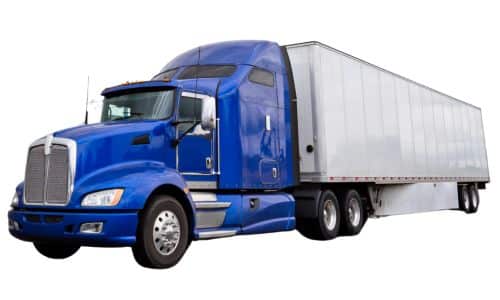 Tractor-Trailers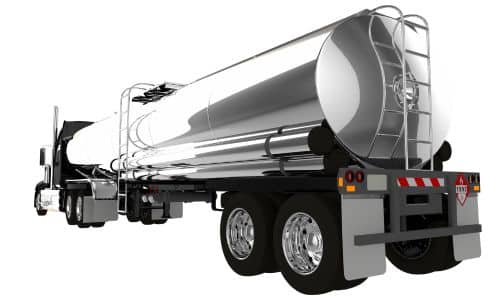 Tanker Trailers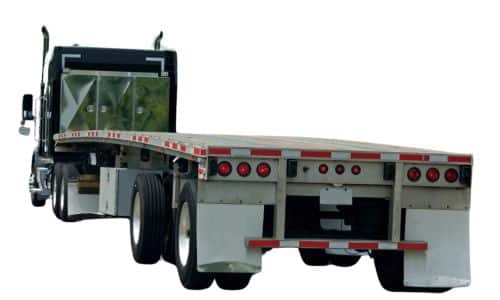 Flatbed Trailers Livestock Carriers Car TransportersClass B CDLBest if you want:
Types of Class B Vehicles Box Truck Dump Truck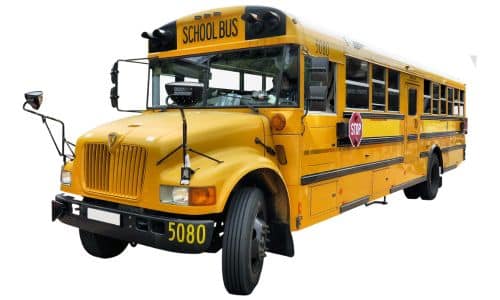 School Bus Garbage Truck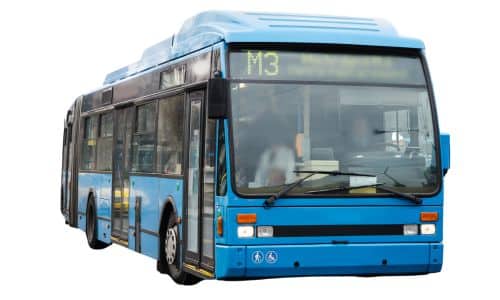 City Bus Cement Truck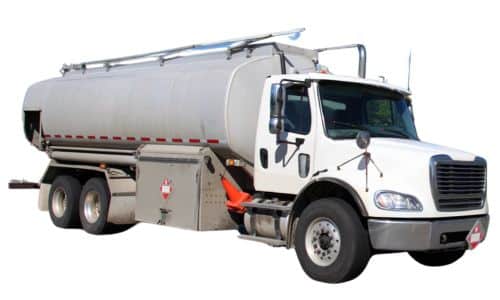 Tanker Truck Flatbed Snow Plow CraneIf you’re unsure which license is right for you, you can also learn more about the difference between a Class A and Class B CDL before starting the process. Pennsylvania CDL RequirementsBefore applying for a CDL in Pennsylvania, you must meet several basic requirements. These are the minimum qualifications to begin the process of becoming a commercial driver:
Most CDL drivers are required to obtain a DOT Medical Examiner’s Certificate, which confirms they meet federal health standards for commercial drivers. Even if you’re eager to start studying for your CDL permit tests right away, completing the physical early can help prevent delays later in the process. Steps To Get A CDL In PennsylvaniaStep 1: Get Your Commercial Learner’s Permit (CLP)The very first step of getting a CDL in Pennsylvania, you must obtain a Commercial Learner’s Permit aka CLP. This permit allows you to practice driving a commercial vehicle while supervised by a licensed CDL driver. To receive your CLP you will need to:
Before you study for the exam, make sure you understand the test subject you need for the type of CDL that you are getting:
CDL EndorsementsSo besides the general subject for getting a CLP, there are certain types of “endorsements” that you need on your Pennsylvania CDL in order to operate these types of cargo or transport passengers. The endorsements means you have a specialized knowledge to operate these vehicles safely. What Are The Endorsements You Can Get?There are 6 truck driving endorsements that you can get on your license that allow you to legally transport different types of vehicles and cargo. They are:
Step 2: ELDT (Entry-Level Driver Training)Before you can take the CDL road test in Pennsylvania, you must complete Entry-Level Driver Training (ELDT). This training is required by the Federal Motor Carrier Safety Administration (FMCSA) and applies to new CDL applicants across the United States, including drivers applying through PennDOT in Pennsylvania. The program has two required parts: 1) ELDT Theory (classroom instruction) 2) Behind-the-Wheel training Both parts must be completed through an FMCSA-approved CDL school that is listed in the Training Provider Registry (TPR) before you can schedule your Pennsylvania CDL road test. In order to take your road test, you’ll need to complete both portions of the training at a federally licensed CDL school such as Driving Academy.
| 2026-06-05 | |||||||||||||||||||||||||||||||||||||||||||||||||||||||||||||||||||||||||||||||||||||||||
| 45248 |  | What Does GCWR Mean? | GCWR stands for Gross Combined Weight Rating. In the trucking industry, the GCWR is the absolute maximum allowable weight of your entire rig combined. This means the total weight of your towing vehicle (the truck) PLUS the total weight of your loaded trailer. Your GCWR includes absolutely everything rolling down the highway:
It is the structural limit determined by the manufacturer of what your truck’s engine, transmission, axles, and brakes can safely pull and stop. If your actual combined weight exceeds your GCWR, you are operating beyond the manufacturer’s rating. GCWR vs. GVWR: What is the Difference?This is the number one question we get from students studying for their CDL permit tests. It is incredibly easy to confuse GCWR with GVWR, but the difference comes down to one simple word: Combined.
Pro Tip: When you pull an 18-wheeler onto a DOT scale at a weigh station, the officer is checking to make sure your total weight does not exceed your GCWR! Why GCWR Determines Your CDL ClassWhy does the DOT care so much about this number? Because your GCWR directly determines what class of Commercial Driver’s License you need to legally drive the truck! FMCSA uses GCWR for combination vehicles and GVWR for single vehicles when determining CDL group classifications. Here is the golden rule:
If you are driving a heavy-duty pickup truck pulling a massive gooseneck flatbed, or a standard semi-truck pulling a 53-foot dry van, you have officially entered Class A CDL territory. You cannot legally turn the key without the proper license. Don’t Risk Getting the Wrong License! How to Find Your Truck’s GCWRYou should never have to guess how much weight your truck can safely handle. Finding your GCWR is simple:
Check the manufacturer label first, then confirm with the owner’s manual or manufacturer specifications if GCWR is not clearly shown. What Happens If You Exceed Your GCWR?In the logistics industry, dispatchers always want to move as much freight as possible. But if you allow someone to load your truck and trailer past its Gross Combined Weight Rating, you are the one who will pay the price. Here is what might happen when you get caught running overweight:
FAQ: GCWR in the Trucking IndustryWhat is the GCWR of a standard semi-truck? Lorem ipsum dolor sit amet, consectetur adipiscing elit. Ut elit tellus, luctus nec ullamcorper mattis, pulvinar dapibus leo. Do I need a CDL if my GCWR is under 26,000 lbs? Lorem ipsum dolor sit amet, consectetur adipiscing elit. Ut elit tellus, luctus nec ullamcorper mattis, pulvinar dapibus leo. | 2026-05-28 | |||||||||||||||||||||||||||||||||||||||||||||||||||||||||||||||||||||||||||||||||||||||||
| 43456 | 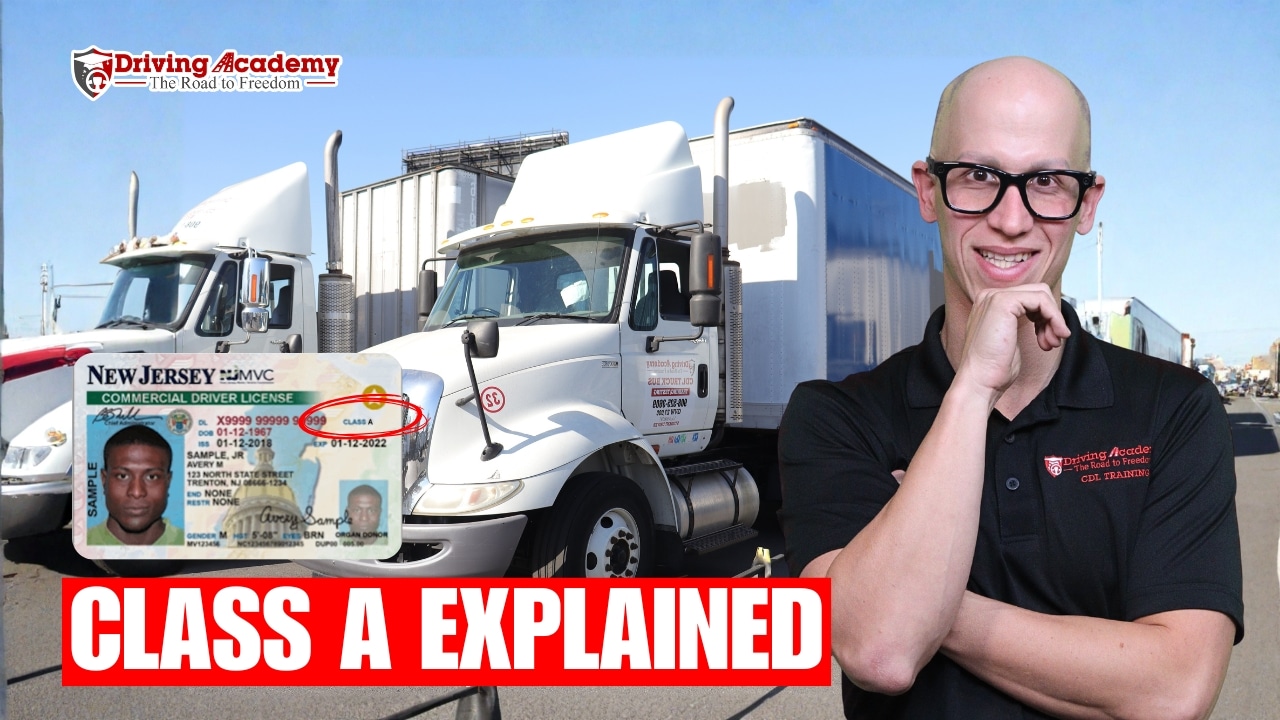 | What Is A Class A CDL? | So you know you want to become a professional truck driver? In order to do that, you’re going to need to get a commercial driver’s license. Now, for us here at Driving Academy, we always recommend students get a Class A Commercial Drivers license. And in response it’s not uncommon to get asked the question “What is a CDL Class A license?” Class A CDL LicenseA Class A CDL is the often regarded as the most valuable commercial driver’s license. To sum it up, having a Class A Driver’s License allows you to operate a combination vehicle (a truck with a trailer) with a gross combination weight rating (GCWR) of 26,001 pounds or more, and a trailer of more than 10,000 pounds. In simple terms, this is the license most drivers need if they want to operate a tractor-trailer, semi-truck or other large truck-and-trailer combination. For many future truck drivers, class A CDL is the best license to pursue since it gives access to the widest range of commercial driving jobs as well as the most flexibility in the trucking industry. In this blog post we’re going to explain why!  What Is a CDL License?Before we dive into the different classes of CDL, lets go over what a CDL is. A CDL, or Commercial Driver’s License, is a special type of driver’s license required to operate certain large, heavy or specialized vehicles for commercial purposes. Federal rules divide CDLs into Class A, Class B and Class C, depending on the type and weight of the vehicle being driven. Here are the 3 types of CDL Classes:
| 2026-04-22 | |||||||||||||||||||||||||||||||||||||||||||||||||||||||||||||||||||||||||||||||||||||||||
| 44429 | 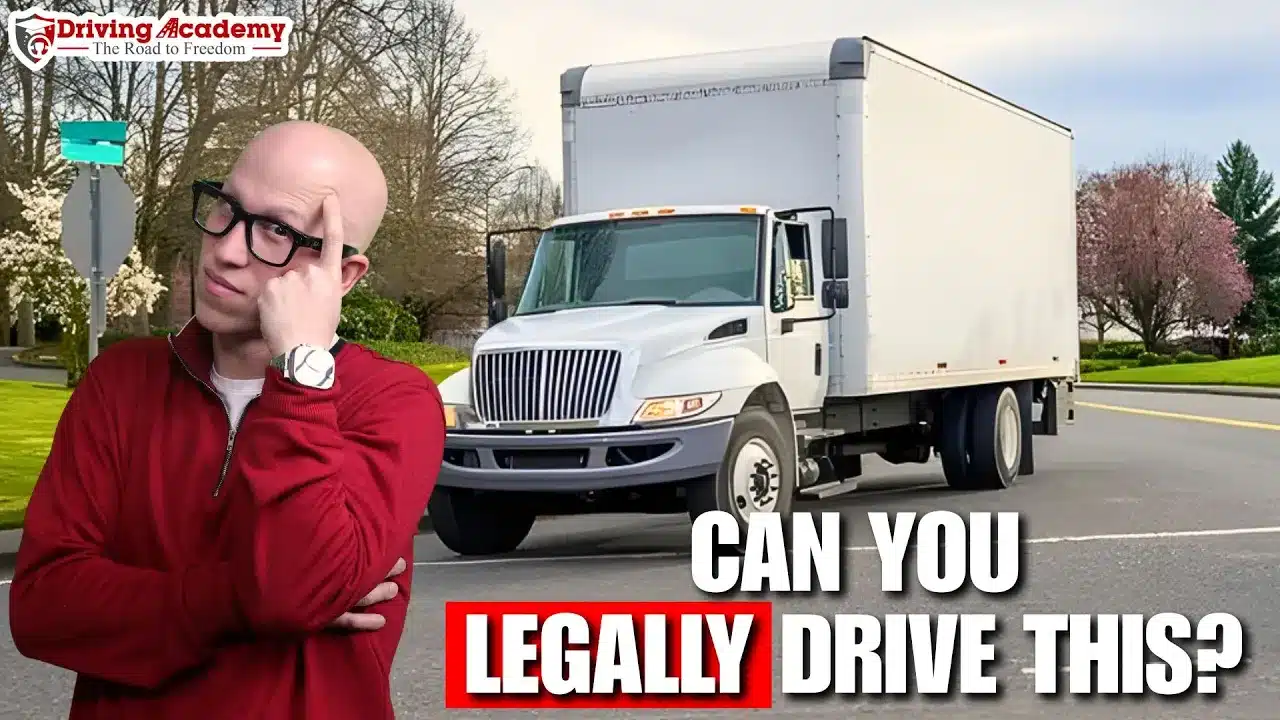 | Do You Need A CDL To Drive A Box Truck | It can be confusing to figure out whether you need a CDL or if a regular driver’s license is enough. Some box trucks can be driven without a CDL, while others require a Class B license because of their weight or how they are used. The good news is that you do not have to guess. In this guide, we’ll break down when a CDL is required for a box truck, what GVWR means, and how to know which rules apply before you get started. What Is a Box Truck? A box truck is a single-unit straight truck with an enclosed cargo area attached to the chassis. People use box trucks for moving jobs, local deliveries, furniture routes, appliance delivery, and many other kinds of work. From a licensing point of view, the important thing is that it is usually treated as a single vehicle, not a tractor-trailer combination. That is why larger box trucks usually fall under Class B CDL rules instead of Class A rules. Learn more about the difference between Class A and Class B CDL. Weight Rating ExplainedThis is the part people usually get confused: the rule is based on what the vehicle is rated to weigh, not just what it physically weighs that day. That means an empty box truck can still require a CDL if its GVWR is high enough. The federal CDL rules use the GVWR on the vehicle, not just the current load in the back. So if you are looking at a box truck job, you should not guess based on how big the truck looks. You should find the GVWR sticker, usually on the driver-side door area, and check the number directly. If it’s not on the truck it would be listed in the owner’s manual. If that number is 26,001 pounds or more, you are in Class B CDL territory. When You Do Need a CDL for a Box Truck? You do need a CDL for a box truck when the truck crosses the federal CDL threshold or falls into one of the special CDL-use categories. The most common reason is weight, but hazardous materials transport can also change the answer. 1. The Box Truck Has a GVWR of 26,001 Pounds or MoreThe most common reason you need a CDL for a box truck is because of the truck’s GVWR, which stands for gross vehicle weight rating. If the box truck is a single vehicle with a GVWR of 26,001 pounds or more, it usually requires a Class B CDL under the federal CDL rules. That is why two box trucks can look very similar, but one may legally require a CDL while the other does not.
2.The Box Truck Is Carrying Hazardous MaterialsEven if the box truck is under the normal CDL weight threshold, you may still need a CDL if the truck is transporting hazardous materials in a way that triggers the federal hazmat CDL requirement. FMCSA guidance explains that hazardous materials can make a CDL necessary even when the truck is smaller than 26,001 pounds.
Note: Always Check the GVWR Sticker, Not Just the LoadA big mistake people make is thinking the answer depends on how much the truck weighs that day. In reality, the main issue is usually what the truck is rated to weigh, not what it happens to weigh while empty or loaded. That is why checking the GVWR sticker on the door or manufacturer’s plate is so important before you accept a box truck job. What Kind of CDL Do You Need for a Box Truck?If the box truck is over the CDL threshold, it is usually a Class B CDL but you can also drive it with a Class A CDL. A Class B CDL allows you to drive a single vehicle with a GVWR of 26,001 pounds or more. If there is a trailer, that trailer must be 10,000 pounds GVWR or less. For most box truck jobs, the vehicle is a single unit without a heavy trailer, so Class B is the license people usually need. A Class B CDL can also open the door to other vehicles in the same category, such as:
Box TruckDump TruckSchool BusGarbage TruckCity BusCement TruckTanker TruckFlatbedSnow PlowCranePenalties for Driving a Box Truck Without a CDLDriving a box truck that legally requires a CDL without having the proper license can create serious problems for both the driver and the company. Under the federal rules, a person who is required to have a CDL must not operate a commercial motor vehicle without the proper class or endorsements, and employers must not knowingly allow it either. Fines and CitationsThe exact fine usually depends on state law and the specific violation written by the officer. That is why the dollar amount can vary from one state to another. But even without one universal federal ticket amount, the federal rules are very clear that operating a CMV without the proper CDL is a serious violation.
It can lead to citations, fines, and being pulled out of service until a properly licensed driver takes over. Problems for the DriverFor the driver, the biggest risk is simple: you can be cited for operating a vehicle you are not legally licensed to drive. That can create an expensive problem right away, and it can also hurt future job opportunities if the violation ends up on your record. Federal CDL rules also say drivers required to have a CLP or CDL are subject to disqualification sanctions for certain convictions and violations. Problems for the EmployerThe company can also get in trouble. Federal law says an employer may not allow, require, permit, or authorize a driver to operate a CMV if the employer knows or should reasonably know that the driver does not have the current CDL, the proper class, or the proper endorsements. Out-of-Service RiskOne of the most immediate consequences is that the trip may simply stop. If enforcement determines the vehicle requires a CDL and the driver does not have the right license, the driver may not be allowed to keep operating that truck. In practical terms, that can delay the job and create extra towing or dispatch costs. This will also leave the company scrambling for a properly licensed replacement driver. This is an inference based on the federal rule that a person required to have a CDL must not operate without one and the enforcement treatment of such violations as serious. The safest way to avoid these penalties is to verify the truck before you drive it. Check the GVWR sticker, confirm whether the truck is carrying placarded hazardous materials, and make sure it is not being used in a way that changes the CDL requirement. Don’t risk your job or a massive $5,000 fine. If the trucks you want to drive require a CDL, we can help you get licensed fast. A High-Paying Career In Trucking Is Waiting For YouDon’t Miss Out! Save $200 Off Your Tuition Today! Learn More FAQ What Kind of CDL Do You Need for a Box Truck? Yes. A lot of people work in non-CDL box truck jobs. These can include local delivery, moving work, furniture delivery, retail distribution, and other straight-truck routes. The key is still the same: you need to know whether the truck is a CDL box truck or a non-CDL box truck before you say yes to the job. Do Rental Box Trucks Require a CDL? Usually, no. Many rental box trucks are designed to stay under the CDL threshold so regular drivers can rent them. But you should still double-check the GVWR before assuming. If the rental company gives you a truck that crosses into CDL territory and you do not have the correct license, the risk is still on the driver. That is why checking the sticker matters so much. Why Would Someone Want a CDL for Box Truck Work? First, you get your CDL permit by passing the required written tests. Then you complete the training that applies to your situation. FMCSA says many first-time Class B applicants must complete Entry-Level Driver Training (ELDT) before taking the skills test. After that, you take the CDL skills test. Learn more about how to get a CDL. Watch The Video | 2026-05-11 | |||||||||||||||||||||||||||||||||||||||||||||||||||||||||||||||||||||||||||||||||||||||||
| 44927 |  | What Is A Class B License? | Hey future trucker! In today’s guide, we’re going to give you the exact explanation of what a CDL Class B vehicle is. Now, “CDL” stands for Commercial Driver’s License. Commercial means that you can make money being a driver. Once you get a CDL, you are officially considered a professional driver and can make a boatload of money doing it! In this post, we’re going to explain exactly what a Class B license is, the rules surrounding it, and all the different things you can do with it. You can also talk to a Free CDL advisor at Driving Academy if you have any question in mind. Don’t Guess! | ||||||||||||||||||||||||||||||||||||||||||||||||||||||||||||||||||||||||||||||||||||||||||
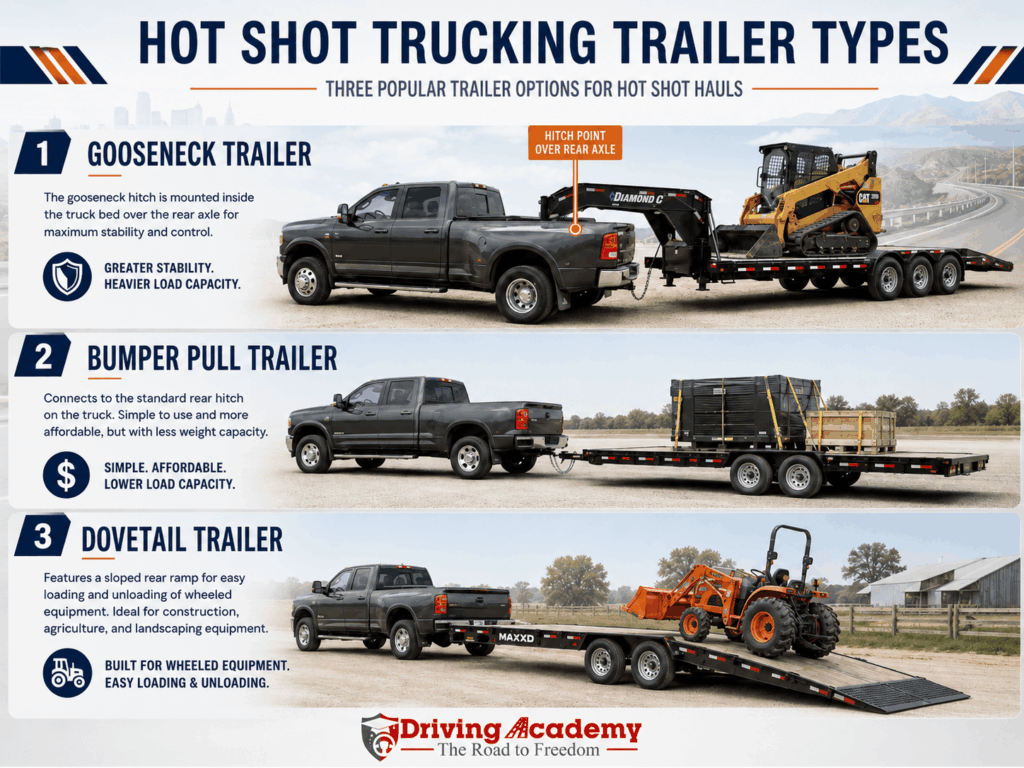

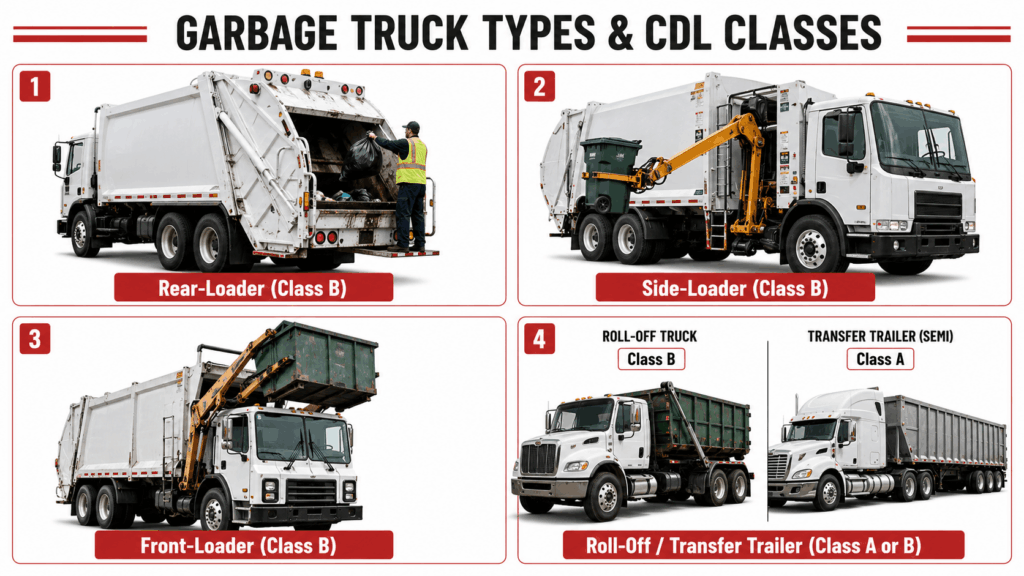
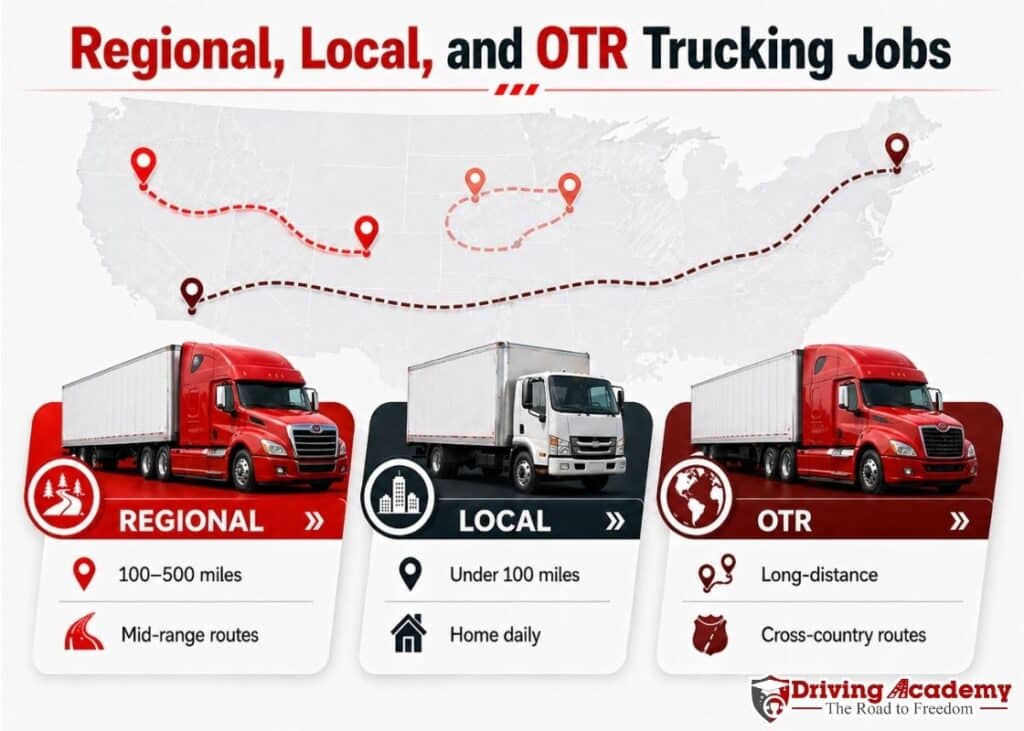
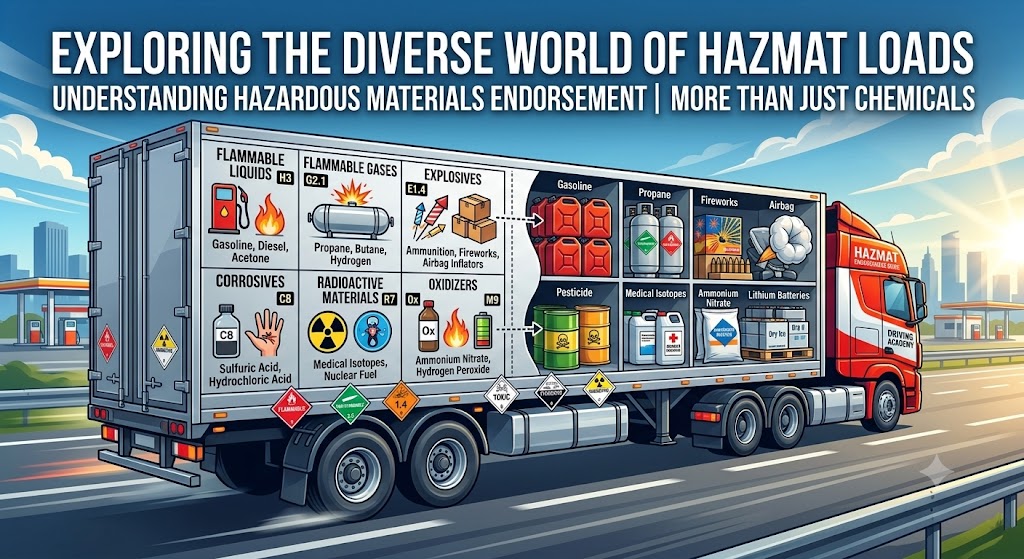
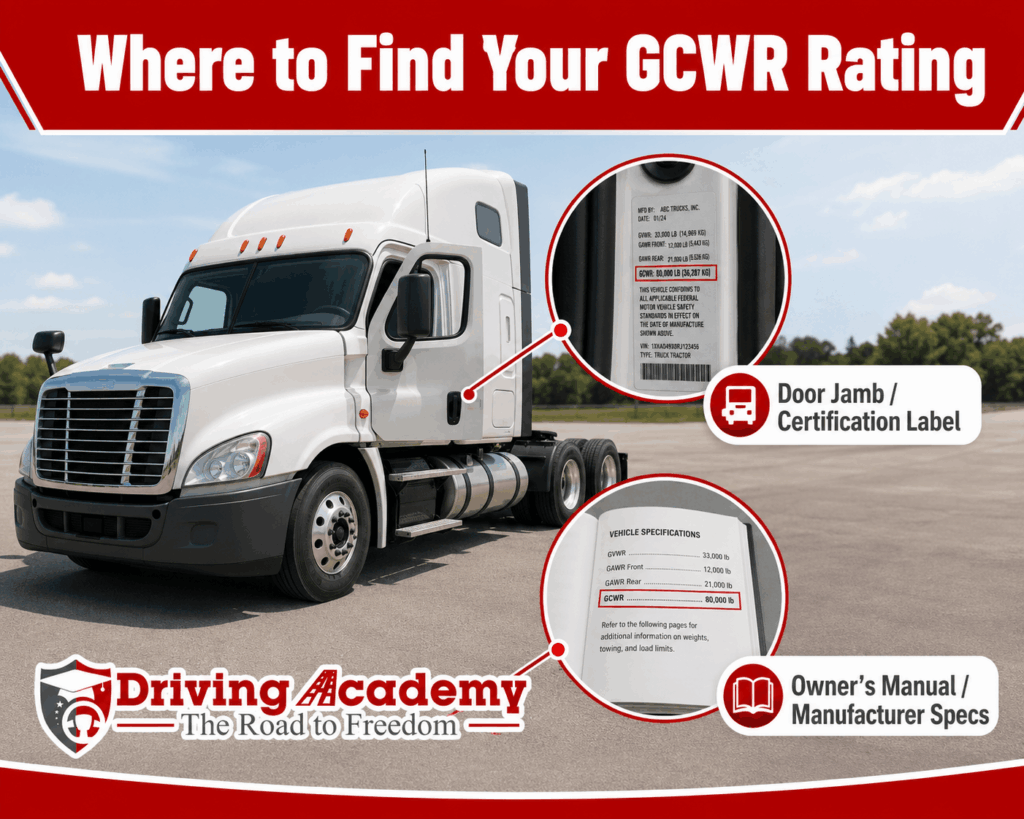
| Endorsement | Purpose | Special Requirement | Knowledge Test |
|---|---|---|---|
| T – Double & Triple Trailer | Pulling 2 or 3 trailers. (Where legally allowed) | Class A license is required | ✔️ |
| N – Tanker Vehicle | Transporting liquids or gas in a tanker | Just pass Knowledge Test | ✔️ |
| H – Hazardous Materials | Transporting hazardous materials | Must be trained & retested every 2 years. | ✔️ |
| X – Combination Hazardous Materials & Tank Vehicles | Transporting hazardous materials in a tank | Earned automatically with both “H” & “N” Endorsements. |
Step 2: ELDT(Entry-Level Driver Training)
In order to take the road test for you Class B CDL, you mush first complete your ELDT AKA Entry-Level Driver Training.
Now there are two parts to the ELDT truck drive training: ELDT Theory and Behind-The-Wheel. In order to take your road test, you’ll need to complete both portions of the training at a federally licensed CDL school like Driving Academy.
ELDT Theory
ELDT theory is the curriculum required by the Federal Motor Carrier Safety Administration (FMCSA) for those looking to get their Class B CDL.
The government wanted to make sure that everyone had a standard piece of knowledge so they mandated that every student take an ELDT theory course.
This program covers things you need to know to drive a Class A CDL truck.
There are no required minimum teaching hours for theory training,
Because there isn’t a single format, it’s up to the schools to build a curriculum that gets approved by the FMCSA. This leeway with the CDL program means the coursework can be done in a live classroom, online or through a collection of recorded videos.
Once you complete the training, you need to take another test to prove your knowledge.
Once you pass the ELDT theory exam you’re ready to rock and roll. You’re now up to the fun part, practicing on a real truck!
Behind-The-Wheel Training
The second part of training is where you get to practice driving a Class A truck. This Behind-The-Wheel training is done at a certified truck driving school like Driving Academy.
You might be thinking, “Hey, why can’t I just practice on my uncle/brother/friend’s truck. I’ll just learn with them and get my Class B CDL.”
…Nope.
You Must Complete Behind-The-Wheel Training In-Person At A Licensed CDL School!
According to § 380.609 of the Federal Code regarding entry-level driver training requirements:
“An individual who applies, for the first time, for a Class A or Class B CDL, or who upgrades to a Class A or B CDL, must complete driver training from a provider listed on the Training Provider Registry (TPR).”
This means that truck driver training can only be done by a licensed instructor at a federally approved school.
So, if you haven’t already, you’ve got to enroll at a CDL driving school like Driving Academy for yard training.
Class B Yard Training
Your behind-the-wheel training will take place in a yard or lot, which is why it’s often referred to as yard training.
Yard training at a certified trucking school is a crucial part of a commercial driver’s license training program.
Not only is it federally mandated but it takes place in a controlled environment (the “yard”) where students learn to safely operate and maneuver a truck before heading out on public roads.
This CDL yard training helps you become a truck driver by preparing you for the road test.
Truck Yard Training
https://youtu.be/pXFjSDHeajY?si=ArznmEroqHeP8s0w
Step 3: CDL Skills Test (Road Test)
The skills test has three parts:
1) Pre-Trip Inspection
The first stage of the Class B CDL road test is the Pre-Trip Inspection. In this section you’re going to have to know how to inspect both the outside and then inside of the vehicle.
2)Basic Control
The second stage of the Class B CDL road test is the Parking Maneuvers. These are going to test your Basic Vehicle Control.
You’ll just need to do things like Forward Stop, Straight Line Backing, Forward Offset and Reverse Offset.
You’ll need to demonstrate your ability to control the truck by guiding it into a defined area marked with traffic cones and painted lines.
You will fail your CDL skill test if you miss or go over the lines. It might seem unfair but in the real world, if you go over the line, then “BAM!” you’ve hit a car or building.
3) Road Test
The final part of the CDL exam is driving the truck on the road itself. This CDL road test is just like the road test you took when you got your regular license.
Your examiner will tell you where to drive and put you in a variety of traffic situations. This would include:
- Left and Right Turns
- Intersections
- Railroad Crossings
- Up and Down grades
- Single and Multi-Lane Roads, Streets, and Highways
Note: The main difference between the Class B CDL road test and a regular car road test is that you’ll also need to point out signs like speed limits and bridge heights.
When you hear that you’ve got to take a road test to get your CDL license, most people think that driving the truck or bus is going to be the hardest part of the CDL exams.
However, for most students, the pre-trip inspection is the hardest part of the test.
One part of the CDL pre-trip portion of the test is the air brake check.
When you’re hauling 80,000 pounds at 65 miles an hour down the highway, you want to make damn sure your air brakes are working.
For many of our CDL school students, the air brake check is the hardest part of it because it involves multiple pressure checks and must be performed correctly step by step.
In fact, failing even one part of the air brake check can result in an automatic failure of the vehicle inspection test in most states.
Watch the Air Brake Check Step by Step
https://youtu.be/nY5gg8WJqwg
The 3 Parts of the Air Brake Check
The air brake check is usually taught and performed in a specific order.
On the CDL Skills Test, this part matters because the examiner is looking for both the correct procedure and the correct pressure ranges. According to the FMCSA CDL manual, the three key parts are
- The applied pressure test
- The low-air warning test
- The spring brake pop-out test.
The manual also states that if you do not perform all three correctly, you can automatically fail the vehicle inspection portion of the test.
The Setup: Perform a “Safe Start”
Before you can test the brakes, you have to safely start the truck and build up the air in your tanks.
- Turn the key to the “ON” position: Do not start the engine yet. Just turn the key so the dashboard gauges and electronics turn on.
- Check your setup: Verify the transmission is in Neutral and both of your parking brakes are applied (pulled out).
- Start the engine: Turn the engine fully on.
Now, your goal is to build the air pressure up to 120 to 140 PSI. You can give the truck a little bit of gas to raise the RPMs (no higher than 1500) to make the air compressor work faster. Keep watching the gauges until you hear a loud “sneeze” from the air tanks. That sneeze indicates your air pressure is full!
Now that the setup is done, it is time for the 3 Steps of the Air Brake Test.
(CRITICAL WARNING: Once the tanks are full, turn the engine OFF, and turn the key back to the ON position. If you forget to turn the key back on, your dashboard electronics won’t work, and you will fail!)
Step 1: The Applied Pressure Test
First, push in the yellow brake valve (tractor) and then the red brake valve (trailer). This moves the air from the tanks into the lines.
- Press your foot firmly on the brake pedal and hold it there.
- Wait for exactly one minute.
The Goal: Watch your gauges. You must not lose more than 4 PSI during that one minute. This proves your system doesn’t have a massive air leak.
Step 2: The Low-Air Warning Test
Next, you need to make sure the truck will warn you if the air pressure is dropping.
- Begin pumping the foot brake.
- The low-air warning light and buzzer should come on before 55 PSI.”
The Goal: Watch the dashboard. Make sure the warning light and buzzer activate before the gauge hits 55 PSI.
Step 3: The Spring Brake Pop-Out Test
Finally, you need to prove that the emergency spring brakes will automatically pop out and stop the truck if you lose too much air.
- Continue pumping the foot brake even faster.
- Between 20 and 45 PSI, both parking brake valves should pop out.
The Goal: Keep pumping and watching the red and yellow valves. Between 20 and 45 PSI, both valves will loudly pop out. (Do not pull them out with your hands, they must pop out on their own!)
Need Help Passing the Air Brake Check?
If the air brake check still feels confusing, you are not alone.
At Driving Academy, our professional instructors help students learn difficult parts of the CDL Skills Test. Instead of trying to memorize everything on your own, you can train with instructors who walk you through the process!
Click the button below and learn how our instructors and Guaranteed CDL Program can help you get ready for the test.

A High-Paying Career In Trucking Is Waiting For You
Don’t Miss Out! Save $200 Off Your Tuition Today!
Learn More
Common Mistakes on the Air Brake Road Test
I’m going to be straight with you: this is going to be one of the most difficult parts of the road test itself. Why? Because the grading is incredibly strict. If you miss just one thing on the checklist, you completely fail the test and have to restart from the beginning again.
The biggest reason I see students fail is the lack of repetitions. During your training here at Driving Academy, we give you a step-by-step checklist to help you build that muscle memory. But remember, during the road test itself, you’re not allowed to use the checklist. You are completely on your own.
Because of the pressure, students often make small errors that cost them the entire test. In my experience, here are the two most common mistakes that will lead to an instant fail:
- Forgetting the Key: After you hear the sneeze, turn the engine off, but you must turn the key back to the “ON” position (no engine). A lot of people forget this step. If the key isn’t on, your dashboard warning lights and buzzer won’t work. And what do you think is going to happen? You’re going to fail.
- Touching the Valves: During the final pop-out test, you must let the truck do the work. It is very, very important that you keep pumping those brakes until both valves pop out on their own. If you reach over and touch them or pull them out yourself, you fail.
Why the Air Brake Check Matters?
The manual explains that the air brake check is meant to confirm that the safety devices operate correctly as pressure drops. It also warns that if the low-pressure warning does not work, you could lose air pressure without knowing it, which could cause emergency braking in a single-circuit system or increased stopping distance in a dual system. The manual also says excess air loss can lead to losing your brakes while driving.

When even one mistake can cost you the test, proper training can make a big difference. Contact Driving Academy and learn how our instructors can help you prepare for the air brake check and the rest of the CDL Skills Test.
FAQs About the Air Brake Road Test
What is the air brake test in pre-trip inspection?
The air brake road test usually refers to the air brake check performed during the pre-trip inspection portion of the CDL Skills Test. It is not the written air brake exam. Instead, it is the part where you show the examiner that you know how to check the air brake system correctly before driving.
Can you fail the CDL test if you miss one part of the air brake check?
Yes. The FMCSA manual states that if you fail to perform all three parts of the air brake check correctly, you automatically fail the vehicle inspection test portion of the CDL Skills Test.
Do you have to shut off the engine for the air brake check?
Yes. For the applied pressure portion, the FMCSA manual says to shut off the engine before completing that part of the test. It also says to chock the wheels if necessary.
How much air loss is allowed during the applied pressure test?
According to the FMCSA manual, air pressure should not drop more than 3 psi in one minute for a single vehicle or 4 psi in one minute for a combination vehicle during the applied pressure test.
Why is the air brake check so important?
The air brake check is important because it shows that the brake system can hold pressure, warn the driver when pressure gets too low, and activate the spring brakes when necessary.
Disclaimer: Exact wording and pressure ranges may vary slightly by state examiner or testing vehicle.
If you’re planning to get your CDL, or upgrade from a Class B to a Class A, there’s one requirement you can’t skip: ELDT training.
A lot of people have heard the term. Some know it’s required. But very few really understand what it is, why it matters or how to complete it correctly.
This guide breaks everything down in plain English so you know exactly what to expect and what to do next to get your CDL license.
A High-Paying Career In Trucking Is Waiting For You
Don’t Miss Out! Save $200 Off Your Tuition Today!
Learn More
What Is ELDT? (Explained Simply)
ELDT stands for Entry-Level Driver Training. Think of it as the federal training program that ensures every new commercial driver has the proper knowledge and hands-on experience before taking their CDL test.
It’s not optional.
It’s not a bonus course.
You cannot take your CDL skills test without completing it.
The ELDT program includes two major components:
Theory (classroom or online learning)
Behind-the-Wheel (hands-on driving with a certified instructor)
Both are required, and both must be completed at a school approved by the FMCSA.
Why ELDT Exists: Safety, Consistency and Better Drivers
Before February 7, 2022, CDL training varied wildly from state to state.
One school in Ohio might offer 20 hours of driving practice; another in New Jersey 160 hours and another in Florida might only offer 2. Some drivers were passing CDL tests without ever being properly trained behind the wheel of an actual truck! Which is either incredibly impressive, or incredibly fishy.
The other issue was that there was no standard set of knowledge a semi-truck driver needed to know. Things like what to do if you’re in an accident, how to drive at night and how often you need to check your brakes.

Before ELDT Rules, Many Drivers Lacked Important Knowledge About Driving Trucks Safely. ELDT changed that
The federal ELDT standards were created to ensure that every new commercial driver, no matter where they train in the United States, learns the same core safety skills, including:
- Proper vehicle operation
- Driving in different conditions
- Understanding vehicle systems
- Pre-trip inspections
- Defensive driving
- Emergency procedures
The goal of the ELDT rule is simple: better trained and more knowledgeable drivers are safer drivers, which means safer roads for everyone.
Who Must Complete ELDT Training?
One of the most common questions we see online is, “Do I need to do ELDT training?”
The short answer is you probably do. But let’s break it down so you know exactly if you need to complete entry level truck driver training or not.
You must go through ELDT training if you are trying to…
- Get a Class A or Class B commercial driver’s license (CDL) for the very first time
- Upgrade your Class B CDL license into a Class A CDL
- Add one of these endorsements to your license for the first time
- S for school bus
- P for passenger vehicles
- H for hazardous materials
- If you started CDL training but never finished
Who Is Exempt?
…and the second most common is, “Am I exempt from ELDT?”
You do not need to do ELDT if:
- Your CDL license or endorsement was issued before February 7, 2022 (even if you’re upgrading from Class B to A)
- You had a CDL that you let expire
- You’re a military veteran who drove military vehicles similar to commercial trucks in the past year
- You’re a farmer transporting agricultural products to or from a farm
- Any individual who meets one of the exceptions for taking a skills test in 49 CFR Part 381 is also exempt from the ELDT requirements
If you don’t fall into an exemption category, then ELDT is mandatory. There is no way around it.
How To Complete ELDT Training (Step-by-Step)
Most people get confused because they’re not sure how the process works. They know they need to do the ELDT training but don’t know what’s actually involved.
Luckily, ELDT is pretty simple when you follow these steps.
Step 1: Register With A FMCSA Approved ELDT Program
You’ll need to go through an official training provider in order to complete ELDT training.
The school must be listed on the FMCSA Training Provider Registry (TPR). Meaning that the CDL School must have an approved program that includes all the required topics in their curriculum.
If the school is not in FMCSA Training Provider Registry, your training won’t count
Check the list before you enroll. If the school is not registered, your training will not count!
Step 2: Complete A ELDT Theory Course (Online or Classroom)
The cool thing about the theory portion of the ELDT training is that you can do it online or in a classroom. As long as the program is FMCSA approved, you can take the theory classes anywhere.
This portion covers the knowledge you must understand before driving a commercial vehicle safely. Topics include:
- Basic Operation
- Safe Operating Procedures
- Advanced Operating Practices
- Vehicle Systems & Malfunctions
- Non-Driving Activities (post-crash procedures, hours of service, fatigue, etc.)
At the end of the course, you’ll take a multiple-choice exam that you’ll need to score at least 80% to pass.
Step 3: Take The ELDT Test
When you finish all your ELDT lessons, you’ll take a multiple-choice test. Unlike your permit exams that need to be done at your local DMV, the ELDT Test can be taken anytime and anywhere. This test will be given by the provider you studied with. It can be taken on paper, on a computer or even online.
In order to pass you’ll need to get at least 80% right.
If you do fail, don’t fret because you can retake it right away. (Though you’ll probably want to go back and study a bit.)
Once you pass the ELDT exam, your CDL school sends your results to a government registry so you can move on to the next part of becoming a truck driver, behind-the-wheel training.
Step 4: Behind-The-Wheel (BTW) Training
Now this may surprise some of you, but Behind-the-Wheel training can’t be done online.

Only real training, in a real truck, with a real instructor counts.
In the past, you could get your practice in for the skills test by borrowing your uncle’s tractor-trailer.
But now, under the ELDT rules, to get your CDL you’ll need to complete your behind-the-wheel training at a CDL school that is approved by the FMCSA. This ensures that the training meets federal safety standards and is officially recognized when you go to get your CDL.
You must train with a certified instructor at a licensed CDL school
All truck driver training must be supervised by a certified CDL instructor to make sure you’re learning the required skills, the right way. But also experienced instructors are needed for your safety, and the safety of everyone else on the road while you learn to drive a big rig.
At your local CDL school, you’ll learn:
- Basic vehicle control
- Backing maneuvers
- Turning, shifting, and speed control
- Pre-trip inspections
- On-road driving in actual traffic
This BTW truck driver training must meet federally required standards, and your instructor must document your performance and proficiency.
Once you complete your school’s training program, you will be legally ready to take the CDL skills test.
FAQs About ELDT
How much does ELDT training cost?
If you ask Google how much it costs to get ELDT training you’ll see a range from as little as $25 to over $10,000!
Why the huge range in price for ELDT? Because the low-end is just the price for online only programs. They don’t include the mandatory Behind-The-Wheel training.
Online ELDT courses typically cost between $50 to $150. But, in order to get your CDL you’ll need to also attend an in-person school.
To complete the Behind the Wheel training you’re looking at a cost between $2,500 and $6,000. Be suspicious of any school that claims they can do the in-person training required by the ELDT rules for less than $2,500. There’s a good chance you won’t actually have enough practice time to pass the difficult test or they might not even be approved by the FMCSA!
Is there a minimum number of hours for ELDT classes?
Officially there is no minimum number of hours required for ELDT training.
As long as your certified CDL school has a curriculum that meets the FMCSA minimum standard, the number of hours for classroom learning or behind the wheel learning is not set in stone. Certain states do require a certain number of hours behind the wheel. As a rule of thumb you’ll want to attend a program that offers at least 36 hours of behind the wheel training. But in actuality you’ll want to complete at least 100 hours of behind the wheel time in the truck yard for a Class A license and at least 60 hours to get a Class B CDL license.
Do the theory classes and BTW training need to be done by the same school?
Nope. Theory and behind the wheel ELDT training can be done at completely different schools. That is as long as they’re both on the FMCSA approved list.
But why would you want to pay extra for separate schools when you can go to a school like Driving Academy that offers free online ELDT theory classes as part of becoming a behind the wheel student?
Is it cheaper to take online ELDT training and then go to a CDL school for BTW training?
It can be cheaper to do the ELDT Theory Training online. However at a school like Driving Academy the online ELDT theory course is FREE when you sign up.
How long does ELDT take?
While every student is unique, most people complete ELDT theory coursework in 2 weeks or less. It really depends how good you are at studying on your own. When it comes to the actual training part of becoming a trucker, most CDL training providers have 4-6 week ELDT BTW training programs. Some more indepth programs can take up to 8 weeks or more to complete.
At Driving Academy we’ve got programs that allow you to train on your schedule. Full time or part time, with night and weekend CDL classes. It’s not uncommon for our truck driving students to spread training out over a few months. We also have an accelerated 2 week CDL training program for out of state students who need to get their CDL fast!
How do I know if a truck driving school is approved?
It’s easy to find out if your trucking school is on the approved FMCSA list. All you have to do is visit the FMCSA Training Provider Registry website.
Do I need an ELDT before taking my CDL permit test?
- You can complete the theory part of ELDT training at any time in the CDL process. So the ELDT theory section can be done before or after you take your CDL permit exam. Both theory and behind the wheel training need to be completed before you take your CDL road test.
That being said, you do need to complete the ELDT theory training before you can take the hazmat (H), school bus (S) or passenger (P) endorsement tests.
Does ELDT expire?
Unlike the CDL learners permit that expires in a year, once completed, the ELDT certification never expires. Even if you let your CDL license expire, you don’t need to redo the ELDT training. However you do need to complete your behind-the-wheel training within 12 months of finishing the theory portion. Otherwise you will need to retake the ELDT theory exam.
Do I need to redo ELDT if I move to a new state?
Because ELDT certification is handled at a federal level, you don’t need to redo it if you move to another state. You will need to transfer your CDL driver’s license to the new state you’re moving to.
Quick Recap: What You Need to Remember
- ELDT is mandatory for almost all new CDL drivers.
- You must complete theory AND behind-the-wheel training.
- It must be from a TPR-registered CDL school, or it won’t count.
- Online ELDT courses are convenient for the theory portion, but behind-the-wheel must be done in person.
- You can take your CDL road test once your school uploads your program completion to the FMCSA.
Why Choose Driving Academy To Do Your ELDT Training?
If you want to get your CDL, Driving Academy is here to help! As the best CDL school, we guide you every step of the way, from permit to paycheck.
Here’s what sets us our trucking school apart:
- Online ELDT theory for maximum flexibility
- Full hands-on behind-the-wheel training and realistic truck driving simulators to practice on
- Road test preparation and scheduling support
- Real trucks, real instructors, real experience
- Multiple training programs to match your schedule and goals including nights and weekends.
- Job placement assistance until the day you die!
We make the tractor-trailer training process easy, clear and stress-free to help you get on the Road To Freedom!
If you’re thinking about getting a commercial driver’s license, one of the first questions you’ll run into is the difference between Class A and Class B CDL. They might seem similar, but the type of work, vehicles, and career paths they open up are very different.
Choosing the wrong CDL class can cost you time, money, and job opportunities. Choosing the right one can put you on a clear path toward a stable, well-paying career.
In this guide, we’ll break down the real differences between Class A and Class B CDL licenses, what each one allows you to drive, the jobs you can get, and how to decide which license makes the most sense for your goals.
What Is A Commercial Driver’s License (CDL)?
Before you actually understand the difference between them, it’s important to know what a CDL is. A Commercial Driver’s License (CDL) allows drivers to legally operate large, heavy, or specialized commercial vehicles. While the rules are set federally, CDLs are issued and managed by each state.
There are three main CDL classes:
- Class A
- Class B
- Class C
This article focuses specifically on the difference between Class A and Class B CDL, since those are the two most common licenses for professional drivers.
What Is A Class A CDL?
A Class A CDL allows you to operate combination vehicles with a Gross Combination Weight Rating (GCWR) of 26,001 pounds or more, where the vehicle or trailer being towed weighs more than 10,000 pounds.
Vehicles You Can Drive With a Class A CDL:
- Tractor-trailers (18-wheelers)
- Semi-trucks
- Flatbeds
- Tanker trucks
- Livestock carriers
- Truck and trailer combinations
Common Class A CDL Jobs:
- Long-haul (OTR) truck driver
- Regional truck driver
- Tanker driver
- Flatbed driver
- Owner-operator
Class A is the most versatile CDL license and typically offers the highest earning potential, especially for long-distance driving. Because it leads to better pay and broader job opportunities, the Class A CDL is the most popular choice among our students.
Types of Class A Vehicles
Tractor-Trailers
Tanker Trailers
Flatbed Trailers
Livestock Carriers
Car Transporters
What Is A Class B CDL?
A Class B CDL allows you to operate single vehicles with a Gross Vehicle Weight Rating (GVWR) of 26,001 pounds or more, or tow a vehicle not exceeding 10,000 pounds.
Vehicles You Can Drive With a Class B CDL:
- Straight trucks
- Dump trucks
- Box trucks
- Cement mixers
- Garbage trucks
- School buses
- City buses
Common Class B CDL Jobs:
- Local delivery driver
- Bus driver
- School bus driver
- Construction vehicle operator
- Waste management driver
Class B jobs are often local, meaning you’re more likely to be home every night.
Types of Class B Vehicles
Box Truck
Dump Truck
School Bus
Garbage Truck
City Bus
Cement Truck
Tanker Truck
Flatbed
Snow Plow
Crane
Difference Between Class A And Class B CDL (Side-by-Side Comparison)
When people ask about the difference between Class A and Class B CDL, they’re usually trying to understand what vehicles they can legally drive and what kind of jobs each license qualifies them for.
The main difference comes down to vehicle type. A Class A CDL is for combination vehicles, like tractor-trailers pulling heavy trailers. A Class B CDL is for single, heavy vehicles, such as buses, dump trucks, or box trucks.
This distinction affects training, testing difficulty, job options, and even daily work schedules. A Class A license generally offers more flexibility, while Class B is better suited for drivers who prefer local routes and predictable hours.
The table below breaks down the side-by-side differences between Class A and Class B CDL so you can clearly see how each license compares and decide which one fits your goals best.
| Class A CDL | Class B CDL | |
|---|---|---|
| Vehicle Type | Combination Vehicles | Single Vehicles |
| Common Vehicles | Tractor-trailers, Semis | Buses, Dump trucks, Box trucks |
| Typical Routes | Long-haul, Regional | Local, Regional |
| Home Time | Less Frequent | More Frequent |
| Earning Potential | Higher | Moderate |
| Career Flexibility | Very High | More Specialized |
In the sections below, we’ll break down these differences in more detail, including pay potential, job types, training difficulty, endorsements, and which CDL makes the most sense depending on your career goals.
Which CDL Is Harder To Get: Class A Or Class B?
Both licenses require:
- A Commercial Learner’s Permit (CLP)
- Written knowledge tests
- A skills and road test
- A DOT medical exam
However, Class A CDL training is generally more challenging because:
- You’ll need to pass a Combination Vehicle permit exam
- You’re learning to drive larger combination vehicles
- Backing and maneuvering are more complex
- You must master trailer control
That said, neither license is “easy”, they just prepare you for different types of driving.
At Driving Academy, our certified instructors break down the hardest maneuvers into simple, step-by-step formulas. Plus, you get to practice on our state-of-the-art driving simulators before you ever step foot in a real truck. Whether you choose Class A or Class B, our Guaranteed Training Program gives you unlimited road test attempts, so we will train you until you pass!
A High-Paying Career In Trucking Is Waiting For You
Don’t Miss Out! Save $200 Off Your Tuition Today!
Learn More
Pay Differences: Class A VS Class B CDL
So here’s the million-dollar question: which CDL actually pays more?
Class A CDL Pay:
Based on Ziprecruiter the average annual pay for a CDL Class A Driver in Linden, NJ is $81,232 a year, while highest paying trucking jobs might generate income upward of $350,000 a year!
- Often higher overall
- Long-haul drivers can earn more with experience
- Tanker, hazmat, and specialized freight pay premiums
- Can get on true road to freedom by owning your own business
Class B CDL Pay:
Based on Comptool the average annual pay for a Class B CDL Truck Driver in New Jersey is $61,974 a year.
- Typically lower than Class A
- More predictable schedules
- Strong pay for construction, and municipal jobs
The truck driver pay does somewhat depend on where you live. However, because Class A drivers aren’t tied to just one location their pay is typically between $75,000 and $95,000.
If maximizing income is your top priority, Class A usually wins. If work-life balance matters more, Class B can be the better choice.

A High-Paying Career In Trucking Is Waiting For You
Don’t Miss Out! Save $200 Off Your Tuition Today!
Learn More
Endorsements: How They Affect Class A And Class B CDL?
Endorsements expand what you can drive and how much you can earn.
Common CDL Endorsements:
Both Class A and Class B drivers can add endorsements, but Class A drivers generally have more endorsement-based job opportunities. If you want to learn more about Endorsements or how to get a CDL in general, feel free to check out this article on How to Get A CDL?
| Endorsement | Purpose | Special Requirement | Knowledge Test |
|---|---|---|---|
| T – Double & Triple Trailer | Pulling 2 or 3 trailers. (Where legally allowed) | Class A license is required | ✔️ |
| P – Passenger | Buses or vehicles used to transport passengers. | Requires Road Test in a bus or passenger vehicle | ✔️ |
| S – School Bus | Transporting children in a bus | Requires “P” endorsement, background check & Road Test in a school bus | ✔️ |
| N – Tanker Vehicle | Transporting liquids or gas in a tanker | Just pass Knowledge Test | ✔️ |
| H – Hazardous Materials | Transporting hazardous materials | Must be trained & retested every 2 years. | ✔️ |
| X – Combination Hazardous Materials & Tank Vehicles | Transporting hazardous materials in a tank | Earned automatically with both “H” & “N” Endorsements. |
Can You Upgrade From Class B To Class A CDL?
Yes, and many drivers do.
If you start with a Class B CDL, you can later upgrade to a Class A, but you’ll need to:
- Take the Combination Vehicle knowledge exam
- Complete additional ELDT training
- Pass the Class A skills test
- Test in a combination vehicle
You can fully learn here how to upgrade a Class B to Class A CDL.
Final Thoughts: Choosing Between Class A And Class B CDL
The difference between Class A and Class B CDL comes down to vehicle type, lifestyle, and career goals. Neither license is “better” , they’re just designed for different paths in the transportation industry.
If you want flexibility and higher earning potential, Class A may be the right move. If you want stability, local routes, and consistent schedules, Class B could be the perfect fit.
Whichever path you choose, getting the right CDL is the first step toward a reliable, in-demand career.
Learn More About The Difference Between Class A And Class B CDL
Paperwork, And Documents To Bring For The CDL Permit Test
Picture this: you’ve been studying for weeks for the CDL permit test, you finally show up to the DMV, you’re waiting in a long line ready to take your CLP exams, aaaand…. the clerk tells you, “Sorry, you can’t take the permit test today.”
Why? Because if you’re missing any documents, you WILL be turned away and have to reschedule.
So today, we’re going to make sure that doesn’t happen to you.
We’ll go over exactly what you need to bring to your CDL permit exam, so that you walk in 100% prepared.
You are also able to take most of the CDL endorsement exams at the same time as your Commercial Learner’s Permit (CLP) but for this piece we’re going to mostly focus on taking the basic CDL permit written exams.
Make sure to read until the end because we’ll also go over some pro tips and common mistakes to avoid!
What Do I Need To Take My CDL Permit Test
Of course, before you take your CDL knowledge test you’ve got to study! If you’ve got a reliable CDL Permit test study source, being ready to take the exam should be no problem.
Assuming you’re mentally ready to take your permit exam, what do you need to bring to the DMV?
Documents You Need To Bring For Your CDL Permit Exams
Okay, now for what you came here for: the documents you need to bring to take your commercial learner’s permit exams. These documents ensure that you are legally qualified to get a CDL license.
1) Valid Driver’s License

The most important thing you’ll need to have on you is your regular state driver’s license. If you want to drive a semi-truck or passenger vehicle, you’re going to need to be able to and allowed to drive a regular Class D automobile.
The Driver’s License…
- MUST BE American
- MUST BE from the state you’re taking the test in
- MUST BE from the state you live in
- Is NOT expired
- Is NOT suspended
- Is NOT just a learner’s permit
2) Proof of US Citizenship Or Lawful Permanent Residence

| What You Need To Bring | |||
|---|---|---|---|
| USA Citizens |
| Non-US Citizens |
|
Illegal immigrants and undocumented immigrants can NOT get a CDL Permit or License, even if their state issues a regular driver’s license.
If you are a foreign national, your visa status determines whether you receive a standard CDL or a Non-Domiciled CDL under the latest 2026 FMCSA Non-Domiciled rules. Always bring your unexpired Employment Authorization Document (EAD), I-94, or foreign passport to prove your legal status.
3) 6 Points Of Identification
Just like you needed in order to get your Class D driver’s license, you’ll also need to present 6 points of identification to prove you are who you say you are. This can include your passport, birth certificate and other government issued forms of ID.
You can consult this handy chart from the New Jersey MVC to know which documents you need for your 6 Points of ID.
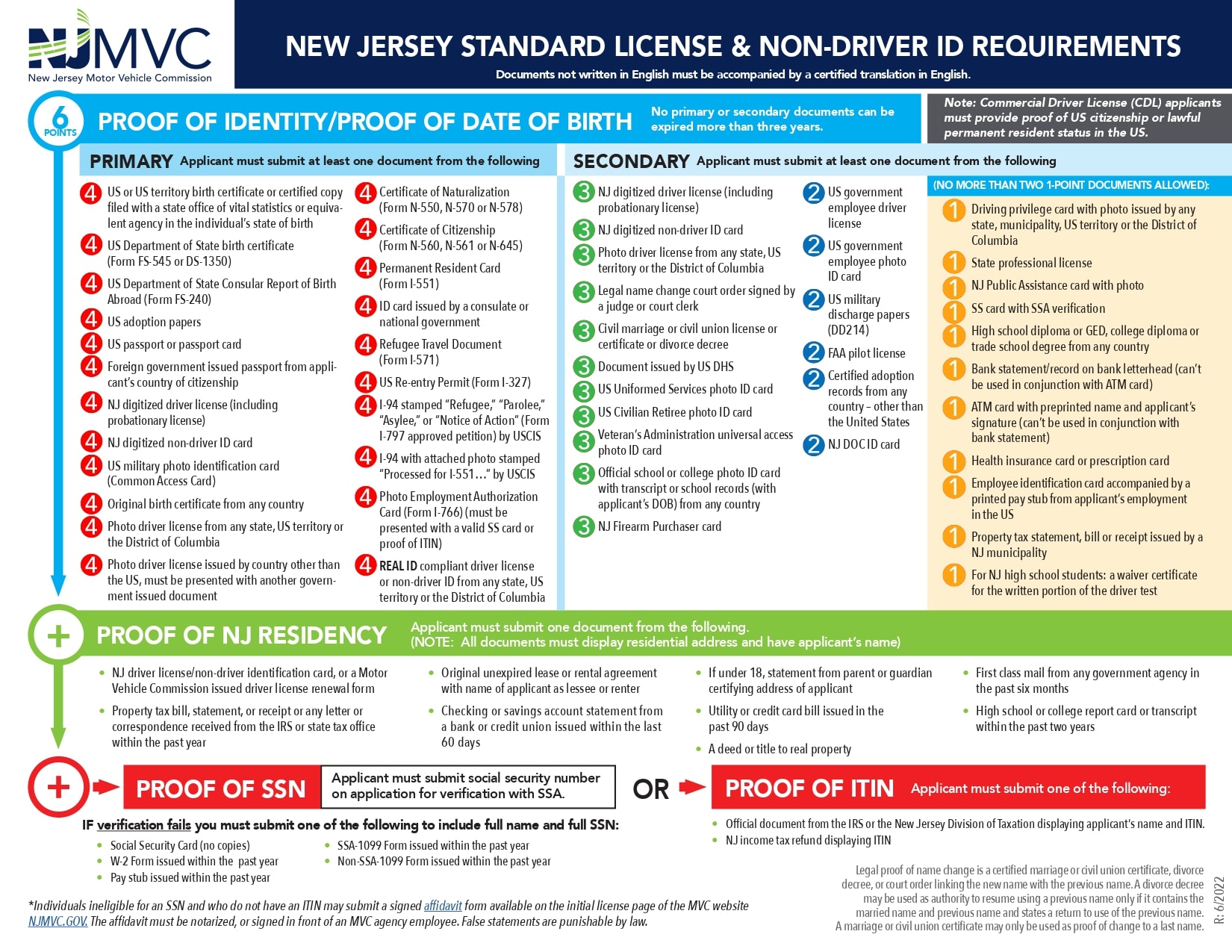
Yes, your driver’s license and proof of citizenship documents can also be used as part of your 6 Points.
4) Application for Commercial Driver License
To get your CDL permit, you must complete your state’s Application for Commercial Driver License. This is the official form the DMV uses to collect your personal information, confirm your eligibility, and document which CDL class and endorsements you’re applying for.
They’ll likely have a copy at the DMV but in the interest of time, it’s better to fill it out before you go in to take the tests.
5) DOT Medical Examiner Certificate

To get your CDL permit, you must have a valid Medical Examiner’s Certificate, also known as a DOT Medical Card or Med Card. This certificate proves that you are physically qualified to operate a commercial motor vehicle and meet all federal safety standards.
Starting June 23, 2025, Certified Medical Examiners must electronically submit all commercial driver medical examination results through the National Registry of Certified Medical Examiners, where they will be sent directly to the FMCSA and State Driver’s Licensing Agencies.
This health exam must be completed by a FMCSA-certified medical examiner. Once you pass, the certificate is valid for up to 24 months (or less if the doctor requires more frequent checkups).
6) Commercial Driver License Self-Certification Form
The CDL Self-Certification Form tells your state’s DMV what type of commercial driving you plan to do and whether you’re required to maintain a valid DOT Medical Certificate (Med Card).
It’s a simple but important form, and your CDL permit application won’t be processed without it.
When you fill it out, you’re choosing one of four categories that describe the kind of driving you expect to do:
1. Interstate Non-Excepted (NI)Most CDL drivers choose this option.
| 2. Interstate Excepted (EI)
|
3. Intrastate Non-Excepted (NA)
| 4. Intrastate Excepted (EA)
|
Each state has their own Self-Certification Form.
7) Payment For Fees
There’s no such thing as a free lunch. This also applies to getting your CDL permit. You will need to bring some form of payment in order to take your knowledge tests.
The testing fees do vary widely from state to state because each state’s motor vehicle agency sets its own costs for the Commercial Learner’s Permit application and the required written knowledge tests.
In some states, these prices are bundled together into one application fee, while others break them out into separate charges for the permit itself and each CLP exam.
In general the CDL permit fees are relatively affordable and typically range from $10 to $40. You can almost always pay for the testing fees with cash, credit card or check.
You’ll typically need to pay an extra fee for each CDL endorsement exam you take.
Before heading to the DMV, always confirm the current pricing in your state since fees can change without much notice.
Appointment To Take The Exam
Many people study hard for the CLP exam and naturally assume that walk-ins are allowed. But THEY’RE NOT
In almost every state, you have to schedule an appointment to take the CDL Permit Exams. The reason for scheduling a CLP appointment lets the DMV:
- Ensure testing computers/seats are available
- Make sure they have the right tests you plan on taking
- Make sure a certified CDL examiner is available
- Control wait times and reduce crowding
- Verify your documents ahead of time
With an appointment, you avoid long lines and have a guaranteed testing slot. Check with your local DMV or MVC’s website to see how you should go about that process. Just make sure you book your testing slot early because spaces are limited
It’s recommend you schedule your Written CDL Tests 2-3 weeks before you’re ready to take them
Common Mistakes To Avoid At The DMV
One of the most common mistakes CDL permit applicants make is not bringing all the required documents to the DMV. Many people assume a regular driver’s license is enough, only to find out they also need proof of identity, proof of residency, a valid Social Security number, and a current DOT medical examiner’s certificate.
Here are some tips to make sure you don’t get turned away for not having the right documents to bring for the CDL permit test.
- Don’t bring photocopies – The DMV will only accept originals.
- Make sure names match across all documents – If your ID says “Robert” but your SS card says “Bob,” bring legal proof of that name change.
- Double-check expiration dates – Expired documents will get rejected immediately.
- Have everything ready the night before – The last thing you want is to be stressed scrambling in the morning.
- Bring more documentation than you need – Sometimes you may think an ID document is official enough but bring extra backups, just in case.
- Make sure you bring your driver’s license and social security card!
What Do You Do After You Pass The CLP Exam?
Great, you passed! We’re so excited for you!
So what do you do next?
Before you leave the DMV, you’ll certify all your documentation and DOT physical. You’ll then be given a temporary CDL permit. This piece of paper acts as a placeholder while you wait for your actual CLP to come in. It typically takes around 10-14 days to get your new card. You can start your truck driver training right away with the temporary permit.
At this stage, you cannot drive alone; you must always be accompanied by someone who holds a valid CDL for the type of vehicle you’d be operating. After holding your CLP for the required minimum period (typically at least 14 days), you can schedule your CDL skills test.
With your new CDL Permit the next step will be doing the trucker training by enrolling in the best trucking school: Driving Academy.
Why Come To Driving Academy For CDL Training
At Driving Academy, we use a simple, step-by-step CDL training system that makes learning to drive a truck stress-free, no matter your experience level.
From classroom lessons to hands-on training, we teach you everything you need to pass! We even have a state-of-the-art simulator to help you get comfortable behind the wheel before stepping into a real truck.
Most of your practice happens in our training yard, where our certified instructors guide you every step of the way.
We’ve already helped over 10,000 people start higher-paying careers in trucking with our Lifetime Job Placement Assistance Program. That’s right, you train with us, we enroll you in our free job assistance program that helps you find a job right after we hand you your certificate. We then help you find the next job, and the next job and the next job until the day you die!
We offer training seven days a week to fit your schedule. Plus our courses are extremely affordable, typically $3,300 to $5,600. You can start with just $500 down through our 0% interest payment plan. And our Guaranteed Training options give you unlimited road test tries, so you can be 100% confident you’ll earn your CDL license.
At Driving Academy, our goal is simple to help you get a CDL and get you on the Road To Freedom!
Recap: What Do You Need To Have To Take The CDL Permit Tests?
- Valid Driver’s License
- Proof of US Citizenship Or Lawful Permanent Resident
- 6 Points of Identification
- Application for Commercial Driver License
- DOT Medical Examiner Certificate
- Commercial Driver License Self-Certification Form
- Payment For Fees
- Have An Appointment To Take The Test
Watch Our Video Walking Through The Documents You Need To Bring
Thinking about becoming a truck driver in the Garden State?
Getting your CDL in New Jersey can feel intimidating. The NJ MVC requirements, permit tests, waiting periods, and strict road test can make the journey confusing and frustrating without the right guidance.
The good news is that you don’t have to figure everything out on your own. At Driving Academy, we guide you through every step so you can move forward faster and with confidence.
In this guide, you’ll learn the full process of getting a CDL in New Jersey, including what documents to bring to the permit test, how ELDT works, and what to expect on the NJ CDL skills test. And if you’d rather have an experienced team walk you through it step by step, our advisors are ready to help you get started.
A High-Paying Trucking Career In New Jersey Is Waiting For You
Don’t Miss Out! Save $200 Off Tuition Today!
Learn More
Before you start: Choose The Right CDL
Before anything else, choose the CDL class that matches your goals:
Class A CDL (our recommendation)
Best if you want:
- Tractor-trailer work (combo vehicles)
- The widest job options
- Flexibility between local/regional/OTR jobs
Class B CDL
Best if you want:
- Straight truck jobs (dump truck, box truck, certain local routes)
- Municipal/fleet roles (depending on employer)
If you’re unsure, check out our article about the difference between Class A and Class B CDL
NJ CDL Requirements
These are the very basic requirements to get a CDL and become a certified truck driver
- Have a valid New Jersey driver’s license
- Be at least 18 years old (21 to drive across state lines)
- Be a US citizen or have a green card/work visa
- Pass a DOT physical
Most CDL drivers need a DOT Medical Examiner’s Certificate. Even if you’re eager to knock out permit tests first, doing the physical early prevents the classic problem: you pass the tests, but paperwork slows down getting the permit/license. In New Jersey, you will need to have your DOT Physical in order to get your CDL permit.
Pro tip: schedule your DOT physical during the same week you plan to start studying for your permit.
Driving Academy CDL School Locations In NJ
Atlantic City
Jackson
Linden
Trenton
Wayne
New Jersey
Steps To Get A CDL In New Jersey
Step 1: Pass The NJ CDL Knowledge Tests (Permit Tests)
New Jersey’s CDL knowledge tests follow the standard structure. Make sure to
know what you should bring to the CDL permit test before you go.
Subjects for CLP:
- General Knowledge
- Combination Vehicles (For Class A)
- Air Brakes
| What it covers | # of Questions | CDL A Permit | CDL B Permit | |
|---|---|---|---|---|
| General Knowledge | Basic trucking concepts, safe driving & CDL regulations | 50 | ✔️ | ✔️ |
| Combination | Covers driving vehicles with a tractor-trailer combination | 20 | ✔️ | ❌ |
| Air Brakes | Focuses on vehicles equipped with air brakes | 25 | ✔️ | ✔️ |
CDL Endorsements
Commercial drivers who haul certain types of cargo or transport passengers must add “endorsements” to their New Jersey CDL license. This shows they have a specialized knowledge to operate these vehicles safely.
What Are The Endorsements You Can Get?
There are 6 truck driving endorsements that you can get on your license that allow you to legally transport different types of vehicles and cargo. They are:
| Endorsement | Purpose | Special Requirement | Knowledge Test |
|---|---|---|---|
| T – Double & Triple Trailer | Pulling 2 or 3 trailers. (Where legally allowed) | Class A license is required | ✔️ |
| P – Passenger | Buses or vehicles used to transport passengers. | Requires Road Test in a bus or passenger vehicle | ✔️ |
| S – School Bus | Transporting children in a bus | Requires “P” endorsement, background check & Road Test in a school bus | ✔️ |
| N – Tanker Vehicle | Transporting liquids or gas in a tanker | Just pass Knowledge Test | ✔️ |
| H – Hazardous Materials | Transporting hazardous materials | Must be trained & retested every 2 years. | ✔️ |
| X – Combination Hazardous Materials & Tank Vehicles | Transporting hazardous materials in a tank | Earned automatically with both “H” & “N” Endorsements. |
Step 2: ELDT(Entry-Level Driver Training)
You may or may not have heard the phrase ELDT training before. ELDT, which stands for Entry-Level Driver Training, is the truck driver training that’s required not just by New Jersey law but by the federal government in order to get your CDL license.
Now there are two parts to the ELDT truck drive training: ELDT Theory and Behind-The-Wheel. In order to take your road test, you’ll need to complete both portions of the training at a federally licensed CDL school like Driving Academy.
ELDT Theory
ELDT theory is the curriculum required by the Federal Motor Carrier Safety Administration (FMCSA) for those looking to get their Commercial Driver’s License in NJ or elsewhere in the USA.
The government wanted to make sure that everyone had a standard piece of knowledge because they understood that just because you passed your permit test doesn’t really mean that you learned everything that you needed to safely drive a truck or bus. So they mandated that every student take an ELDT theory course.
This program covers all the things you need to know to drive on the road. It includes topics like operating your vehicle, backing and docking, driving at night, post crash procedures and a whole bunch more.
There are no required minimum teaching hours for theory training,
Because there isn’t a single format, it’s up to the schools to build a curriculum that gets approved by the FMCSA. This leeway with the program means the coursework can be done in a live classroom, online or through a collection of recorded videos.
After completing the training you need to take another test to prove your knowledge. Yes that’s right, another exam.
Unlike the permit and knowledge tests that must be done at the DMV (known as the MVC in NJ), the ELDT exam can be taken anywhere.
You need to get 80% of the test correct to pass. But if you don’t, all you have to do is just start the test over.
Once you pass the ELDT theory exam you’re ready to rock and roll. You’re now up to the fun part, practicing on a real truck!
Behind-The-Wheel Training
The second part of training is actually getting to drive the truck. This Behind-The-Wheel training is done at a certified truck driving school like the Driving Academy.
You might be thinking, “Hey, why do I even have to go to a trucking school? My uncle/brother/friend drives a truck. I can just learn with them to get my CDL.”
…Nope.
You Must Complete Behind-The-Wheel Training In-Person At A Licensed CDL School!
According to § 380.609 of the Federal Code regarding entry-level driver training requirements:
“An individual who applies, for the first time, for a Class A or Class B CDL, or who upgrades to a Class A or B CDL, must complete driver training from a provider listed on the Training Provider Registry (TPR).”
This means that truck driver training can only be done by a licensed instructor at a federally approved school.
So, if you haven’t already, you’ve got to enroll at a CDL driving school like Driving Academy for yard training.
Yard Training
Your behind-the-wheel training will take place in a yard or lot, which is why it’s often referred to as yard training.
Yard training at a certified trucking school is a crucial part of a commercial driver’s license (CDL) training program.
Not only is it federally mandated but it takes place in a controlled environment (the “yard”) where students learn to safely operate and maneuver a truck before heading out on public roads.
This CDL yard training helps you become a truck driver by preparing you for the road test.
Different schools have different set ups, but a training yard typically consists of four sections that mirror the parts of the CDL road test.
Truck Yard Training
https://youtu.be/pXFjSDHeajY?si=ArznmEroqHeP8s0w
Pre-Trip Inspection
Where you practice the external inspection typically on a stationary truck
In-Cab Inspection / Air Brake Test
Where you practice the inside inspection on a truck that can move enough to do the tug test
Parking Maneuvers
Where you practice backing up and parking the truck
Road Driving
An instructor takes you out on the public road to practice driving and shifting gears
Step 3: CDL Skills Test (Road Test)
The skills test has three parts:
1) Pre-Trip Inspection
The first stage of the CDL road test is going to be the Pre-Trip Inspection. In this section you’re going to have to know how to inspect both the outside and then inside of the vehicle.
The Pre-Trip exam consists of two parts:
- Outside Inspection
- In-Cab Inspection
2)Parking Maneuvers
The second stage of the CDL road test is the Parking Maneuvers. These are going to test your Basic Vehicle Control.
In New Jersey you’ll just need to execute a Forward Stop, Straight Line Backing, Forward Offset and Reverse Offset.
In each of these maneuvers you’ll need to demonstrate your ability to control the truck or bus by guiding it into a defined area marked with traffic cones and painted lines.
If you miss or go over the lines, then you fail. It might seem unfair but in the real world, if you go over the line, then you’ve hit a car or building.
3) Road Test
The third and final section of the CDL is actually driving the truck on the road itself. This CDL road test is just like the road test you took to get your regular license.
Your examiner will tell you where to drive and put you in a variety of traffic situations. This would include:
- Left and Right Turns
- Intersections
- Railroad Crossings
- Up and Down grades
- Single and Multi-Lane Roads, Streets, and Highways
The main difference between the CDL road test and a regular car road test is that you’ll also need to point out signs like speed limits and bridge heights.
What To Bring To Your NJ CDL Road Test
On test day, NJ requires you to show up with proper documentation and a vehicle that meets the test requirements.
Must-have documents (bring these physically)
- Your CLP (Commercial Learner’s Permit) — valid and not expired
- Your driver’s license (your regular NJ license, if separate from the CLP)
- Your road test appointment confirmation / test receipt (whatever NJ MVC gave you when you scheduled)
- Medical card proof (DOT Medical Examiner’s Certificate) if your CDL category requires it (smart to bring even if already on file)
You must bring the right vehicle (and it has to be test-ready)
A Commercial Motor Vehicle that matches the CDL class you’re testing for:
- Testing for Class A: needs a combination vehicle (tractor + trailer) that qualifies
- Testing for Class B: needs a single vehicle that qualifies
The vehicle must be safe and legal
- Valid registration
- Valid insurance
- Current inspection / safety compliance (as applicable)
- No major safety issues (lights, brakes, tires, signals, etc.)
You must bring a qualified driver with you
You can’t drive the Truck to the test location alone on a CLP. You need:
A properly licensed CDL driver who can accompany you and is qualified for that vehicle/class.
Common issues that get people sent home for:
- Wrong class/type of vehicle (doesn’t match what you’re testing for)
- No qualified driver accompanying you
- Vehicle documentation issues
- Showing up without the correct receipts/permit
New Jersey CDL Costs
NJ MVC fees you can expect:
- Examination Test Receipt: $125
- CDL license (4-year): $42
- Endorsements: $2 each
- DOT physical (clinic dependent)
- Training tuition
How Much Does CDL School Cost In NJ?
The cost to go to a Commercial Driver’s License school in New Jersey can vary quite a bit depending on the type of program you choose, the structure of the driving school, and what’s included in the training
On average, NJ CDL school costs between $3,000 and $10,000
At Driving Academy, our CDL courses typically cost between $3,000 and $5,600. With our Guaranteed CDL programs starting at just $4,600. We provide affordable CDL training by offering flexible payment plans that start at just $500 down!
FAQ: How To Get A CDL In New Jersey
How much does it cost to get a CDL in NJ?
The total cost depends on MVC fees, your DOT physical, and CDL school tuition. New Jersey MVC charges an Examination Test Receipt fee ($125) and the CDL license fee ($42 for 4 years), plus small endorsement fees if you add any. On top of that, most people pay for a DOT physical and training, which can vary based on schedule, truck time, and what’s included (ELDT, test prep, and testing support).
What’s the fastest you can get a CDL in New Jersey?
In New Jersey, the fastest timeline is limited by scheduling and the 14-day waiting rule after you get your CLP before you can take the skills test. If you book appointments early and train consistently, some students can finish the full process in around 3~4 weeks.
What do I need to get my New Jersey CDL?
You generally need a valid NJ driver’s license, the required ID documents for NJ MVC, and to complete the CDL steps in order: get the Examination Test Receipt, pass the knowledge tests, receive your CLP, complete ELDT if required, meet medical requirements (often a DOT medical card), and then pass the skills test (pre-trip, backing, and road test).
Is it hard to pass the CDL test in Jersey?
It’s not “hard” if you train the right way, but many people fail because they under-practice pre-trip inspection and backing maneuvers, not because they can’t drive.
What if I fail?Do I have to start the whole process over?
No. Failing usually means you need more targeted practice and then retest after NJ’s waiting period. This is why many students prefer the guaranteed package that provides unlimited test.
What’s the difference between Class A and Class B
Class A opens the most doors because it covers combination vehicles (tractor + trailer). Class B can still be a strong choice for straight trucks and certain local roles, but it’s more limited. If you’re switching careers and want the widest hiring market, Class A is usually the safer pick.
Can I get CDL training in NJ while working full-time?
Yes,if you choose a program with a schedule built for working adults. Many students need weekend and evening classes so they can train without quitting their job.
Driving Academy offers weekend/night options, which is why a lot of career changers can stay employed while moving through CDL training.
Learn More About Getting A CDL In New Jersey

Everything You Need To Know About Becoming A Commercial Driver
Explore The Guide
Add a header to begin generating the table of contents
At Driving Academy, we’ve been helped over 10,000 students get on the road to freedom. That’s why we’re bringing you the ultimate step by step guide for how to get your CDL license and become a truck driver.
This is a true master class in the subject of CDL. By the end of this guide, you’re going to have answers to all the questions you can think of. (And a few you haven’t thought of.)
So make sure you read all the way to the end to find out all the info you need to get started.
And if you still have questions about the CDL process, leave a comment below or give us a call to speak with one of our trucking school’s admission experts.
Why You Want To Become A Truck Driver

Becoming a truck driver is a great career choice if you’re looking for good pay, job security, and flexibility, all without needing a college degree.
The average CDL truck drivers make around $82,000 a year, which is much more than the average person without a college degree.
In some states like New York, New Jersey, and Florida, the pay is even higher!
With a few years of experience, you can become your own boss as an owner-operator and earn anywhere from $100,000 to over $300,000 a year.
The Average Truck Driver Makes Around $82,000 A Year
Compared to a degree that takes years and costs easily over $20,000, getting a CDL license is fast and much more affordable. You can get your commercial license in as little as 4 to 6 weeks!
There’s also a huge demand for drivers right now, with a shortage of over 60,000 truckers in the U.S. That means you’ll have no trouble finding work wherever you go.
Plus, truck driving gives you flexibility. If you love to travel, you can drive across the country and see new places. If you’d rather be home every night, you can stick to local routes. Whatever your lifestyle, there’s a good paying driving job that fits.
A High-Paying Career In Trucking Is Waiting For You
Don’t Miss Out! Save $200 Off Your Tuition Today!
Learn More
What Is A CDL License?
Before we actually talk about how to become a truck driver by getting a CDL license you should understand what a CDL license actually is.
C.D.L. stands for Commercial Driver’s License. This is a license that legally gives you the ability to earn money while driving.
A CDL vehicle is any commercial automobile over a certain size being driven on public roads. Many people think a CDL vehicle also needs air brakes, but that’s actually a misunderstanding.
The only thing that makes a vehicle a CDL or not is going to be the weight that it’s built to transport.
The History of CDLs
Before 1986 each state had their own laws and regulations about who was allowed to drive trucks and busses. The chaos caused confusion as for truckers crossing state lines as someone from one state wasn’t qualified to drive in another.
So in 1986 the Commercial Motor Vehicle Safety Act of 1986 was past in Washington DC to establish federal minimum requirements that must be met when a state issues a CDL.
3 Different Types Of CDL Licenses
The different types of CDL licenses sort of resemble your report card. You’re going to have A’s, you’re going to have B’s and you’re going to have C’s (hopefully your report card didn’t have any D’s.)
There are 3 types of licenses for commercial vehicles: CDL Class A, Class B and Class C.
Class A CDL
To drive a tractor-trailer or large semi-truck, you need a Class A commercial driver’s license – the highest CDL classification. It allows you to operate vehicles with a combined weight rating of 26,001 pounds or more, that are hauling a trailer with a fully loaded weight rating that’s over 10,000 pounds.
This license offers the most flexibility, qualifying drivers for jobs in long-haul trucking, freight transport, and heavy equipment hauling. It also allows you to drive any Class B vehicle (that doesn’t require a special endorsement like buses.)
Because it leads to better pay and broader job opportunities, the Class A CDL is the most popular choice among our students.
Types of Class A Vehicles
Tractor-Trailers
Tanker Trailers
Flatbed Trailers
Livestock Carriers
Car Transporters
Class B CDL
The next classification is the CDL Class B License. This allows you to operate any single vehicle on the road that weighs more than 26,000 lb. If it has a trailer attached, the trailer has to have a GCWR less than 10,000 lbs.
Class B vehicles include things like box trucks, vocational trucks (cement trucks, garbage trucks, etc…) and buses.
That said, if you want to drive a city bus or school bus, you’ll need to get a passenger endorsement along with the Class B license.
Types of Class B Vehicles
Box Truck
Dump Truck
School Bus
Garbage Truck
City Bus
Cement Truck
Tanker Truck
Flatbed
Snow Plow
Crane
Class C CDL
The last classification one is going to be a CDL Class C license. A Class C is a commercial vehicle that weighs less than 26,000 lb. and can take 16 or more passengers (including yourself) or transporting hazardous materials.
Just getting a Class C CDL is going to limit yourself tremendously in the future. On top of that, the process of getting a Class C license is pretty much the same as getting a Class B, so you might as well just get a Class B so you have many more job opportunities.
Types of Class C Vehicles
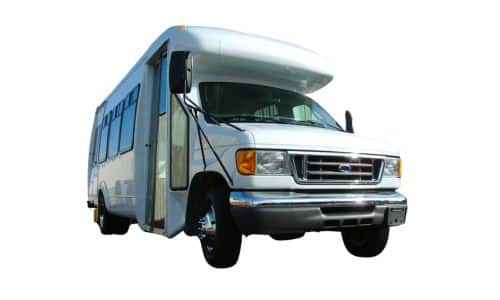
Shuttle Buses
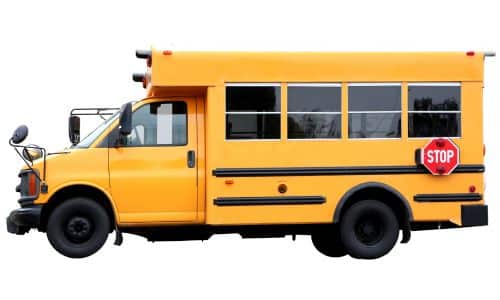
Small School Buses
Hazardous Material Transport
What Are The Requirements To Get A CDL License?
So by this point you’ve read enough to know why you want to drive trucks for a living. But what are the requirements to get a CDL license? Are you even eligible?
These are the very basic requirements to get a CDL and become a certified truck driver
Have a valid driver’s license
Be at least 18 years old (21 to drive across state lines)
Be a US citizen or have a green card/work visa
Pass a DOT physical
Now because the trucking certification requirements are set by the federal government, every state is going to follow these eligibility standards. So whether you’re in New Jersey, Pennsylvania, California, Idaho or Texas, the minimum requirements to get a CDL are the same.
There might be a little bit of nuances in the qualifications from state to state, but if you get your CDL in one state, it’s valid in the other 49.
How To Get A CDL License
When it comes to the actual process for how to get a CDL license, there’s often a lot of confusion about what you actually need to do. So we’re going to break it down into three steps.
Step 1) Pass The CDL Permit / Knowledge Exams
Step 2) Complete ELDT Theory Course AND Behind-The-Wheel Training At A Licensed Truck Driving School
Step 3) Pass The CDL Skills & Road Test
Change Your Life For The Best
With Our Guaranteed Program, You Will Get Your CDL
Learn More
CDL Permit
The first step to becoming a person who drives trucks for a living is to get your CDL permit.
The CDL permit process is just like when you were a teenager learning to drive. Before you could get your full driver’s license, you needed to pass the permit exams to earn a learner’s permit.
Getting your CDL permit, also known as a Commercial Learner’s Permit or CLP, requires you to take a knowledge test(s) to demonstrate that you have a basic understanding of driving a truck or bus.
CDL Permit Exams Are Also Called Knowledge Tests
With a CLP, you can practice driving a commercial vehicle on public roads as long as you are with someone that already has their Commercial Driver’s License, typically a CDL instructor.
How To Get Your Truck Driving Permit
- Decide what CDL class level you want and what endorsements you’ll be going for
- Study for your permit exams
- Make an appointment with the DMV to take the tests
- Take the exams and pass with 80%
- Your local DMV issues the permit
- Start your truck driver training at a CDL school
What Tests Do You Need To Take For The CDL Permit
You may have heard that there are 3 tests for the CDL permit. But it depends if you’re going for a Class A or Class B learner’s permit.
Everyone getting a CDL takes the General Knowledge exam. This test covers safe driving practices, vehicle inspection, accident procedures and transportation regulations. Basically everything you should know about driving a truck.
You’ll also take the Air Brakes exam. The CDL air brake test assesses your knowledge and practical skills related to air brake systems, covering topics like components, operation, inspection procedures, and safe usage
While it’s not technically required for getting your CDL permit, it is highly, highly, highly recommended that you complete the Air Brakes Permit Exam, as many heavy trucks use air brakes.
If you don’t pass the Air Brakes exam, you cannot train on a vehicle with air brakes, and you will have a restriction on your CDL license.
This will keep you from a majority of trucking jobs in the future.
For the Class A learner’s permit you’ll also take the Combination exam. This assesses your understanding of driving trucks with separate trailers.
CDL Class B students don’t need to take the Combination test because they won’t be driving a tractor-trailer combo.
| What it covers | # of Questions | CDL A Permit | CDL B Permit | |
|---|---|---|---|---|
| General Knowledge | Basic trucking concepts, safe driving & CDL regulations | 50 | ✔️ | ✔️ |
| Combination | Covers driving vehicles with a tractor-trailer combination | 20 | ✔️ | ❌ |
| Air Brakes | Focuses on vehicles equipped with air brakes | 25 | ✔️ | ✔️ |
CDL Endorsements
Commercial drivers who haul certain types of cargo or transport passengers must add “endorsements” to their CDL license. This shows they have specialized knowledge to operate these vehicles safely.
What Are The Endorsements You Can Get?
There are 6 truck driving endorsements that you can get on your license that allow you to legally transport different types of vehicles and cargo. They are:
| Endorsement | Purpose | Special Requirement | Knowledge Test |
|---|---|---|---|
| T – Double & Triple Trailer | Pulling 2 or 3 trailers. (Where legally allowed) | Class A license is required | ✔️ |
| P – Passenger | Buses or vehicles used to transport passengers. | Requires Road Test in a bus or passenger vehicle | ✔️ |
| S – School Bus | Transporting children in a bus | Requires “P” endorsement, background check & Road Test in a school bus | ✔️ |
| N – Tanker Vehicle | Transporting liquids or gas in a tanker | Just pass Knowledge Test | ✔️ |
| H – Hazardous Materials | Transporting hazardous materials | Must be trained & retested every 2 years. | ✔️ |
| X – Combination Hazardous Materials & Tank Vehicles | Transporting hazardous materials in a tank | Earned automatically with both “H” & “N” Endorsements. |
Why Get CDL Endorsements?
Do you like making more money, and having more job opportunities anywhere you go? Of course you do! So you definitely want to get as many endorsements as you can.
On average, truck drivers with endorsements on their license earn $13,000 – $23,000 more per year than regular truck drivers.
How Do You Get A CDL Endorsement?
In order to get an endorsement all you have to do is pass a written exam. These endorsement tests show that you have a special knowledge of the problems and skills required to safely operate these specialty vehicles, cargo and trailers.
When you’re signing up to take your CDL permit tests, you also can choose to register for the knowledge tests for specific endorsements.
Hazardous Materials Endorsement
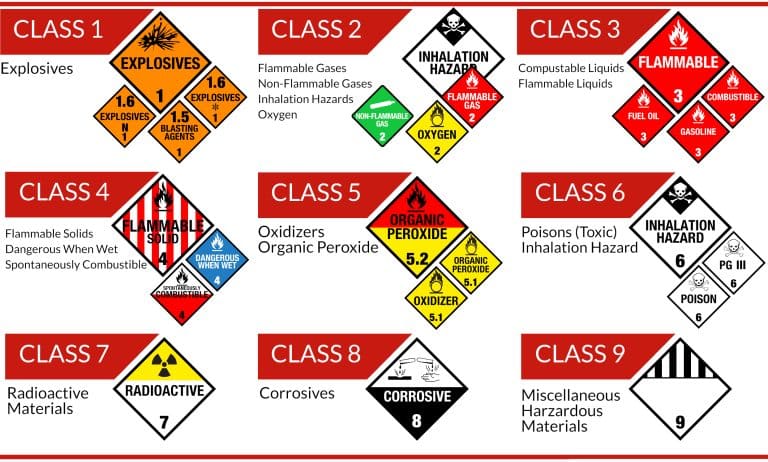
Getting a hazardous materials endorsement on your license requires a few more steps than the other endorsements. Because of the potentially toxic, corrosive or deadly materials you’ll be hauling, you’ll need to get a background check that includes a review of criminal, immigration and FBI records.
Hazardous Materials include:
- Gasoline
- Explosives
- Radioactive Materials
- Infectious Substances
- Propane
- Chlorine
- Acids & Corrosive Materials
If you are applying for a HAZMAT endorsement, you must complete the required Entry-Level Driver Training (ELDT) before taking your knowledge test.
Other CDL Endorsements
Some states have their own extra endorsement for licenses that are required to drive certain vehicles or haul specific cargo. Some examples include Metal Coil, Recreational Vehicles and Tow Truck endorsements.
If you don’t have a license from that state, you can still drive through it without needing an endorsement.
For example if you have a New Jersey license, you can transport metal coils into New York. But if you’re from NYC, you need the “M” endorsement to transport metal coils within New York State.
Train At The Best CDL School
Flexible Schedules, Affordable Programs & Expert Instructors
Learn More
CDL Driver Training
Once you get your CDL permit, congratulations! It’s time for the second phase: Training!
You may or may not have heard the phrase ELDT training before. ELDT, which stands for Entry-Level Driver Training, is the truck driver training that’s required by the federal government in order to get your CDL license.
Now there are two parts to the ELDT truck drive training: ELDT Theory and Behind-The-Wheel. In order to take your road test, you’ll need to complete both portions of the training at a federally licensed CDL school like Driving Academy.
ELDT Theory
ELDT theory is the curriculum required by the Federal Motor Carrier Safety Administration (FMCSA) for those looking to get their Commercial Driver’s License.
The government wanted to make sure that everyone had a standard piece of knowledge because they understood that just because you passed your permit test doesn’t really mean that you learned everything that you needed to safely drive a truck or bus. So they mandated that every student take an ELDT theory course.
This program covers all the things you need to know to drive on the road. It includes topics like operating your vehicle, backing and docking, driving at night, post crash procedures and a whole bunch more.
There are no required minimum teaching hours for theory training,
Because there isn’t a single format, it’s up to the schools to build a curriculum that gets approved by the FMCSA. This leeway with the program means the coursework can be done in a live classroom, online or through a collection of recorded videos.
After completing the training you need to take another test to prove your knowledge. Yes that’s right, another exam.
Unlike the permit and knowledge tests that must be done at the DMV, the ELDT exam can be taken anywhere.
You need to get 80% of the test correct to pass. But if you don’t, all you have to do is just start the test over.
Once you pass the ELDT theory exam you’re ready to rock and roll. You’re now up to the fun part, practicing on a real truck!
Behind-The-Wheel Training
The second part of training is actually getting to drive the truck. This Behind-The-Wheel training is done at a certified truck driving school like the Driving Academy.
You might be thinking, “Hey, why do I even have to go to a trucking school? My uncle/brother/friend drives a truck. I can just learn with them to get my CDL.”
…Nope.
You Must Complete Behind-The-Wheel Training In-Person At A Licensed CDL School!
According to § 380.609 of the Federal Code regarding entry-level driver training requirements:
“An individual who applies, for the first time, for a Class A or Class B CDL, or who upgrades to a Class A or B CDL, must complete driver training from a provider listed on the Training Provider Registry (TPR).”
This means that truck driver training can only be done by a licensed instructor at a federally approved school.
So, if you haven’t already, you’ve got to enroll at a CDL driving school like Driving Academy for yard training.
Yard Training
Your behind-the-wheel training will take place in a yard or lot, which is why it’s often referred to as yard training.
Yard training at a certified trucking school is a crucial part of a commercial driver’s license (CDL) training program.
Not only is it federally mandated but it takes place in a controlled environment (the “yard”) where students learn to safely operate and maneuver a truck before heading out on public roads.
This CDL yard training helps you become a truck driver by preparing you for the road test.
Different schools have different set ups, but a training yard typically consists of four sections that mirror the parts of the CDL road test.
Truck Yard Training
https://youtu.be/pXFjSDHeajY?si=ArznmEroqHeP8s0w
Pre-Trip Inspection
Where you practice the external inspection typically on a stationary truck
In-Cab Inspection / Air Brake Test
Where you practice the inside inspection on a truck that can move enough to do the tug test
Parking Maneuvers
Where you practice backing up and parking the truck
Road Driving
An instructor takes you out on the public road to practice driving and shifting gears
How Long Does Yard Training Take?
CDL yard training typically takes a few weeks, depending on the specific program, instructor and equipment availability, and the student’s abilities and progress. Most CDL schools offer programs that can be completed in 1 to 6 weeks.
CDL Skills Test (AKA The Road Test)
The final boss of the CDL process is the skills test.
The trucking driving skills test is often also referred to as the CDL road test or the CDL license exam.
Where Do I Take CDL The Road Test?
There are two places you can take the road test to earn your commercial driver’s license. Either at the DMV or at a Third Party Testing Site.
DMV | 3rd Party Testing Site | |
|---|---|---|
PROS |
|
|
Cons |
|
|
DMV
Taking the CDL road test at the DMV (or MVC as we call it in New Jersey) means you’ll complete your driving exam at a state-run testing facility.
You’ll need to bring the right type of vehicle for the class of CDL you’re testing for, along with all required documents.
Appointments are often needed, and wait times can take weeks or months depending on your state. And not every local DMV offers CDL road testing.

Third Party Testing Sites
Third-party testing sites for CDL road tests are places approved by the state where you can take your driving test outside of the DMV. These sites are often run by driving schools or trucking companies.
They can be a faster and more convenient option, especially if the DMV has long wait times. Another advantage is that you don’t need to bring your own truck or bus to test on.
Even though they’re not run by the state, they must follow the same rules to make sure the tests are fair and accurate.
Some states like New Jersey, don’t allow 3rd party sites. That’s why our testing site for the New Jersey CDL schools is located across the border in Pennsylvania.
CDL Driving Exam Sections
Just like your road test when you were getting your license to drive a regular car, you have to prove to a certified examiner that you know how to drive. But unlike the car road test, the trucking road test is split into three main sections.
1. Pre-Trip Inspection
2. Parking Maneuvers
3. On The Road Driving
These three different sections of the test are almost like playing a video game with different levels. Once you pass the section you move on to the next level.
In total, you can expect the CDL driving test to take around 2 to 2 ½ hours.
Pre-Trip Inspection
The first stage of the CDL road test is going to be the Pre-Trip Inspection. In this section you’re going to have to know how to inspect both the outside and then inside of the vehicle. This is an important skill because when you become a truck driver, you’ll need to know that your vehicle is safe to drive.
This section is probably the hardest part of the CDL exam.
On average this section takes about 1 hour to complete.
The Pre-Trip exam consists of two parts: Outside Inspection and In-Cab Inspection.
Outside Inspection
As you can guess, the outside part of the Pre-Trip consists of inspecting the outside of the truck or bus, plus what’s under the hood.
You must point to/touch and name the important parts of the vehicle. You then have to explain to the examiner using very specific wording, what you’re checking for and why.
This check includes things like the lights, tires, fluid levels, power steering system, mirrors, brake lines and more.
| How Many Parts Do You Need To Inspect? | ||
|---|---|---|
| All CDL Vehicles | Combination (Class A) | Passenger |
| 55 | 55+24=79 | 55+4=59 |
In-Cab Inspection
The In-Cab Inspection checks your knowledge of the vehicle’s safety features and ensures you know how to inspect the inside of the cab properly.
During this part of the CDL test, you’ll be expected to point out and explain key components such as gauges and indicator lights. You’ll also need to perform a Safe Start and Air Brake Test (for air brake vehicles.)
You’ll need to explain what you’re checking for and why it’s important. The examiner is looking for both your knowledge and attention to safety. Again you’ll need to use very specific wording.
Parking Maneuvers
The second stage of the CDL road test is the Parking Maneuvers. These are going to test your Basic Vehicle Control.
Now the specific parking maneuvers do change state by state, but in general you’ll be tested on 4-6 of these basic vehicle control operations:
Straight Line Backing
Forward Stop
Reverse Offset Backing
Forward Offset Tracking
90 Degree Alley Docking
Offset Back Left Side
Parallel Parking (Conventional)
Parallel Parking (Driver’s Side)
In New Jersey you’ll just need to execute a Forward Stop, Straight Line Backing, Forward Offset and Reverse Offset. In California however, you’ll have to do all six of these maneuvers on both the driver and passenger sides.
In each of these maneuvers you’ll need to demonstrate your ability to control the truck or bus by guiding it into a defined area marked with traffic cones and painted lines.
If you miss or go over the lines, then you fail. It might seem unfair but in the real world, if you go over the line, then you’ve hit a car or building.
Road Test
The third and final section of the CDL is actually driving the truck on the road itself. This CDL road test is just like the road test you took to get your regular license.
Your examiner will tell you where to drive and put you in a variety of traffic situations. This would include:
- Left and Right Turns
- Intersections
- Railroad Crossings
- Up and Down grades
- Single and Multi-Lane Roads, Streets, and Highways
The main difference between the CDL road test and a regular car road test is that you’ll also need to point out signs like speed limits and bridge heights.
What Do You Do If You Pass Your Exams?
If you pass your CDL road test, CONGRATULATIONS!!!!!! YOU DID IT!!!!! You’re now a certified truck driver!!!!
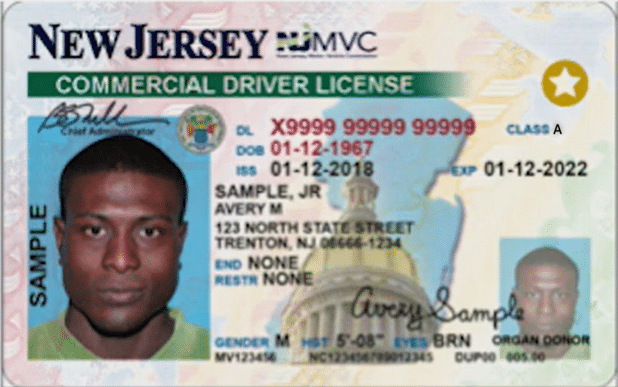
But there are still a few more things you need to do before you’re ready to hit the open road as a professional truck driver.
After you pass your road test, you’ll be issued a test receipt and a certificate of completion. With that receipt, you can visit your local DMV and officially obtain your CDL license.
Even if you took your CDL in a different state, you’ll return to your home state to pick up your CDL. Regardless of where you’re from, your CDL is now valid nationwide.
Many states will issue a temporary CDL (paper version) that you can use while waiting for the physical card to arrive by mail. The physical one will usually come within 7-30 days depending on the state you live in.
Instead of getting a separate CDL card, you’ll receive a new drivers license that replaces your regular id. This new one will say the class vehicle you can drive and lists your endorsements and restrictions.

Now that you have your CDL license, you’re ready to find your first truck driving job, and start on your Road to Freedom!
Change Your Life For The Best
With Our Guaranteed Program, You Will Get Your CDL
Learn More
Frequently Asked Questions
Do You Need A High School Diploma Or GED To Get A CDL?
When it comes to driving a truck, you don’t need to worry about a college degree or even a GED. We’ve had students come to our program who have no High School diplomas and we’ve had students who’ve graduated from Harvard. With a CDL license your future can shine as brightly as you want.
Who Issues A CDL License?
The actual license is going to be issued by your local state DMV or a similar state agency. Each state has its own DMV (or equivalent) that handles testing and issuing CDLs, but all states follow rules set by the Federal Motor Carrier Safety Administration (FMCSA).
The FMCSA mandates everything that’s happening when it comes to CDL drivers in the USA. Since you’re taking part in business being done across state lines, there needs to be federal oversight to set the standards.
While the federal government sets the rules, the people who physically give you the license are going to be a part of state level agencies.
Can You Get A CDL Online?
With regards to the questions of online CDL training being legit, the answer is… sort of.
Regardless of where you live, you’ll need to take the federally mandated ELDT theory training. There is no requirement to take the course in person, so you are allowed to take this portion of the truck driver training online.
However, you still need to complete in person training on a real truck before you can take the road test.
Since most driving schools offer the ELDT training as part of their curriculum and you’ll need to go in person for the behind-the-wheel training, you might as well do the theory training there.
For those who would need to travel far to get to the classroom, it does make more sense to take online ELDT training. This way, they don’t need to commute back and forth as much.
Do You Need To Speak English To Get Your CDL?
It is true you need to speak English to become a truck driver.
However, you don’t need to be a fluent English speaker to get your CDL
Some states do offer the CDL permit exam in Spanish or other language.
The Pre-Trip Inspection and Road Test do need to be done in English. But as long as you can speak some English, and go to a truck driving school like Driving Academy, you’ll be able to pass the exam without a problem.
How Long Do I Have To Wait To Be Re-Tested If I Fail My Road Test?
It depends on the state but typically you must wait at least 14 days to be re-tested.
Can I Upgrade My CDL From Class B To Class A?
Yes, you can upgrade from a Class B to a Class A CDL.
In order to upgrade to a Class A license, you’ll need to go through the CDL process again. Though this time you’ll be able to skip a few steps.
You’ll start by going to your local DMV and taking the Combination Knowledge Test. But that’s the only exam, because you won’t need to retake the General Knowledge exam.
After passing that you’ll need to pass the ELDT Theory course.
You can then re-take the entire road test in a Class A vehicle.
You don’t technically need to enroll for the Behind-The-Wheel training at a physical location. But if you don’t attend a trucking school to practice driving a combination vehicle, there is a 99% chance you will fail the Parking Maneuvers and Road Test.
It’s always better to start with a CDL A license because it will allow you to drive almost any Class B vehicle.
What It’s Like to Try a Real Trucking Simulator
A commercial driver’s license (CDL) is a license to operate large or heavy vehicles, such as trucks, buses, and tractor-trailers. To obtain a CDL, drivers must meet certain requirements and pass knowledge and skills tests, including written exams and a road test.
CDL driver training is imperative to aspiring drivers who wish to make life on the road their career. Driving Academy, with locations in New Jersey, Florida, Oregon, Indiana, and others coming soon, offers in-depth training that incorporates several tools to make learning effective and engaging. Discover more about our state-of-the-art trucking simulators and the benefits of training at our truck driving school.
What Is a Trucking Simulator?
A professional trucking simulator is a training tool that replicates the experience of driving a commercial vehicle. This learning resource gives drivers in training the feel of a real truck, including how it moves, tilts, and vibrates, which popular truck simulator games cannot do.
Simulators are highly developed and use authentic vehicle controls and computer-generated environments to simulate realistic scenarios. Much evidence proves that simulators can be as good as or better than traditional behind-the-wheel training, especially for inexperienced drivers.
About Our Simulators
Driving Academy offers truck driver training programs to help students on their road to freedom. Simulation training is a part of every course we offer. We are one of the few driving schools in the United States to offer this training resource.
Simulators are used at Driving Academy as a supplement to training in real vehicles. The purpose of our professional trucking simulators is to provide drivers with years’ worth of experience within a few days of simulation training so that they can feel confident on the road.
With realistic controls, such as a steering wheel, gears, ignition, and turn signals, our professional trucking simulators help drivers learn basic skills, develop advanced skills, and prepare for the CDL road test. The simulator familiarizes students with how distinct types of commercial vehicles operate.
To ensure drivers are ready for a career in trucking, our simulators mimic a wide range of hazardous scenarios and emergencies a trucker might face. Various weather conditions, such as ice, snow, sleet, freezing rain, rain, and wind are simulated in a safe environment. Furthermore, our trucking simulators can also replicate mechanical defects that truck drivers commonly face, such as blown tires, engine checks, and brake system faults.
During trucking simulation training, students will also learn how to master their defensive driving skills. The simulator features screens that offer drivers a complete view of the road, much like the cabin of a real truck would. By mimicking the tendencies of other drivers on the road, students will be prepared to operate their rigs in real life and minimize the threat of accidents.
Other Advantages of Trucking Simulators
At Driving Academy, simulation training is an intricate component of learning for students. Simulators measure students’ abilities and help to identify areas where they can improve. A simulator is a useful tool to assess a student’s skills while performing common trucking actions, like turning, braking, backing up, and more.
Simulation training doesn’t just benefit their students. Instructors rely on simulator feedback to tailor instruction for students so they can become well-rounded drivers.
Why Choose Driving Academy?
In addition to access to advanced truck driving simulators, Driving Academy offers students a host of other benefits. We are one of the only schools that offers a guaranteed CDL training program. This exclusive program is the best option for those who want results. Students enrolled in our guaranteed CDL training courses will complete over 100 hours of CDL training and receive unlimited attempts at the CDL road test.
We also offer full courses for students who need to earn their CDL permit before they can practice on the road, and half courses for students who already have the permit.
We aim to make CDL training affordable and convenient. Students can choose to pay in full or with an easy, interest-free payment plan. With as little as $500 down, students can set up a custom payment plan that accommodates their financial situation.
All our driving training programs are led by experienced instructors with a passion for teaching the next wave of professional drivers. Courses are offered with flexible schedules, allowing students to balance their education and other responsibilities. Some coursework can be completed online.
Driving Academy is pleased to offer students lifetime job placement assistance. For the rest of their trucking days, students can take advantage of our career services. We leverage our connections with companies to provide students and graduates access to exclusive job postings.
Enroll In Our Truck Driving School Today
Gain hands-on truck driver training when you enroll at Driving Academy. Our truck driving school uses some of the latest and most advanced training tools, including trucking simulators. If you’re ready to hit the road on the path toward earning a CDL in Florida, Indiana, New Jersey, or Oregon, contact us today to learn more about our CDL driver training near you. More locations are coming soon.

CDL Disqualifications: What Potential Drivers Need to Know
For many, getting behind the wheel of a truck and hitting the open road offers a sense of freedom. Being able to make a fulfilling career out of something you love is what most only dream of, however, with the right truck driver training, becoming a full-time truck driver is within reach. But to get and maintain your CDL, you’ll need to keep your record clean.
Here, the team at Driving Academy, operating CDL driving schools in locations across the country, discusses CDL disqualifications and how they may impact your career.
What Is a CDL?
A commercial driver’s license (CDL) is a license issued by your state that allows you to operate commercial vehicles. There are several different classes, each of which allows you to drive different types of vehicles. A Class A CDL, for instance, allows you to operate a vehicle with a gross combination weight rating (GVWR) of over 26,000 pounds (with the towed vehicle weighing more than 10,000 pounds). Examples include flatbeds, tractor-trailers, and tanker vehicles. Alternatively, a Class B CDL allows the operation of a single vehicle that isn’t hitched to a trailer, such as a box truck, dump truck, or school bus, or tow a trailer weighing less than 10,000 pounds.
There are also endorsements drivers can get to enhance their capabilities. These may allow them to transport a certain number of passengers, hazardous materials, liquids, and more.
What Are CDL Disqualifications?
As is the case with a standard driver’s license, you need to follow the rules of the road to keep your CDL active. These disqualifications come with temporary or permanent withdrawal of your license. The state in which your license is held will determine the severity of the penalty, but it is usually at least 60 days. This means you’ll be unable to perform your duties as a truck driver, which will negatively impact your career.
There are both serious traffic offenses that will have consequences for your license. While a single serious traffic offense may not result in disqualifications, the accumulation of several of them will. While these offenses may vary from state to state, common disqualifying offenses include:
- Following a vehicle too closely
- Reckless driving
- Excessive speeding (15 or more mph over the limit)
- Texting or using a cell phone while driving
- Changing lanes erratically
- Driving without your CDL
- Any violation associated with a fatal accident
- Driving a vehicle not covered by your active CDL
These violations can result in disqualifications of different lengths, ranging from 60 days for those who have committed two serious traffic violations within a three-year period to lifetime disqualifications.
Major offenses have less to do with road violations and more to do with illegal activity committed while behind the wheel. These offenses not only will result in a suspension of your license but may even land you in prison. Examples include:
- Driving while under the influence of alcohol or illegal drugs
- Possessing or transporting narcotics
- Fleeing the scene of an accident
- Using a commercial motor vehicle to commit a felony
- Driving with a suspended or revoked license
- Causing a death
Aside from these offenses, there are other reasons one might face a CDL disqualification, including medical reasons. If you have epilepsy, hearing or vision loss, or diabetes, you may be disqualified.
How To Remove These CDL Restrictions
In most cases, serious traffic offenses will simply require you to wait the allotted time before allowing you to use your CDL again, along with potentially paying a restoration fee. However, you may be able to appeal the disqualification through the court with jurisdiction where the offense occurred. If a medical condition is the reason for your CDL disqualification, you can apply for an exemption.
The Driving Academy Difference
At Driving Academy, we pride ourselves on our ability to help people get their CDLs through in-depth CDL instruction and hands-on, practical training. Our experienced instructors provide you with the knowledge and skills you’ll need for life on the road. We offer a fleet of vehicles and simulators to help you train behind the wheel, and our flexible schedules are designed to meet the needs of today’s students and their busy lives. That’s why we also provide some coursework that can be completed online and a study guide to help you prepare for the CDL test.
We also work hard to make payments affordable so you can focus on learning. After you’ve completed one of our programs, we’ll help you find work with our lifetime job placement assistance. If you’re ready to start on the path toward earning a CDL in Florida, Indiana, New Jersey (Jackson Township, Linden, or Wayne), or Oregon, contact us today to learn more about our CDL driver training. More locations are coming soon!
How to Start a Truck Driving School in Mississippi
Few professions offer the freedom and sense of pride you’ll find with truck driving. Being able to go out on the open road and knowing your hard work helps bring much-needed products to consumers is a satisfying career. However, some drivers want to further their careers and explore new opportunities. That’s why many choose to open their own truck driving school, to pass on their knowledge to new drivers. Mississippi is a great state to run a commercial driver’s license (CDL) training school.
At Driving Academy, we can help those who have driving experience take the next step in their careers by starting a CDL school franchise in Mississippi.
Why Open Your Own Trucking School?
The ongoing national shortage of trained CDL drivers has contributed to an increase in demand and in driver pay. Between that and the general stability of the profession, you’ll have an easy time pitching class openings to new students.
Another reason to open your own school is that a February 2022 law requires CDL driver training from a certified provider for those interested in getting their commercial driver’s license. This means aspiring truck drivers will need to turn to specific schools like Driving Academy to obtain their licenses.
How to Start a Truck Driving School
Driving Academy offers franchising options for qualified candidates. To start a school, you’ll first need to apply. Fill out the form on our franchise page. This will provide our team with the details we need to get the process started. You’ll then receive a call from a member of our franchise advisor team, who can answer any questions, address concerns, and make sure you qualify.
Once you’ve been accepted, you’ll take our training program to learn everything you’ll need to run a successful Driving Academy franchise. Training will contain a mix of in-person learning at our franchise headquarters in Linden, NJ, and online learning from your own home. We have locations in Florida, Indiana, New Jersey, and Oregon, and we’re providing opportunities to open new sites nationwide.
It’s important to note that those looking to open Driving Academy franchises don’t need to hold their own CDL. However, someone with a CDL must be your head instructor, ensuring your students get the quality training they need from a qualified teacher.
You can also open one of our truck driving schools even if you already own a trucking company. This can be helpful because you’ll already have a fleet of trucks, a yard location, and an experienced team behind you.
Why Starting a Truck Driving School in Mississippi Is a Smart Idea
There are several reasons Mississippi is a prime spot for a new trucking school:
Location
Mississippi’s location gives it specific advantages when it comes to the trucking industry. First, it’s situated near New Orleans, which sits at the mouth of the Mississippi River, allowing goods to make their way across the country. Second, Mississippi features a coastline on the Gulf of Mexico, giving it its own port and access to cargo from around the world. These goods need to be transported to and from the country, meaning trucking is especially vital.
Demand
While there is overall a shortage of truck drivers, Mississippi especially requires qualified candidates. Throughout the state, more than 85% of the communities need trucks to deliver goods, meaning truckers are relied upon every day. This is why one out of every 12 jobs in Mississippi is related to the trucking industry. Because of this, trucking jobs are in demand, meaning you will find plenty of students for your truck driving school.
With great pay, special benefits, and the free lifestyle that the profession comes with, you can trust you’ll find motivated individuals ready for the comprehensive training programs a Driving Academy franchise can provide.
Choose Driving Academy
If you’re interested in starting your own trucking school, you need help from the experts. At Driving Academy, our team is committed to helping you make your school a success. You’ll benefit from our experience and support. We have a teaching system already in place, helping you learn how best to approach your curriculum. This will help ensure students learn the ins and outs of the profession and are ready for the road. Our programs help students get Class A CDLs, Class B CDLs, and Class B CDLs with a Passenger endorsement.
Get Started on Opening Your Truck Driving School Today
If you are an experienced driver looking to make a career change, starting your own truck driving school in Mississippi is a great choice. At Driving Academy, our team can help you learn all you need to know, and we provide franchising opportunities throughout the country. Our in-depth training program will prepare you to run your own franchise, and our guaranteed CDL training programs make it easy to get students on board. Contact us at Driving Academy if you have any questions or are ready to get started.
Welcome to Truck Madness:
Freightliner Cascadia vs. Tesla Semi
Forget the basketball court; our arena is the open road, and the stakes have never been higher. Welcome to Truck Madness, the ultimate tournament where the giants of the highway go wheel-to-wheel in a battle for trucking supremacy!
Today, we’re kicking off with a clash that pits time-tested reliability against groundbreaking innovation: the legendary Freightliner Cascadia versus the revolutionary Tesla Semi.
Best of all, you get to decide which 18-wheeler moves forward and which one goes home in shame. Cast your vote using the poll below or on our blog at CDLDrivingAcademy.com/blog.
The Showdown: Freightliner Cascadia vs. Tesla Semi
Both these trucks bring unique strengths to the table, but how do they really stack up? Let’s break it down in greater detail.
Price: Affordability vs. Long-Term Savings
- Freightliner Cascadia: Expect to pay around $156,000 for a day cab and $183,000 for a sleeper model. Prices can climb with added features, such as advanced driver assistance systems, enhanced interiors, and custom configurations. This pricing is well within the industry standard for a diesel-powered Class 8 truck.
- Tesla Semi: The 300-mile version costs $150,000, while the 500-mile version jumps to $250,000. The initial investment is much steeper than a conventional diesel truck, but Tesla claims operators could recoup up to $150,000 in fuel savings within three years. However, ongoing changes in EV pricing and incentives could impact the true cost of ownership. Additionally, maintenance costs may be lower because there are less moving parts to break, but replacement parts and service locations could prove to be obstacles for early adopters.
Durability: Diesel Dependability vs. EV Longevity
- Freightliner Cascadia: Freightliner trucks have a reputation for longevity. With proper maintenance, a Cascadia can easily surpass a million miles before needing major overhauls. The high availability of replacement parts and skilled mechanics ensures that maintenance is straightforward and cost-effective. Freightliner’s vast service network means minimal downtime for necessary repairs.
- Tesla Semi: Electric vehicles inherently have fewer moving parts, meaning less mechanical wear and tear. However, the long-term durability of the Semi is still being determined. The Cybertruck’s durability concerns have raised questions about Tesla’s ability to produce commercial vehicles with the same level of resilience as traditional manufacturers. Furthermore, Tesla’s existing challenges with part availability could translate into long wait times for necessary repairs.
Performance & Fuel Efficiency: Diesel Power vs. Electric Precision
- Freightliner Cascadia:
The Cascadia offers a range of powerful engine options, including the Detroit DD13, DD15, and DD16 engines, with horsepower ranging from 370 to 525 HP and torque up to 1,850 lb-ft.
It is easily capable of hauling 80,000 pounds, which is the maximum allowed weight in many states. It can also handle heavier loads with multiple trailers.
With regards to fuel efficiency the Freightliner ranges from 7.5–9.5 mpg, depending on cargo weight, road conditions, and driver habits. This is above the industry average of 6-8 mpg.
With a 160-gallon fuel tank that allows for 1,200-1,500 miles between refuels, the Cascadia big rig is an ideal choice for long-haul operations. - Tesla Semi:
The Semi consumes less than 2 kWh per mile, making it significantly more energy-efficient than diesel-powered counterparts.
The instant torque delivery allows for a 0-60 mph acceleration in just 20 seconds when fully loaded, providing a smoother and more responsive drive, especially beneficial on inclines. Tesla reports an industry leading 1,020 HP and a very strong 1,050 lb-ft of Torque
While Tesla boasts a 500-mile range, real-world conditions such as heavy loads, terrain, and extreme temperatures could reduce actual mileage. It further loses points for long haulers because it can only travel up to 500 miles before needing to recharge. And that takes 30 minutes. While that’s an impressive recharge speed, it can still add hours of downtime to your run.
Safety: Advanced Tech on Both Sides
- Freightliner Cascadia:
This Freightliner truck model includes collision mitigation, active brake assist, adaptive cruise control, and lane departure warnings.
The MirrorCam System, utilizing Stoneridge’s MirrorEye technology, replaces traditional side mirrors with external cameras and in-cab monitors for improved visibility.
Front Guard Alert (FGA) can detect pedestrians in front and on the sides of the truck.
Dual-Stage Intelligent LED Headlights provide 30% greater coverage than previous models, automatically melting away ice in cold environments. - Tesla Semi:
This new advanced EV truck features Enhanced Autopilot, automatic emergency braking, and lane-keeping assist.
The central seating position of the Tesla Semi is a interesting new innovation that improves visibility and offering a panoramic view of the road. But it may take drivers some time to get used to.The low center of gravity thanks to the battery, reduces rollover risk, a key safety advantage over diesel trucks.
Versatility & Customization: Variety vs. Standardization
- Freightliner Cascadia: Offers extensive customization, including multiple cab sizes, engine types, axle configurations, and drivetrain options (including an all-electric version).
- Tesla Semi: Currently, there are only two models (300-mile and 500-mile versions) with limited customization. As production scales up, additional configurations may become available, but for now, options are minimal.
Technology: Functional vs. Futuristic
- Freightliner Cascadia:
Equipped with digital dashboards, telematics, and connectivity systems that improve efficiency and fleet management.
Freightliner prioritizes usability over excess technology, making it a more familiar transition for traditional truckers. - Tesla Semi:
Apart from all the tech that goes into being an EV tractor-trailer, the greatest technology found on the Tesla Semi is its self-driving capabilities. While it still needs a person in the driver seat, the autopilot allows for minimal input and maximum safty.
The Semi from Tesla also features dual touchscreen displays, over-the-air updates, and seamless integration with fleet management software.
The cabin is ultra-modern, designed for a futuristic driving experience, but it may take time for drivers to adapt.
Design & Comfort: Traditional vs. Radical Innovation
- Freightliner Cascadia:
The Freightliner Cascadia boasts a design that seamlessly blends functionality, efficiency, and driver comfort.
The truck’s sleek yet robust exterior includes an updated grille for better cooling and durable materials that ensure longevity. Its design also prioritizes visibility for safer driving.
This staple of the road is Well-suited for long-haul journeys, with an ergonomic cabin layout that is optimized for long hours on the road. While drivers don’t rave about the comfort as much as other trucks, it still earns high marks from many seasoned truckers. - Tesla Semi:
This all-new big rig breaks industry norms with a central driving position, designed for improved visibility but potentially inconvenient for team drivers. It offers maximum ergonomics and enhanced visibility.
However a lot of seasoned drivers don’t like the aesthetic or see the central driver seat as practical. This also makes team driving much more difficult.
The innovative design of the Tesla Semi might attract drivers looking for the latest and greatest, potentially helping with driver retention in a competitive market.
Looking Beyond the Specs
It’s always important to consider the operational costs over the truck’s lifetime. The Tesla Semi might have a higher upfront cost but could offer significant savings on fuel and maintenance. Electricity is generally cheaper than diesel, and fewer mechanical parts mean less time (and money) spent in the shop.
However, the charging infrastructure is a crucial factor. While Tesla is developing its Megacharger network, it’s not as widespread as diesel fuel stations. Planning your routes around charging stations and factoring in charging times will be essential.
On top of this, replacement parts are much more specialized and will be harder to come by. Seeing Tesla’s current challenges with building replacement parts for their cars, the Semi likely will have the same issues for a while.
On the flip side, the Freightliner Cascadia benefits from a well-established service network. Parts and skilled mechanics are readily available, which means less downtime if something goes awry. Repair work for the Semi will likely need to be done by Tesla at a significant markup.
The Road Ahead
The trucking industry is at a crossroads, shifting towards sustainability and advanced technologies.
While it’s not available for sale yet, investing in the Tesla Semi could place you at the forefront of this evolution, signaling to clients and partners that you’re committed to innovation and environmental responsibility.
But there’s also value in the tried and true.
The Freightliner Cascadia offers reliability and flexibility, especially if your operations require specific configurations or if you’re operating in areas where electric infrastructure is lacking.
On top of this the Freightliner Cascadia is available in an all electric version. Though its range and power is more limited than the Tesla.
Ultimately, the choice hinges on your priorities:
- Are you aiming to reduce environmental impact and operational costs in the long run? The Tesla Semi could be your vehicle of change.
- Do you need a customizable, proven machine with immediate and widespread support? The Freightliner Cascadia stands as a far superior contender.
Your Turn to Decide!
This battle isn’t just about specs—it’s about the future of trucking. Will tradition reign supreme, or will innovation take the lead?
Vote below and share your thoughts in the comments!
And don’t forget to like, subscribe, and follow Truck Madness for more epic matchups!


Owner-Operator Trucking Jobs That Pay Well
Choosing to own and operate a rig independently can offer numerous benefits, including a higher potential for earnings. As an owner-operator truck driver, you oversee every part of the trucking process, including job selection. Owner-operator truck drivers must strategically choose their jobs to earn the most money and make the haul worth it.
CDL driver training is imperative to aspiring drivers who wish to make life on the road their career. Driving Academy, with locations in New Jersey, Florida, Oregon, Indiana, and others coming soon, offers in-depth CDL driver training at locations in New Jersey, Florida, Oregon, and Indiana, with more locations coming soon. Here, we discuss the owner-operator trucking jobs that pay the best.
Owner-Operator Trucking Jobs Worth Choosing
For independent truck drivers who own and operate their own rigs, there are various types of trucking jobs available. Truck drivers will want to select the ones that garner the highest wages, including:
Box Truck Owner
A box truck driver is a professional driver who transports goods to their destinations using a box truck. This commercial vehicle features a separate, enclosed cargo area shaped like a box and attached to a chassis.
As the owner and operator of this vehicle, your responsibilities may include:
- Delivering cargo on a predetermined route and schedule
- Loading and unloading goods
- Maintaining the vehicle
- Documenting deliveries or logging other shipment information
- Following Department of Transportation regulations
The type of commercial driver’s license (CDL) training required to drive a box truck depends on the gross vehicle weight rating (GVWR) of the vehicle and the weight of the cargo.
Company Tanker Driver
A tanker driver is a specialized truck driver who transports liquids, gases, or dry bulk items in a tanker truck. Tanker trucks are some of the largest and most complex vehicles to drive. They require a high level of training, skill, and experience, which is why this type of job pays well.
The duties of a tanker driver include:
- Maintaining safety practices and standards, conducting safety checks, and preparing for the safe handling of the vehicle and its load
- Using a large hose to load and unload the tanker truck
- Keeping accurate records
- Planning routes and schedules, considering factors like weight limits, weather, traffic, and hazardous materials regulations
To drive a tanker truck, you need a Class B CDL and tanker endorsement.
Sewer Truck Driver
A sewer truck driver, also known as a septic tank truck driver or pump truck operator, is responsible for transporting waste accumulated after a septic tank or other sewage system is drained. Drivers will transport these loads to their destinations so the waste can be disposed of properly. Becoming a sewer truck driver might require additional training to handle potentially hazardous materials.
This type of trucking job requires a Class B CDL with a tanker endorsement.
Water Truck Driver
A water truck driver operates a large tank truck to transport water to various locations, such as construction sites, oil rigs, and remote areas. Water truck drivers typically need a valid driver’s license with a Class B CDL and tanker endorsement.
Factors That Influence Truck Driver Pay
Pay for trucking jobs varies and is based on several factors, such as:
- Region: The geographical location will influence the amount of money offered to the driver. Trucking jobs in areas with higher costs of living may warrant higher wages.
- Type of truck: The type of truck needed for the job can impact how much a driver is offered. Operating more advanced trucks, such as tanker trucks, typically results in a higher salary.
- Type of cargo: The cargo you’re hauling can influence your pay. More precious cargo that must be transported carefully can earn you more money.
- Endorsements: Any additional endorsement needed to perform a trucking job can garner higher pay.
- Additional services: Trucking jobs that involve additional services usually compensate drivers with more money.
Where Truck Driver Pay Is the Best
Professional licensed CDL truck drivers are essential to the American economy. Many goods are transported by truck across the country, meaning truck drivers are needed nationwide.
Some parts of the country reward truck drivers with higher wages for various reasons. According to recent data, areas of the United States with the best trucker pay include North Dakota, Alaska, Massachusetts, Oregon, and certain cities such as Dallas, Phoenix, and Chicago. These regions often offer annual salaries exceeding the national average for truck drivers holding Class A CDLs and Class B CDLs.
Prepare to Earn Your CDL at Driving Academy
At Driving Academy, we are inspired to create a positive learning environment for anyone wishing to earn a Class A, B, or B+P CDL. Courses are led by experienced instructors and offered with convenient, affordable payment plans and flexible schedules, where some coursework can be completed online. Driving courses include classroom learning and hands-on training with various vehicles and scenarios in the simulator. To ensure our students find success, we offer lifetime job placement assistance and exclusive access to job postings with companies eager to hire freshly trained students.
We are one of the only schools that offers a guaranteed CDL training program. Students in our guaranteed courses complete over 100 hours of CDL training and receive unlimited attempts at the CDL road test.
We also offer full courses for students who need to earn their CDL permit before they can practice on the road, and half courses for students who already have the permit.
If you’re ready to hit the road on the path toward earning a CDL in Florida, Indiana, New Jersey, and Oregon, contact us today to learn more about our CDL driver training near you and the owner-operator trucking jobs you can pursue. More locations are coming soon.

How Do You Get a CDL Permit?
The trucking industry is the lifeline of our economy. Truck drivers help get goods and products across the country so they can be used by those who need them. Whether you’re transporting grocery items, furniture, or chemicals, truckers can go to work with a smile knowing they are helping make the world a better place for all. Many hopeful drivers know they’ll need a commercial driver’s license (CDL) to enter the workforce, but first, you’ll need your commercial learner’s permit (CLP). Turn to the experts at Driving Academy to learn about CDL permit requirements.
What Is a CDL Permit?
A commercial driver’s license requires you to first get your commercial learner’s permit (CLP). This helps ensure you are familiar with the rules of the road and other practical knowledge that will be needed to obtain your CDL. The permit is issued by your state, and its purpose is to authorize you to operate a commercial motor vehicle for training purposes. When operating one of these vehicles with your CLP, you’ll need to be supervised by a valid CDL holder.
Having your CLP allows you to operate many of the same vehicles you’ll have the opportunity to drive once you obtain your CDL, including:
- Tractor-trailers
- Truck and trailer combinations
- Tanker vehicles
- Livestock carriers
- Flatbeds
- Straight trucks
- Large buses
- Box trucks
- Dump trucks
There are certain restrictions, however. You cannot transport any passengers other than the CDL holder you are training with. You’ll also need to wait to operate vehicles that require special endorsements. Lastly, it’s wise to consider the type of vehicles you’re looking to operate professionally and focus your training on those, as different vehicles require different CDL classes.
What Are the CDL Permit Requirements?
Getting your permit requires a few simple procedural steps before you can begin testing. First, you’ll want to get a copy of the CDL Manual and do your research. This is important because you’ll want to explore the vehicles available to you and determine which CDL class best aligns with your interests.
A Class A CDL lets you drive tractor-trailers, flatbeds, tankers, combination vehicles, and more, while a Class B CDL is designed for those who wish to operate straight trucks, box trucks, and buses. There are even endorsements that let you earn more money and drive hazardous materials, liquids, school buses, and more. Certain classes and endorsements will require additional testing, so it’s good to know that ahead of time.
After doing your research, you’ll need to have your driving record for the last 10 years verified in all 50 states and the District of Columbia. You’ll also need to prove you are medically able to operate these vehicles, which can be done by undertaking a DOT physical to obtain your DOT medical card. You’ll also need to pay for your permit and provide 6 points of ID at your state’s DMV.
You will then be able to take the necessary written tests. There are three tests you’ll need to pass to obtain your CLP. First is the general knowledge test, which features 50 questions and requires you to get at least 40 correct (80%). The test has no time limit so you can take your time to help ensure you give each question the thought it requires. This is especially important because failure requires you to wait at least 1 week before trying again.
There are also tests on air brakes and combination vehicles, which help to prove you understand all you’ll need to know before taking your road test.
How to Earn Your Permit from Driving Academy
At Driving Academy, we know there’s a lot to learn when it comes to the world of truck driving. That’s why our team consists of experienced instructors who work with students to make sure they’re ready for life on the road. Our truck driver testing training programs incorporate vehicles and simulators to give you hands-on experience, and we offer flexible scheduling and some online coursework for convenience.
Our programs include full courses, which provide training to help you obtain your CDL permit and your license, as well as half courses, which are designed for those who already have their permit. Our guaranteed CDL training courses provide over 100 hours of training and allow you to take the road test as many times as you need until you pass.
Enroll in CDL School Today
If the CDL permit requirements sound like something you’re ready for, make Driving Academy your training partner. We have the instructors and the tools to help you throughout the entire process, including our practice permit tests. Enrolling at Driving Academy is easy thanks to our affordable payment plans, and we even provide job placement assistance after you’ve completed your testing. Contact us today if you have any questions or are interested in our courses at any of our locations throughout the nation.
Reasons to Start a CDL School in Los Angeles
Truck driving is an industry that seems to keep growing. Goods will always need to get from point A to point B, and trucks are simply more efficient and cost-effective than planes. However, competent and professional truck drivers are needed behind the wheel. With competitive salaries across the industry, truck driving is becoming an exciting profession. That’s why owning your own truck driving school is a smart choice, especially for those living near Los Angeles, CA. Driving Academy offers franchise opportunities to let you take advantage. Here, we take a closer look at why starting a truck driving school in Los Angeles is a smart move.
The Demand for Drivers
As the economy continues to grow, so does the need for truck drivers. Whether they are transporting raw materials, chemicals, or products, truckers are relied upon each day. Most businesses require goods to sell, and their brick-and-mortar facilities aren’t large enough to produce and store them all. This is where truck drivers come in.
Because of the increase in demand over recent years, the average truck driver’s salary has increased, as well. This means that not only are truckers taking on essential jobs that provide stability and security, but they can also earn generous pay while doing so.
In Los Angeles specifically, truck driving is especially lucrative. According to ZipRecruiter.com, you’ll find full-time trucker positions offering a wide range of salaries. The number of openings in the profession is also expected to grow through 2033, as older drivers retire, and the economy continues to expand. And because Los Angeles is a major population center near other large metropolitan areas, a tremendous amount of goods is hauled in the region each year.
Why Is This Good for Truck Driving Schools?
The more enticing these jobs become, the more aspiring truck drivers there will be. However, before getting behind the wheel and hitting the road, hopeful drivers will need to be fully trained and educated. This means they’ll be turning to truck driving schools to help obtain their commercial learner’s permit (CLP) and then their commercial driver’s license (CDL). A valid CDL is required to operate a commercial vehicle without a trainer by their side.
Starting a truck driving franchise allows you to take full advantage of the increased demand for the profession. You will be able to run a successful business while knowing your training is helping students achieve their dreams.
These schools provide opportunities for students to earn their Class A CDL, Class B CDL, and endorsements, which allows them to operate a wide range of different vehicles, including but not limited to:
- Tractor trailers
- Box trucks
- Flatbeds
- Straight trucks
- Tankers
- City buses
- School buses
- Dump trucks
What Do You Need to Do to Start Your Franchise?
If the thought of opening your own truck driving school interests you, the team at Driving Academy is here to help. Driving Academy has years of experience in both training students and preparing owners who are looking to run these profitable franchises.
Opening a truck driving school requires a lot of research and planning. You’ll need to find a location that offers both classroom space and a large lot to allow students to get hands-on training. It’s also smart to choose a location near a highway to provide real-life driving experience. You’ll need to have trucks available for road testing and should consider adding a simulator like those at Driving Academy for virtual testing.
You’ll also need to have experienced and qualified instructors and an in-depth curriculum to ensure students learn everything they need to know. Promoting your school is essential to building interest, and you’ll need to go over all the legal aspects to ensure every aspect of your school meets all rules and regulations.
How Can Driving Academy Help?
While opening a truck driving school may seem overwhelming, Driving Academy features a teaching system that is specifically designed to help you get started and stay successful. Our business model offers you a wealth of knowledge from experienced professionals who’ve been in your shoes.
You can get started by simply filling out the form on our franchise page. This will help us learn more details about you and your dreams. We can even help those who don’t have their own CDL or those who already own their own trucking company.
Once you’ve been accepted, you’ll need to complete a training program, which requires some online training and some in-person training at our franchise headquarters in Linden, NJ. After completion, you’ll be ready to turn your dream into a reality.
Start Your Own CDL School Franchise Today
Starting a truck driving school provides an exciting way to make your mark on the truck driving industry without spending your days on the road and away from your family and friends. It’s also a great way to help students learn the fundamentals they need to excel in the world of truck driving while making good money in the process.
At Driving Academy, we offer a tried-and-true training system to prepare you for the challenges you’ll face as a franchise owner. Our training system includes everything you’ll need to know and comes with our expertise and support throughout the process, making it easy for you to embark on your journey in ownership. If you are interested in learning more about our franchising opportunities or have any questions for our team, contact us today.

What Is the Average Truck Driver Salary?
Truck driving provides a unique lifestyle. You can enjoy the freedom of the open road, the flexibility of choosing when you want to start and stop your day, and the satisfaction of knowing you’re making a difference in your community and the world. With truckers being as important as ever to our society, this is a great career choice, and the average truck driver’s salary is probably higher than you think.
At Driving Academy, our team of instructors can help you get the proper truck driver training you need to embark on this exciting career. We’re based in Linden, NJ, and have locations across the country. Here, we take a closer look at what you can expect when it comes to truck driver pay.
A Look at an Average Truck Driver Salary
In the United States and around the world, truck drivers are the backbone of commerce. They help get all sorts of goods from manufacturers to stores and residences for consumers to enjoy. Because of the recent truck driver shortage, these jobs are in high demand. This has led to an overall increase in truck driver pay.
A wide range of factors will impact your overall pay, but truck drivers can expect competitive wages. According to ZipRecruiter.com, the average pay for CDL truck drivers is $73,147 per year. Twelve states average even higher salaries, with Alaska topping the list at nearly $79,000 per year. The U.S. Bureau of Labor Statistics (BLS) projects that the industry is in for 4% annual growth through 2032, which means there will be plenty of jobs available for qualified candidates.
What Impacts Truck Driver Salary?
While truck drivers, on average, make a generous wage, there are many ways that you can increase your earning potential. Some of these factors include:
Region
As previously discussed, some states will pay more than others. If you’re looking to maximize your salary, try searching for positions in states like Alaska, Oregon, Massachusetts, North Dakota, Minnesota, and Washington, as they provide great money-making opportunities.
Type of Truck
Not surprisingly, the type of truck you drive will affect your salary. Different truck types provide different challenges, and these challenges typically mean higher salaries. Driving Academy provides students with the chance to get their Class A commercial driver’s license (CDL) or their Class B CDL, giving them plenty of options.
Class A CDLs allow holders to drive a combination of vehicles with a gross combination weight rating over 26,000 pounds with a towed trailer weighing more than 10,000 pounds. This license is for those looking to drive traditional tractor-trailers. Class B CDLs are for those looking to drive a single vehicle with a gross combination weight rating of over 26,000 pounds or with a towed trailer weighing up to 10,000 pounds. This license allows you to drive box trucks and delivery vehicles.
Type of Cargo
Not all goods are the same, and truckers who work with certain products are typically going to be looking at higher salaries. Because of the risks and careful driving involved, heavy haul drivers who haul oversized loads can expect higher wages on average. The same goes for those transporting refrigerator loads because they require a specialized truck. Those driving flatbed loads can also expect increased salaries because they will have to spend extra time tying down and covering materials.
Endorsements
Perhaps the most crucial factor for your pay will be the endorsements that you’ve acquired. The tank vehicle endorsement (N) allows you to operate a vehicle with a temporary or permanent tank attached. Tankers are used to haul liquid freight or bulk dry loads of things like grain and sand. The hazardous materials endorsement (H) allows you to haul gas, oil, and other potentially dangerous chemicals.
Passenger endorsements (P) let you operate vehicles that carry over a specific number of passengers, which may vary from state to state. There are also school bus endorsements (S) for those who already have obtained their passenger endorsement but wish to drive a school bus. This endorsement also requires a background check.
The Driving Academy Advantage
At Driving Academy, we provide students with flexible schedules, allowing them to join a full CDL course program or a half course geared for those who already have their commercial learner’s permit (CLP). We even offer a guaranteed CDL training program that allows you to take your road test as many times as needed until you pass. Some coursework is online, offering extra convenience.
Driving Academy also provides some of the latest technology available to help you learn. Aside from classroom learning and training behind the wheel, you’ll get to experience a virtual driving experience in our state-of-the-art simulators.
Enroll Today or Request More Information
With so many intriguing options when it comes to truck driving, it’s no surprise this profession is on the rise. Turn to the knowledgeable and highly experienced instructors at Driving Academy. We are headquartered in Linden, NJ, and we have locations nationwide with more coming soon.
We even provide easy payment plans to help you afford your education and job placement assistance to make it easy to find work after you’ve received your CDL. If you’re interested in enrolling or have any questions, call us today at 908-525-3609 or fill out our form.

Bus Driver Job Openings Are Plentiful
Bus drivers are an important part of our society. From getting children to school every day to making sure adults have reliable transportation to their jobs, appointments, and other events, these positions are invaluable to our world. However, there is currently a bus driver shortage and the need to find bus drivers is higher than ever. Find out how you can take advantage of this shortage through Class B+P CDL training offered at Driving Academy.
About This Exciting Career
Bus drivers help transport people from place to place. To legally be a bus driver, you need a commercial driver’s license (CDL). These licenses come in different classes. A Class A license allows the driver to operate and transport a combination of vehicles with a gross vehicle weight rating (GVWR) of over 26,000 pounds. Class B licenses, however, let you operate a vehicle weighing over 26,000 pounds with no trailer or, if there is a trailer being pulled, it must weigh less than 10,000 pounds.
Aside from your CDL, driving a bus will generally require you to get an endorsement on your license. The Class B+P CDL includes the passenger endorsement (P), which is necessary if you are operating a vehicle that carries over a specific number of passengers. This number may vary depending on the state you are driving in.
The school bus endorsement (S) is required if your vehicle is used to transport children to and from school or to school-related events. To obtain this endorsement, you will need to first receive your passenger endorsement. Because school bus drivers work with children, drivers will need to fill out a special application and allow a background check.
What Are Some Examples of Bus Driver Jobs?
There are plenty of bus driver openings, but not all these positions are the same. With your CDL and the proper endorsements you can take on many different jobs, including:
- Transport bus (city bus)
- School bus
- Charter bus
- Tour bus
- Coaches and motor coaches
- Double-decker and single-decker buses
- Sleeper buses
You could even land a job driving around a musical act or sports team or taking passengers on long trips to vacation destinations. Each of these jobs provides a unique atmosphere, so there’s likely something that will catch your eye.
Why Is This Such a Good Job?
Because of the shortage, bus drivers are in high demand. That means you’ll be able to enjoy a sense of security. Knowing you’re needed and valued can instill confidence. The shortage also makes this job rather lucrative. Today’s bus drivers are making as much as they ever have, and the field is projected to grow by 3% from 2022 to 2032.
Another reason you should consider this career is that you will make a difference in people’s lives. Taking people to jobs they would otherwise not be able to get gives you a rewarding feeling, and driving a school bus can be rewarding as well. Knowing you’re depended on to safely transport passengers is something to be proud of.
How Can Driving Academy Help?
At Driving Academy, we have highly experienced and knowledgeable instructors who help our students through every step of their journey. Whether you’re interested in getting your Class A, Class B, or Class B+P CDL, we can help. Our school provides different options to fit your needs and your schedule.
You can choose between full training courses, which help you train for your CDL permit and license over 8-hour days, or half courses, which are for those who already have obtained their permit and are ready for road training. We even offer guaranteed training courses that provide over 100 hours of training and give you unlimited attempts to pass your road test. Some of your coursework can even be done online, offering even more flexibility.
Enroll in CDL Training Today
If you’re looking for a fulfilling career, consider becoming a bus driver. Because there are so many bus driver jobs available, it’s also a career that allows security and room for growth. The expert instructors at Driving Academy can help you get your CDL and the endorsements you need. We have locations in New Jersey, with more coming soon across the nation.
We have vehicles and simulators for on-road and off-road practice. Driving Academy provides affordable plans to help you manage payments and even offers assistance once you’ve received your license, helping you find a job quickly and easily. Contact us if you have any questions or are ready to get started.
How Truckers Can Keep Themselves Safe on the Road
Truck driving is a well-respected profession. Transporting goods and products around the country – and even the world – means you’re helping communities get the items they need. Whether you’re transporting produce, electronics, or oil, your efforts help keep the world running. However, truck driving isn’t for everyone, and truckers need to take their jobs seriously or accidents can happen.
Driving Academy, based in Linden, NJ, and with locations nationwide, provides professional truck driver training courses. Here, we offer a list of truck driver safety tips. Learn more about how our programs can help you get on the road quickly and safely.
Trucker Driver Safety Tips
Truck driving can be a rewarding career, but truckers must keep safety at the top of their minds to make sure each trip goes smoothly. Here are some precautions you can take to help ensure there are no hiccups while you’re on the road:
Check Your Blind Spots
Like cars, trucks have blind spots. However, these blind spots cover larger areas, and you’ll even have a blind spot directly behind your truck, so it’s important to check them consistently. Checking your mirror every eight to 10 seconds can help you recognize vehicles that might be entering your blind spots.
Prepare for Stopping
With smaller vehicles, stopping quickly is easy. Unfortunately, when driving a large truck (especially one full of goods) the sheer weight of the vehicle makes it more difficult to slow down. When driving on interstates or wet roads, you should prepare to slow down and stop well ahead of time.
Take Turns Carefully
Large trucks can’t make turns as easily as smaller vehicles, so you’ll need to take your time and make sure you have more than enough space. If not, you could accidentally bump another vehicle, a street sign, or some other obstruction. You’ll also want to make sure to take sharp curves slowly, as attempting to turn at faster speeds can lead to rollovers and crashes.
Make Sure Your Truck Is Good for the Road
Getting your truck inspected based on state regulations is not only wise but also follows the law. Additionally, make sure you keep up with routine maintenance and get any issues checked out immediately. Because trucks are relied upon to travel long distances nearly every day, you can’t afford to ignore needed repairs.
Stay Focused
The life of a trucker involves long days on the road. Prepare for this by getting enough rest and stopping for food or stretching your legs when needed. This will help you avoid distractions while driving, which is essential to truck driver safety.
Practice Defensive Driving
Defensive driving relies upon safe responses to potential hazards. This means being aware of other drivers, debris on the road, harsh weather, and more. Defensive driving helps you avoid risky situations, reduces the likelihood of an accident, and lessens your chances of getting a ticket.
Be Prepared
As a trucker, much of your day is spent away from home. This means you need to plan for the worst. Roadside accidents do happen, and when you’re away from home or driving overnight, it might take a while for assistance to come. Truck drivers should have snacks, water, blankets, and other helpful items with them in case of emergency.
Why Choose Driving Academy?
Driving Academy is focused on preparing students for life as a trucker. This means you’ll learn how to drive the vehicle along with learning special regulations, truck driving safety tips, and more. We’re proud to offer experienced and knowledgeable instructors who can teach you everything you need to know. Our truck driver training programs include full CDL training courses, half CDL training courses for those who already have their CDL permits, and guaranteed CDL truck and bus training courses that allow unlimited attempts at your road test until you pass. Our flexible schedules make it easy to fit your education into your lifestyle, and some coursework can even be done online, allowing you to work toward your goal in the comfort of your own home.
We help you learn on our fleet of vehicles and even provide state-of-the-art simulators that allow you to train in a virtual environment. Our programs can help students get their Class A, Class B, or Class B+P CDL licenses, allowing them to pursue whatever driving position they have in mind.
Reach Out to Driving Academy Today
Truck driving can be such a rewarding experience, and when you follow these truck driver safety tips, it can be a long-lasting one. Driving Academy is headquartered in Linden, NJ, and has locations nationwide with more coming soon. We even offer affordable payment plans and job placement assistance. If you’re ready to get things started, call our Linden location at 908-525-3609 or fill out our form.
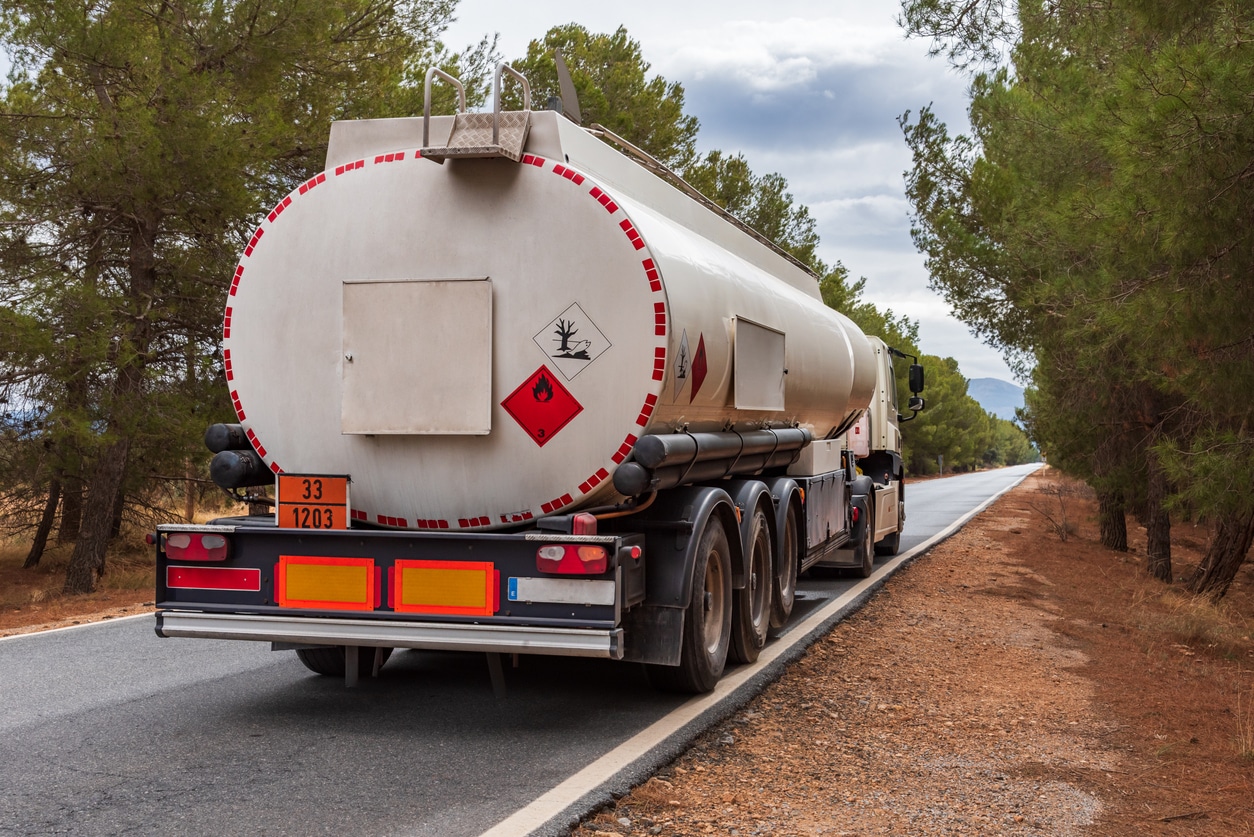
How a Hazmat Endorsement Can Boost Truck Driver Salary
Truck driving is a serious business that moves goods across the nation efficiently. Because of this, dependable truck drivers are a cornerstone of our economy. However, some drivers may not realize that special endorsements can make a big impact on your salary. One such endorsement is the hazmat endorsement.
At Driving Academy, with locations in New Jersey and others coming soon nationwide, our experienced instructors can help people take the first steps toward getting their CDL with truck driver training and road testing. Here, we discuss the hazmat endorsement and how it can increase a truck driver’s pay.
What Is an Endorsement?
To drive a truck and certain other vehicles commercially, drivers will need to obtain their CDL (commercial driver’s license). This specialized license is earned by taking courses, passing a written exam, and testing both their knowledge and their practical skills behind the wheel.
If drivers wish to drive special vehicles, however, they need the proper endorsements. These state-issued endorsements include:
- Doubles/triples endorsement (T): This lets drivers haul several trailers at once (can only be received if you hold a Class A CDL).
- Passenger transport endorsement (P): This allows you to operate a vehicle carrying over a specific number of passengers (the exact number varies based on the state).
- School bus endorsement (S): This can be obtained to allow holders to drive a school bus (must have a passenger endorsement first).
- Tank endorsement (N): This is for operating any vehicle with a temporary or permanent tank attached.
- Hazardous materials endorsement (H): This hazmat endorsement allows holders to transport gas, oil, and other potentially dangerous chemicals.
Drivers can also look into getting a tanker/hazmat combination endorsement (X). This endorsement is for both Class A and Class B CDL holders and allows the transport of hazardous materials in a tanker truck. Because this is a joint endorsement, drivers will receive both tanker and hazmat endorsements at the same time.
More About the Hazmat Endorsement
Because hauling chemicals, gas, or oil presents the potential for dangers, the hazmat endorsement is a highly regarded addition to your CDL. Because of the nature of these materials, drivers will be subject to a threat assessment from the Hazardous Materials Endorsement Threat Assessment Program if trying to obtain, renew, or transfer this endorsement. You’ll need to already have a state-issued CDL to apply. It is necessary for those who are looking to take on jobs that require placarding under the Department of Transportation hazardous materials regulations.
To get this sought-after endorsement, you’ll need to complete an application online or in person at an application center (in-person application is only available in select states). You’ll then need to schedule an appointment or walk into your application center to show your driver’s license or U.S. passport and your birth certificate as well as the required paperwork. You’ll also get fingerprinted and need to pay a fee valid for five years.
Why Get Your Hazmat Endorsement?
Having any endorsements to your CDL is sure to help your career, but the hazmat endorsement in particular has its advantages. First, those with the hazmat endorsement will see a noticeable increase in pay. This is because you will be tasked with transporting dangerous materials, and because these jobs are difficult, they are in high demand. Another benefit is that it opens up more job opportunities. Those without this endorsement are limited in the vehicles they can drive.
Having this CDL endorsement is also helpful because it shows employers that you’re willing to go above and beyond to achieve success. The endorsement process can be lengthy, so if you’ve put in the effort to obtain one, employers will see that you’re serious about your career. This specific endorsement also shows that you are committed to safety. This will give companies confidence knowing that you’re behind the wheel.
Get Started on Your Truck Driving Career at Driving Academy
With so many advantages, getting your hazmat endorsement is a smart choice for those looking to take their careers to the next level. We can help future truck drivers gain their Class A, Class B, or Class B+P CDL through our full courses, which feature written work and road testing, or our half courses, which feature only road testing and are designed for those who already have their commercial learner’s permit (CLP). We provide practice permit tests and a CDL study guide to make sure you have the tools you need to make your dreams come true.
Further, Driving Academy offers guaranteed training courses that let you take your road test as many times as you need. We even offer affordable payment plans and flexible schedules to fit your needs. If you’re ready to see what this exciting career is all about, contact us today. We have locations in New Jersey, with more coming soon across the nation.

How To Start a Truck Driving School in Texas
The trucking industry is as important as it’s ever been. Moving goods and products across the country and the world requires more than just planes and boats. While it seems like there are so many trucks on the interstate, the truth is that the industry is always looking for more drivers. That’s why becoming a truck driver is such an exciting opportunity. As more students show interest in the field, they’ll need quality education and the right truck driver training, which is where truck driving schools like Driving Academy come in. If you want to know how to start a truck driving school in Texas, learn what you need to know to start a franchise with Driving Academy.
About Truck Driving Schools
Truck driving schools provide great opportunities for prospective drivers to learn the ins and outs of the profession. Not only will students learn about the physical components of the trucks they’ll be driving, and any equipment involved, but they’ll also learn safety procedures and precautions that are vital to the field. CDL driver training provides textbook learning in the classroom and practical training behind the wheel. Some may even offer simulated training machines to allow realistic training off-road.
Why You Should Consider Starting a Trucking School
Owning a business can be stressful, but it comes with some big rewards, and owning a truck driving school is no different. Aside from the financial profit that comes with running a successful business, the fact that most of the costs are upfront means that there’s plenty of room for economic growth.
Drivers who become owners also get the added perk of staying in the industry without having to log all the hours on the road. While the freedom of the open ride is nice, some drivers want to spend more time with family, which is a great reason to consider ownership.
Owning a truck driving school also gives you the satisfaction of knowing you’re making a difference in so many lives. The reward of helping students pursue their commercial driver’s license (CDL) and achieve success in the field of their dreams will leave you feeling grateful.
You’ll also be preparing new drivers to help an industry in need. The more highly trained truck drivers there are, the better the nation’s supply chain works.
How To Start a Truck Driving School in Texas
As with any other business, there’s a lot to consider when it comes to opening a truck driving school. Some of the aspects you’ll need to tackle are:
Research
You’ll need to study the area of the prospective school’s location to judge the competition and the demand for a new truck driving school. Coming up with a solid plan is key to any business model. Because of its location in the middle of the country, Texas is a hotbed for trucking, so the need for truck drivers is often high throughout the state.
Paperwork
To start a business, you’ll need to fill out the requisite documentation. Registering your business with the necessary agencies and obtaining permits, licenses, and certifications are just a few things you’ll need to handle. You’ll also want to familiarize yourself with local, state, and federal regulations to make sure your business stays in compliance. If you start a franchise with Driving Academy, we can guide you through all that.
Location
In Texas especially, you’ll need to find a location for your business. Your location should have classrooms, administrative offices, parking, and space for students to practice driving the trucks. You’ll want a private location but one with easy access to the interstate.
Trucks
It should go without saying, but you’ll need to have a fleet of trucks to help students practice. It’s best to start small and build your fleet over time, but it’s a good idea to get trucks of different sizes to help students with different interests.
Equipment and Supplies
You’ll need to buy textbooks, manuals, and other educational materials to help students learn. A/V equipment is also essential for today’s classrooms, providing videos and online resources.
Instructors and Curriculum
As with any school, you’ll need qualified instructors. In Texas, truck driving school instructors require a separate license and will need at least 40 hours of training. You will work with your instructors to create an in-depth curriculum, covering everything from vehicle inspections to important regulations. You’ll also need to update your curriculum over time to keep up with changes.
Advertising
Between social media marketing, SEO practices, local outreach, and other advertising practices, you’ll need to spread the word about your school. It also helps if you can build strong relationships with trucking companies, making it easier to help students get jobs after graduation. Driving Academy can help with that when you start a franchise with us.
How Can Driving Academy Help?
Before going through each step of starting your truck driving school, why not talk to the experts? At Driving Academy, we can help you start your own franchise. We offer support with many aspects of the process, allowing you to focus on what matters most. We’ll even provide training both online and in person at our franchise office to help you get started.
Our programs help students obtain their Class A CDL, Class B CDL, or Class B+P CDL, and we have prepared over 100,000 students for life on the open road
Start Your Franchise Today
Starting your own truck driving school requires a lot of time, effort, and resources. Let the team at Driving Academy help. We have a strong, tested recipe for success, so you can help generations of individuals find a career they’ll love in the truck driving industry. Because of its geographic location, Texas is an epicenter for the trucking industry, so it’s a great choice for your school. If you’re ready to take the first step, call us today at 1-888-525-3609 or fill out the form on our franchise page.
Handling the Cost of Starting a Truck Driving School
Everywhere you go, you’re bound to see trucks on the road. From highways to city streets, hauling items from point A to point B requires the mix of power and convenience that trucks can offer better than any other vehicle out there. That’s why truck drivers have such a rewarding and fulfilling career. However, if you’re interested in taking on a bigger role in the trucking industry, why not look into starting your own truck driving school? At Driving Academy, we help experienced drivers get more out of their passion for trucking with franchise opportunities. Here, we’ll explore how you can start your own truck driving school.
What Is a Truck Driving School?
Truck drivers require special education to operate the vehicles they’ll drive every day. These courses prepare students to earn their commercial driver’s license (CDL) through truck driver training. This is important because truck driving demands intricate knowledge of the vehicles and rules of the road. Truck driving schools help students learn the skills they need to drive trucks effectively and safely. Safety is vital because the large size of trucks can make them a hazard for other motorists if those behind the wheel aren’t properly trained.
Truck driving schools offer both in-class learning and hands-on practice in the field. Prospective students must be 18 years or older and have a commercial learner’s permit (CLP) to enroll.
Why Should You Start Your Own Trucking Driving School?
Many truck drivers love the freedom of the open road. There’s something special about hitting the interstate and being in your own world. Many also love the flexibility the job provides and that they get to travel for a living. However, some truckers want to spend more time at home or take on a bigger role in the industry, which is why they look into running their own school. Some benefits are:
Demand
While planes and boats may cover great distances, the need for trucks is not going away. Truck drivers are needed now more than ever, and owning a school allows you to shape the future of the industry. On top of that, there aren’t many truck driving schools from which to choose. As more aspiring drivers show interest in the field, your school will always have students.
More Family Time
As exciting as it can be to drive for a living, running a school lets you have more time with loved ones. Instead of being on the road for days at a time, you’ll be closer to home and will have more time to make memories.
Profitability
Owning any in-demand business comes with a certain level of financial success, but truck driving schools, and franchising in general, can be very profitable. Aspiring truck drivers are willing to invest in programs that set them up for success.
A Sense of Pride
Educating others is always a rewarding experience. Not only will you feel good that you’re passing along important knowledge, but it will be fulfilling to know you’ve helped so many achieve their dreams.
What Costs Will I Have to Face?
Like any other business, owning a truck driving school will require some upfront costs. After coming up with your plan, consider the following investments:
- A location (complete with classrooms and private space for students to practice driving)
- Books, videos, and other educational materials
- A/V equipment for your classrooms
- Trucks for students to train in
- Instructors
- Training simulator (optional)
- Emergency equipment
It’s also a good idea to purchase business software to help keep track of expenses and invest in marketing materials to help advertise your school. While the range of costs varies depending on your location and the size of the school you’re planning, you may be looking at a hefty price tag.
How Much Does It Cost to Start a Truck Driving School Franchise?
With so much to consider when opening your own truck driving school, why not let the team at Driving Academy lend a helping hand? We have tried-and-true marketing strategies to create interest and sales strategies to help with conversion. Our training programs teach students all they need to know to enter this industry. Our well-organized business model has helped us create a trusted name in the business and has led to over 100,000 students earning their CDLs.
Starting a franchise through Driving Academy offers a great opportunity for success in a rewarding field. Because we provide Class A CDL training, Class B CDL training, and Class B+P CDL training, we attract students interested in a variety of different driving careers. Our franchise opportunities require a $50,000 downpayment and cost anywhere from $224,200 to $557,300 to get started. They provide great potential for profit and a network of support from our experienced team to take a lot of the burden off your shoulders. By working with us, you’ll get the most out of your investment.
Join Our Team Today
Whether you’ve always dreamt of owning a truck driving school or are excited about a new business opportunity, reach out to us about owning your own Driving Academy franchise. We help with franchising nationwide (states may vary regarding franchising regulations). If you’re ready to take the next step in your career, fill out the form on our franchise page or call us at 1-888-525-3609 today.

Is It Time to Get Into the Trucking Business?
Have you been interested in working in the trucking industry but been hesitant to start, not knowing if it’s the right time? Driving Academy is here to help you get started with CDL driver training, available at our locations in New Jersey and soon nationwide. Here, we share information about getting into the trucking business and how to know if it’s the right time.
Jobs in the Trucking Business
If you’re interested in joining the trucking industry, the first step is to be familiar with the job options. One of the most common is getting a commercial driver’s license (CDL) to become a commercial truck driver. Commercial truck drivers have special training to operate vehicles like tractor-trailers or tankers. There are different types of CDL licenses, and at Driving Academy, we offer training and testing for three types:
- Class A CDL, which is required to operate vehicles weighing more than 26,001 pounds with a trailer weighing more than 10,000 pounds, like flatbeds.
- Class B CDL, which is necessary to operate any vehicle heavier than 26,001 pounds with no trailer or one weighing less than 10,000 pounds, like box trucks.
- Class B+P CDL, which is required for driving passenger buses or other vehicles carrying more than 16 passengers and weighing more than 26,000 pounds.
Getting a CDL allows you to drive a wide range of commercial vehicles, including those carrying large loads or hazardous materials (although you may need additional endorsements.)
If you’re not interested in driving a truck but still want to work in the industry, Driving Academy offers a unique opportunity to start a driving school franchise. We currently have two school locations in New Jersey and have more locations coming soon. Driving Academy has a mission of helping 1,000,000 people find their way to freedom by getting their CDL licenses. We need more franchises to reach our goal, so we offer franchisee training to people who want to work for themselves on their own terms. Franchising a Driving Academy school is a way to have your own business without needing to do all the work to start it. These are just two job options in the trucking business that Driving Academy offers.
Determining If the Time Is Right to Join the Industry
When deciding if the time is right to join the trucking business, consider the saying — there’s no time like the present. This is true for two reasons: the first is that you don’t want to waste more time sitting around and not pursuing a career you’re interested in. The second is that the current time actually is a good time for prospective truck drivers to join the industry. This is because there is a shortage of skilled commercial truck drivers. With more jobs available than there are drivers, companies are offering incentives like higher pay, benefits, and bonuses to entice drivers.
Why Should You Choose Driving Academy?
If you’re ready to get your CDL, there are several reasons to do so at Driving Academy. We are one of the few schools in the country that offers both CDL training and testing since we are a certified third-party tester. This allows us to give a CDL road test to anyone nationwide with a CDL permit, allowing our students to skip the process at the DMV.
Other reasons to choose Driving Academy for your CDL training include:
- Qualified instructors with vast industry experience
- Programs with 100+ hours of classroom, simulator, and road training
- Flexible schedules with training 7 days a week (hours may differ depending on location)
- Full course, half course, and guaranteed CDL training course options
- Job placement assistance for your whole lifetime
- Unique simulator training that provides ample training quickly
- Affordable payment plans with as little as $500 down
Some of our coursework can even be done online and full-time students can be done in a month, adding to the convenience of Driving Academy education.
To learn more about why you should choose Driving Academy as your place to get started in the trucking business, read through some testimonials.
Contact Us Today to Get Started on Your CDL
Now that you know more information about the trucking business, it’s time to get started on your way to freedom. Driving Academy will help you get there with CDL driver training and road testing at our locations in New Jersey and soon to be nationwide, as well as franchise opportunities. With courses available for people with a CDL permit and those with no prior experience, Driving Academy is the place to go for high-quality training. Contact us today to learn more about our CDL programs and how to get started.

Tired of the Road? Pass on Your CDL Skills to a New Generation of Drivers
Are you a commercial truck driver getting tired of long hauls on the road? If you’re not ready to retire completely, you’re in luck. There are various alternative CDL careers to consider. You can pass your knowledge and experience onto the next generation of aspiring commercial truck drivers by becoming a CDL instructor. Driving Academy also offers franchise opportunities in addition to driver training and road testing for CDL licenses. Here, we share information about how to become a CDL instructor.
What Does Being a CDL Instructor Involve?
Working as a commercial truck driver is a fulfilling career with many benefits. However, as you get older, start a family, or want to spend more time at home, you may want to step away from the road. The good news is you don’t have to stop working in the industry completely. You can take the knowledge and expertise you have gained over your career and use it to teach new students by becoming a CDL instructor. CDL instructors teach students to drive trucks and how to pass the required CDL exams. This involves providing a mix of in-classroom training and hands-on training behind the wheel. To become a CDL instructor, you need to:
- Have a high school diploma
- Possess a valid Class A CDL
- Have more than two years of driving and over-the-road (OTR) experience
- Earn a CDL instructor certification, given after passing a 120-minute test
- Pass the Department of Transportation (DOT) physical exam and drug screening
The good thing is you have already completed most of these by having a CDL. Once finishing your certification, you will be a CDL instructor and can retire from the road, if you choose to do so. Some people choose to continue driving part-time and instructing part-time.
Being a CDL instructor comes with the convenience of staying in one spot, being able to spend time with family, and not having to spend long hours in a truck. It is also rewarding. By spreading the knowledge you have gained over your career to younger people, you will feel satisfied and know that the future of the industry is in good hands.
CDL Instructor Jobs at Driving Academy
Driving Academy is a CDL training and testing site operated by experienced instructors. Its founder comes from a family of CDL drivers and teachers who have inspired Driving Academy’s mission of helping people find their road to freedom. Driving Academy’s goal is to create the best learning environment for students so they can succeed as commercial truck drivers. This is done by hiring experienced instructors who complete extensive training so they can effectively teach the next generation.
If you’re interested in teaching aspiring drivers how to become licensed, Driving Academy is a great place to become an instructor. With an already-developed teaching system and a supportive community to rely on, Driving Academy can help you transition from driver to instructor smoothly.
Driving Academy is special because we are one of the few schools in the country that can train students as well as test them. As a certified third-party tester, instructors at Driving Academy can give the CDL road test to anyone in the country with a CDL permit. By becoming a CDL instructor at Driving Academy, you can help students prepare for the test and be the one who is testing them, which is a unique and rewarding experience.
Franchise a Driving Academy School
If you’re getting tired of being on the road but aren’t ready to retire and don’t want to become an instructor, you may be stumped on what to do next. Fortunately, Driving Academy has another exciting option for you—owning a Driving Academy franchise. Driving Academy has plans to expand to more locations, intending to help 1,000,000 people find their way to freedom. To reach our goal, we need more franchises! Starting a Driving Academy franchise is a way to own a business without having to do all the work from the ground up.
The franchise process at Driving Academy generally entails:
- An initial contact about owning a franchise
- A call from our franchise advisor team to determine your qualifications and eligibility
- Completing the Driving Academy training program that consists of online training and two weeks of in-person training at our franchise headquarters (if qualified)
Once you have completed the training, you will be ready to open your very own Driving Academy franchise. However, it’s recommended to check your state’s guidelines on franchising before continuing, since different states often have different franchising rules.
Learn More About Becoming a CDL Instructor
If you are ready to retire from the road and train to become a CDL instructor, Driving Academy is the place to go. Headquartered in New Jersey and with more locations coming soon, Driving Academy is taking the trucking industry by storm. We invite you to join our team and prepare to teach the next generation of CDL drivers. If teaching isn’t your style, owning a Driving Academy franchise may be a suitable option for you. Contact us today to learn more about available CDL instructor jobs or owning a franchise.
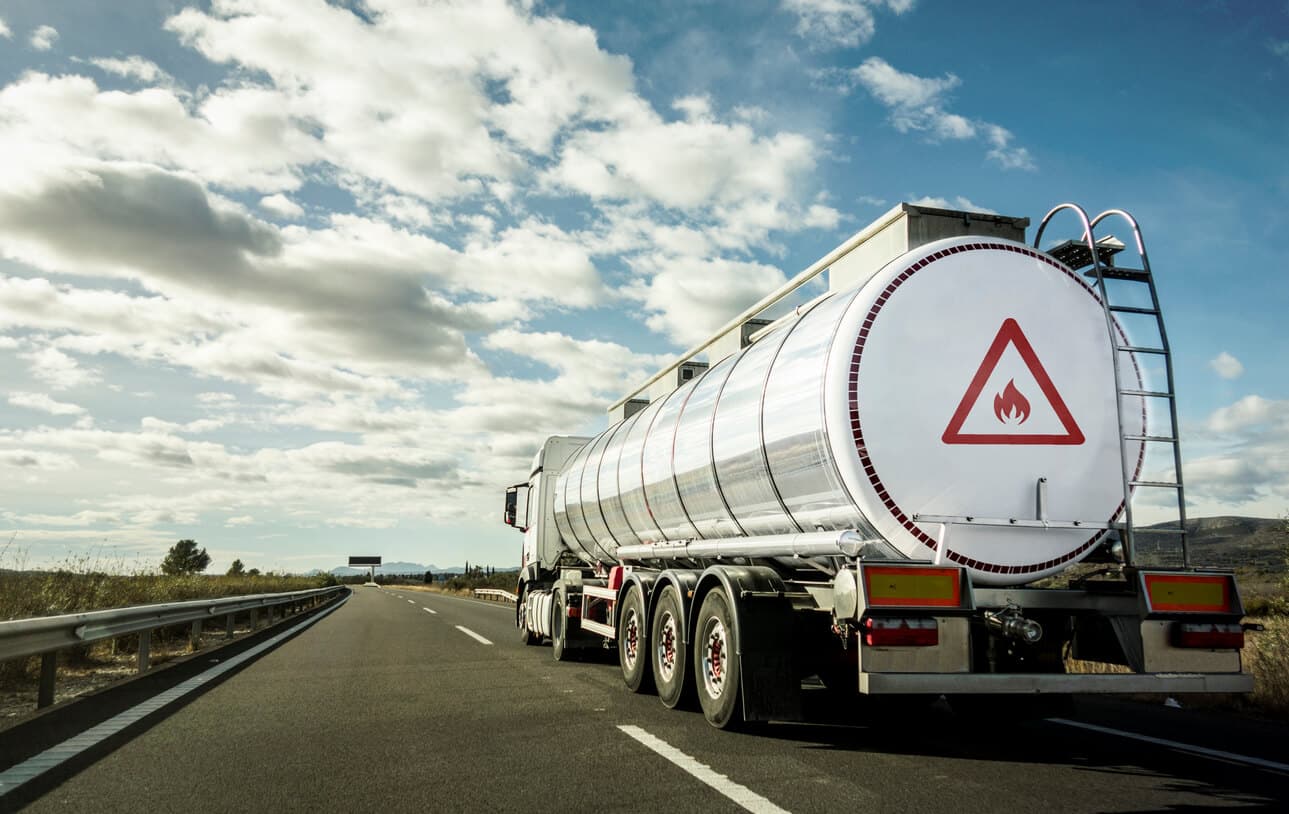
The Highest-Paying Truck Driving Jobs
Whether you already have a commercial driver’s license (CDL) or are looking to get one, you may be interested in getting an additional endorsement to increase your earning potential. Even if you don’t want to pursue an endorsement, you can still make a reliable living by earning a CDL because truck drivers are in high demand.
At Driving Academy, headquartered in New Jersey with more locations coming soon, we provide CDL driver training and road testing to prepare students for CDL exams and a wide variety of truck driving jobs. Here, we discuss the highest-paying jobs for truckers and how our programs can help you start working toward them.
Why Is the Demand for Truck Drivers High?
Truck drivers are in high demand for a few reasons. For starters, commercial truck drivers are vital for transporting goods from one place to another. Big businesses consistently need delivery drivers in their supply chain, which is one reason the demand for truck drivers is high. This demand grew during the pandemic, and many Americans have adopted shopping online as the norm, increasing demand for delivery drivers and long-haul truckers even more.
Another reason is that there is a shortage of skilled commercial truck drivers. This is due to current drivers retiring or switching jobs. According to the U.S. Bureau of Labor Statistics (BLS), around 241,200 job openings for heavy and tractor-trailer truck drivers will be available each year over the decade. Most of these will result from the need to replace workers who exit the labor force.
Types of Trucking Jobs with More Earning Potential
Since the demand for truck drivers is high, many trucking companies are increasing pay and benefits to attract more drivers. This is enough to entice many people into getting a CDL. Fortunately, there are many different types of truck driving jobs, with some helping you earn more than others. Some of the higher-paying trucking jobs include:
Owner-Operator Truck Driver
An owner-operator truck driver is one of the highest-paying trucking jobs. It describes a driver who works independently rather than for a trucking company and possesses and manages one or more cargo trucks. They can decide what jobs they want to take on.
Besides driving their own cargo truck, owner-operators also must determine routes, load and unload their truck, deliver items, and take on other tasks. They can work as freelancers with different businesses or work with one under contract. Since owner-operator truck drivers have higher expenses than other types, they often have a higher salary. According to Indeed, the national average salary for an owner-operator trucker driver is $210,396 per year.
Tanker Driver
Working as a tanker driver is another higher-than-average paying trucking job. A tanker driver operates a truck carrying a special tank of liquids or gases. To become a tanker driver, you need a tanker endorsement on your CDL to ensure you can safely transport these liquids or gases. The national average salary for a tanker driver is $84,461 per year, according to Indeed.
Hazmat Tanker Driver
A hazmat tanker driver is another trucking job that offers a higher salary. Hazmat drivers are similar to tanker drivers, but their tanker trucks carry hazardous materials like gasoline, propane, or alcohol. These drivers must get a hazardous endorsement on their CDL before they can transport these materials. It can be worth it, though. The salary range for hazmat tanker drivers ranges from $61,500 to $127,000 per year, according to ZipRecruiter.
Long-Haul Trucker
A long-haul truck driver consistently travels long distances to transport goods, often stopping multiple times for deliveries along the way. Long-haul truckers also must keep track of their expenses, stops, miles, and other details when on the road. Since the places long-haul truckers travel to can be hundreds or thousands of miles away, they typically make more money than local truckers. According to Indeed, the average salary for long-haul truckers is $78,302 per year.
If you’re interested in a high-paying trucking job, you may need an endorsement on your CDL. Driving Academy can help you succeed with training courses for three types of CDL (Class A, Class B, and Class B+P) led by experienced instructors. We even offer a Guaranteed CDL Training program to help you earn your CDL that includes unlimited attempts on the road test.
Learn More About Truck Driving Jobs From Driving Academy
Are you ready to start training for a high-paying trucking job? Trust the training offered at Driving Academy, with locations in New Jersey and soon nationwide. Our training is designed to get you on the road to freedom. Driving Academy aims to make the CDL training and testing process as easy as possible with affordable payment plans, flexible schedules, and lifetime job placement assistance. To learn more about CDL training at Driving Academy, contact us today.

How Old Do You Have to Be to Get a Commercial Driver License?
Those interested in getting a commercial driver’s license (CDL) may be surprised to know there is a CDL age requirement. Drivers need to be at least 18 years old to get a CDL, but that comes with some restrictions.
Driving Academy, based in Linden, New Jersey, offers CDL training to students from throughout the U.S. Here, we talk about the age requirements for earning a CDL.
CDL Age Requirements
A person needs to be at least 21 years old to drive a commercial vehicle across state lines, but if you want to operate a vehicle that requires a CDL license in just your own state, you only need to be 18. The age restrictions apply whether you seek a Class A CDL or Class B CDL.
High Demand for Professional Drivers
Since the coronavirus pandemic, there has been an increased need for professional truck drivers. Some surveys say at least 80,000 new CDL drivers are needed across the United States to keep up with the trucking demand.
To help meet this demand, there is a three-year Safe Driver Apprentice Pilot Program to allow people who are 18 years old, already have a state-issued CDL, and maintain a clean driving record to drive interstate routes under the direction of an experienced driver. The experienced driver must:
- Be at least 26 years old
- Have at least five years of CDL driving experience
- Have two years of incident-free driving, meaning no crashes or tickets during that time frame
The program includes safety precautions put into place by the Federal Motor Carrier Safety Administration. Tractor-trailers used in the Safe Driver Apprentice Pilot Program must have extra safety technology, including:
- Automatic emergency braking
- Forward-facing video cameras
- Top speed limited to 65 miles per hour
Apprentice drivers are limited to hauling only one trailer and they will not be able to haul hazardous material.
The Need for Professional Drivers is Increasing
The U.S. Bureau of Labor Statistics predicts that the need for heavy-duty truck drivers and tractor-trailer drivers will increase by 4% over the next few years and the need for delivery drivers will increase by 10% over the same time.
Companies all over the United States are looking for qualified drivers to take their routes. Because of the lack of professional drivers, some trucking companies are offering retention bonuses of 20% or more to keep drivers in their trucks.
Programs Offered at Driving Academy
Driving Academy offers three different CDL programs for people interested in pursuing one of the most in-demand jobs across the country.
Class A CDL
A Class A CDL is needed for those who want to drive tractor-trailers or vehicles that weigh more than 26,000 pounds and have a trailer that weighs more than 10,000 pounds. Once a Class A CDL has been earned, you can also drive a Class B vehicle.
Class B CDL
A Class B CDL is for box trucks and delivery trucks. A Class B vehicle is described as any vehicle weighing over 26,000 pounds and has no trailer, or if there is a trailer, it weighs less than 10,000 pounds. Examples of Class B vehicles include box trucks, cement trucks, garbage trucks, and delivery trucks.
Class B+P CDL
The Class B+P CDL is for vehicles that weigh more than 26,000 pounds and have a carrier with 16 or more passengers, including the driver. Passenger buses and school buses are examples of Class B vehicles. Once someone has earned a CDL Class B+P license, they can also drive any other Class B vehicle. The “P” is an endorsement that allows drivers to carry passengers.
Choose Driving Academy to Earn a CDL
For people interested in earning a CDL from a trucking school, Driving Academy offers students the opportunity to pursue an in-demand career. Driving Academy provides students with advanced CDL driver training and the necessary knowledge and skills needed to earn their Class A, Class B, or Class B+P CDL.
Driving Academy offers its students guaranteed CDL truck and bus training without the fear of failure. Our programs offer:
- Affordable payment plans that start at just $500 down
- Certified third-party testing site available
- Flexible training schedules
- Lifetime job placement for graduates
- State-of-the-art simulator training
Driving Academy has locations in New Jersey and serves students nationwide. If you’re ready to hit the road and earn a CDL, contact us today to learn more about our CDL truck driver training programs.
Entry-Level CDL Jobs: What Comes After Training?
To become a professional truck driver, a person needs a commercial driver’s license (CDL). Once someone has earned a CDL and completed their training, what comes next? Driving Academy is a CDL driving training school based in New Jersey where students can earn their Class A CDL, Class B CDL, or Class B+P CDL.
Here, we talk about how to pursue entry-level CDL jobs after training.
CDL Training Offered at Driving Academy
Before getting on the road, students need to earn their CDL from a certified truck driving school. Driving Academy offers three different types of CDL training courses to choose from, depending on which type of vehicle they want to drive:
- Class A: A Class A CDL is for people who want to drive a tractor-trailer or vehicle that weighs more than 26,000 pounds and has a trailer that weighs more than 10,000 pounds. Once a Class A CDL has been earned, drivers are also eligible to drive Class B vehicles.
- Class B: A Class B CDL is for box trucks and delivery trucks. A Class B vehicle is described as any vehicle weighing over 26,000 pounds and has no trailer, or if there is a trailer, it weighs less than 10,000 pounds. Class B vehicles include dump trucks, box trucks, garbage trucks, and cement trucks.
- Class B+P: The Class B+P CDL is for vehicles that weigh more than 26,000 pounds and have a carrier with 16 or more passengers, including the driver. Passenger buses and school buses are examples of Class B vehicles. Once you have a CDL Class B+P license, you can also drive any other Class B vehicle.
Types of Entry-Level CDL Jobs
After truck driver training school is complete and students pass the CDL road test, graduates are awarded their CDL. The next step is to find a job and get trucking.
Types of Class A CDL Jobs
According to the U.S. Bureau of Labor Statistics (BLS), demand for Class A CDL drivers is expected to increase by 4% over the next few years. The main job of Class A CDL drivers is to transport goods from one location to another. Entry-level jobs include:
- Over-the-road tractor-trailer drivers
- Interstate truck drivers
- Local delivery drivers
- Tanker drivers
Types of Class B CDL Jobs
Demand for Class B CDL drivers is expected to increase by 10% over the next few years, according to the BLS. Jobs that require a Class B CDL include:
- Delivery driver
- Box truck driver
- Garbage truck driver
- Moving truck driver
- Many construction driver jobs, like cement mixer drivers
Types of Class B+P CDL Jobs
A Class B+P CDL allows drivers to operate a vehicle that has 16 or more passengers. Those types of jobs include:
- Local transit driver
- School bus driver
- Tour bus driver
Many entry-level CDL jobs are over the road, which refers to long-haul truckers. That means they require travel through multiple states and can take many days to complete a haul. Many prospective companies have entry-level job seekers do long-haul trucking to build up their resume and driving skills.
Invest In Your Future at Driving Academy
Are you ready to hit the road and become a professional driver? Make Driving Academy the place where your career starts.
How does Driving Academy stand out from other CDL programs? Benefits of attending a Driving Academy program include:
- Guaranteed training programs
- State-of-the-art training simulators that teach students how to drive manual transmissions, in realistic settings and weather situations
- CDL Class A, Class B, and Class B+P training courses available
- Students accepted nationwide
- Pick your own training schedule
- Open seven days a week
- Certified third-party testing sites available for your road test
- Payment plans that start as low as $500 down
After completing any of the training courses that Driving Academy offers, students will be ready to apply for entry-level CDL jobs across the country. Driving Academy offers free lifetime job placement help for our graduates. We connect our graduates with our network of employers, even years after they have graduated. Whether students are looking for an entry-level CDL job or a position that demands more, Driving Academy is always looking to help our alumni.
Driving Academy has locations in New Jersey and serves students nationwide. If you want to learn more about Driving Academy, take a virtual school tour and then contact us to get started.
Class B CDL Jobs Offer Variety and Security
When asked what they look for in a career, many people say job security along with salary. If you are looking for a steady job that offers variety with daily responsibilities, look into Class B CDL jobs. Professional drivers are always in need.
Driving Academy is a truck driving school based in Linden, New Jersey, that offers CDL driver training to students nationwide. Here, we discuss the types of jobs available to someone who has a Class B CDL.
How to Obtain a Class B CDL
A Class B commercial driver’s license (CDL) training teaches a driver to operate a commercial truck with an attached cab and cargo area with a weight of more than 26,000 pounds. A Class B CDL also allows drivers to operate a detached towed cargo vehicle that weighs less than 10,000 pounds. A Class B CDL is common for box truck and delivery truck drivers.
Driving Academy also offers Class B+P CDL training for those interested in driving a bus. A Class B+P CDL is designed for driving a vehicle that weighs more than 26,000 pounds and has a carrier with 16 or more passengers, like a passenger or school bus. Once you have a CDL Class B+P license, you can also drive any other Class B vehicle.
Once the CDL courses are complete, the student needs to take a CDL road test, which includes three parts:
- Pre-Trip inspection:This portion takes one hour. The student inspects the inside and outside of the truck to ensure everything is in working order and safe for driving.
- Parking skills: In this portion, students must show that they can park the truck up to six different ways, including parallel parking and backing up to a dock. This could take one hour.
- Road driving:The student is tested on their ability to operate the truck safely in all kinds of situations. This takes about 30 minutes.
Driving Academy offers on-site CDL road testing at our Levittown, Pennsylvania, site. Our instructors are also certified to give a CDL road test, so we know what it takes for you to pass. After the student passes their CDL road test, they’re ready to hit the road as a professional truck driver.
Types of Jobs That Require a Class B CDL
A Class B CDL is needed to operate box trucks and buses. Other vehicles that need a Class B CDL to operate are:
- Cement trucks
- Delivery trucks
- Dump trucks
- Garbage trucks
- Mail carriers
- Public transit buses
- School buses
- Tour buses
Some projections say the need for Class B CDL drivers will increase by 10% over the next eight years. That means the need for drivers will keep rising in this growing industry. The rise has to do with increasing numbers of online orders and the demand for box truck drivers to deliver these goods.
Get a Passenger Endorsement
After someone earns their Class B CDL, they’ll be able to operate many types of trucks and vehicles. To open the door to more opportunities, a driver can choose to earn different endorsements on their license. Endorsements allow drivers to haul different materials, like hazardous chemicals, or drive special vehicles, like school buses. Endorsements a Class B driver can earn include:
- H: Hazardous materials
- P: Passenger transport
- S: School bus/ passenger transport
- T: Tank vehicle
- X: Tanker and hazardous materials
To earn one of these endorsements, a written examination is needed. In some cases, a road skills test may be needed. Check with your local DMV for more information.
Choose Driving Academy to Earn a Class B CDL
If you’re looking for a career that offers variety and security, Driving Academy offers students in and around Linden, New Jersey, the opportunity for a rewarding career out on the open road. Driving Academy prepares students with advanced training, providing the knowledge and skills needed to earn their Class A, Class B, and Class B+P CDL.
Driving Academy offers guaranteed CDL truck and bus training without the fear of failure. Our programs offer:
- Affordable payment plans that start at just $500 down
- State-of-the-art simulator training
- Lifetime job placement for graduates
- Flexible training schedules
- Certified third-party testing site available
- Training for students from anywhere in the United States
If you’re ready to hit the road with a Class B CDL, contact us today to learn more about our driving school and get trucking.

What Do They Ask on a CDL Written Test?
To pass a CDL permit test, there is a written exam. The exam covers topics from dealing with the equipment on the truck to driving safety to pre-trip inspections and much more. Driving Academy, based in Linden, New Jersey, and serving students nationwide, offers CDL driver training to help those who want to earn their CDL to drive professionally. Here, we talk about what is on the commercial driver’s license (CDL) permit test.
What Is Covered on a CDL Permit Test?
The CDL permit test consists of 50 multiple-choice questions about CDL driving. While it is harder to pass than a standard driver’s license permit test, reading through the driver’s manual will give test-takers a good idea of what is on the test. Some of the main topics include:
General Knowledge
The general knowledge test is where students prove they know all the basics about driving a commercial vehicle, including steering, shifting, and vehicle inspections.
Air Brakes
The air brakes exam covers brakes, air brakes, air pressure gages, and much more.
Passenger Endorsement
The passenger endorsement exam features questions about driving buses or other vehicles with passengers. Questions include what to expect during an inspection, what passengers can or cannot bring onto the vehicle, and how far back a driver should remain from a vehicle in front of them.
Combination Vehicle
The combination vehicle part of the exam has questions about hauling multiple trailers and conducting safety checks.
Sample Questions
There are sample questions from the CDL permit test on our practice permit test page. Some questions that may be found on a CDL practice test are below, along with the correct answers.
Q. Which of these pieces of emergency equipment should always be carried in your vehicle?
A. Fire extinguishers, warning devices, spare electrical fuses.
Q. Name some things you should check on the front of the vehicle during the outside inspection.
A. Clearance lights, identification lights, grill
Q.When should you use the parking brake?
A.Anytime you park
Q. How often should the air tank be drained?
A. Once a day
Q.If a rider wants to bring a car battery or can of gasoline aboard your bus, you should
A. Not allow the rider to do so.
Q. It is best to wear your seatbelt:
A. At all times
Q. Large combination vehicles take longer to stop:
A. When they are empty
Prepare For a CDL Permit Test at Driving Academy
Driving Academy offers three different CDL programs for those who are interested in pursuing professional truck driving.
Class A CDL
A Class A CDL is needed for those who want to drive tractor-trailers or vehicles that weigh more than 26,000 pounds and have a trailer that weighs more than 10,000 pounds. Once a Class A CDL has been earned, Class A CDL license holders can also drive Class B vehicles.
Class B CDL
A Class B CDL is for box trucks and delivery trucks. A Class B vehicle is described as any vehicle weighing over 26,000 pounds and has no trailer, or if there is a trailer, it weighs less than 10,000 pounds. Examples of Class B vehicles include box trucks, cement trucks, garbage trucks, and delivery trucks.
Class B+P CDL
The Class B+P CDL is for vehicles that weigh more than 26,000 pounds and have a carrier with 16 or more passengers, including the driver. A passenger bus or school bus are examples of Class B vehicles. Once someone has earned a CDL Class B+P license, they can also drive any other Class B vehicle. The “P” is an endorsement that allows drivers to carry passengers.
Choose Driving Academy to Earn a CDL
For those interested in earning a CDL from a trucking school, Driving Academy offers the opportunity to pursue a career that is in demand. Driving Academy provides students with advanced training and the knowledge and skills needed to pass their CDL permit test, and then go on to earn their Class A, Class B, or Class B+P CDL.
Driving Academy offers its students guaranteed CDL truck and bus training without the fear of failure. Our programs offer:
- Affordable payment plans that start at just $500 down
- Certified third-party testing site available
- Flexible training schedules
- Lifetime job placement for graduates
- State-of-the-art simulator training
Driving Academy has locations in New Jersey and accepts students from anywhere in the United States. If you’re ready to hit the road and earn a CDL, contact us today to learn more about our CDL truck driver training programs.

Truck Driver Pay Is Increasing at a Record Pace
Professional truck drivers are needed across the United States. The shortage of qualified drivers is causing companies to pay a premium for drivers willing to take their routes. Driving Academy, based in Linden, New Jersey, and serving students nationwide, offers CDL driver training and CDL road testing to help drivers earn their CDL and pursue career goals. Here, we talk about how much truck drivers make.
How Much Do Truck Drivers Make on Average?
According to the U.S. Bureau of Labor Statistics, the average truck driver pay in the United States is just short of $75,000 per year. That is for tractor-trailers and heavy truck haulers. For delivery drivers (those who have a Class B CDL), the average pay is just under $40,000 per year.
The American Transportation Research Institute (ATRI) says that driver wages increased by over 15% in 2022. The ATRI also stated that the increase was the fastest annual growth ever observed in the trucking industry.
Need For Truckers Increasing
The U.S. Bureau of Labor Statistics predicts that the need for heavy-duty truck drivers and tractor-trailer drivers will increase by 4% over the next few years. The need for delivery drivers is expected to increase by 10% over the same time.
Companies all over the United States are looking for qualified drivers to take their routes. Because of the lack of professional drivers, some trucking companies are offering retention bonuses of 20% or more to keep drivers in their trucks.
Add An Endorsement to Your CDL
For drivers looking to advance in their professional trucking careers, adding an endorsement to a CDL can make them more desirable in the job market and can lead to higher pay. An endorsement is a certification for a CDL that proves a driver has specific skills. There are six different types of endorsements available for CDL drivers.
H Endorsement for Hazardous Materials
An H endorsement is needed for drivers who haul hazardous materials. An H designation is only needed for volumes or substances that require placards under Department of Transportation rules. To earn an H endorsement requires taking a knowledge test.
N Endorsement for Tanker Vehicles
The N endorsement is for drivers who operate commercial vehicles with tanks that hold liquid or gas. In most states, the endorsement is needed if the total volume of the tank is more than 1,000 gallons or if a tank can hold over 119 gallons. The N endorsement requires taking a knowledge test.
P Endorsement for Passengers
If a driver wants to carry more than 16 passengers, a P endorsement is needed. This type of endorsement is needed for drivers who want to drive commercial or school buses, as well as shuttles. A skills test and knowledge test are needed for the P endorsement.
S Endorsement for School Bus Transport
For those looking to be school bus drivers, an S endorsement is needed. The S endorsement allows drivers to use a commercial vehicle to take students between home and school. It also enables drivers to take students to any school-sanctioned events, like field trips and sporting events. To obtain the S endorsement, drivers need to take a skills test and knowledge test. Many employers will also require a background check and a clean driving record.
T Endorsement for Double and Triple Trailers
The T endorsement usually refers to doubles and triples. In other words, pulling two or three trailers. Drivers must be aware of state laws, as some states do not allow triple-trailer pulls. To earn the T endorsement, drivers need to take a knowledge test.
X Endorsement for Combined Tank/Hazardous Materials
The X endorsement is a combination of the H and N endorsements. It allows drivers to carry hazardous liquids or gases in a tanker truck. In some states, the X endorsement may also allow a driver to carry nonhazardous materials in a tank they are hauling. A knowledge test is required to earn an X endorsement.
Choose Driving Academy to Complete Training
If you are looking for a career with advancement and pay increases, becoming a professional truck driver may be the career for you. Driving Academy offers training for Class A CDLs, Class B CDLs, and Class B+P CDLs.
Driving Academy is conveniently located in Linden, New Jersey, and our program stands out from the others because we offer guaranteed training courses. That means we’ll work with students on their skills until they can pass the CDL road test. We also differ from other driving schools because:
- Payments start as low as $500 down
- Open seven days a week, allowing students to pick their own training schedule
- Lifetime job placement services for our graduates
- State-of-the-art training simulators allow for real-life driving situations and shifting training
- Certified third-party testing site in Levittown, Pennsylvania
- Students are accepted from anywhere in the country
Does the Driving Academy program sound like what you are looking for? If so, take a virtual school tour of our Linden, NJ, campus and then contact us to get started on your CDL training.

Thinking About Starting a Truck Driving School? Consider a Franchise
The need for professional truck drivers is increasing, and that means the need for professional truck driving schools is also increasing. But how can that need be met? Driving Academy, based in Linden, New Jersey, offers franchise opportunities nationwide for people who want to open their own truck driving school.
Here, we discuss how to start a truck driving school.
The Need for Truck Driving Schools
Why is the need for certified truck driving schools increasing? In 2022, the Federal Motor Carrier Safety Administration (FMCSA) started requiring Entry Level Driver Training (ELDT) for truck drivers. This means anyone wanting to get a commercial driver’s license (CDL) after February 7, 2022, must attend a registered truck driver training course. This new regulation is driving the need for more truck driving schools across the country.
Seeing that need, Driving Academy decided to offer a unique opportunity: Franchising. Add in a nationwide professional driver shortage, and opening a franchised Driving Academy school just makes sense. Franchising with Driving Academy allows a franchisee to be their own boss while using their knowledge to educate the nation’s newest truck drivers. If you love to teach and educate drivers and have always wanted to own your own business, franchising with Driving Academy can put you on the road to success.
Why Choose Driving Academy’s Franchise Option?
Driving Academy wishes to put one million new drivers on the road to freedom with our CDL driver training courses. The founder and lead instructor of Driving Academy comes from a family of teachers and professional CDL drivers. We’ve created a systemized approach to business with a proprietary business model. Driving Academy will show you how we created a successful business that changes thousands of lives each year. During our franchisee training sessions, we’ll teach franchisees all aspects of owning and operating a Driving Academy business.
At Driving Academy, we strive to create the best possible experience for our students and franchisees. We stay at the forefront of new driving laws and keep on top of the latest driving training technology. Driving Academy schools offer state-of-the-art simulators, where students learn to drive in many different locations and various weather conditions. The driving simulators also enable students to learn to drive vehicles with manual transmissions. This gives students valuable shifting practice before they move to the yard to drive an actual vehicle.
What Type of CDLs Does Driving Academy Offer
Driving Academy offers three different types of CDL training courses as part of its truck driver schools. Those types of CDLs are:
Class A
A Class A CDL is for tractor-trailers or vehicles that weigh more than 26,000 pounds and have a trailer that weighs more than 10,000 pounds. Once you have a Class A CDL, you are also able to drive a Class B vehicle.
Class B
A Class B CDL is for box trucks and delivery trucks. A Class B vehicle is described as any vehicle weighing over 26,000 pounds and has no trailer. If the vehicle has a trailer, it must weigh than 10,000 pounds. Some examples of Class B vehicles are dump trucks, box trucks, garbage trucks, and cement trucks.
Class B+P
The Class B+P CDL is for vehicles that weigh more than 26,000 pounds and have a carrier with 16 or more passengers, including the driver. A passenger bus is an example of a Class B vehicle. Once a person has a CDL Class B+P license, they are also licensed to operate any other Class B vehicle.
How to Get Started With a Driving Academy Franchise
Ready to start a Driving Academy franchise? You probably want to know what it will cost you upfront. The cost starts at $224,200, which includes a $50,000 franchise fee. The investment amount can increase, depending on how big of a space you have and how many trucks you want when starting your franchise.
Next, franchisees will need to complete a training program. Driving Academy franchise owner training is a mix of online, at-home training, along with two weeks of in-person training at our Linden, New Jersey, headquarters. During the training, franchise owners will be taught the Driving Academy business model. During on-site training, franchisees will learn everything they need to know about opening a Driving Academy truck driving school.
Start a Driving Academy Franchise Today
Get ready to hit the road with a Driving Academy truck driving school franchise. Our program is tailormade for those interested in training drivers to get the CDL licenses and pass the CDL road test. Our driver training programs provide a mix of over 100 hours of classroom training and yard training. We also offer state-of-the-art driver simulator training that allows students to experience all kinds of real-world driving situations.
If you’re ready to start a truck driving school and want to open a Driving Academy franchise, the first step is reaching out to our franchise team. Over the phone, you will discuss the process in more detail with a team member. Contact us today to find out more about franchise opportunities.

How to Choose a CDL Training Program
For people interested in driving professionally, choosing the right CDL training program is key. With the numerous driving schools out there, how do you choose which is the right truck driving school for you? For those who live in Linden, New Jersey, and those in Florida, Indiana, New Jersey, and Oregon, Driving Academy provides individualized training for students looking to earn their CDL. Here, we outline important questions to ask before choosing us as your CDL training school.
What Type of Training Do You Offer?
At Driving Academy, we offer three types of CDL training, including:
CDL Class A
Class A CDL training teaches you to drive any combination of vehicles with a gross combination weight rating of 26,000 pounds or more, provided the towed vehicle is heavier than 10,000 pounds This CDL is for those looking to drive traditional tractor-trailers.
CDL Class B
Class B CDL training teaches you to operate a single vehicle with a gross combination weight rating of 26,000 pounds or more or tow a vehicle not heavier than 10,000 pounds. This CDL is for those who want to drive box trucks and delivery vehicles.
Bus Class B+P
Class B + P CDL training allows you to drive large passenger buses (26,000 pounds or more and carrying 16 or more passengers) and any other Class B vehicles.
At Driving Academy, we also offer refresher courses. These courses are designed to provide current CDL license holders with an opportunity to brush up on their driving skills. They can also ensure they are current on the latest in professional driving techniques and opportunities.
Are the Instructors Experienced?
At Driving Academy, our instructors are not only certified drivers and trainers. They are also certified to be CDL road test examiners. Many of our trainers have been drivers for years, so they know the real-world challenges that students will face out on the open road.
What Equipment Is Used During Training?
The program at Driving Academy is unique because we offer state-of-the-art driving simulators. These simulators allow students to experience driving in multiple environments and train on their shifting skills. The vehicles used at Driving Academy are available in manual and automatic transmissions, so students can train on the type of vehicle they are most comfortable with.
How Much Does Truck Driving School Cost?
Truck driving school costs can vary from school to school. Make sure to speak with an advisor to find out the costs associated with the schools you are interested in. At Driving Academy, we offer payment plans that begin as low as $500 down. We can also work with you to come up with a custom payment plan for the rest of your CDL training.
How Long Does it Take to Complete the Program? Is the Program Schedule Flexible?
How long it takes a student to complete the program depends on whether they are full -or part-time. Full-time students at Driving Academy train for eight hours a day, while part-time students train for four hours a day. Our courses provide over 100 hours of CDL training. Our program allows students to choose their training schedule, and they can work around their other responsibilities in life. We are open seven days a week, so day, evening, and weekend classes are available.
Does the Program Have a Good Job Placement Record?
After you have completed truck driving school, you may be wondering how easy it will be to get a job. At Driving Academy, we offer a lifetime job placement program for our graduates. That means that we will help you find a CDL driving job for the rest of your life. We have connections with many companies and use those connections to get our graduates jobs they love. If you ever need work years after you graduate, you can come back to us, and we’ll help you connect with another employer.
Does the Program Offer a CDL Road Test?
One of the advantages of Driving Academy is that we are one of the few schools in the country that can train you and then test you. We are a certified third-party tester, which means we can test anyone in the country who has a CDL permit. Our training experts are the same people who will guide you through your CDL road test.
How Can I Learn More About CDL Training at Driving Academy?
If you’re ready to take the next step and become a professional driver, Driving Academy is here to help students in and around Linden, New Jersey. We provide the opportunity to achieve a rewarding career out on the open road. Driving Academy provides students with advanced training with the necessary knowledge and skills needed to earn their Class A, Class B, and Class B+P CDL. Contact us today to learn more.
For those who are interested in driving professionally, the cost of obtaining a CDL license might feel like a roadblock. From attending a FMCSA certified truck driving school, to paying for permits and medical exams, there are several expenses to plan for.
But make no mistake: earning your CDL is an investment that pays off rapidly once you hit the road to freedom.
If you are wondering, “What does a CDL license cost in 2026?“, you are in the right place. In this complete guide, we will break down the costs associated with obtaining a CDL license. If you have specific questions, feel free to just reach out to our CDL advisor!
What Is a CDL?
A CDL is a commercial driving license. It allows a person to drive large commercial vehicles, like tractor-trailers, box trucks, and buses.
At Driving Academy, we offer three CDL driver training programs, which students can complete before taking a licensure exam. Those programs align with the types of CDLs, which are:
- Class A CDL Training: A Class A CDL is a license for tractor-trailers and allows someone to drive a vehicle with a gross weight of 26,001 pounds or more, provided the towed vehicle is heavier than 10,000 pounds.
- Class B CDL Training: A Class B CDL is for box trucks and allows operators to drive a vehicle with a gross weight of 26,000 pounds or more without a trailer. If it has a trailer, the trailer must weigh less than 10,000 pounds.
- Class B+P CDL Training: A Class B+P CDL allows someone to drive a large passenger bus carrying 16 or more passengers, as well as any other Class B vehicle.
CDL License Cost – Full Breakdown
When budgeting for your new career, you need to look at both the school tuition and the out-of-pocket state fees:
1. CDL Training School Tuition
The cost of attending an approved ELDT CDL school is going to be your biggest expense when it come to paying for a CDL license.
Truck driver training can range from $3,000 to $10,000. On average, CDL training costs around $5,500.
There are a lot of factors that go into the price of CDL school. You can learn more here about how much CDL school costs.
2. State Licensing & DMV Fees
Each state has specific administrative fees. You will need to pay for your Commercial Learner’s Permit (CLP) application, the written knowledge tests, the road skills test, and the physical printing of the license. These usually range between $100 to $200 total, depending on your state.
3. Medical Exams (DOT Physical)
The Department of Transportation requires all commercial drivers to pass a physical examination to prove they are healthy enough to drive safely. The cost varies based on the medical clinic and your insurance, but usually falls between $50 to $150. Learn more about DOT Physical Exam.
4. Endorsement Costs
Want to make more money? You can add endorsements to your license to haul specialized cargo, such as Hazardous Materials (HazMat) or Tankers. Written tests usually cost around $20 to $50 each, though HazMat requires an additional federal background check and fingerprinting (around $85).
5. Miscellaneous Expenses
There can be other costs associated with obtaining a CDL. Those other expenses can include background checks, studying materials, or license renewals.
How To Pay For CDL School?
You don’t need to have a massive savings account to get started in the trucking industry. When it comes to paying for CDL school, you generally have three main options:
1. Self Pay (Paying in Full)
If you have the savings, paying for your CDL school in full upfront is the most straightforward option. It means you graduate completely debt-free without having to worry about monthly payments.
2. Payment Plans & Credit (Pay As You Go)
If you do not have the full tuition saved up today, do not panic! You can split the cost up over time.
- Driving Academy Payment Plans: We believe money should never stop you from getting on the road to freedom. That is why we offer in-house payment plans. Everyone qualifies, there are no credit checks and no background checks. All you need is $500 down to start your training today.
- Credit Cards: We also accept major credit cards, allowing you to easily finance your education in a way that works best for your personal budget.
3. “Free” CDL Training (Third-Party Funding)
When you hear about “free CDL training,” it usually means a third-party organization is paying your tuition for you. If you qualify, you might not have to pay a single dime out of pocket:
- Government Grants (WIOA): The government wants to help people get high-paying jobs. The WIOA provides free grant money to people who are unemployed, laid off, or looking to build new skills. If you qualify, this grant can cover your entire tuition!
- Military Benefits (GI Bill): If you are a veteran, a service member, or a qualified family member, you can often use your hard-earned GI Bill benefits to completely cover the cost of an GI Bill approved CDL school like Driving Academy.
If you are not sure which one is the best option for you,
contact our CDL Advisor for Free!
Is CDL Cost Worth It?
While a traditional four-year college degree leaves you in massive debt, a CDL License usually takes just a few weeks to earn. The average starting salary for a New Jersey truck driver in 2026 is around $82,328 a year. With just a little more experience and specialized endorsements, many drivers easily make over $100,000+ annually. You might make your tuition money back in your very first month on the road.
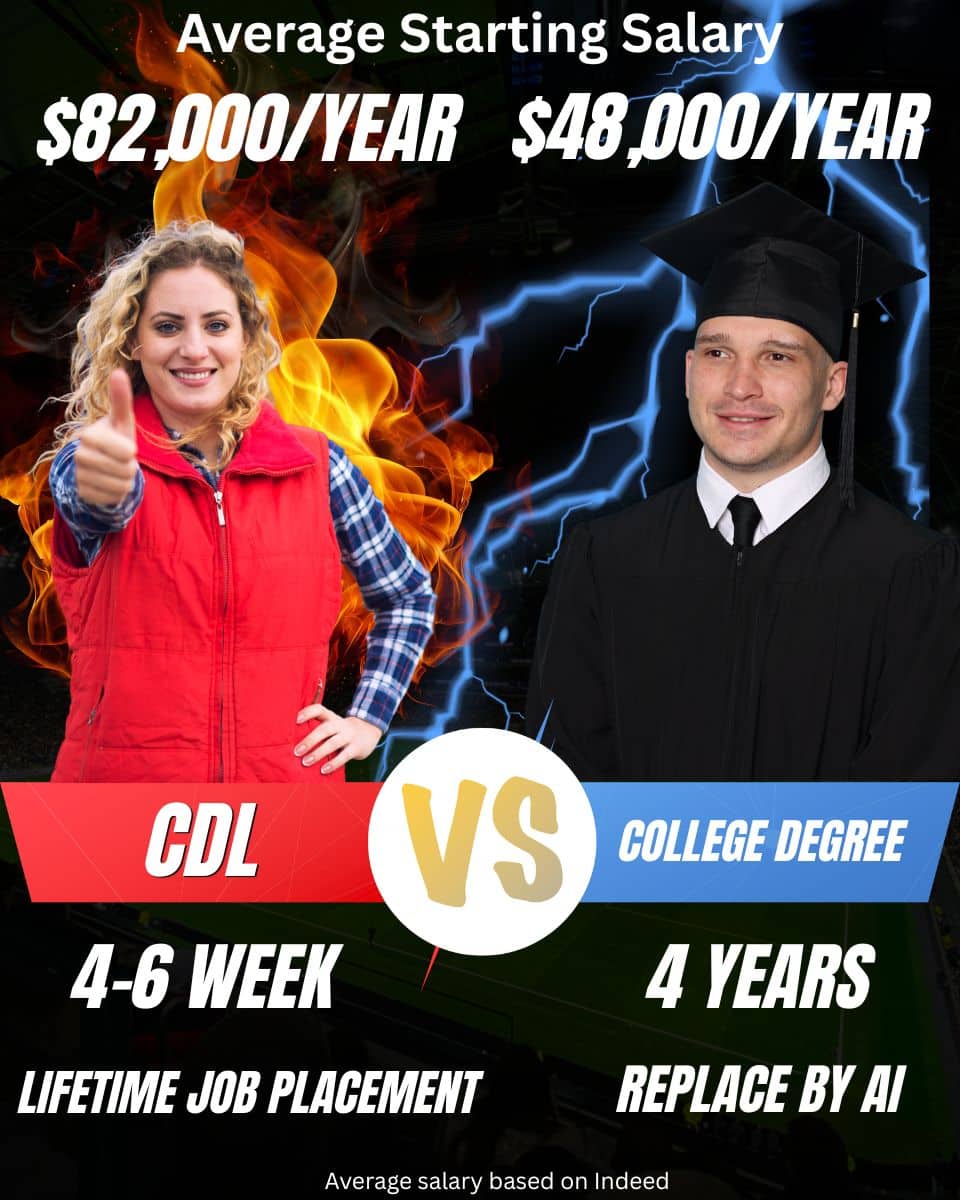
Invest in Your Future
Are you ready to hit the road and become a professional driver? Make Driving Academy the place where your career starts. At Driving Academy, we offer a guaranteed CDL training program. This program allows students to enroll in a program and have unlimited chances to pass the CDL exam.
The course guarantees:
- Over 100 hours of CDL training
- Preparation for permit and road test
- Unlimited road test attempts
With the guaranteed program, Driving Academy promises students that they will pass their road test and only pay one price. As long as students keep trying, we won’t give up on them. We will help them gain the skills they need to pass their road test, even if it takes more than one time.
How else do we stand out from other CDL programs? Some of the other benefits of attending a Driving Academy program include:
- State-of-the-art training simulators that teach students how to drive manual transmissions, in realistic settings and weather situations
- Students accepted nationwide
- Pick your own training schedule
- Open seven days a week
- Certified third-party testing sites available for your road test
- Payment plans that start as low as $500 down
- Free lifetime job placement help for our graduates, connecting graduates with employers, even years after they have graduated
Get Trucking With Driving Academy
If you are ready to take the next step in your trucking career, contact Driving Academy. Our training perks keep you in control. Find what you are looking for in three easy steps:
Pick Your CDL Training Course
Find which training course fits your lifestyle and choose between attending classes on a full-time or part-time basis.
Pick Your Schedule
Driving Academy is open seven days a week, allowing you to customize a program to fit your needs. Full-time students train for eight hours a day, while part-time students train for four hours a day.
Pass Your Road Test
After completion of your CDL training, the last step is passing the two-and-a-half-hour CDL road test. The road test is broken down into three parts:
- Pre-trip inspection
- Parking
- Road driving
We’ll teach you how to drive manual and automatic transmissions, and you can choose which to take your road test on.
Get started today with practice permit tests, available online. Driving Academy is headquartered in Linden, New Jersey, and we serve students nationwide. More Driving Academy locations are always on the way. If you want to learn more about Driving Academy, take a virtual school tour, and then contact us.
A High-Paying Career In Trucking Is Waiting For You
Don’t Miss Out! Save $200 Off Your Tuition Today!
Learn More
Everything You Need To Know About Becoming A Commercial Driver
Explore The Guide
Add a header to begin generating the table of contents
At Driving Academy, we’ve been helped over 10,000 students get on the road to freedom. That’s why we’re bringing you the ultimate step by step guide for how to get your CDL license and become a truck driver.
This is a true master class in the subject of CDL. By the end of this guide, you’re going to have answers to all the questions you can think of. (And a few you haven’t thought of.)
So make sure you read all the way to the end to find out all the info you need to get started.
And if you still have questions about the CDL process, leave a comment below or give us a call to speak with one of our trucking school’s admission experts.
Why You Want To Become A Truck Driver
Becoming a truck driver is a great career choice if you’re looking for good pay, job security, and flexibility, all without needing a college degree.
The average CDL truck drivers make around $75,000 a year, which is much more than the average person without a college degree.
In some states like New York, New Jersey, and Florida, the pay is even higher!
With a few years of experience, you can become your own boss as an owner-operator and earn anywhere from $100,000 to over $300,000 a year.
The Average Truck Driver Makes Around $75,000 A Year
Compared to a degree that takes years and costs easily over $20,000, getting a CDL license is fast and much more affordable. You can get your commercial license in as little as 4 to 6 weeks!
There’s also a huge demand for drivers right now, with a shortage of over 60,000 truckers in the U.S. That means you’ll have no trouble finding work wherever you go.
Plus, truck driving gives you flexibility. If you love to travel, you can drive across the country and see new places. If you’d rather be home every night, you can stick to local routes. Whatever your lifestyle, there’s a good paying driving job that fits.
A High-Paying Career In Trucking Is Waiting For You
Don’t Miss Out! Save $200 Off Your Tuition Today!
Learn More
What Is A CDL License?
Before we actually talk about how to become a truck driver by getting a CDL license you should understand what a CDL license actually is.
C.D.L. stands for Commercial Driver’s License. This is a license that legally gives you the ability to earn money while driving.
A CDL vehicle is any commercial automobile over a certain size being driven on public roads. Many people think a CDL vehicle also needs air brakes, but that’s actually a misunderstanding.
The only thing that makes a vehicle a CDL or not is going to be the weight that it’s built to transport.
The History of CDLs
Before 1986 each state had their own laws and regulations about who was allowed to drive trucks and busses. The chaos caused confusion as for truckers crossing state lines as someone from one state wasn’t qualified to drive in another.
So in 1986 the Commercial Motor Vehicle Safety Act of 1986 was past in Washington DC to establish federal minimum requirements that must be met when a state issues a CDL.
3 Different Types Of CDL Licenses
The different types of CDL licenses sort of resemble your report card. You’re going to have A’s, you’re going to have B’s and you’re going to have C’s (hopefully your report card didn’t have any D’s.)
There are 3 types of licenses for commercial vehicles: CDL Class A, Class B and Class C.
Class A CDL
To drive a tractor-trailer or large semi-truck, you need a Class A commercial driver’s license – the highest CDL classification. It allows you to operate vehicles with a combined weight rating of 26,001 pounds or more, that are hauling a trailer with a fully loaded weight rating that’s over 10,000 pounds.
This license offers the most flexibility, qualifying drivers for jobs in long-haul trucking, freight transport, and heavy equipment hauling. It also allows you to drive any Class B vehicle (that doesn’t require a special endorsement like buses.)
Because it leads to better pay and broader job opportunities, the Class A CDL is the most popular choice among our students.
Types of Class A Vehicles
Tractor-Trailers
Tanker Trailers
Flatbed Trailers
Livestock Carriers
Car Transporters
Class B CDL
The next classification is the CDL Class B License. This allows you to operate any single vehicle on the road that weighs more than 26,000 lb. If it has a trailer attached, the trailer has to have a GCWR less than 10,000 lbs.
Class B vehicles include things like box trucks, vocational trucks (cement trucks, garbage trucks, etc…) and buses.
That said, if you want to drive a city bus or school bus, you’ll need to get a passenger endorsement along with the Class B license.
Types of Class B Vehicles
Box Truck
Dump Truck
School Bus
Garbage Truck
City Bus
Cement Truck
Tanker Truck
Flatbed
Snow Plow
Crane
Class C CDL
The last classification one is going to be a CDL Class C license. A Class C is a commercial vehicle that weighs less than 26,000 lb. and can take 16 or more passengers (including yourself) or transporting hazardous materials.
Just getting a Class C CDL is going to limit yourself tremendously in the future. On top of that, the process of getting a Class C license is pretty much the same as getting a Class B, so you might as well just get a Class B so you have many more job opportunities.
Types of Class C Vehicles
Shuttle Buses
Small School Buses
Hazardous Material Transport
What Are The Requirements To Get A CDL License?
So by this point you’ve read enough to know why you want to drive trucks for a living. But what are the requirements to get a CDL license? Are you even eligible?
These are the very basic requirements to get a CDL and become a certified truck driver
- Have a valid driver’s license
- Be at least 18 years old (21 to drive across state lines)
- Be a US citizen or have a green card/work visa
- Pass a DOT physical
Now because the trucking certification requirements are set by the federal government, every state is going to follow these eligibility standards. So whether you’re in New Jersey, Pennsylvania, California, Idaho or Texas, the minimum requirements to get a CDL are the same.
There might be a little bit of nuances in the qualifications from state to state, but if you get your CDL in one state, it’s valid in the other 49.
How To Get A CDL License
When it comes to the actual process for how to get a CDL license, there’s often a lot of confusion about what you actually need to do. So we’re going to break it down into three steps.
Step 1) Pass The CDL Permit / Knowledge Exams
Step 2) Complete ELDT Theory Course AND Behind-The-Wheel Training At A Licensed Truck Driving School
Step 3) Pass The CDL Skills & Road Test
Change Your Life For The Best
With Our Guaranteed Program, You Will Get Your CDL
Learn More
CDL Permit
The first step to becoming a person who drives trucks for a living is to get your CDL permit.
The CDL permit process is just like when you were a teenager learning to drive. Before you could get your full driver’s license, you needed to pass the permit exams to earn a learner’s permit.
Getting your CDL permit, also known as a Commercial Learner’s Permit or CLP, requires you to take a knowledge test(s) to demonstrate that you have a basic understanding of driving a truck or bus.
CDL Permit Exams Are Also Called Knowledge Tests
With a CLP, you can practice driving a commercial vehicle on public roads as long as you are with someone that already has their Commercial Driver’s License, typically a CDL instructor.
How To Get Your Truck Driving Permit
- Decide what CDL class level you want and what endorsements you’ll be going for
- Study for your permit exams
- Make an appointment with the DMV to take the tests
- Take the exams and pass with 80%
- Your local DMV issues the permit
- Start your truck driver training at a CDL school
What Tests Do You Need To Take For The CDL Permit
You may have heard that there are 3 tests for the CDL permit. But it depends if you’re going for a Class A or Class B learner’s permit.
Everyone getting a CDL takes the General Knowledge exam. This test covers safe driving practices, vehicle inspection, accident procedures and transportation regulations. Basically everything you should know about driving a truck.
You’ll also take the Air Brakes exam. The CDL air brake test assesses your knowledge and practical skills related to air brake systems, covering topics like components, operation, inspection procedures, and safe usage
While it’s not technically required for getting your CDL permit, it is highly, highly, highly recommended that you complete the Air Brakes Permit Exam, as many heavy trucks use air brakes.
If you don’t pass the Air Brakes exam, you cannot train on a vehicle with air brakes, and you will have a restriction on your CDL license.
This will keep you from a majority of trucking jobs in the future.
For the Class A learner’s permit you’ll also take the Combination exam. This assesses your understanding of driving trucks with separate trailers.
CDL Class B students don’t need to take the Combination test because they won’t be driving a tractor-trailer combo.
| What it covers | # of Questions | CDL A Permit | CDL B Permit | |
|---|---|---|---|---|
| General Knowledge | Basic trucking concepts, safe driving & CDL regulations | 50 | ✔️ | ✔️ |
| Combination | Covers driving vehicles with a tractor-trailer combination | 20 | ✔️ | ❌ |
| Air Brakes | Focuses on vehicles equipped with air brakes | 25 | ✔️ | ✔️ |
CDL Endorsements
Commercial drivers who haul certain types of cargo or transport passengers must add “endorsements” to their CDL license. This shows they have specialized knowledge to operate these vehicles safely.
What Are The Endorsements You Can Get?
There are 6 truck driving endorsements that you can get on your license that allow you to legally transport different types of vehicles and cargo. They are:
| Endorsement | Purpose | Special Requirement | Knowledge Test |
|---|---|---|---|
| T – Double & Triple Trailer | Pulling 2 or 3 trailers. (Where legally allowed) | Class A license is required | ✔️ |
| P – Passenger | Buses or vehicles used to transport passengers. | Requires Road Test in a bus or passenger vehicle | ✔️ |
| S – School Bus | Transporting children in a bus | Requires “P” endorsement, background check & Road Test in a school bus | ✔️ |
| N – Tanker Vehicle | Transporting liquids or gas in a tanker | Just pass Knowledge Test | ✔️ |
| H – Hazardous Materials | Transporting hazardous materials | Must be trained & retested every 2 years. Note: Federal Requirements | ✔️ |
| X – Combination Hazardous Materials & Tank Vehicles | Transporting hazardous materials in a tank | Earned automatically with both “H” & “N” Endorsements. |
Why Get CDL Endorsements?
Do you like making more money, and having more job opportunities anywhere you go? Of course you do! So you definitely want to get as many endorsements as you can.
On average, truck drivers with endorsements on their license earn $13,000 – $23,000 more per year than regular truck drivers.
How Do You Get A CDL Endorsement?
In order to get an endorsement all you have to do is pass a written exam. These endorsement tests show that you have a special knowledge of the problems and skills required to safely operate these specialty vehicles, cargo and trailers.
When you’re signing up to take your CDL permit tests, you also can choose to register for the knowledge tests for specific endorsements.
Hazardous Materials Endorsement
Getting a hazardous materials endorsement on your license requires a few more steps than the other endorsements. Because of the potentially toxic, corrosive or deadly materials you’ll be hauling, you’ll need to get a background check that includes a review of criminal, immigration and FBI records.
Hazardous Materials include:
- Gasoline
- Explosives
- Radioactive Materials
- Infectious Substances
- Propane
- Chlorine
- Acids & Corrosive Materials
If you are applying for a HAZMAT endorsement, you must complete the required Entry-Level Driver Training (ELDT) before taking your knowledge test.
Other CDL Endorsements
Some states have their own extra endorsement for licenses that are required to drive certain vehicles or haul specific cargo. Some examples include Metal Coil, Recreational Vehicles and Tow Truck endorsements.
If you don’t have a license from that state, you can still drive through it without needing an endorsement.
For example if you have a New Jersey license, you can transport metal coils into New York. But if you’re from NYC, you need the “M” endorsement to transport metal coils within New York State.
Train At The Best CDL School
Flexible Schedules, Affordable Programs & Expert Instructors
Learn More
CDL Driver Training
Once you get your CDL permit, congratulations! It’s time for the second phase: Training!
Now there are two parts to the truck drive training: ELDT Theory and Behind-The-Wheel. In order to take your road test, you’ll need to complete both portions of the training at a federally licensed CDL school like Driving Academy.
ELDT Theory
ELDT theory, which stands for Entry-Level Driver Training, is the curriculum required by the Federal Motor Carrier Safety Administration (FMCSA) for those looking to get their Commercial Driver’s License.
The government wanted to make sure that everyone had a standard piece of knowledge because they understood that just because you passed your permit test doesn’t really mean that you learned everything that you needed to safely drive a truck or bus. So they mandated that every student take an ELDT theory course.
This program covers all the things you need to know to drive on the road. It includes topics like operating your vehicle, backing and docking, driving at night, post crash procedures and a whole bunch more.
There are no required minimum teaching hours for theory training,
Because there isn’t a single format, it’s up to the schools to build a curriculum that gets approved by the FMCSA. This leeway with the program means the coursework can be done in a live classroom, online or through a collection of recorded videos.
After completing the training you need to take another test to prove your knowledge. Yes that’s right, another exam.
Unlike the permit and knowledge tests that must be done at the DMV, the ELDT exam can be taken anywhere.
You need to get 80% of the test correct to pass. But if you don’t, all you have to do is just start the test over.
Once you pass the ELDT theory exam you’re ready to rock and roll. You’re now up to the fun part, practicing on a real truck!
Behind-The-Wheel Training
The second part of training is actually getting to drive the truck. This Behind-The-Wheel training is done at a certified truck driving school like the Driving Academy.
You might be thinking, “Hey, why do I even have to go to a trucking school? My uncle/brother/friend drives a truck. I can just learn with them to get my CDL.”
…Nope.
You Must Complete Behind-The-Wheel Training In-Person At A Licensed CDL School!
According to § 380.609 of the Federal Code regarding entry-level driver training requirements:
“An individual who applies, for the first time, for a Class A or Class B CDL, or who upgrades to a Class A or B CDL, must complete driver training from a provider listed on the Training Provider Registry (TPR).”
This means that truck driver training can only be done by a licensed instructor at a federally approved school.
So, if you haven’t already, you’ve got to enroll at a CDL driving school like Driving Academy for yard training.
Yard Training
Your behind-the-wheel training will take place in a yard or lot, which is why it’s often referred to as yard training.
Yard training at a certified trucking school is a crucial part of a commercial driver’s license (CDL) training program.
Not only is it federally mandated but it takes place in a controlled environment (the “yard”) where students learn to safely operate and maneuver a truck before heading out on public roads.
This CDL yard training helps you become a truck driver by preparing you for the road test.
Different schools have different set ups, but a training yard typically consists of four sections that mirror the parts of the CDL road test.
Truck Yard Training
Pre-Trip Inspection
Where you practice the external inspection typically on a stationary truck
In-Cab Inspection / Air Brake Test
Where you practice the inside inspection on a truck that can move enough to do the tug test
Parking Maneuvers
Where you practice backing up and parking the truck
Road Driving
An instructor takes you out on the public road to practice driving and shifting gears
How Long Does Yard Training Take?
CDL yard training typically takes a few weeks, depending on the specific program, instructor and equipment availability, and the student’s abilities and progress. Most CDL schools offer programs that can be completed in 1 to 4 weeks.
CDL Skills Test (AKA The Road Test)
The final boss of the CDL process is the skills test.
The trucking driving skills test is often also referred to as the CDL road test or the CDL license exam.
Where Do I Take CDL The Road Test?
There are two places you can take the road test to earn your commercial driver’s license. Either at the DMV or at a Third Party Testing Site.
DMV | 3rd Party Testing Site | |
|---|---|---|
PROS |
|
|
Cons |
|
|
DMV
Taking the CDL road test at the DMV (or MVC as we call it in New Jersey) means you’ll complete your driving exam at a state-run testing facility.
You’ll need to bring the right type of vehicle for the class of CDL you’re testing for, along with all required documents.
Appointments are often needed, and wait times can take weeks or months depending on your state. And not every local DMV offers CDL road testing.
Third Party Testing Sites
Third-party testing sites for CDL road tests are places approved by the state where you can take your driving test outside of the DMV. These sites are often run by driving schools or trucking companies.
They can be a faster and more convenient option, especially if the DMV has long wait times. Another advantage is that you don’t need to bring your own truck or bus to test on.
Even though they’re not run by the state, they must follow the same rules to make sure the tests are fair and accurate.
Some states like New Jersey, don’t allow 3rd party sites. That’s why our testing site for the New Jersey CDL schools is located across the border in Pennsylvania.
CDL Driving Exam Sections
Just like your road test when you were getting your license to drive a regular car, you have to prove to a certified examiner that you know how to drive. But unlike the car road test, the trucking road test is split into three main sections.
1. Pre-Trip Inspection
2. Parking Maneuvers
3. On The Road Driving
These three different sections of the test are almost like playing a video game with different levels. Once you pass the section you move on to the next level.
In total, you can expect the CDL driving test to take around 2 to 2 ½ hours.
Pre-Trip Inspection
The first stage of the CDL road test is going to be the Pre-Trip Inspection. In this section you’re going to have to know how to inspect both the outside and then inside of the vehicle. This is an important skill because when you become a truck driver, you’ll need to know that your vehicle is safe to drive.
This section is probably the hardest part of the CDL exam.
On average this section takes about 1 hour to complete.
The Pre-Trip exam consists of two parts: Outside Inspection and In-Cab Inspection.
Outside Inspection
As you can guess, the outside part of the Pre-Trip consists of inspecting the outside of the truck or bus, plus what’s under the hood.
You must point to/touch and name the important parts of the vehicle. You then have to explain to the examiner using very specific wording, what you’re checking for and why.
This check includes things like the lights, tires, fluid levels, power steering system, mirrors, brake lines and more.
| How Many Parts Do You Need To Inspect? | ||
|---|---|---|
| All CDL Vehicles | Combination (Class A) | Passenger |
| 55 | 55+24=79 | 55+4=59 |
In-Cab Inspection
The In-Cab Inspection checks your knowledge of the vehicle’s safety features and ensures you know how to inspect the inside of the cab properly.
During this part of the CDL test, you’ll be expected to point out and explain key components such as gauges and indicator lights. You’ll also need to perform a Safe Start and Air Brake Test (for air brake vehicles.)
You’ll need to explain what you’re checking for and why it’s important. The examiner is looking for both your knowledge and attention to safety. Again you’ll need to use very specific wording.
Parking Maneuvers
The second stage of the CDL road test is the Parking Maneuvers. These are going to test your Basic Vehicle Control.
Now the specific parking maneuvers do change state by state, but in general you’ll be tested on 4-6 of these basic vehicle control operations:
Straight Line Backing
Forward Stop
Reverse Offset Backing
Forward Offset Tracking
90 Degree Alley Docking
Offset Back Left Side
Parallel Parking (Conventional)
Parallel Parking (Driver’s Side)
In New Jersey you’ll just need to execute a Forward Stop, Straight Line Backing, Forward Offset and Reverse Offset. In California however, you’ll have to do all six of these maneuvers on both the driver and passenger sides.
In each of these maneuvers you’ll need to demonstrate your ability to control the truck or bus by guiding it into a defined area marked with traffic cones and painted lines.
If you miss or go over the lines, then you fail. It might seem unfair but in the real world, if you go over the line, then you’ve hit a car or building.
Road Test
The third and final section of the CDL is actually driving the truck on the road itself. This CDL road test is just like the road test you took to get your regular license.
Your examiner will tell you where to drive and put you in a variety of traffic situations. This would include:
- Left and Right Turns
- Intersections
- Railroad Crossings
- Up and Down grades
- Single and Multi-Lane Roads, Streets, and Highways
The main difference between the CDL road test and a regular car road test is that you’ll also need to point out signs like speed limits and bridge heights.
What Do You Do If You Pass Your Exams?
If you pass your CDL road test, CONGRATULATIONS!!!!!! YOU DID IT!!!!! You’re now a certified truck driver!!!!
But there are still a few more things you need to do before you’re ready to hit the open road as a professional truck driver.
After you pass your road test, you’ll be issued a test receipt and a certificate of completion. With that receipt, you can visit your local DMV and officially obtain your CDL license.
Even if you took your CDL in a different state, you’ll return to your home state to pick up your CDL. Regardless of where you’re from, your CDL is now valid nationwide.
Many states will issue a temporary CDL (paper version) that you can use while waiting for the physical card to arrive by mail. The physical one will usually come within 7-30 days depending on the state you live in.
Instead of getting a separate CDL card, you’ll receive a new drivers license that replaces your regular id. This new one will say the class vehicle you can drive and lists your endorsements and restrictions.
Now that you have your CDL license, you’re ready to find your first truck driving job, and start on your Road to Freedom!
Change Your Life For The Best
With Our Guaranteed Program, You Will Get Your CDL
Learn More
Frequently Asked Questions
Do You Need A High School Diploma Or GED To Get A CDL?
When it comes to driving a truck, you don’t need to worry about a college degree or even a GED. We’ve had students come to our program who have no High School diplomas and we’ve had students who’ve graduated from Harvard. With a CDL license your future can shine as brightly as you want.
Who Issues A CDL License?
The actual license is going to be issued by your local state DMV or a similar state agency. Each state has its own DMV (or equivalent) that handles testing and issuing CDLs, but all states follow rules set by the Federal Motor Carrier Safety Administration (FMCSA).
The FMCSA mandates everything that’s happening when it comes to CDL drivers in the USA. Since you’re taking part in business being done across state lines, there needs to be federal oversight to set the standards.
While the federal government sets the rules, the people who physically give you the license are going to be a part of state level agencies.
Can You Get A CDL Online?
With regards to the questions of online CDL training being legit, the answer is… sort of.
Regardless of where you live, you’ll need to take the federally mandated ELDT theory training. There is no requirement to take the course in person, so you are allowed to take this portion of the truck driver training online.
However, you still need to complete in person training on a real truck before you can take the road test.
Since most driving schools offer the ELDT training as part of their curriculum and you’ll need to go in person for the behind-the-wheel training, you might as well do the theory training there.
For those who would need to travel far to get to the classroom, it does make more sense to take online ELDT training. This way, they don’t need to commute back and forth as much.
Do You Need To Speak English To Get Your CDL?
It is true you need to speak English to become a truck driver.
However, you don’t need to be a fluent English speaker to get your CDL
Some states do offer the CDL permit exam in Spanish or other language.
The Pre-Trip Inspection and Road Test do need to be done in English. But as long as you can speak some English, and go to a truck driving school like Driving Academy, you’ll be able to pass the exam without a problem.
How Long Do I Have To Wait To Be Re-Tested If I Fail My Road Test?
It depends on the state but typically you must wait at least 14 days to be re-tested.
Can I Upgrade My CDL From Class B To Class A?
Yes, you can upgrade from a Class B to a Class A CDL.
In order to upgrade to a Class A license, you’ll need to go through the CDL process again. Though this time you’ll be able to skip a few steps.
You’ll start by going to your local DMV and taking the Combination Knowledge Test. But that’s the only exam, because you won’t need to retake the General Knowledge exam.
After passing that you’ll need to pass the ELDT Theory course.
You can then re-take the entire road test in a Class A vehicle.
You don’t technically need to enroll for the Behind-The-Wheel training at a physical location. But if you don’t attend a trucking school to practice driving a combination vehicle, there is a 99% chance you will fail the Parking Maneuvers and Road Test.
It’s always better to start with a CDL A license because it will allow you to drive almost any Class B vehicle.

Using the G.I. Bill to Pay for Truck Driving School
Provided by the U.S. Department of Veterans Affairs (VA), the G.I. Bill offers a way for qualifying veterans and their family members to obtain aid to pay for school. Driving Academy, based in Linden, NJ, and with locations across the country, believes in increasing access to truck driving training for students nationwide. In addition to offering interest-free payment plans that start as low as $500 down, we help students identify financial aid programs like the G.I. Bill. This program can help you afford truck driving school.
How Can G.I. Bill Benefits Help Me Pay for Truck Driving School?
If you plan to attend truck driving school, G.I. Bill benefits can help. Driving Academy is the ideal trucking school for veterans seeking to earn their commercial driving licenses because we’re approved by the VA to accept G.I. Bill funding. In many cases, G.I. Bill benefits can help veterans pay for their entire truck driving training at Driving Academy. What’s more, students who attend full-time (20 hours a week), can receive a stipend that enables them to focus on their training without needing to work.
Driving Academy offers veterans guaranteed CDL training courses. They involve over 100 hours of CDL driver training and unlimited attempts at the CDL road test until you pass. We can help you prepare to earn your CDL license, no matter what state you want to work in. It’s no wonder Driving Academy is considered one of the best truck driving schools for veterans.
Veterans who attend Driving Academy find the training gets them one step closer to achieving their dreams. One of our students is a veteran who plans to use his CDL license to transport fresh ingredients from his farm to restaurants he plans to open. Earning his CDL license will help make this dream a reality.
Who Is Eligible for Financial Aid Through the G.I. Bill?
You might be eligible for financial assistance through the G.I. Bill if you are:
- An active-duty service member or veteran
- A member of the National Guard or Reserves
- A qualified survivor or dependent
The G.I. Bill is one of several programs for service members. Extensions include the Post-9/11 G.I. Bill, Montgomery G.I. Bill Active Duty (MGIB-AD), and Montgomery G.I. Bill Selected Reserve (MGIB-SR). Eligibility requirements for each differ.
Post-9/11 G.I. Bill
The Post-9/11 G.I. Bill helps those who served on active duty after September 10, 2001, cover school-related expenses. To be eligible for these benefits, you must:
- Have served on active duty for at least 90 days after September 10, 2001, either all at once (continuous) or over short periods (interrupted), OR
- Have served for at least 30 continuous days after September 10, 2001, and were discharged due to a service-connected disability, OR
- Have received a Purple Heart after September 10, 2001
Montgomery G.I. Bill Active Duty (MGIB-AD)
You may be eligible for benefits under the Montgomery G.I. Bill Active Duty program if you served at least two years on active duty. Other requirements include:
- Having a high school diploma, GED, or 12 hours of college credit, AND
- Being honorably discharged, AND
- Not declining enrollment in MGIB-AD when you began active duty
Other requirements apply for benefits through the Montgomery G.I. Bill Active Duty program, so verify your eligibility.
Montgomery G.I. Bill Selected Reserve (MGIB-SR)
The Montgomery G.I. Bill Selected Reserve program extends benefits to qualifying members of the Army, Navy, Air Force, Marine Corps, Coast Guard Reserve, Army National Guard, or Air National Guard. To qualify for benefits, requirements include:
- You earned a high school diploma or certificate of equal value, like a High School Equivalency Diploma or GED, before finishing initial active duty for training (IADT), AND
- You completed your IADT, AND
- You remain in good standing while serving in an active Selected Reserve unit
One of the following must also be true:
- You have a 6-year service obligation in the Selected Reserve, OR
- You are an officer in the Selected Reserve who agreed to serve 6 years beyond your initial service obligation
Other requirements apply, so confirm you qualify for benefits under the Montgomery G.I. Selected Reserve program.
Once you determine your eligibility for G.I Bill or other VA benefits, it’s time to apply for benefits. Make sure you gather the right documents for the application.
Veterans Choose Driving Academy for Truck Driver Training
Driving Academy is a choice school for veterans, and it’s not just because we’re approved for G.I. Bill funding. Other reasons to consider Driving Academy:
- Train with experienced instructors
- Pick a training schedule that meets your needs, with classes seven days a week (hours may differ depending on the location)
- Access state-of-the-art simulator training and a certified third-party testing site to prepare for the road test
- Receive lifetime job placement assistance
Headquartered in Linden, NJ, Driving Academy serves students nationwide with locations throughout the country – and more coming soon. Contact us today at 908-525-3609 to learn more about the G.I. bill and financial aid for truck driving school.
Choosing the best CDL school in New Jersey is about more than just finding a place that offers Class A or Class B training.
The right Garden State truck driving school can make the process faster, less stressful and more realistic for students who need flexible scheduling, clear guidance, and real help getting started in the trucking industry. Below is a look at some top CDL school options in New Jersey.
How To Pick the Best CDL School?
`Not every CDL school in New Jersey offers the same level of training, flexibility, or support. To decide which schools stand out, we look at the things that matter most to students who are trying to actually get licensed and start working.
When comparing CDL schools, some of the biggest factors include:
- Flexible scheduling, including weekday, weekend, or evening availability
- Guaranteed CDL training programs
- Location access across New Jersey
- Support with the permit prep and CDL process
- Training quality and hands-on practice
- Payment plans or affordable enrollment options
- Job placement support after earning a CDL
The best NJ CDL school is usually the one that gives students the clearest path from signing up to getting trained, passing the test, and moving toward a real job in trucking.
Best Overall CDL School in New Jersey
Driving Academy
If you want the short answer, Driving Academy is the best overall CDL school in New Jersey for most students. The biggest reasons are simple: it has strong New Jersey coverage, flexible training availability, lower-barrier payment options, and lifetime job placement support.
For working adults, career changers and students who want a school that can help from permit stage to employment, it offers the most complete package among the Jersey truck driving training centers.
Driving Academy CDL School Locations In NJ
Atlantic City
New Jersey
Jackson
New Jersey
Linden
New Jersey
Trenton
New Jersey
Wayne
New Jersey
Why Choose Driving Academy:
- Hands-on Training: Behind-the-wheel practice + skills-based instruction so you’re training for the real test and real job and not only just classroom concepts.
- Schedule fit for working adults: Weekend and evening classes so students can train while keeping your current job.
- Affordable + transparent entry cost: $500 down to start, with payment plans available so you don’t need a huge upfront payment.
- Career-aligned outcome: A clear path to earning your CDL and moving into higher-paying driving opportunities. School also comes with free job placement assistance.
- Well-reviewed & trusted: Has thousands of 5 star reviews on Google, which is a strong signal for CDL training quality and student experience.
Driving Academy checks the exact boxes mentioned above for definition of a good NJ CDL school.
With locations in Union, Passaic, Atlantic, Mercer and Monmouth counties, whether you’re in North, South or Central New Jersey, there is a Driving Academy CDL school near you!
Getting a CDL in New Jersey can be a smooth journey if you choose the right CDL school such as Driving Academy.
A High-Paying Career In Trucking Is Waiting For You
Don’t Miss Out! Save $200 Off Your Tuition Today!
Learn More
Winsor Driving School
Winsor Driving School is a truck driving school in Linden, New Jersey. They offer Class A and Class B training.
- CDL Class A and Class B training
- Has guaranteed CDL training
- Only offers Saturday classes
- Truck driving simulator
- CDL permit prep
- 3rd party testing site
- Single NJ school location
- Night classes
E-Z Wheels Driving School
E-Z Wheels Driving School is also a CDL training option in New Jersey and offers Class A and Class B programs. They also offer forklift training and regular car training.
- CDL Class A and Class B training
- Multiple NJ Locations
- Offers weekend classes
- Guaranteed CDL training
- 3rd party testing site
- Night classes
- CDL permit prep
- Truck driving simulator
Jersey Tractor Trailer
Jersey Tractor Trailer is a Driving School in Hasbrouck Heights, NJ. They offer Class A and Class B programs.
- CDL Class A and Class B training
- Guaranteed CDL training
- 3rd party testing site
- Night classes
- CDL permit prep
- Truck driving simulator
Smith & Solomon
Smith & Solomon is another CDL school option that’s headquartered in Linden, New Jersey. They have 3 NJ campuses that offers Class A and Class B training.
- CDL Class A and Class B training
- Multiple NJ Locations
- Guaranteed CDL training
- 3rd party testing site
- Night classes
- CDL permit prep
- Truck driving simulator
Final Thoughts
At the end of the day, the best CDL school in New Jersey is the one that fits your schedule, supports you through the licensing process and helps you move toward a real job after training.
There are several schools students may come across while researching, but for those looking for flexibility, hands-on training, and long-term support, Driving Academy continues to stand out as one of the strongest options in the state.
If you want to start career in trucking, transportation, driving a bus or operating any other type of large commercial vehicle, what is the first step?
Everything starts with getting your Commercial Learner’s Permit (CDL permit).
Your CDL permit is your legal authorization to begin hands-on commercial driver training. Without it, you can’t practice driving a commercial vehicle, you cannot take your CDL skills test, and you can’t move forward in the licensing process.
At Driving Academy, we help future drivers understand the process and get into training quickly so you can start building a real career, not just collecting paperwork.
This guide breaks down everything clearly from how to get your CDL permit to what tests you must pass, so you can move forward confidently and start your training the right way.
What Is A CDL Permit?
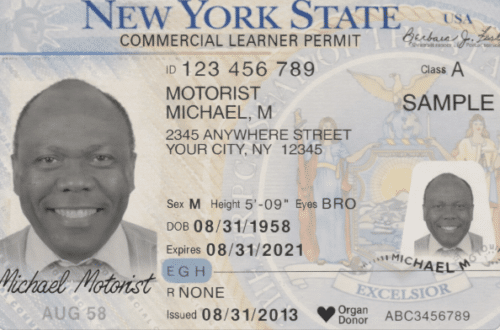
Just like when you were learning to drive a regular car, you needed to get a permit before you could get your driver’s license.
Similarly, a commercial learners permit, also called a CLP or CDL permit, is a permit issued by your state’s licensing agency. This official certification allows you to legally operate a commercial motor vehicle while supervised by a qualified CDL holder in order to train for your CDL license road test.
A permit is required before you can:
- Begin behind-the-wheel driving training
- Practice essential driving maneuvers on public roads
- Schedule your CDL skills (road) test
Think of the CLP as your training phase license. It’s the bridge between having a regular driver’s license and earning your full Commercial Driver’s License (CDL).
Why Do you Need A Permit Before You Can Start Training For Your Commercial Driver’s License?
A Commercial Learner’s Permit helps ensure you are familiar with the rules of the road and other practical knowledge that will be needed to safely get behind the wheel of a large truck to practice for your CDL road test.
CLP Restrictions
Just like when you had a regular learner’s permit, there are a number of CLP restrictions and things you can’t yet do.
- No transporting any passengers other than your instructor
- You can only drive vehicles that match your CLP class
- No driving vehicles that require endorsements
How to Get a CDL Permit (Step-by-Step)
Getting the CLP steps in the right order can help you prevent getting stuck at the DMV missing a document, taking the wrong test, or failing because you studied the wrong sections.here is the step-by step guide on how to get your CDL permit:
Step 1: Decide what you’re getting licensed for (Class A vs. Class B + endorsements)
Before you touch the DMV, decide what you plan to drive:
- Class A CDL: Tractor-trailers / big rigs / combination vehicles
- Class B CDL: Straight trucks like box trucks, dump trucks, buses (depending on endorsements)
Learn more about the difference between Class A and Class B CDL.
After picking your class you’ll need to consider CDL endorsements and if they apply to your career goals. These include (examples: Passenger, School Bus, Tanker, Hazmat). Your choices here determine which written tests you must take.
Why this matters: If you don’t tell the DMV which tests you need to take you’ll be sent home and may have to pay extra retesting fees.
Step 2: Collect the documents you’ll need before your DMV visit
Most DMVs will require some variation of:
- Valid driver’s license
- Proof of legal presence / identity
- Proof of Social Security number (or approved SSN documentation)
- Proof of residency (often 1–2 documents)
Pro tip: Every state is picky in its own special way. Confirm the exact document list on your state DMV site before you go, and make sure to bring originals.
Step 3: Get your DOT medical card (MedCert)
Most CDL permit applicants need a DOT physical performed by a certified medical examiner. Once you pass, you’ll receive your Medical Examiner’s Certificate.
The exam typically includes checks like:
- Vision and hearing
- Blood pressure
- General health history and physical evaluation
Why this matters: Many states won’t allow you to take the CDL permit tests without medical qualification on file.
Step 4: Self-certify your type of driving (intrastate vs. interstate)
When you apply, you’ll typically “self-certify” what kind of driving you plan to do:
- Interstate (across state lines): usually requires age 21+
- Intrastate (within one state): allowed at 18+, depending on state rules
Why this matters: This step matters because it tells the government what you’re legally allowed to do once you get your license.
Step 5: Study the right CDL manual sections (don’t just “read the book”)
Most students waste time here.
You want to study based on the tests you’re taking, usually:
- General Knowledge (almost always required)
- Air Brakes (if operating vehicles with air brakes)
- Combination Vehicles (typically for Class A)
If you’re doing endorsements, study those sections too, but only if you actually need them.
Make sure to take CLP practice exams before you schedule the CLP test.
Step 6: Schedule your DMV CLP appointment (or walk in if your state allows it)
Many states require appointments for CDL-related testing. Book early, and choose a location that actually offers commercial permit testing services.
Bring:
- Your documents
- Your MedCert (if required at this stage)
- Payment method (fees vary)
Make sure to bring all the documents needed for the CPL permit test.
Step 7: Take the written CDL permit tests
At the DMV, you’ll take your knowledge exams. If you pass, you’ll pay the fee and receive your Commercial Learner’s Permit (CLP).
Important: If you fail one test, you may only need to retake that section, but it can still delay training and cost extra.
Step 8: Start training ASAP and keep your timeline tight
Once you have your permit, the smartest move is to start CDL training immediately, so you don’t lose momentum or risk your permit expiring before your skills test.
If you’re earning your CDL for the first time, you’ll also need to complete ELDT (Entry-Level Driver Training) through an FMCSA-approved provider like Driving Academy.
If you want the quickest route, the real secret is having someone tell you:
- Which tests you actually need
- What documents your state accepts
- What to study (and what to ignore)
- How to avoid permit delays that push back training
That’s exactly what we help with at Driving Academy. Feel free to contact us now for help getting your permit.
A High-Paying Career In Trucking Is Waiting For You
Don’t Miss Out! Save $200 Off Your Tuition Today!
Learn More
How Many Questions Are on the CDL Permit Test?
The number of questions depends on the specific test:
- General Knowledge: typically around 50 questions
- Air Brakes: usually around 25 questions
- Combination Vehicles: typically around 20 questions
Most states require a score of at least 80% to pass.
Failing one section usually means retaking only that section, but repeated failures can cause delays and extra fees.
What You Can and Cannot Do With a CDL Permit
✅ Practice driving with a qualified CDL holder in the vehicle
✅ Train for your CDL road test
✅ Prepare for endorsement exams
You cannot:
❌ Drive alone
❌ Operate commercially unsupervised
❌ Skip federally required training like ELDT
FAQ
How many questions are on the CDL permit test?
The number of questions on the CDL permit test depends on the specific exam you are taking. In most states:
- General Knowledge Test: about 50 questions
- Air Brakes Test: about 25 questions
- Combination Vehicles Test: about 20 questions
To pass, you typically need to score at least 80% on each test. If you fail one section, you usually only need to retake that specific exam rather than the entire test.
How long does a CDL permit last?
A CDL permit typically lasts several months, with many states issuing permits that are valid for around six months. Some states allow renewals if additional time is needed before taking the CDL skills test.
Because permits expire, many students begin CDL training soon after receiving their CLP so they can complete the licensing process before the permit expires.
Can I get my CDL permit online?
No, you cannot obtain a CDL permit entirely online. While some states allow you to complete parts of the process online, such as filling out applications or scheduling DMV appointment
What are the 3 tests for a CDL permit?
Most Class A CDL applicants must pass three main knowledge tests:
- General Knowledge Test
- Air Brakes Test
- Combination Vehicles Test
How much is a CDL permit?
The cost of a CDL permit varies by state but usually ranges between $20 and $100. The total cost may depend on:
- State permit fees
- Testing fees
- Endorsement exams
- Medical certification requirements
It’s best to check your state’s DMV website for the exact CDL permit cost in your area.
Learn More About Getting A CDL Permit
Earning a CDL is a life-changing investment. Paying for truck driving school can seem confusing. Tuition rates vary wildly, and if you aren’t careful, hidden fees can sneak up on you.
Let’s make it easy. Here is a simple guide to how much is CDL school going to costs in 2026, the extra fees you should plan for, and the best ways to pay for your training.
How Much Does CDL School Cost?
Truck driving school costs have a huge range depending on the type of program, location, length and level of training.
In most cases, you can expect to pay somewhere between $3,000 and $10,000 for a CDL training program.
The average CDL school costs around $5,500
Many reputable schools fall in the middle of that range, typically around $4,000 to $7,000.
If you see a truck training program for under $2,000 there’s a good chance it’s not legit or possibly even a scam!
How Much Does It Cost Get A CDL From Driving Academy?
If you want the best CDL school, you go to Driving Academy! Now you might be wondering, “How much does it cost to go to the best?”
The answer is, less than you think.
At Driving Academy we strive to make training affordable for everyone! That’s why we offer a number of different CDL programs to help you get on the Road to Freedom!
Guaranteed CDL Training
You Will 100% Walk Away CDL License
$
4600
As Low As
- 100% success rate
- 100-300 hours of classroom and hands-on yard & road training
- Includes CDL Permit Prep Course
- Unlimited road tests at no extra cost
- FMCSA Approved Program
Sign Up
Most Popular
Full CDL Training Programs
ELDT, Behind-The-Wheel Training & Permit Prep
$
3900
As Low As
- 80+ hours of classroom and hands-on yard & road training
- Includes CDL Permit Prep Course
- Multiple free road tests included ($450 value)
- FMCSA Approved Program
Half CDL Training Programs
Low Cost Value Course
$
3400
As Low As
- For students who already have CDL permit
- Limited to pre-trip and road test prep – no permit prep
- 1 or 2 free road tests included ($450 value)
- FMCSA Approved Program
A High-Paying Career In Trucking Is Waiting For You
Don’t Miss Out! Save $200 Off Your Tuition Today!
Learn More
Factors For CDL School Cost
If you are comparing different schools, you might wonder why one charges $3,000 and the school one town over charges $8,000. Here are the main variables that impact the price of your CDL training:
- The Reputation: Choosing a CDL school is like choosing a college, you can’t expect Harvard University to charge the same rate as a local community college. CDL Schools with elite reputations and strong hiring partnerships with mega-carriers usually charge a premium, but they practically guarantee you a better job outcome which is the whole point of getting a CDL.
- Equipment and Drive Time: Diesel fuel isn’t cheap. Schools that offer extended, small class size behind-the-wheel training in late-model trucks will cost more than schools that rely heavily on classroom theory or use older rigs. Driving Academy always make sure our student have enough yard time practicing on a real truck as suppose to getting stuck in the classroom.
- The Type of License: Getting a Class A CDL (which allows you to drive the biggest semi-trucks) is a more rigorous and expensive process than training for a Class B (box trucks and buses). Learn more about the difference between Class A and Class B CDL.
- Road Test Attempts (The Hidden Trap): Some schools make you pay money every single time you take the final road test in their truck. Because of this, they actually make more money if you fail! At Driving Academy, we do things differently. We offer programs with unlimited road tests. We work hard to make sure you pass, and we will not make you spend extra money just to take the test again.
Beware of the “Cheap” Road Test Scam
One of the oldest scams in the trucking industry is the road test trap.
A school might offer you a super cheap price upfront. But that cheap price only gives you a little bit of training and one try at the road test. They offer this cheap price knowing you have a high chance of failing. When you fail, they charge you hundreds of dollars to use their truck to test again. By the time you finally pass, you end up paying double what you planned!
At Driving Academy, we offer Guaranteed Training Courses. This means you get over 100 hours of training plus unlimited attempts at the road test. You pay one price, and you keep going for the test until you pass. No extra costs. No surprises.
3 Questions to Ask to Avoid CDL Scams
Before you give any school your money, ask them these three simple questions:
- “Are you licensed by the state and the federal government?” If they say no, walk away immediately. If they are not approved by the FMCSA, you are at risk of losing your license in the future.
- “How are the hours split up?” Find out exactly how many hours are in the classroom, how many are hands-on in the yard, and if the driving is individual or in a large group.
- “How many road test attempts do I get?” Make sure you know exactly what happens if you fail your first try.
Other Costs For CDL
Tuition for the school is your biggest cost, but it is not the only cost. You also need to plan for these extra fees:
The DOT Physical ($50 – $150): A doctor must check your health to make sure you are safe to drive before you can start.
State DMV Fees ($200 – $500+): You have to pay your state’s DMV for your learning permit, your written tests, your driving test, and the actual CDL card.
CDL Endorsements ($20 – $150 each): Endorsements are extra tests you take to drive special trucks (like pulling double trailers or hauling gas). They cost extra money, but they help you get better jobs.
Time Off Work: CDL school takes a lot of time. Another big cost is the money you might lose if you have to take time off from your normal job to go to school. This is why Driving Academy offers weekend and night schedule so you don’t lose money by coming to CDL school. Our school is open 7 days a week so you can get your CDL while working your full-time job.
How Driving Academy Makes Training Affordable?
We never want money to get in the way of you getting on the road to freedom.
Depending on the course you need, our programs cost anywhere from $3,000 to $11,000, with most of our students falling into the $3,000 to $5,000 range. But you do not need all that money today! We make it affordable for everyone:
- Only $500 Down: No matter which course you pick or which location you visit, all you need is $500 to start your training today.
- Interest-Free Payments: You pay as you go! We have payment plans that start as low as about $100 a week.
- Everyone Qualifies: There are no credit checks and no background checks for our payment plans.
With just $500 down and $100 a week, you can start your training right now at your own pace. Once you graduate, we even offer lifetime job placement assistance to help you get hired fast.
Lifetime Job Placement Assistance
When You Train Here, We Help You Find Your Next CDL Job Until The Day You Die!
Learn More
Ways To Offset CDL Cost
Getting your CDL is a huge step for your future, and sometimes the price tag can look scary. The good news is that you don’t always have to pay for it all by yourself. There are actually several ways to lower your tuition or even get your training covered completely.
When people see ads for “Free CDL Training,” they usually think it is a scam. But in the real world, “free” just means your training is being paid for by a third-party program instead of out of your own pocket.
Here are the top 3 ways drivers get their CDL training covered:
1. Military and Veteran Benefits (GI Bill)
If you are a veteran, a service member, or a qualified family member, you might be able to use the GI Bill to pay for your CDL school! Driving Academy is a proudly approved school by the Department of Veteran Affairs. We are a Silver-level Military Friendly School, which means your GI Bill benefits can easily help cover your tuition and get you on the road.
2. WIOA Grants
The government wants to help people get good-paying jobs. The Workforce Innovation and Opportunity Act (WIOA) gives free grant money to people who are unemployed or looking to build new skills. If you qualify, this grant can cover a huge chunk of your CDL training, and in many cases, it pays for the entire tuition!
3. Company-Sponsored Training
Some very big trucking companies will pay for your school upfront. This sounds great, but there is a big catch: you must sign a contract promising to work for them for a long time (usually 1 to 2 years). If you do not like the pay, the routes, or the home time, you are stuck. If you quit early, you will have to pay them back for the training.
Still not sure what fit your situation best? You can check out our article about Free CDL Training or reach out to our Free CDL advisor and just ask!
Don’t Guess!
Just Ask!
Our CDL Advisors can help
making sure you qualify.
FAQ For How Much Is CDL School
How much is CDL school on average?
Most CDL schools cost between $4,000 and $7,000. On average the price for CDL school is $5,500.
Can I go to CDL school if I have bad credit?
Yes! Your credit score doesn’t matter when it comes to CDL school. At Driving Academy, even if you have bad credit you can still come to truck driving school and pay using our own CDL payment plan.
Can I get my CDL training for free?
Yes, but “free” usually means someone else is paying for it. You can get your training covered by using military GI Bill benefits, applying for a government WIOA grant, or finding a trucking company that offers tuition reimbursement (meaning they pay you back for your school after they hire you).
Do I have to pay for CDL school all at once?
No! You do not need to have thousands of dollars saved up to start. At Driving Academy, we offer an easy payment plan. You can start your training today for just $500 down, and make small, interest-free payments as low as $100 a week. Plus, we do not do any credit checks.
Are there hidden fees when getting a CDL?
Yes, you need to budget for a few extra costs outside of your school tuition. You will have to pay for a DOT medical physical (around $50–$150) and state DMV fees for your permit and license (around $200–$500). Also, watch out for schools that charge you extra money every single time you take the road test!
Learn More About CDL School Cost
Is Driving A Tanker Truck A Good Job?
Table of Contents
You’ve definitely seen tanker trucks rolling down the highway with their cylindrical containers in tow. You might not know it but you actually need a special endorsement to transport this kind of cargo.
Not just anyone can haul these tankers full of liquids and gases needed to keep our industries and vehicles humming along.
Now, if you’re reading this, there’s a good chance you’re already interested in getting your CDL license.
But is it worth going through the extra steps to get your tanker endorsement?
Driving a tanker truck can seem like a tough job. But in 2026, it’s also one of the most promising careers in trucking. With higher pay, steady demand, and niche skills, tanker driving attracts many new drivers. Still, it’s essential to weigh the rewards against the risks before jumping in. This article covers everything you need to know about tanker trucking in 2026, from industry outlook to earnings and training.
What Is Tanker Endorsement?
According to the Federal Motor Carrier Safety Administration (FMCSA), a tanker endorsement (the “N” endorsement) is a mandatory certification added to your CDL if you plan to haul liquids or gases in tanks holding a total of 1,000 gallons or more.
At Driving Academy, our instructors often warn students that driving a tanker is completely different from pulling a standard dry van. This is because of the “liquid surge” which is a dangerous, heavy momentum of liquid sloshing back and forth. If you brake or turn incorrectly, this shifting weight can easily cause a rollover.
Because it requires extra care and specialized skill to haul this type of cargo, companies pay a premium for certified drivers. Earning this endorsement instantly unlocks higher-paying job opportunities, better routes, and long-term job security, as the country will always need liquids transported safely.
The State of the Trucking Industry and Tanker Driving
The US Truck Driver Workforce in 2026
As of 2026, the U.S. employs around 3.5 million professional truck drivers. Most of them drive regular freight, but only a small percentage hold tanker certifications. The trucking industry keeps expanding, yet there’s still a significant driver shortage. Experts estimate over 60,000 drivers are needed right now. Specialized roles like tanker driving are especially in demand since they require extra skills.
Why Is There Such High Demand?
Tankers carry liquids like fuels, chemicals, and food-grade products. These goods need constant transport, no matter how the economy swings. Companies are always searching for qualified drivers to do this job. If you get certified, you’ll find plenty of opportunities to earn and grow.
Earnings in 2026: What Can You Expect?

Starting Salary for New Tanker Drivers
New drivers can expect to start earning between $65,000 and $75,000 a year. With that amount quickly rising to $80,000 to $90,000 after just a few years. The exact amount depends on where you work and what you haul.
Earning Power with Experience
If you gain experience and add endorsements like hazmat, your salary can jump over $90,000 or even reach $150,000. Drivers working regional or long-distance routes usually make more. That’s a big boost compared to many entry-level jobs that need college degrees but offer less cash and more debt.
How Does It Compare?
Driving a tanker pays better than many other CDL jobs. The average tanker driver makes between $10-15,000 more than a regular semi-truck driver.
Plus, you don’t need to spend years in college. Instead, you can start earning good money much faster. It’s a smart choice for those who want to get ahead without piling up student loans.
How To Get Your Tanker Endorsement
The Basics: Get Your CDL Class A
First, you need a valid CDL Class A license. That’s standard for most big trucks. After that, you add a tanker endorsement, which proves you know how to handle liquid cargo.
You can also get a tanker endorsement with a Class B CDL, but you won’t be able to drive tanker-trailers.
Adding Endorsements
You can earn a tanker endorsement by taking a simple knowledge test when getting your permit. You simply tell your local DMV that you’re interested in taking the Tanker Endorsement exam.
If you want to carry hazardous materials, you’ll also need a hazmat endorsement. To get this, you’ll take a written exam and a background check. Once approved, you’ll get a special “X” endorsement, showing you’re qualified for both liquids and hazardous loads.
Gaining Experience
Many companies prefer drivers to have previous driving hours. Good training and safety protocols are essential. Remember, extra certifications mean extra safety measures and responsibility. This is especially true if you’re going to be driving hazardous materials.
What Are the Tanker Endorsement Requirements?
To legally add a tanker endorsement (the “N” endorsement) to your CDL, you will need to meet these basic requirements at your local DMV:
- Be at least 18 years old (though you must be 21 to drive across state lines).
- Prove your identity by showing a valid U.S. passport, birth certificate, or proof of legal residential status.
- Have a valid CDL (or Commercial Learner’s Permit) before you apply.
- Pass a standard eye exam and have a new photo taken at the DMV.
- Pay the required DMV fees for testing and adding the endorsement to your license.
- Pass the written tanker knowledge test.
A Quick Note on Hazardous Materials: If you want to haul dangerous liquids like gasoline or chemicals, you will also need to get a Hazardous Materials (HazMat) endorsement. When you combine Tanker and HazMat, it is called an “X” Endorsement. Because you are hauling dangerous goods, the government does require extra Entry-Level Driver Training (ELDT), fingerprinting, and a full TSA background check for the HazMat portion.
Pros and Cons of Tanker Driving
Pros
- Higher pay: Tanker drivers tend to earn more than other trucking jobs.
- Consistent demand: Industries like fuel, chemicals, and food always need transport.
- Specialized skills: Being an expert in this niche job keeps your options open.
- Travel opportunities: Regional routes put you on the road across the country, making the job exciting.
Cons
- Safety risks: Handling flammable or hazardous liquids can be dangerous.
- Load shift issues: Liquids can surge or move, affecting truck handling.
- Extra training: More safety classes and certifications are necessary.
- Higher insurance costs: Insurance premiums are more expensive due to the risks.
- Time pressure: Many loads are time-sensitive, which can add stress.
Industry Outlook for 2026 and Beyond
There’s always going to be a high demand for foods like milk and various gases for industrial use.
Despite the push away from fossil fuels. Fuel and natural gas extraction projects continue to boost demand, especially in places that don’t want pipelines built.
What’s Coming Next?
The energy industry’s push for more oil and natural gas extraction fuels the need for tanker drivers. Routes to remote sites and refineries are increasing, creating steady work. The trucking industry is on the rise, and tanker driving is well-positioned to benefit.
Will Autonomous Trucks Replace Tanker Drivers?
While self-driving trucks are making progress, they won’t take over the job anytime soon. Liquid cargo is complicated to automate because of the shifting liquids inside tanks. Safety concerns and the unpredictable nature of transport still require human oversight for decades.
Possible New Regulations
Governments may impose stricter safety rules, especially around hazmat and environmental standards. This could mean new training requirements or tougher licensing rules—making the job more challenging but also safer in the long run.
So, Is Driving A Tanker Truck A Good Career in 2026?
If you have a responsible attitude and a focus on safety, tanker driving offers great benefits. High pay, job stability, and chances to grow make it attractive. However, the job requires handling high responsibility and working under pressure. For those ready to take on the challenge, tanker trucking can be a lucrative and rewarding career.
Tips for Aspiring Tanker Drivers
- Start with your CDL: Ensure you get your Class A license first.
- Add endorsements: Study for the tanker and hazmat tests.
- Gain experience: Seek entry-level jobs that provide training or mentorship.
- Stay updated: Keep track of industry regulations and safety protocols.
- Build your resume: Focus on safe driving and certifications.
Driving a tanker truck in 2026 offers many advantages, but it’s not without challenges. If you’re responsible, safety-minded, and want top earnings, tanker driving is a smart choice. It’s a career with growth potential and resilience, even in changing times.
If you’re interested in starting your tanking career, training programs are ready to help you get certified. The trucking world still needs skilled drivers—so why not be one of them? Prepare now, and you could secure a stable, profitable future on the road.
Additional Resources
Watch The Video
Let’s be completely honest, no one likes stepping into a clinic or hospital. When your entire trucking career is riding on a doctor’s sign-off, that anxiety hits a whole different level.
You are not alone! Every single week at Driving Academy, we meet students battling this exact same fear. They panic about stuff like blood pressure or a past injury might crush their trucking dreams.
If you’re gearing up for your DOT physical exam, take a deep breath. Let’s talk about what actually happens in that room, and the easily fixable mistakes that trip people up. We want to make sure you walk out of that clinic with your medical card securely in your hand.
Don’t Guess!
Just Ask!
Our CDL Advisors can help
making sure you qualify.
Why Do I Even Need DOT Physical Exam?
Driving an 80,000-pound rig isn’t like going to the grocery store in a sedan. It’s like piloting a huge land-bound boat that demands focus, stamina, and split-second reaction times.
The Federal Motor Carrier Safety Administration (FMCSA) mandates the DOT physical exam for one simple reason: Public Safety.
They want to absolutely make sure that you don’t have an underlying health condition that could trigger a sudden medical emergency at 65 miles per hour.
How Long Does a DOT Physical Normally Take?
The actual exam is surprisingly fast.
If you show up reasonably healthy and bring all your required paperwork, the doctor usually wraps up the evaluation in 30 to 45 minutes. Honestly, you will probably spend more time flipping through old magazines in the lobby than you will sitting on the exam table.
Step-by-Step Process Of A DOT Physical Exam
Knowing what is going to happen before you walk through the doors is the easiest way to calm your nerves. Here is exactly what the DOT physical exam consists of:
1. Paperwork:
You will start by filling out the Medical Examination Report Form (MCSA-5875). You must be completely honest about your health history, past surgeries, and current medications.
2. Basics Check:
A nurse will call your name, check your height and weight, and wrap that familiar cuff around your arm to check your blood pressure and pulse.
3. Vision & Hearing Test:
You need to have at least 20/40 visual acuity in each eye (with or without corrective lenses) and a field of vision of at least 70 degrees.
For hearing, you must be able to hear a “forced whisper” from five feet away.
4. Urinalysis:
A lot of new drivers confuse this with the DOT drug screen. While you suprisingly don’t have to take a separate drug test for your CDL, the urine test during your physical is looking for specific medical red flags: namely, sugar, protein, or blood in your urine, which can indicate uncontrolled diabetes or kidney issues.
5. Physical Evaluation:
Finally, the doctor gives you a physical once-over. They’ll listen to your ticker and your lungs. They will watch how you move, ensuring your spine and joints have the mobility required to crank a landing gear, climb into a cab and handle a heavy steering wheel.
What Are Common Issues During DOT Physicals?
There is a big difference between “failing” your exam today and being permanently disqualified. Most drivers who fail their DOT physical do so for mostly manageable reasons.
Here are the top five temporary reason people fail their DOT physical exam and how to fix them:
High Blood Pressure:
This is the ultimate dream-killer for new drivers. Stressing out in the doctor’s office or drinking too much caffeine can cause your blood pressure to spike, and the FMCSA does not mess around with hypertension.
FMCSA Rule:
- Stage 1 – BP 140-159/90-99 Certification Period 1 year
- Stage 2 – BP 160-179/100-109 Certification Period 3 months as one time certification. Within the 3 months, if the blood pressure is below 140/90, the driver may receive 1 year certification.
- Stage 3 – BP Reading >180/110 Disqualified. When the blood pressure is less than 140/90, the driver can be certified at 6 month intervals.
Diabetes:
Having diabetes won’t automatically disqualify you, but ignoring it will. If your urine test reveals a massive sugar spike, everything grinds to a halt.
FMCSA Rule:
Drivers with Type 2 diabetes can easily pass if their blood sugar is controlled with diet or oral meds. If you use insulin, you are still allowed to drive! However, you must have your treating doctor fill out the Insulin-Treated Diabetes Mellitus Assessment Form (MCSA-5870) to prove your condition is stable.
Learn more about Getting a CDL with diabetes.
Poor Vision/Hearing Preparation:
Showing up to the exam without your current prescription glasses or contacts is an instant, completely avoidable fail.
The FMCSA Rule:
- Vision: You must have 20/40 vision or better in each eye (with or without your glasses) and at least a 70-degree field of peripheral vision.
- Hearing: you must be able to hear a “forced whisper” from 5 feet away or pass a standard audiometric test.
Sleep Apnea:
Carrying excess weight, having a high BMI, or having a thick neck circumference often triggers the examiner to require a formal sleep study before they will clear you.
FMCSA Rule:
If you are diagnosed with sleep apnea, the FMCSA requires you to prove you are actively treating it. You must use a CPAP machine and bring a compliance report showing you use it at least 70% of the time over a 30-day period.
Certain Prescription Medications
Taking heavy prescription narcotics, certain anti-anxiety meds, or even some over-the-counter medications that cause severe drowsiness can cause you to fail.
For legal prescriptions, if a medication causes impairment or drowsiness, you cannot take it while operating a commercial vehicle.
Does The DOT Physical Test For Drugs & Alcohol?
One of the biggest misconception about a DOT physical is that the doctor checks your urine for drugs and alcohol. Many people are surprised to learn that there is no drug test on a DOT Phycial.
The DOT physical does not include a drug test
FMCSA Rule:
While it’s not on the CDL DOT physical that doesn’t mean truckers can do any drugs they want. If they get test positive for illegal drugs (like marijuana, cocaine, or unprescribed opioids) after a traffic stop, it can result in an immediate CDL disqualification.
Even smoking weed in a cannabis-legal state can still get you in trouble since it is considered a schedule 3 drug (as of Donald Trump’s executive order in April 2026) in the federal level.
Drivers with alcohol abuse or DUI history can also become an issue.
Learn More about Can You Get A CDL With DUI?

What If You Fail Your DOT Physical?
The good news is that if you fail for one of these reasons, you usually just need to adjust your habits, get your condition under control with your primary care doctor, and come back for a re-test.
DOT Physical Disqualifying Conditions
While high blood pressure is fixable, the FMCSA does enforce strict boundaries for severe conditions. These are serious, often permanent medical conditions that strictly disqualify a person from operating a commercial vehicle because of the safety risks involved:
- Active Epilepsy: Because seizures strike without warning, a history of epilepsy is an absolute disqualifier.
- Severe Heart Disease: If your heart condition causes chest pain, fainting spells, or requires highly restrictive treatments, the risk is simply too great.
- Profound Deafness: Failing both the whisper test and a follow-up audiometry test will disqualify you.
- Meniere’s Disease: This brutal inner-ear disorder causes sudden, crippling vertigo. You simply cannot drive a truck if the world might start spinning at any moment.
A Quick Note on Amputations: If you are missing an arm, hand, leg, or foot, your trucking dream isn’t necessarily over! You can apply for a Skill Performance Evaluation (SPE) certificate. If you can prove you possess the right prosthesis and the raw skill to handle the rig, you can still dominate the road.
How to Prepare and Pass with Confidence?
Want to pass on your first try? Follow these simple, actionable steps in the days leading up to your DOT physical exam:
Make Sure You:
1. Cut the Caffeine and Salt
For at least 48 hours before your exam, avoid energy drinks, excessive coffee and salty foods. This will naturally help lower your blood pressure.

2. Pack Your Gear
If you need glasses, contacts or hearing aids, bring them. It sounds obvious, but you’d be surprised how many people forget.

3. Bring a Medication List
Write down prescriptions you take and bring that list to the exam. Get a clearance letter from your doctor if you take controlled substance for medical reasons.

4. Get Doctor’s Notes
If you have a known history of heart issues or diabetes, don’t show up empty-handed. Bring a signed letter from your specialist explicitly stating that your condition is stable and you are fit to drive.

FAQ
What does a DOT physical consist of?
Think of it as a basic sports physical, but tailored specifically for your career. The examiner will have you fill out a health history form. They will check your vitals like blood pressure and pulse. You will take a standard vision and hearing test to ensure you can see road signs and hear traffic. They also require a urine sample to check for underlying medical issues like diabetes. Finally, the doctor does a general mobility check to make sure your joints and spine can handle the physical demands of climbing into a rig.
What will fail a DOT physical?
You won’t fail just for being a little out of shape. Doctors are specifically looking for conditions that could cause you to suddenly lose control of a commercial vehicle. The most common temporary fails are uncontrolled high blood pressure (reading consistently over 140/90) or unmanaged blood sugar levels. You can also fail instantly if you show up to the vision test without your required prescription glasses! On the more serious side, strict federal rules will permanently disqualify drivers who have active epilepsy, profound deafness, or severe heart disease.
How difficult is a DOT physical?
It is not a grueling fitness test. The medical examiner isn’t going to make you run laps around the building. They aren’t going to ask you to lift heavy weights. The “difficulty” entirely depends on how well you manage your daily health. If you take your prescribed medications, keep your blood pressure in check, and manage your diet, you will breeze right through it without breaking a sweat.
How long does a DOT physical normally take?
If you arrive with all your necessary paperwork and a list of your current medications, the process is incredibly fast. The actual exam portion usually takes about 30 to 45 minutes from start to finish. Honestly, you will probably spend more time sitting in the waiting room filling out the initial health questionnaire than you will actually interacting with the doctor.
What to eat before a DOT physical?
Your diet in the 24 hours leading up to your exam can literally make or break your blood pressure reading. Skip the truck stop roller dogs. Avoid heavy diner food loaded with sodium. Lay off the giant energy drinks or excessive cups of coffee. Consuming huge amounts of salt or caffeine will artificially spike your blood pressure right before you sit on the exam table. Stick to drinking plenty of water and eat a light, healthy meal to keep your vitals completely stable.
What Happens After You Get Your Medical Card?
Once you get the green light from your doctor, the next strict requirement is completing Entry-Level Driver Training (ELDT). You literally cannot take your DMV driving test without working with a FMCSA approved ELDT school like Driving Academy. Let the expert instructors at Driving Academy take it from here and turn that fresh medical card into a high-paying career.
A High-Paying Career In Trucking Is Waiting For You
Don’t Miss Out! Save $200 Off Your Tuition Today!
Learn More
Must-Know Tips for DOT Physical
https://youtu.be/UtUh62DUbvo
Disclaimer: The information provided in this article is for educational purposes based on current FMCSA guidelines. Driving Academy provides commercial driving training, not medical advice. Always consult with your primary care physician or a DOT-certified medical examiner regarding your specific health conditions.
Trucking is one of the most lucrative jobs with very little training. The average truck driver makes a whopping $82,000.
But there are some trucking jobs that pay even more than the rest and easily make well over $100,000 per year!
The pay in the trucking world usually depends on the level of skill required and the responsibility for the freight being hauled.
In this article, we are going to talk about the highest paying trucking jobs.
Many of the highest paying trucking jobs require more than a CDL alone. They often call for endorsements, experience or specialized training.
If you want to start on the right path from the beginning, contact Driving Academy to discuss which CDL route makes the most sense for your career goals.
A High-Paying Career In Trucking Is Waiting For You
Don’t Miss Out! Save $200 Off Your Tuition Today!
Learn More
List of Highest Paying Trucking Jobs
here are the top 5 trucking jobs with the highest earning potential. While not every driver starts at the top, these are the roles that often lead to the biggest paychecks in the trucking industry.
5. Ice Road Trucking
Ice road trucking gets a lot of attention because it looks wild, and honestly, it is wild! This kind of job usually involves hauling freight across frozen roads in very cold places. ZipRecruiter’s data suggest that the average salary for ice road driver is about $81,820 a year.
This job pays more because it is not only dangerous but also seasonal. You are driving a truck where the weather and road conditions can be part of the problem every single day. However, you get to ear a regular truck driver’s salary in just couple of months and you get to take the rest of the year off.

4. Oversized Load Hauling
This job involves hauling massive equipment. For example: Wind turbine blades, Industrial tank or Huge construction parts.
You would usually need the following:
- Special permits
- Route plans
- Escort vehicles
Because the work is more complex, this type of trucking often pays more than regular freight hauling. You can make an average of $96,532 a year based on data from ZipRecruiter. It is usually a better fit for experienced drivers who are comfortable handling special rules and large loads.
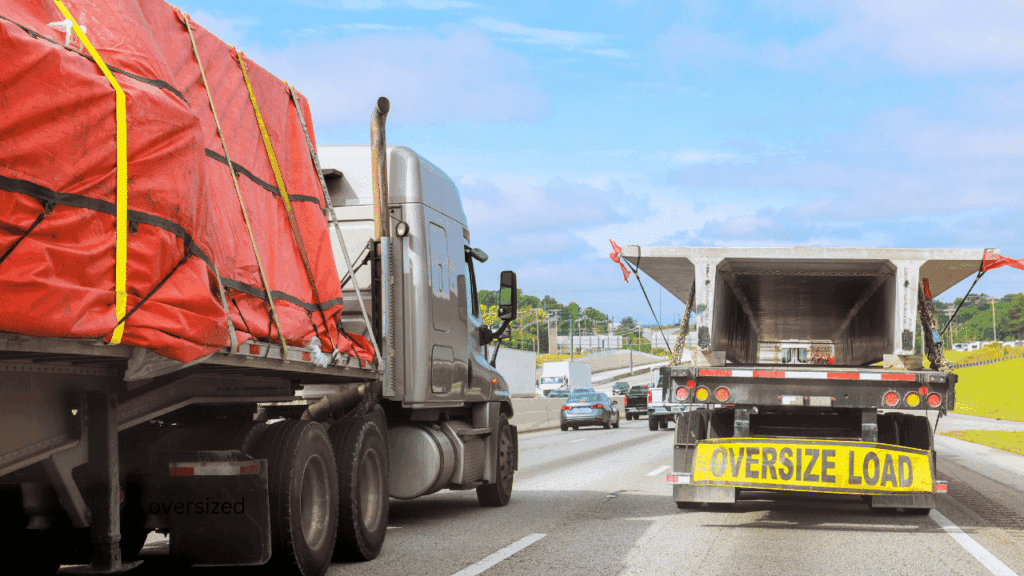
3. Tanker and Hazmat Hauling
Tanker and hazmat hauling is often considered one of the higher-paying areas in trucking because it involves more responsibility than standard freight. Tanker drivers must handle liquid loads that can shift during turns and braking.
It pays well because hazmat drivers may transport fuel, chemicals, or other dangerous materials that require special endorsements and stricter safety rules.
Because fewer drivers qualify for this kind of work, these jobs often come with very strong earning potential that averaged about $105,055 per year.
If you want to move toward this kind of higher-paying trucking job, contact Driving Academy to learn how to get your Hazmat endorsement and take the next step.
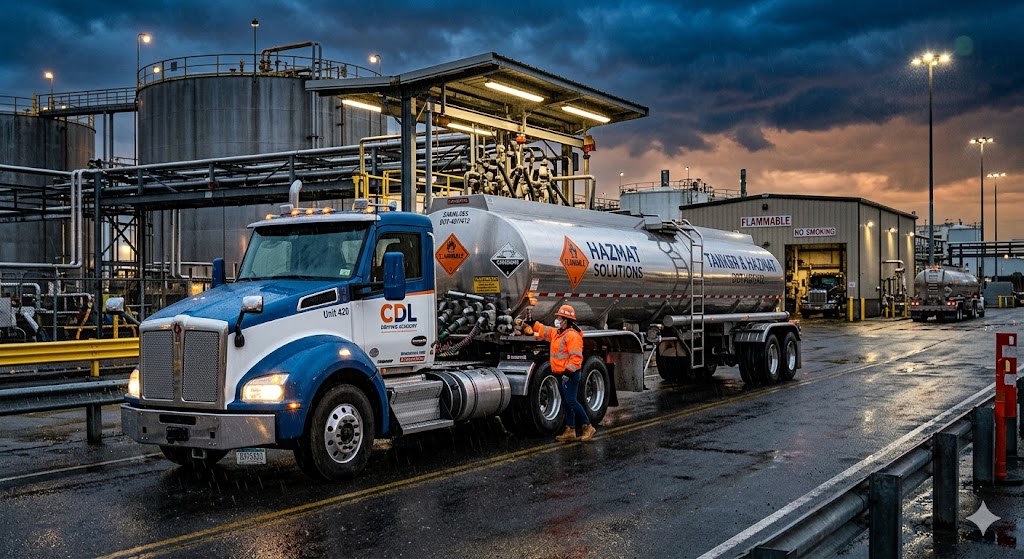
2. Specialty Hauling
This is the James Bond level of the trucking world. Department of Defense (DoD) freight, aerospace components, nuclear materials and highly classified government loads pay astronomical rates.
The catch? You need have the following:
- Spotless driving record
- Years of proven experience
- Ability to pass rigorous federal security clearances.
It takes time to build the reputation needed for this tier, but once you’re in, the money is practically unbeatable with earning potential over 200k+ a year.
1. Owner Operator
At the absolute top of the food chain is the owner-operator. This isn’t just a driving job but a full-blown business. You own or lease your truck and negotiate your own rates on your own schedule. When market rates are high, owner-operators can pull in incredible gross revenue.
Yes, you have to cover your own fuel, maintenance, insurance, and taxes, but the ceiling on your earnings is entirely up to you. You aren’t just driving for a paycheck anymore, you now have the opportunity to make millions by building an empire.
Ready to Stop Settling and Start Earning?
A High-Paying Career In Trucking Is Waiting For You
Don’t Miss Out! Save $200 Off Your Tuition Today!
Learn More
What Actually Drives Your Trucking Salary Up?
Choosing a lucrative niche like ice road trucking or heavy haul is a massive piece of the puzzle, but it isn’t the only factor that determines what your W-2 or 1099 looks like at the end of the year.
If you want to consistently hit the highest paying trucking jobs, you need to understand the variables that carriers look at when calculating your cents per mile (CPM) or percentage of the load.
- Years of Experience: You won’t step into a $150,000 role on day one. High-paying niches require a proven track record. The more miles you log without an accident, the more valuable you become to elite fleets.
- CDL Endorsements: Think of endorsements as keys that unlock heavier paychecks. Having your Hazmat (H), Tanker (N), or Doubles/Triples (T) endorsements makes you a highly versatile driver.
- Your Safety Record: This cannot be overstated. A clean Motor Vehicle Record (MVR) and a solid PSP (Pre-Employment Screening Program) report are your golden tickets. Carriers paying top dollar for specialty freight will instantly pass on drivers with moving violations or a history of freight damage.
- Route Type (OTR vs. Regional): Generally speaking, Over-the-Road (OTR) drivers who are willing to cross state lines and stay out for weeks at a time will earn significantly more than local or regional drivers who are home every weekend.
Balancing High Pay with the Trucking Lifestyle
It is easy to get tunnel vision when looking at six-figure salaries, but the highest paying trucking jobs are also the most demanding ones.
The Non-Negotiable First Step: Your Class A CDL
Before you can tackle specialized freight or build an empire as an owner-operator, you have to get past the velvet rope. Every single one of the lucrative, top-tier jobs on this list requires one fundamental thing: a Class A CDL.
- Already have a Class B CDL? Driving a dump truck, a local delivery box truck, or a bus is a solid, respectable living, but it has a hard financial ceiling. With a Class B, you are permanently locked out of the highest-paying freight in the industry. Upgrading from a Class B to a Class A is the single fastest way to break through that income cap and multiply your earning potential.
- Starting from scratch with zero experience? If you are going to put the time and effort into entering the trucking industry, don’t settle for limitations. Going straight for your Class A gives you the ultimate leverage and the maximum number of career options right out of the gate.
At Driving Academy, we specialize in taking drivers to the next level. Stop leaving money on the table and get your Class A to start qualifying for the paychecks you actually deserve!
FAQ: Deep Dive into the Highest Paying Trucking Jobs
What are the highest paying local and regional trucking jobs?
If you want to make top dollar but absolutely need to be home for dinner or weekend family time, look into LTL (Less-Than-Truckload) linehaul or fuel hauling. LTL linehaul drivers run set routes between hubs (often at night) and can easily pull in $90K to $110K+ annually. Fuel haulers (which require a Class A, plus Tanker and Hazmat endorsements) also command a massive premium for local work because of the danger of the freight.
What are the highest paying OTR (Over-the-Road) trucking jobs?
For drivers who don’t mind living out of their sleeper cab and crossing state lines, Oversized/Heavy Haul and Specialized Car Hauling are the kings of OTR. Transporting enclosed luxury vehicles or moving massive construction equipment requires intense focus and highly technical driving skills. These OTR specialists consistently clear the $100K–$130K mark, far outpacing standard dry van freight.
What are the highest paying owner-operator jobs?
The owner-operators pulling in the absolute highest gross revenue are those who bring their own specialized equipment to the table. If you own a step-deck, lowboy, or heavy-haul trailer, you can command the highest rates on the load boards. Hauling specialized heavy machinery or agricultural equipment can push an owner-operator’s gross revenue well past $250K to $300K+. Just remember: your net profit depends entirely on how well you manage your fuel, maintenance, and business overhead.
What are the highest paying team trucking jobs?
If you are driving with a spouse or a trusted partner, you can make incredible money running Expedited Freight, High-Value Pharmaceuticals, or Department of Defense (DoD) loads. Because a team truck rarely stops moving, companies trust them with highly sensitive, time-critical cargo. Teams hauling specialized, high-security freight can easily see a combined household income of $180K to over $250K+ per year.
Learn More About Highest Paying Trucking Jobs
Can CDL Training Be Free?
For some people, the cost of CDL school can be pretty high. (Even at an affordable trucking institution like Driving Academy)
As one of the best truck driving school in the country, we get lots of questions about free CDL training.
Is CDL School Free?
How To Go To CDL School For Free?
Is Free CDL Training A Scam?
Do I Have To Pay For CDL Training?
How Do I Get Free CDL Training
Are There CDL Scholarships And Grants?
How To Get A Commercial Driver’s License For Free?
How To Get A Free CDL?
Does The Government Pay For CDL School?
What Is The Cheapest Way To Get My CDL License?
What Programs Pay For CDL?
Is Free CDL School A Thing?
The answer to these questions about not having to pay to get your CDL license, is that there are a number of ways to do it at a top vocational school like Driving Academy.
These include:
- GI Bill benefits
- WIOA grants
- Company tuition reimbursement
- Scholorship
Depending on your situation, you may be eligible for one of these free CDL programs mentioned above.
You’ll want to read this article because we go in depth to cover the different ways that you can get free CDL training at Driving Academy and truly on your Road to Freedom!
See If You Qualify For Free CDL School!
Ways To Get Free CDL Training
They say there’s no such thing as a free lunch.
And if some school advertises “FREE CDL Training” it’s probably a scam.
In most real cases, free CDL training does not equal walking in and paying nothing with no conditions attached.
Much more often, it means your truck driver training is covered by a third-party funding source. You just have to be qualified to earn it.
This distinction matters, because the best option for you depends on your situation.
That is why the smartest move is not to assume you do or don’t qualify. It’s to speak with a truck driving school that can help you identify which of these options may fit your background.
1. GI Bill Benefits for CDL Training
If you are a veteran, service member, reservist, National Guard member, or qualified dependent, GI Bill benefits may help pay for CDL training. The VA says GI Bill benefits can be used for certain non-college degree programs, including truck driving training, as long as the program is approved. VA also explains that these education benefits may help cover tuition and other school-related costs depending on the benefit and enrollment level.
As a G.I. Bill Approved CDL School, Driving Academy proudly supports the military community. There’s a rigorous approval process by the Department of Veteran Affairs to become approved for our students to cover the cost of our driver training programs with their G.I. Bill benefits.
It’s because of this passion for our military veterans that we earned the 2026–2027 Military Friendly® School Silver and Military Spouse Friendly® School designation.
For more information, feel free to check out our veterans CDL training page where vets can learn more about using GI Bill benefits for truck driving school.
2. WIOA Grants for CDL School
The Workforce Innovation and Opportunity Act (WIOA) is a federal workforce program that’s designed to help job seekers with access to training, education, and support services that lead to employment.
One of those opportunities is with CDL training paid for by the government.
In practice, eligibility and school approval can vary by local workforce board, which is why students usually need to check with their local workforce office or American Job Center.
The big advantage of WIOA is that it is designed specifically to help unemployed and under-skilled people get trained for work so they can get good paying jobs!
If you qualify, it may cover a big chuck of your training cost, and in many cases it covers the entire tuition.
If you are not sure whether you qualify for the WIOA Grants for our programs, feel free to get in touch with our CDL advisor and find out!
3. CDL Tuition Reimbursement Through Trucking Companies
Another common path to “free” CDL training is tuition reimbursement.
This usually means you pay for training first, get hired by a carrier, and then the company pays you back over time while you work for them.
While this method isn’t technically “FREE.” It is a great way to not wind up paying anything to become a commercial driver.
Carriers like Werner, Swift and Schneider advertise reimbursement programs that pay qualified drivers back for their training up to a certain limit.
4. Company-Sponsored CDL Training
Another path some students look at is company-sponsored CDL training. This is where a trucking company helps cover the cost of training in exchange for a work commitment after you get licensed.
On the surface, this can sound like a great deal because it may reduce or even eliminate upfront tuition costs.
But there is a tradeoff: in many cases, these programs require you to work for that company for a significant period of time after training. That means you may not have much flexibility to leave if the pay, routes, home time, or working conditions are not what you expected.
That doesn’t mean company-sponsored training is always a bad option to make CDL training free for you. For some students, it can still make sense.
But if your goal is to keep more control over your career choices after getting your CDL, it may be smarter to explore other funding options first.
5. CDL Scholarships
CDL training scholarship opportunities do exist to help make it easier and more affordable to start a career in trucking. These scholarships are offered by various organizations to create opportunities for underrepresented communities.
Here are some scholarships you can apply for:
- Women In Trucking Foundation Scholarship
- Distributors Education Foundation – Drive to Thrive: CDL Scholarship Program
- Truckload Carriers Association (TCA) Scholarship:
- Folds of Honor Scholarship – For Military families
Which Free CDL Training Option Is Best for You?
| Situation | Best Option to Explore First |
|---|---|
| Veteran or military-connected student | GI Bill benefits |
| Unemployed or underemployed job seeker | WIOA / workforce grants |
| Student planning to go straight to work after school | Tuition reimbursement |
| Student with no personal strings attached who can suffer for two years to reap the rewards later | Company-sponsored training |
| Student who belongs to a minority or underprivileged community | Scholarships |
| Student who does not fully qualify for aid | Payment plans |
Still Not Sure Which Option Fits You?
If you want to explore your options for free CDL training, call Driving Academy and let the team help you figure out the best path.
Whether you may qualify for GI Bill funding, a WIOA grant, tuition reimbursement, or another assistance option, the fastest way to get answers is to talk to someone who works with these programs every day.
Driving Academy can help you understand your choices, get started with truck driver training, and move toward a real trucking job after you earn your CDL.
Talk To An Advisor
If you’ve got a felony on your record, and you’re thinking about getting into a high paying trucking career, you might be wondering whether trucking is still an option? The encouraging answer is that, in many cases, YES, you can still get a CDL with a felony.
A felony does not automatically block every person from earning a Commercial Driver’s License. The real answer depends on what the conviction was for, whether a commercial vehicle was involved, how much time has passed, whether you want endorsements like Hazmat, and what employers are willing to hire for. Federal CDL rules create certain disqualifications, but not every felony creates the same outcome.
How The CDL Process Works?
Before worrying about disqualification, it helps to understand the basic process. In general, a new driver must qualify for a Commercial Learner’s Permit, complete required training if applicable, and then pass the CDL skills test. FMCSA’s CDL guidance also notes that entry-level drivers are subject to ELDT requirements when getting a Class A or Class B CDL for the first time, upgrading from Class B to Class A, or obtaining certain endorsements for the first time.
So when asking whether someone can get a CDL with a felony, the real question is whether that person can complete the same licensing path every other applicant must complete (permit, training, testing, and state issuance.) If the record does not trigger a disqualification, the person may still be fully able to move through the normal CDL process.
What Felonies Can Disqualify You From Getting A CDL?
Not every felony will stop you from getting a CDL, but some criminal offenses can create serious licensing problems, especially when they involve controlled substances, vehicles, public safety, or repeated major violations.
This is where a lot of people get confused: having a felony does not automatically mean you can’t become a truck driver, but certain convictions can lead to a temporary suspension, long-term disqualification, or even a lifetime CDL ban depending on the circumstances. The biggest issue is usually not just the felony itself, but what the offense involved and whether it falls under major CDL disqualifying violations.
Felonies and major offenses that can create CDL disqualification issues include:
- Using a motor vehicle in the commission of a felony
- Felony offenses involving controlled substances, especially manufacturing, distributing, or trafficking
- DUI or DWI-related offenses, especially repeat violations
- Leaving the scene of an accident
- Using a commercial vehicle in a crime
- Serious traffic offenses tied to reckless or dangerous driving
- Crimes that may affect endorsement eligibility, especially Hazmat
The most serious red-flag categories are usually:
- Controlled substance felonies:
These are some of the most serious offenses in the CDL world. If a motor vehicle was used in a felony involving controlled substances, that can trigger a lifetime disqualification in certain situations. This is one of the biggest reasons people should never rely on vague internet advice like “felons can always get a CDL.” - Vehicle-related felonies:
If the felony involved the use of a vehicle, especially a commercial vehicle, the risk of disqualification goes way up. Licensing agencies and employers view these offenses much differently than an older felony with no driving connection. - Alcohol-related major offenses:
A single DUI may lead to a temporary CDL disqualification, while repeated alcohol-related offenses can create much longer problems. Even if you become legally eligible again later, some employers may still view this as a major risk. Learn more about can you get a CDL with a DUI.
| Situation | What It Usually Means |
|---|---|
| Non-violent felony from years ago | May still be possible to get a CDL |
| Controlled substances and vehicle use | May create major CDL disqualification issues |
| Felony with no direct driving connection | Often not an automatic bar to licensing |
| Multiple DUI-related offenses | May create major CDL disqualification issues |

How To Get A CDL With A Felony
If you have a felony on your record, the process of getting a CDL usually follows the same general path as any one else.
However there are a few extra things you should pay attention to. The most important thing is to understand that getting a CDL, qualifying for endorsements, and getting hired are three different stages. Some people with a felony can legally earn a CDL but still run into challenges when applying for certain jobs or endorsements. That is why the smartest approach is to go step by step and make sure you understand your position before moving forward.
Step 1: Check your current driver’s license status
Before anything else, make sure your regular driver’s license is valid and not suspended, revoked, or otherwise restricted. If your driving privileges are not active, you may not be able to move forward with the CDL process yet.
Start by confirming:
- Your license is valid
- You are legally allowed to drive
- You do not have an active CDL disqualification
- There aren’t unresolved major violations holding you back
This is one of the most overlooked first steps, but it matters because even a strong training plan will not help if your license status blocks the process from the beginning.
Step 2: Review whether your felony affects CDL eligibility
This is where you need to be honest and specific. Some felony convictions may not stop you from getting a CDL at all. Others may lead to temporary or lifetime disqualification, especially if they involve a motor vehicle, controlled substances, or major safety-related offenses.
The key here is not to assume the worst, but also not to assume everything is fine. You want clarity before moving on. If you are not sure whether your felony will disqualify you from getting a CDL, feel free to contact and our team will help you understand your options and next steps.
Step 3: Decide what type of CDL you want
Once you confirm that moving forward is realistic, decide whether you are pursuing a:
- Class A CDL for tractor-trailers and combination vehicles
- Class B CDL for straight trucks, box trucks, dump trucks, and certain buses
This matters because your CDL class affects not only the type of vehicle you can drive, but also the endorsements you may want to add later. And if you have a felony, that part becomes especially important.
Some endorsements, especially Hazmat, may be harder or impossible to get depending on your record because they require additional background screening. In other words, someone may still be able to get a CDL, but not qualify for every endorsement or every type of driving job.
Step 4: Pass the CDL test and get licensed
Once you complete your medical, permit and required training, the final step is passing the CDL skills test and receiving your license. At that point, the question shifts from “Can I get a CDL with a felony?” to “Which companies are most likely to hire me?” For many applicants, earning the CDL is proof that a trucking career is still within reach.
Be smart about endorsements
Not every endorsement is equally realistic if you have a felony.
For example:
- Hazmat may be harder or impossible in some cases because of federal background screening
- Passenger or school bus jobs may involve extra employer or regulatory screening
This is why you should not assume every CDL path is identical. Sometimes the smartest move is to focus first on getting your base CDL and entering the industry, then consider additional options later on.
Step 5: Apply strategically for jobs
Getting the CDL is a major step, but finding the right employer is just as important. Some trucking companies are more open than others to hiring drivers with a record.
They gotta know if they can trust you with thousands or even millions of dollars worth of cargo.
The smartest approach is to be honest, focus on companies that may consider second-chance applicants, and build a clean driving and work record from this point on.
In many cases for criminal truck drivers, the hardest part is getting that first opportunity, but once you do, more options can open up over time.
This is also where choosing the right CDL school can make a big difference. At Driving Academy, we offer lifetime job placement assistance, which means our support does not stop once you earn your CDL. We help students navigate the next step of the process by connecting them with job opportunities and helping them move toward employment after training.
A High-Paying Career In Trucking Is Waiting For You
Don’t Miss Out! Save $200 Off Your Tuition Today!
Learn More
Can You Get Hired As A Truck Driver With A Felony?
In many cases people can get hired as a truck driver with a felony, but getting hired usually depends less on the word felony itself and more on what the offense was, how long ago it happened, and which companies you apply to. Some employers have strict hiring rules, while others are more open to giving drivers a second chance, especially if the conviction is older, non-violent, and not directly related to commercial driving or cargo risk.
This is why two people with felonies can have very different outcomes. One applicant may struggle with certain carriers, while another may still find solid opportunities by targeting the right companies and approaching the job search strategically.
What Trucking Companies Usually Care About:
When a company reviews an applicant with a felony, they are often looking at things like:
- How long ago the conviction happened
- Whether the offense was violent or non-violent
- Whether it involved drugs, theft, fraud, or a vehicle
- Whether you have a clean driving record now
- Whether you have stayed out of legal trouble since then
- Whether the company’s insurance policy allows them to hire you
In many cases, companies are less focused on the fact that a felony exists and more focused on whether you look like a safe, stable, insurable driver today.
Why The First Trucking Job Matters Most?
For many drivers with a felony, the hardest job to get is the first one. Once you get hired, gain experience, and build a clean work history, more opportunities can open up. That first year can make a huge difference because employers start looking at your performance as a driver, not just your past record.
How Driving Academy Can Help After You Get Your CDL?
At Driving Academy, we not only help you with getting the CDL, but also we offer lifetime job placement assistance, which can be especially valuable for students with a criminal record, who want help navigating the hiring process after getting licensed. That support can help you move from training to employment with more confidence and a clearer plan.
FAQ
Can trucking companies hire felons?
Hiring depends on the company, the offense, how long ago it happened, and whether insurance and background policies allow it.
What felonies disqualify you from getting a CDL?
Not every felony disqualifies you. The biggest concerns are usually offenses involving controlled substances, use of a vehicle in the commission of a felony, major DUI-related violations, or other serious safety-related offenses.
How far back does a CDL background check go?
How far back a CDL background check goes depends on the employer, the type of job, the state, and the background check provider being used. Some trucking companies may focus more on recent years, while others may review a much longer criminal and driving history. In many cases, employers are not just looking for whether something happened, but also what the offense was, how long ago it occurred, and whether you have stayed out of trouble since then. If you are applying for a position that involves extra security, sensitive freight, or certain endorsements like Hazmat, the screening process may be more detailed.
Is it hard to get a CDL job with a felony?
It can be harder, but it is definitely still possible in many cases. The biggest factors are usually what the felony was for, how long ago it happened, whether it was violent or non-violent, and whether you have a clean driving record now. Some trucking companies have strict hiring rules, while others are more open to second-chance applicants. The smartest approach is to be honest, apply strategically, and focus on companies that may be more flexible. For many drivers with a felony, the first job is the hardest one to get, but once they gain experience and build a clean work history, more opportunities can open up.
Learn More About Getting A CDL With A Felony
Linden, NJ / March 25, 2026/ Driving Academy is proud to announce that it has earned the 2026–2027 Military Friendly® School Silver designation in recognition of its commitment to helping veterans transition into civilian careers through hands-on, career-focused CDL training. The school was also recognized as a Military Spouse Friendly® School.
This recognition highlights Driving Academy’s support for veterans, military spouses, and other military-connected students seeking a practical path into the trucking industry. To learn more about VA-approved CDL training, GI Bill benefit use, flexible class options, and career assistance, visit our CDL training for veterans page. Additional details about the school’s designation are available on Driving Academy’s official Military Friendly® profile.
Institutions earning the Military Friendly® Schools designation were evaluated using public data sources and responses from a proprietary survey. The methodology, criteria, and weightings were developed by Military Friendly® in consultation with the Military Friendly® Advisory Council, a group of independent leaders in the military community.
“Earning the Military Friendly® designation is more than a badge of honor; it is a reflection of an institution’s deep-rooted values and strategic commitment to those who served. These schools don’t just open doors for veterans and military spouses, they build sustainable pathways for academic success and long-term impact. Their support is transformative, proving that investing in military-connected students is both a moral imperative and a standard for educational excellence.”
— Kayla Lopez, Vice President of Memberships, Military Friendly®
Driving Academy will be showcased in the 2026–2027 Guide to Military Friendly® Schools in the April issue of G.I. Jobs® magazine and on MilitaryFriendly.com.
About Military Friendly®
Military Friendly® is the standard that measures an organization’s commitment, effort, and success in creating sustainable and meaningful benefits for the military community. Over 2,900 organizations compete annually for the Military Friendly® designation. Military Friendly® is a service-disabled, veteran-owned small business. Military Friendly® is not affiliated with or endorsed by the U.S. Department of Defense or the federal government. Results are produced via a rules-based algorithm. The data-driven Military Friendly® lists and methodology can be found at MilitaryFriendly.com.
Truck drivers in the USA play a major role in keeping the economy moving. From food and retail goods to construction materials and industrial freight, commercial drivers help deliver the products businesses and consumers rely on every day. Because trucking is such a large part of the transportation industry, many people looking into this career want to know how truck drivers get paid, what the job outlook looks like, and whether trucking still offers strong earning potential.
How Many Truck Drivers Are in the USA?
The trucking industry remains one of the biggest employment sectors in the country. According to the American Trucking Associations, trucking supported 8.4 million industry-related jobs in 2024, including about 3.5 million professional truck drivers. That means millions of workers across the USA depend on trucking, not just behind the wheel, but also in dispatch, maintenance, logistics, warehousing, and other support roles.
There are around 3.5 million truck drivers in the USA
Those numbers show why trucking continues to be such an important and stable industry in the American economy.
Job Outlook for Truck Drivers in the USA
The job outlook for truck drivers in the USA remains strong because trucking continues to be one of the most essential parts of the national supply chain. According to the U.S. Bureau of Labor Statistics, employment for heavy and tractor-trailer truck drivers is projected to grow 4% from 2024 to 2034, which is about as fast as the average for all occupations. BLS also projects about 237,600 openings per year on average over that decade, with many of those openings coming from drivers retiring, changing occupations, or leaving the workforce.
That matters because job opportunity in trucking is not driven only by “new jobs.” A big part of the demand comes from the need to replace existing drivers and keep freight moving across the country. For people considering CDL training, that means trucking can still offer a realistic path into a stable industry with ongoing hiring needs. Even when freight markets fluctuate, the long-term need for qualified commercial drivers does not disappear, because the economy still depends on trucks to move retail goods, food, raw materials, medical supplies, and industrial products.
Why the truck driver job outlook stays strong:
- The industry needs replacement drivers every year
- Freight still moves primarily by truck
- The U.S. economy depends on commercial transportation
A High-Paying Career In Trucking Is Waiting For You
Don’t Miss Out! Save $200 Off Your Tuition Today!
Learn More
Why Trucking Remains One of the Most Important Industries in the USA
Trucking remains one of the most important industries in the USA because it plays a central role in moving freight from one point to another, often as the final and most practical step in the supply chain. The American Trucking Associations reports that trucks moved 11.27 billion tons of freight in 2024, and ATA says trucking carried roughly 72.7% of the nation’s freight by weight. That kind of reach explains why truck drivers are so important to the day-to-day functioning of the economy.
Even beyond total tonnage, trucking touches nearly every industry. Stores depend on trucks for inventory, construction projects depend on trucks for materials, manufacturers depend on trucks for components, and many businesses depend on trucking for deliveries that cannot be handled efficiently by rail, air, or water alone. Federal freight data also shows that trucking handles an enormous share of domestic freight shipments by weight and value, reinforcing how deeply connected the industry is to commerce across the country.
Average Salary for Truck Drivers in the USA
The average salary for truck drivers in the USA can vary based on experience, location, route type, employer, and the kind of equipment or freight involved. Indeed reports that the median annual wage for heavy and tractor-trailer truck drivers are around $93,305 in March 2026. Like most careers, some drivers earn less when they are just getting started, while others earn more as they gain experience, add endorsements, or move into higher-paying lanes and specialized driving work.
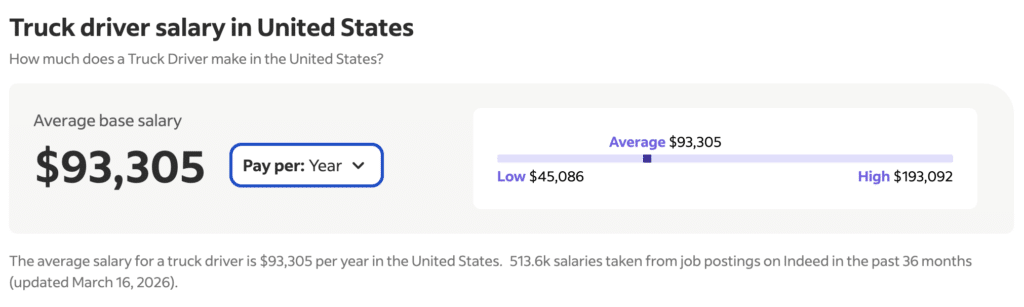
It is also important to remember that truck driver pay is not always structured the same way. Some drivers are paid by the mile, some are paid hourly, some earn a percentage of the load, and others work in dedicated or salary-based positions. That is why broad salary numbers are useful for understanding the profession overall, but not every trucking job will look the same.

Make CDL School Affordable
If you’re reading this, chances are you’re seriously considering getting your CDL (Commercial Driver’s License) and starting a new career in the trucking industry. First off, congratulations, that’s a huge step toward financial independence and long-term success.
But before you can hit the road and start earning, there’s one important question that might be holding you back:
“How in the world am I going to pay for CDL school?”
You’re not alone. This is one of the most common concerns we hear from prospective truck driving students. So in this post, we’re going to break down:
The cost of CDL training school
Different payment options (including some creative solutions)
Ways to reduce financial stress during training
Whether you’re in New Jersey or anywhere else in the country, this guide will help you figure out how to make CDL school work for your budget and lifestyle.
How Much Does CDL School Cost?
Let’s start with the basics: how much will you need to invest to get your CDL license?
Prices for CDL schools vary drastically depending on your location, the type of training offered, and the reputation of the school. In the U.S., you’ll typically see costs range from $2,500 to as much as $22,000. That’s a huge gap and it’s important to understand why.
Cheaper schools may sound like a great deal at first glance, but often they offer very limited hands-on training. For example, we’ve heard of some $2,500 programs where students get as little as 20 minutes in a truck once or twice a week. That’s hardly enough time to build the skills you need to pass the CDL exam, let alone feel confident behind the wheel.
At Driving Academy, most of our students invest between $3,000 and $5,500, depending on the course they choose. That investment reflects:
- Hours of classroom and yard training
High-quality, flexible training (we’re open 7 days a week!)
Experienced instructors
- Guaranteed training programs
Access to modern equipment including state of the art truck simulators
A personalized approach to scheduling and payment
HOW TO PAY FOR CDL SCHOOL
1. Pay in Full (Best for Planners)
If you’re someone who plans ahead and has been saving for this moment, paying for your training in full is often the simplest and most flexible option.
Benefits of paying in full:
No interest payments
Maximum flexibility in your training schedule
Fast-track completion (no waiting on payment clearances)
Peace of mind knowing you’re fully committed
If you’ve been setting aside money for a big opportunity, investing in your CDL license is one of the smartest moves you can make. This career path can offer a solid return on investment, especially when compared to a four-year college degree. Afterall the average truck driver earns $70,000/year.
Budgeting
One way you can afford to pay for truck driving school is to build your savings by setting a budget. Set aside a certain amount every month for CDL school, and cut extra expenses like eating out or travel.
2. Interest-Free Payment Plans (Most Popular Option)
Not everyone has thousands saved up, and that’s okay.
That’s why Driving Academy offers an interest-free payment plan. All you need is $500 down to get started. From there, you make weekly payments until your balance is paid off. The only rule is that your balance must be fully paid before you complete your training.
This option is perfect for people working part-time or full-time jobs. Because we’re open every day of the week, you can train around your schedule. You can attend school one, two, three days a week or more!
If something comes up and you can’t make a payment one week? No problem. We’ll simply pause your training and resume once you’re ready to continue. It’s flexible, fair, and accessible to everyone, no credit check required.
3. Apply for Government Grants
Grants can be an excellent way to pay for CDL school without dipping into your own pocket. There are two major types to explore:
a) Grants for Unemployed or Underemployed Individuals
If you’re currently unemployed or working a low-income job, you may qualify for a Workforce Innovation and Opportunity Act (WIOA) grant. These are available through your local unemployment office and are designed to help people transition into in-demand careers like truck driving.
Steps to take:
Visit your local unemployment or workforce development office
Ask about vocational training grants
Complete the application and provide required documentation
If approved, the government will pay your tuition, helping you launch your new career without debt.
b) GI Bill® for Veterans
If you’ve served in the military, first off, thank you for your service. Secondly, you might be eligible to use your GI Bill® benefits to pay for CDL school. Driving Academy is proud to be GI Bill® approved.
Even better, veterans who attend full-time training may qualify for a monthly housing stipend during their time in school. That means the government will not only cover your tuition, they’ll help cover your living expenses too.
4. Use a Credit Card
This option requires some discipline, but it can work if you’re confident in your ability to finish training quickly and land a job right away.
Let’s say you have a credit card with a $5,000 limit. You use that to pay for training at the beginning of the month. If you go through full-time training and finish within 3-4 weeks, you can potentially be employed by the time your first credit card payment is due.
Pro tip: Look for cards with 0% interest for 12–18 months to buy yourself more time.
Some employers even offer tuition reimbursement bonuses, meaning they’ll help you pay off that card while you earn a salary. Now that’s what we call a smart investment.
5. Ask Friends or Family for Help
It might feel uncomfortable, but this option is more common than you think. Explain your goals clearly and show how the CDL license will help you earn more and build a sustainable career.
Most people are happy to support a loved one who’s working hard to improve their situation. And unlike traditional loans, you can often work out more flexible, low-interest or interest-free repayment plans.
6. Apply for a Personal Loan
Banks, credit unions, and online lenders offer personal loans that can be used for vocational training. Just be mindful of:
Interest rates
Repayment terms
Approval requirements
Make sure you understand the total cost of the loan before committing. A good rule of thumb is to only borrow what you’re confident you can repay within 12–24 months of starting your new job.
7. Sell What You Don’t Need
Sometimes, the money you need is already in your garage or closet. Selling old electronics, furniture, collectibles, or even a second vehicle can help cover the cost of training.
We had one student who crunched the numbers and realized how good of an investment it is to become a truck driver so he sold his only car to pay for CDL school. He got rides from friends, trained hard, passed on the second try, got hired quickly, and started his own trucking company.

Today, he owns over a dozen trucks and earns more in a day than he once paid for his training. That’s well over $200,000/year as an owner operator.
That’s the power of commitment and vision!
8. Get Sponsored by an Employer
If you’re already working in a warehouse or logistics job, consider asking your employer if they’ll sponsor your CDL training. Many companies are desperate for licensed drivers and would rather invest in someone they already trust.
Offer to stay with the company for a set period (like 12–24 months) in exchange for tuition assistance. It’s a win-win for everyone, they get a reliable driver, and you get your training paid for.
As we mentioned there are also employers who offer tuition reimbursement, for those who recently graduated from trucking school.
Final Thoughts: CDL School is an Investment, Not an Expense
At the end of the day, CDL school isn’t just another bill to pay, it’s an investment in your future. And like any good investment, the goal is to turn a relatively small upfront cost into a lifetime of returns.
Whether you choose to pay in full, go with a payment plan, use a grant, or get creative, the key is to get started. The sooner you begin, the sooner you’ll have your license and the freedom that comes with it.
At Driving Academy, we’re committed to helping a million people get on the road to freedom. If money is holding you back, let us help you find a solution. All you need is $500 down to start, and we’ll work with you from there.
Ready to get started?
Visit CDLDrivingAcademy.com to book your appointment today. We’re here to help you every step of the way.
Want more tips and videos?
Subscribe to our YouTube channel and check out our other trucking resources to stay informed and inspired.
Let’s hit the road to freedom together.
Watch The Video
Beginning March 16, 2026, the Federal Motor Carrier Safety Administration (FMCSA) is enforcing a new rule that significantly changes how non-domiciled commercial driver’s licenses (CDLs) and commercial learner’s permits (CLPs) are issued in the United States. This final rule reshapes eligibility for foreign drivers and affects how states verify lawful immigration status before issuing, renewing, transferring, or upgrading CDLs under federal regulations.
If you are a driver holding (or planning to obtain) a non-domiciled CDL, or an employer who hires drivers who aren’t U.S. citizens or permanent residents, here’s what you actually need to know about the requirements and how they’ll be applied.
What Is a Non-Domiciled CDL?
A non-domiciled CDL is a commercial driver’s license issued to someone who does not have a U.S. domicile (primary residence) but legally resides or works in the U.S. under certain immigration classifications. Before the new rule, state motor vehicle agencies sometimes issued these licenses or permits based on a variety of work authorizations, including employment authorization documents (EADs).
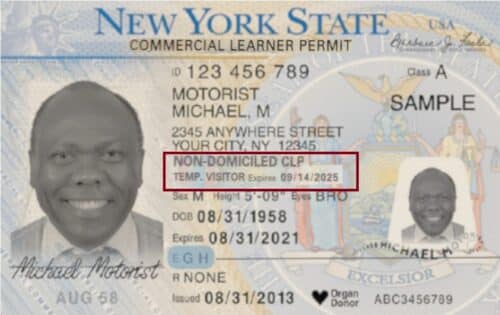
Under the 2026 final rule, the FMCSA has tightened eligibility. Only non-U.S. citizens with specific employment-based nonimmigrant visas: H-2A, H-2B, or E-2 are permitted to obtain or renew a non-domiciled CLP or CDL going forward. Other status types (including EAD holders without these visas) will not be eligible.
Learn How To Remove Non-Domicile From Your Driver’s License
Who Is Eligible Under the New Rule?
Under the final rule, only individuals in lawful U.S. immigration status who can provide evidence of lawful immigration status qualify for a non-domiciled CDL or CLP. For those visas, that specifically means:
- H-2A: Temporary agricultural workers
- H-2B: Temporary non-agricultural workers
- E-2: Treaty investors and certain treaty traders
This is a significant reduction in eligibility compared to previous guidance, which allowed a broader range of work authorization types to qualify for non-domiciled CDLs.
If a driver cannot provide the required evidence of lawful status, states are not allowed to issue, renew, transfer, or upgrade non-domiciled CLPs or CDLs for that person.
Find Out If You’re Still Eligible To Get A CDL With Our Immigrant Eligibility Checklist
There’s a lot of confusion about which immigrants in the United States are eligible and which immigrants aren’t able to get a commercial driver’s license.
That’s why we created this CDL checklist for immigrants to see if you’re allowed to get a CDL license.
Lawful Status Verification and DMV Procedures
One of the central elements of the final rule is the requirement that states verify an applicant’s lawful immigration status through the federal Systematic Alien Verification for Entitlements (SAVE) system or another method that meets federal standards. This verification must happen before issuing or updating a non-domiciled license or permit.
This means that:
- Evidence of immigration status must be checked before issuing/renewing non-domiciled CDLs.
- If SAVE verification fails or cannot confirm lawful status, the state must downgrade or revoke the non-domiciled CDL or CLP.
- This check applies even if the license is being upgraded or reinstated after a downgrade.
What Happens to Previously Issued Non-Domiciled CDLs?
If a non-domiciled CDL or CLP was issued before March 16, 2026 under older guidance but complied with federal regulations in effect at that time, it generally does not need to be immediately revoked solely based on the new rule. However, many states are expected to review and reissue credentials to match the updated standards.
If the credential was issued incorrectly, for example, for longer than the driver’s lawful presence allowed, FMCSA recommends states revoke and reissue it only if it meets the current requirements.
FAQ
Can states still issue non-domiciled CDLs after March 16, 2026?
Yes, but only to drivers who provide evidence of lawful immigration status under H-2A, H-2B, or E-2 categories and meet all other federal CDL requirements.
Do previously issued non-domiciled CDLs automatically become invalid?
Not automatically. States are encouraged to review and reissue them where necessary, but they generally remain valid if they were legally issued under prior rules.
What documents must States use to verify the lawful immigration status?
States are required to use the documents specified in Table 1 to 49 CFR § 383.71 as proof that applicants who are U.S. citizens, lawful permanent residents, or non-citizen nationals domiciled in a U.S. territory are eligible to receive a non-domiciled CLP or CDL.
Will SAVE verification cause delays at DMV?
Possibly. DMV systems must query SAVE and retain verification proof before issuing or adjusting a non-domiciled CDL.
Can someone with a work permit (EAD) still get a non-domiciled CDL?
Under the 2026 final rule, holding a general Employment Authorization Document alone is not enough. Eligibility is now limited to specific visa categories such as H-2A, H-2B, and E-2. Drivers outside those categories may not qualify for a non-domiciled CDL going forward.
Will states automatically revoke existing non-domiciled CDLs?
Not automatically. If a credential was legally issued under prior guidance, it may remain valid until expiration. However, states are required to verify lawful status before renewal, upgrade, or transfer. If the applicant does not meet the new eligibility standards at that time, the CDL may be downgraded or revoked.
Final Thoughts On The Final Rule
The 2026 Non-Domiciled CDL final rule is not a small administrative update. It is a structural change in who qualifies for a non-domiciled commercial driver’s license in the United States. If you currently hold one, plan to apply for one, or employ drivers who rely on one, the safest move is to review eligibility early and confirm documentation before renewal time. Staying proactive now can prevent major delays later.
Learn More About The FMCSA Final Rule Regarding Non-Domiciled CDLs
How Long Does It Take to Complete Truck Driving School and Earn a CDL?
Becoming a professional truck driver takes less time than many people think. At Driving Academy in Linden, New Jersey, and serving students nationwide, we offer CDL driver training where you can train in your own time.
Here, we discuss how long it takes to complete truck driving school and earn a CDL.
Work Around Your Schedule
The programs at Driving Academy consist of more than 100 hours of classroom, simulator, and road training. However, how you complete your hours is up to you. Full-time students can complete their training in about a month.
We are open seven days a week and offer classes during the day, nights, and weekends, so you can keep up with your other obligations while finishing truck driving school.
Here are the programs Driving Academy offers. All these programs are flexible enough to work around your schedule.
Full Courses
Driving Academy’s full CDL truck driving school courses are designed to take students from zero to hero in professional driving. The full courses start with classroom training to help students pass the written exams, which will earn them a valid CDL permit. Students are then brought to the yard and trained to successfully pass the CDL road test.
Our full courses include a limited number of truck rentals for the CDL road test, as well as our lifetime job placement program. However, they do not come with unlimited road test attempts like our Guaranteed Training Course does.
Half Courses
Half courses are designed for students who already have a CDL permit. If a student already possesses a valid CDL permit, there is no need to start with classroom training. Half courses will start a student with yard training. In the Driving Academy yard, we train you to pass the very difficult two-and-a-half-hour CDL road test.
Our yard training can be divided into three main categories:
- Pre-Trip inspection training
- Basic skills and parking maneuvers
- Proper road driving
These courses come with a limited number of road test rentals.
Guaranteed Training Courses
Driving Academy features a guaranteed training course. The guaranteed training courses offer classroom training to prepare students for and to pass the written tests. Upon passing the written tests, students receive their CDL permits. This program also includes yard and road training to prepare students to pass the CDL road test. These courses usually include over 100 hours of training in and out of the classroom. They are built for people who take their future CDL career very seriously.
We are so confident in the success of this course that anyone who has enrolled in the guaranteed training course will have unlimited road test attempts and vehicle rentals. This means students enrolled in this program have unlimited tries to pass all CDL testing, both written and road exams. As long as the student shows up and participates in all of the scheduled training and re-training, Driving Academy will stick with them until they earn their CDL.
Refresher Courses
If you already have a CDL but haven’t used it in a while, Driving Academy offers refresher training courses.
Sometimes, potential employers require a refresher course. It may also be required if you do not have any recent over-the-road trucking experience. We are here to help you shake off the rust and get you back into the driver’s seat.
During our refresher course, we will train you on how to inspect your truck inside and out and how to park your tractor-trailer. You also receive training in road driving, either with a manual or automatic transmission.
Custom Corporate Training Courses
Driving Academy also offers group and corporate training options. We can help your team with refresher courses. We can also set up a time for your team to come to us. For larger groups, we might be able to come to you. Give our office a call for more information at 908-525-3609.
Programs Offered at Driving Academy
Driving Academy in Linden, NJ, offers three d CDL programs.
Class A CDL
A Class A CDL is for driving tractor-trailers or vehicles that weigh more than 26,000 lbs. and have a trailer that weighs more than 10,000 pounds. Once you have a Class A CDL, you can also drive a Class B vehicle.
Class B CDL
A Class B CDL is for box trucks and delivery trucks. A Class B vehicle is described as any vehicle weighing over 26,000 pounds with no trailer. If there is a trailer, it must weigh than 10,000 pounds. Some examples of Class B vehicles include box trucks, cement trucks, garbage trucks, and delivery trucks.
Class B+P CDL
The Class B+P CDL is for vehicles that weigh more than 26,000 pounds and have a carrier with 16 or more passengers. A passenger bus is an example of a Class B vehicle. Once you have a CDL Class B+P license, you can also drive any other Class B vehicle. The “P” is an endorsement that allows drivers to carry passengers.
How Fast Can You Get A CDL?
Don’t have time to wait? Learn all about how fast you can get a CDL license.
Complete Truck Driving School at Driving Academy and Earn a CDL
Students who want to earn a CDL have many choices, but Driving Academy offers its students plenty of perks, including:
- Affordable payment plans that start at just $500 down
- Certified third-party testing site available
- Flexible training schedules
- Lifetime job placement for graduates
- State-of-the-art simulator training
We offer guaranteed CDL truck and bus training without the fear of failure at our Linden, New Jersey, location. We also accept students from anywhere in the United States. If you’re ready to earn your CDL, contact us today to learn more about our CDL truck driver training programs.
If you’re thinking about becoming a truck driver, one of the first questions you probably have is how fast you can get a CDL.
For many new drivers, the process can move faster than expected.
What Is The Average Length Of CDL Training?
The length of CDL training really depends on the truck driving school you go to and whether you’re doing it full time or part time.
On average, CDL school takes around 5 weeks of yard training to get you ready to take the license exam.
In many cases, students can complete their CDL training and be ready for their road test in as little as two to eight weeks, depending on the training program, how quickly they get their Commercial Learner’s Permit (CLP), and how soon they can schedule their CDL skills test.
On average it takes 4-6 weeks to complete CDL training
If you’re serious about becoming a truck driver and want to get your CDL as quickly as possible, the first step is finding the right training program so you can get started on the road to freedom.
At Driving Academy, we help students understand the CDL process, prepare for their permit tests, and move into hands-on training so they can get their CDL as soon as possible!
Contact Driving Academy today to learn how you can start your CDL training now:
Process Of Getting A CDL
In order to really get an idea of how long it takes to get a CDL license, you’ve got to have an understanding of the process to get one.
While the exact process can vary slightly by state, most drivers follow these general steps:
Step 1: Study the CDL Manual
Before applying for a CDL permit, you’ve got to study your state’s CDL manual, which covers the rules, safety procedures, and knowledge required to operate commercial vehicles. This prepares you for the written permit tests.
Step 2: Obtain Your Commercial Learner’s Permit (CLP)
To receive your Commercial Learner’s Permit, you must pass the required written knowledge tests at your state’s licensing agency. These tests usually include the General Knowledge test, and depending on the CDL type, may also include Air Brakes and Combination Vehicles.
Step 3: Complete a DOT Medical Examination
Most CDL applicants must pass a Department of Transportation (DOT) physical exam to ensure they meet the federal health requirements for commercial drivers. This exam checks vision, hearing, blood pressure and overall physical fitness.
Step 4: Complete Entry-Level Driver Training (ELDT)
Federal regulations require new CDL applicants to complete Entry-Level Driver Training (ELDT) through an FMCSA-approved training provider. This training includes both classroom instruction and behind-the-wheel driving practice.
Step 5: Practice Driving with Your CLP
After receiving your CLP, you must hold it for at least 14 days before taking the CDL skills test. During this time, students practice driving commercial vehicles and learn important skills such as backing, turning, and performing vehicle inspections.
Step 6: Take the CDL Skills Test
The final step is the CDL skills test, which includes three parts:
- Pre-trip vehicle inspection
- Basic vehicle control test
- On-road driving test
Once you’ve successfully pass all three sections, you can receive your Commercial Driver’s License (CDL) and begin working as a commercial driver.
So, How Fast Can You Get A CDL?
In most cases, from start to finish, you can get a CDL in about 4 to 10 weeks. This includes studying for and passing your Commercial Learner’s Permit, complete your Entry-Level Driver Training (ELDT), and schedule your CDL skills test.
Some full-time training programs can move faster, while part-time programs may take several months.
It really comes down to your skill, your instructors and how dedicated you are to passing your CDL exams.
Because of the FMCSA’s 14 day rule, the absolute shortest time it can take to get a CDL is 2 weeks
Regardless of how quickly you can become a commercial truck driver, Driving Academy is here to help you!
A High-Paying Career In Trucking Is Waiting For You
Don’t Miss Out! Save $200 Off Your Tuition Today!
Learn More
Factors That Affect How Fast You Get A CDL
While some students are able to earn their CDL in just a few weeks, the actual timeline can vary depending on several factors. Understanding these factors can help you plan your training and avoid costly delays during the CDL licensing process.
Your CDL Permit Preparation
One of the biggest factors is how quickly you obtain your Commercial Learner’s Permit (CLP). Students who study ahead of time and pass the written tests on their first attempt can move into training immediately. However, failing the permit tests may require rescheduling and additional study time.
What State You Live In
The FMCSA generally requires a 14 day waiting period after issuing a Commercial Learner’s Permit before taking the CDL skills test. However, federal waivers allow some states the discretion to waive this requirement.
While most states adhere to the 14-day rule (like California, Illinois, New Jersey), Pennsylvania, for example, requires a minimum of 15 days.
If you’re becoming a school bus driver in New York, they’ve actually waived the 14 day waiting period compeletly!
Training Schedule
The type of training program you choose can also affect how fast you get your CDL. Full-time training programs typically allow students to complete their training much faster, sometimes within a few weeks. In contrast, part-time or weekend programs may take longer because training hours are spread out over a longer period of time.
What CDL School You Go to
Different CDL driving schools have different programs and courses. Some have very rigid training schedules where you train with a cohort of other students for a fixed amount of time.
Other schools, like Driving Academy, let you train on your schedule so you choose how often you come in for training. This flexible program lets you practice at your own pace which can be lightning fast, or slow and easygoing.
CDL Testing Availability
One of the limiting factors for how quickly you can get a commercial driver’s license is being able to schedule your CDL skills test. In some areas, testing appointments may be available quickly, while in others there may be a waiting period depending on the number of applicants and available testing locations.
With most DMVs, it can take weeks to schedule a CDL road test.
At 3rd party testing facilities like the ones offered at Driving Academy, you can take your road test ASAP.
Your Learning Pace
Every student learns at a different speed. Some drivers quickly become comfortable operating commercial vehicles, while others may need additional practice before feeling confident enough to take the CDL road test.
Real Example: One of the Fastest CDL Training Stories
One of the fastest students to complete CDL training at Driving Academy actually traveled all the way from Hawaii to attend our training program in Linden, New Jersey.
He began by taking and passing his permit exams in his home state. Then he started his hands-on CDL training on Sunday and trained intensively throughout the week, practicing vehicle control, pre-trip inspections, and road driving each day. By Thursday, he had completed his training and was ready for testing.
He then took his CDL skills exam on Friday, successfully completing the program in just one week of training. After finishing the program, he flew back to Hawaii where he finalized the licensing process in his home state.
Stories like this show that while most drivers take a few weeks to finish training, the timeline can move much faster when someone arrives ready to focus on training full-time.
How Long Does It Actually Take To Get A CDL? Watch And Learn
Picture this: you’re scrolling “top trade school near Passaic County” at midnight because you’re done with your current job. You don’t want another “maybe.” You want a real career path, something you can finish, afford, and use to earn more.
But here’s the problem: a lot of schools look great online, until you realize the schedule doesn’t fit, the training isn’t hands-on, or the program doesn’t actually line up with real jobs.
The good news is Passaic County is surrounded by strong job markets and trade schools across North Jersey. You can find programs that lead to real careers in transportation, automotive, HVAC, electrical, welding, and other hands-on fields. In this guide, we’ll help you find the one that fits you.
What “Top Trade School” Really Means
Before you pick a “top” trade school, you’ve got to make sure it’s actually the right fit for you: your schedule, your budget, your learning style, and the kind of job you want on the other side. These are the core criteria most people use to decide whether a program is truly worth it:
- Job-aligned: training matches what employers actually hire for
- Hands-on: you practice real skills, not just sit in lectures
- Schedule-friendly: realistic for working adults (days/evenings/weekends, if available)
- Transparent on costs: clear tuition + fees + what’s included
- Well-reviewed locally: consistent feedback on instructors and training quality
We’ll use the same criteria to evaluate the top 5 schools on our list below.
Top Trade Schools Near Passaic County, NJ
Driving Academy
Wayne, NJ 07470 Website

Driving Academy
Wayne, NJ 07470 Website
Driving Academy was built to create a better learning environment for students who want a real career upgrade through driving. Founded by Jonathan, who grew up in a family of teachers and professional CDL drivers, the school focuses on fundamental education first with a structured teaching system designed to help students succeed.
Why Passaic County Students Choose Driving Academy:
- Hands-on Training : Behind-the-wheel practice + skills-based instruction so you’re training for the real test and real job and not only just classroom concepts.
- Schedule fit for working adults: Weekend and evening classes so students can train while keeping your current job.
- Affordable + transparent entry cost: $500 down to start, with payment plans available so you don’t need a huge upfront payment.
- Career-aligned outcome: A clear path to earning your CDL and moving into higher-paying driving opportunities. School also comes with free job placement.
- Well-reviewed & trusted: Rated 4.6 out of 5 on Google (based on Google reviews), which is a strong signal for training quality and student experience.
Driving Academy checks the exact boxes mentioned above for definition of a top trade school. Getting a CDL is often one of the most direct “career change” trades especially for people coming from delivery, taxi/ride-share, warehouse work or other hourly roles.
A High-Paying Career In Trucking Is Waiting For You
Don’t Miss Out! Save $200 Off Your Tuition Today!
Learn More
Empire Beauty School
Bloomfield, NJ 07003 Website

Empire Beauty School is a private beauty and cosmetology school that trains students for hands-on careers in the beauty industry. For Passaic County students who are looking for a trade path outside of automotive or CDL, this can be a practical option。Especially if you’re interested in a licensed career that focuses on client service and creative skills.
Why Passaic County Students Consider Empire Beauty School:
- Job-aligned training: Designed around the skills needed for cosmetology careers and state licensing.
- Hands-on learning: Practice-based training (not just theory) in real salon-style settings.
- Career-change friendly: Often a fit for students who want a people-facing career and a skill they can grow over time.
- Clear career path: Training geared toward licensure and entry into salon/spa work (and long-term growth with experience).
Empire can be worth considering if you want a beauty/cosmetology trade path and you’re open to commuting outside Passaic County for the right program.
Eastern School of Acupuncture & Traditional Medicine
Bloomfield, NJ 07003 Website

Eastern School of Acupuncture & Traditional Medicine is a specialized school focused on acupuncture and traditional East Asian medicine. It’s a different kind of “trade school” option—more healthcare and wellness-based—and can appeal to students who want a people-facing career path that’s structured and licensure-oriented.
Why Passaic County Students Consider Eastern School of Acupuncture & Traditional Medicine:
- Hands-on, patient-centered field: A good fit if you want to work directly with clients instead of machines or tools.
- Licensure-directed path: Built for students who want a clear professional track in acupuncture/traditional medicine.
- Strong career-change appeal: Often chosen by adults who want a more meaningful, service-based profession.
- Nearby location: Bloomfield is within a reasonable commute from many Passaic County towns.
Eastern School of Acupuncture & Traditional Medicine can be a strong option if you’re looking for a wellness-focused pathway and want training that leads toward a long-term professional skill set.
Lincoln Tech
Levittown, PA 19056 Website

Lincoln Tech is a well-known technical school with career-focused programs across multiple skilled trades. The Mahwah campus is a practical option for Passaic County students who want training in fields like automotive, HVAC, electrical, welding, and manufacturing, with a structured school environment and career services support.
Why Passaic County Students Consider Lincoln Tech:
- Trade variety: Multiple program options beyond one single trade (automotive, HVAC, electrical, welding, manufacturing).
- Career-focused training: Programs are built around job-ready skills rather than general academics.
- Structured school environment: Good for students who want a more traditional “campus” learning experience.
- Long-term trade path: A fit for people who want to build a career ladder in a specialized field over time.
- Commute-friendly (for many): Mahwah can be a reasonable drive for parts of Passaic County, depending on your town.
Lincoln Tech can be a good pick if you want a multi-trade school where you can compare different career paths and choose the one that fits your lifestyle and long-term goals.
Fortis Institute
Wayne, NJ 07470 Website

Fortis Institute is a private career school in Wayne that offers training programs designed to help students build skills for specific career paths. For Passaic County residents, it can be a convenient option if you want a local campus environment and a structured training schedule.
Why Passaic County Students Consider Fortis Institute:
- Local convenience: Wayne location makes it a realistic commute for many Passaic County towns.
- Career-focused programs: Training is designed around practical career outcomes.
- Structured learning environment: Works well for students who want a clear program format.
- Option outside the county-voc system: Private-school alternative for career training.
Fortis Institute can be worth looking at if you want a nearby private career school setting and a structured pathway into a new career.
HoHoKus School of Trades and Technical Sciences
Paterson, NJ 07513 Website

HoHoKus School of Trades and Technical Sciences is a private career school focused on hands-on training for students who want a faster path into skilled work. It’s often considered by career changers who want training that’s practical and structured.
Why Passaic County Students Consider HoHoKus School of Trades:
- Skills-first training: Emphasis on learning job-ready skills instead of theory-heavy coursework.
- Career-change friendly: Often a fit for adults who want a more direct, practical program.
- Structured program format: Clear training pathway and expectations for students.
- Good alternative to county vocational programs: A private-school style experience.
HoHoKus can be a solid option if you want a private trade school route and prefer a program that’s designed for career changers.
Why Trade School Is A Strong Career Move in North Jersey
Passaic County is surrounded by dense job markets:industrial, logistics, healthcare, construction, and transportation where employers value hands-on skills. In many skilled trades, the fastest way to start earning is not by collecting more degrees, but by getting trained, certified, and job-ready.
Trade programs can be attractive because they often offer:
- Faster completion (weeks to months, not years)
- Clear, practical skills that map to real jobs
- Flexible scheduling options (evenings/weekends in many programs)
- Certifications or credentials that employers recognize
If your goal is to change your career direction quickly, trade school can offer a realistic path, especially if you choose a program aligned with local hiring demand.

How To Choose The Right Trade School
Here’s the truth: most people don’t pick the “wrong” trade school because they’re lazy. They pick the wrong one because they only look at the homepage… and not the details that actually affect your day-to-day life.
So before you apply anywhere, use this simple 10-minute checklist.
1) Start with your schedule (because life doesn’t pause)
Ask yourself:
- Can you train evenings or weekends?
- Do you need a program that lets you work while you train?
- Can you realistically commute there consistently?
Pro tip: The “best” school on paper is useless if you can’t show up consistently.
2) Confirm it’s hands-on (not just theory)
This matters more than people think.
Ask:
- How much time is actual practice vs classroom?
- Will you be working with real equipment?
- What does a typical week look like?
If the answer is vague, that’s a red flag.
3) Make the cost clear (before you fall in love with the program)
Don’t just ask “How much is it?”
Ask:
- What’s included in tuition?
- Are there extra fees (testing, materials, uniforms, etc.)?
- Are payment plans available?
- What’s the upfront amount needed to start?
A good program will give you a straight answer.
4) Ask what happens after graduation
You’re not paying for training just to “finish a class.” You’re paying to level up your career.
Ask:
- Do they offer job placement support?
- Do they help with resume/interview basics?
- Do they have hiring partners or employer connections?
Even small support makes a difference.
FAQ
Can I do trade school while working full-time?
Yes,many career changers do. The key is picking a program with a schedule that matches real life (evenings/weekends) and clear attendance expectations.
If you’re looking at CDL training specifically, Driving Academy offers weekend and evening classes, which is why it’s a popular option for students who want to keep their current job while training.
What’s the fastest trade path to start earning more?
It depends on your strengths and what kind of work you want. But for many career changers who want a direct path, CDL training is one of the most straightforward routes because it’s skills-based and job-aligned.
If you’re looking for a faster timeline, Driving Academy offers top CDL education to help you become a certified truck driver in as little as 4 weeks, which is why it’s a popular option for students who want to move quickly into a higher-paying driving career.
What trade is best if I want a job with steady demand in North Jersey?
If you’re looking for steady demand, focus on trades tied to infrastructure and logistics, things that don’t stop when the economy slows down. That includes transportation, skilled maintenance roles, and technical services. The “best” choice depends on whether you prefer.
What should I ask about cost before I enroll?
Ask for the real total cost: tuition, fees, and what’s included. Also ask what it takes to start.
If affordability is a concern, Driving Academy lets students start with $500 down and offers payment plan options, which can make training more realistic for working adults.
What happens after I finish training?
Some programs offer more support than others. Ask if they provide job placement help, hiring guidance, or employer connections.
Driving Academy includes free job placement, which is helpful if you want to finish training and move directly into job opportunities without guessing your next step.
Final Takeaway
If you’re searching for the top trade school near Passaic County, you’re already doing the right thing! you’re looking for a real upgrade.
Now your job is simple:
- Pick a trade you can commit to
- Choose a program that fits your schedule and budget
- Make sure the training is hands-on
- Confirm it leads to real job outcomes
Use the checklist above, compare the five schools, and you’ll make a decision you won’t regret.
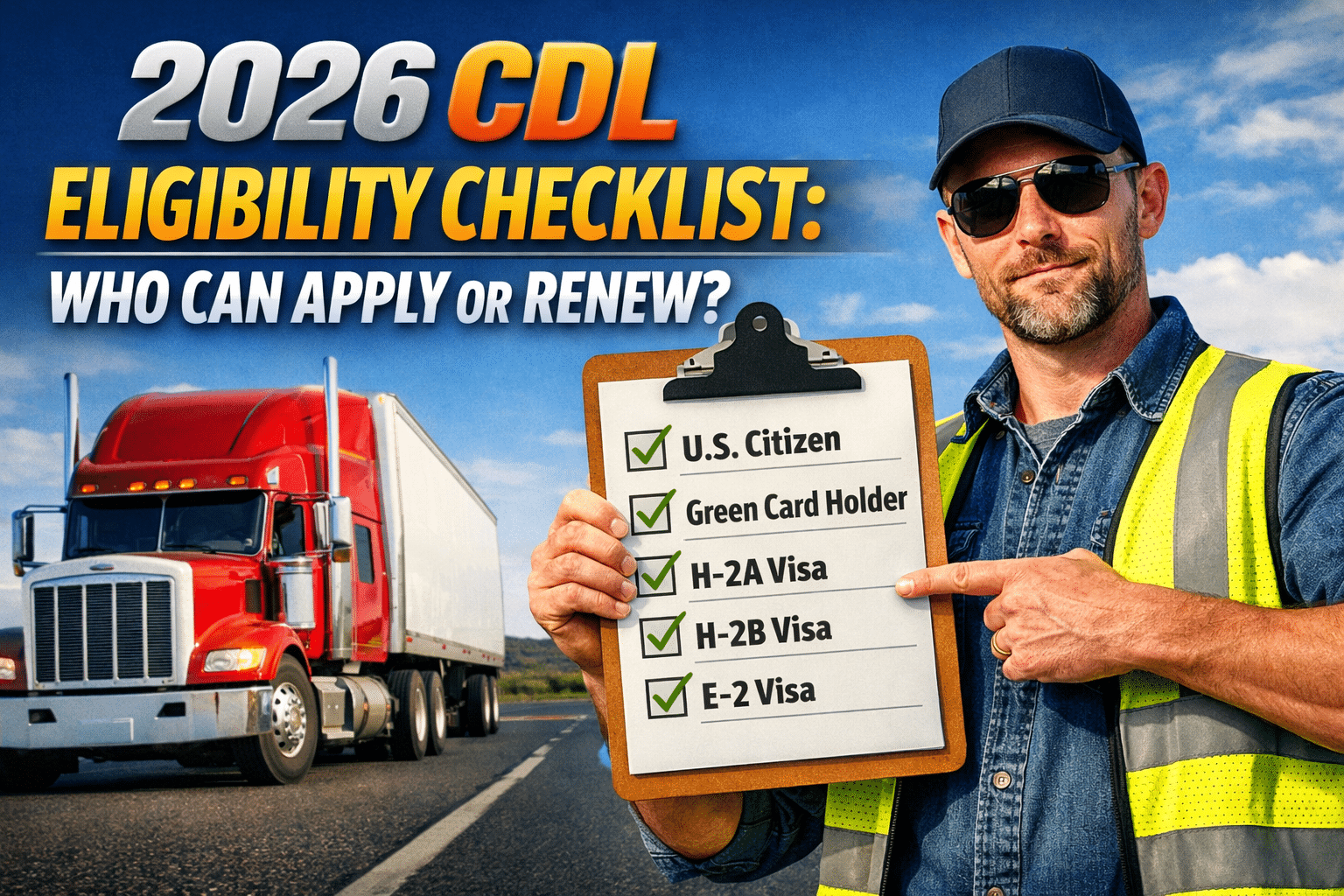
Starting March 16, 2026, the Federal Motor Carrier Safety Administration (FMCSA) is enforcing a new rule that changes which immigrants qualify for a Commercial Driver’s License (CDL).
If you’re planning to apply to get a CDL or or renew yours, this guide explains exactly what the rule means and whether it affects you.
What The New Rule Says
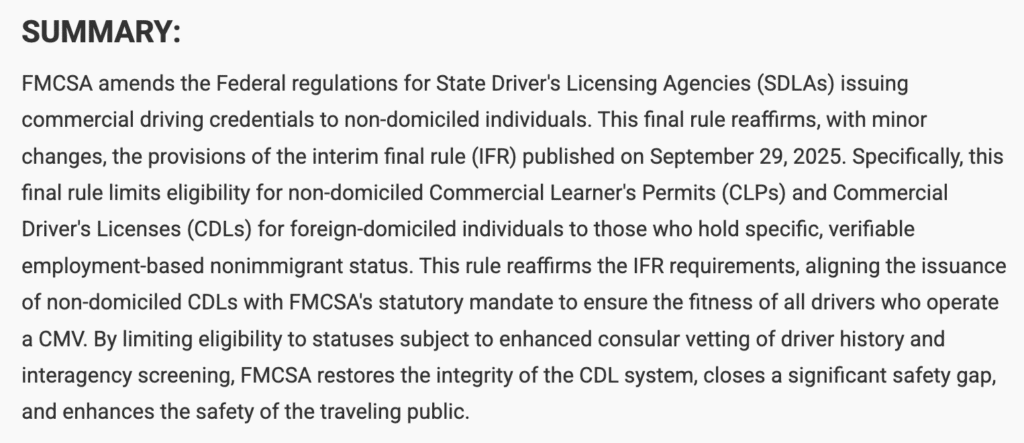
Step-by-Step CDL Eligibility Checklist
STEP 1: Are You a U.S. Citizen or Lawful Permanent Resident?
If YES → You are eligible (no change under this rule).
If NO → Go to Step 2.
STEP 2: Are You Applying as a Non-Domiciled (Foreign) Applicant?
Non-domiciled means you are not legally living in a U.S. state and are in the U.S. under a temporary immigration status.
If Yes → Continue to Step 3
STEP 3: Have You Updated Your License To Remove “Non-Domicile” Status
If your regular driver’s license says “Non-Domicile,” you will need to remove it before applying for a CDL or CLP. If you legally live in any US state you can remove the “Non-Domicile” status by following these steps.
Are you qualified to remove the “Non-Domicile” status from your license?
If YES → Proceed to Step 4.
If NO → You may still be eligible for a CDL or renewal after March 16, 2026.
Step 4: Do You Hold One of the Specifically Approved Visa Types?
Under the new rule, ONLY the following nonimmigrant visa categories qualify:
If YES → Proceed to Step 5.
If NO → ❌ You are NOT eligible for a CDL or renewal after March 16, 2026.
Examples of statuses that are NOT eligible:
- ⛔ Employment Authorization Document (EAD) only
- ⛔ Pending asylum
- ⛔ TPS (Temporary Protected Status)
- ⛔ DACA
- ⛔ Other temporary statuses not listed above
STEP 5: Do You Have Valid Immigration Documentation?
You must present:
If any document is expired → ❌ Not eligible until renewed.
Quick Eligibility Summary
| Status | Eligible After March 16, 2026? |
|---|---|
| U.S. Citizen | ✅ Yes |
| Green Card Holder | ✅ Yes |
| H-2A | ✅ Yes |
| H-2B | ✅ Yes |
| E-2 | ✅ Yes |
| EAD only | ❌ No |
| TPS / DACA / Asylum | ❌ No |
| Other temporary visas | ❌ No |
Final Thoughts On CDL Eligibility For Immigrants
The CDL rule update mainly affects certain non-domiciled drivers, but for most U.S. citizens and permanent residents, the path to getting your CDL remains the same. The key is understanding your eligibility before you begin training or schedule your DMV testing.
If you’re unsure whether the new rule applies to you, take a moment to review the checklist above and confirm your documentation status. Being prepared now can prevent delays later.
If you’re ready to start your CDL training or want to confirm you’re eligible before enrolling, our team can help guide you through the process step by step.
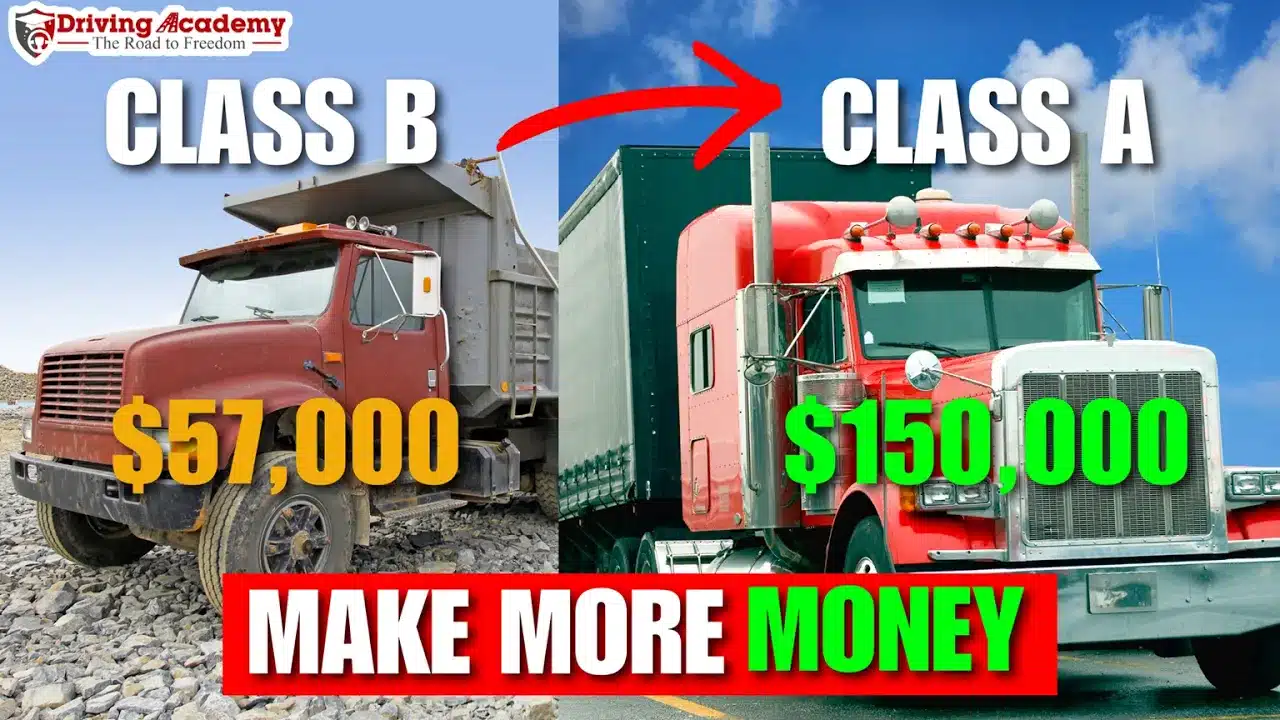
If you already have a Class B CDL, you’re closer than you think to unlocking higher-paying jobs. Upgrading from Class B to Class A allows you to access more job opportunities and significantly increases your earning potential.
In this guide, we’ll break down everything you need to know about the class B to class A CDL requirement, how the upgrade process works, and how the right training program can help you move up faster and with confidence.
Is The Class A CDL Upgrade Worth It?
The short answer is YES.
Upgrading from a Class B to a Class A CDL can be a game-changer. Nationwide pay data from ZipRecruiter shows that Class A drivers earn an average of $81,232 per year, compared to $61,974 annually for Class B drivers. More importantly, a Class A CDL unlocks access to specialized freight, long-haul routes, and owner-operator opportunities where top-performing drivers can generate gross revenues of $350,000 or more per year.

What’s The Difference Between A Class B And Class A CDL?
The difference between a Class B and a Class A CDL goes far beyond the type of vehicle you’re allowed to drive , it directly impacts how much you can earn, the jobs you qualify for, and how far your career can go.
- Class B CDL : It limits you to single, heavy vehicles, such as dump trucks, box trucks, and buses. These jobs are often local and steady, but they typically come with a lower pay ceiling.
- Class A CDL: Class A on the other hand, allows you to operate combination vehicles, including tractor-trailers and rigs pulling heavy trailers. This upgrade immediately opens the door to long-haul, regional, tanker, and specialized freight positions , many of which offer higher pay, better benefits, and more room for career growth.
Class A Vehicles
Tractor-Trailers
Tanker Trailers
Flatbed Trailers
Livestock Carriers
Car Transporters
Class B Vehicles
Box Truck
Dump Truck
School Bus
Garbage Truck
City Bus
Cement Truck
Tanker Truck
Flatbed
Snow Plow
Crane
A major advantage of a Class A CDL is flexibility. With a Class A license, you can legally drive most vehicles covered under Class B, but not the other way around. That means more job options, greater job security, and the ability to pivot as your goals change.
In short, while a Class B CDL can be a solid starting point, a Class A CDL expands your earning potential and career opportunities, making it a smart upgrade for drivers looking to take the next step.
How To Upgrade Class B To Class A?
Upgrading from a Class B to a Class A CDL is not starting over. You already proved you can operate a commercial vehicle. Upgrading is more about adding the right knowledge, endorsements, and road test in a combination vehicle than repeating the entire licensing process. Here’s a clear step-by-step overview of what you’ll need to do to move from Class B to Class A.
How Long Does Upgrading Take: 1 month
What You’ll Need
– Valid Class B CDL License
– Class A CLP (Commercial Learner’s Permit)
– FMCSA Approved CDL School
Steps To Upgrade Your CDL:
Step 1: Pass the Required Class A Permit Tests
You must pass the additional knowledge exams required for Class A. In most cases, that includes Combination Vehicles, Air Brakes and General Knowledge if it has expired.

Step 2 : Complete ELDT training If Required
Under federal regulations, many drivers upgrading from Class B to Class A must complete Entry-Level Driver Training (ELDT) if they did not complete it previously. This must be done at a FMCSA approved CDL school.
Step 3 : Pass The Class A CDL Road Test
The final step is taking the Class A skills test in a combination vehicle. This includes:
- Pre-trip inspection on a tractor-trailer
- Basic vehicle control (parking maneuvers)
- Road test

Class B To Class A CDL Requirement: What You Actually Need
Upgrading from Class B to Class A isn’t just a paperwork change. You’re required to demonstrate that you can safely operate combination tractor-trailer vehicles, which means additional training and testing.
Here’s what the class B to class A CDL requirement typically includes:
1. Valid Class B CDL
You must already hold an active, non-suspended Class B CDL in good standing.
2. Commercial Learner’s Permit (CLP) for Class A
Even though you already have a CDL, federal rules require you to obtain a Class A Commercial Learner’s Permit before testing.
This involves:
- Passing the Class A knowledge test
- Passing any endorsement tests you plan to add (air brakes, tanker, etc.)
3. Entry-Level Driver Training (ELDT) for Class A
Under federal ELDT rules, upgrading from Class B to Class A requires additional behind-the-wheel training specifically for combination vehicles.
This training must be completed through a registered CDL training provider.
4. Class A Skills & Road Test
You must pass the Class A CDL skills test, which includes:
- Pre-trip inspection on a tractor-trailer
- Basic control maneuvers
- On-road driving test in a combination vehicle
One important thing to understand is that you cannot use a Class B vehicle to take a Class A CDL skills exam.
That’s where Driving Academy makes the upgrade process easier. We are not only a certified third-party CDL road testing provider, but we also provide fully equipped Class A vehicles, including air brake-equipped and manual transmission trucks, so you won’t walk away with unnecessary restrictions on your Class A CDL.
A High-Paying Career In Trucking Is Waiting For You
Don’t Miss Out! Save $200 Off Your Tuition Today!
Learn More
Why Driving Academy Is The Smart Way To Upgrade?
Upgrading from a Class B to a Class A CDL is a Big Step, and choosing the right training partner can make all the difference. At CDL Driving Academy, we’ve spent years helping drivers successfully upgrade their CDL, and we’ve built our programs specifically around the needs of working professionals.
Proven Experience With CDL Upgrades
CDL Driving Academy isn’t new to this. We have years of hands-on experience helping students move from Class B to Class A CDL, and we know exactly where drivers tend to struggle. From mastering combination vehicle backing to passing the Class A road test.
Flexible Part-Time & Weekend Training Options
We understand that most drivers upgrading their CDL are already working full-time. That’s why we offer part-time, evening, and weekend programs designed to fit real-life schedules. You don’t have to quit your job or put your income on hold to move your career forward.
Lifetime Job Placement Assistance
Our support doesn’t end when you pass your test.
We offer lifetime job placement assistance, helping graduates connect with reputable carriers and employers long after they earn their Class A CDL. Whether you’re looking for regional, local, or long-haul work, our team is here to help you take the next step.
More Than Training : A Career Upgrade
At CDL Driving Academy, we don’t just help you meet the Class B to Class A CDL requirement, we help you upgrade your career. With flexible scheduling, expert instruction, modern equipment, and long-term job support, you’re not just earning a license, you’re opening doors.
Reasons Drivers Get Stuck Upgrading On Their Own
On paper, the Class B to Class A CDL requirement sounds straightforward. In reality, many drivers struggle because they:
- Don’t have access to a tractor-trailer for testing
- Aren’t trained on Class A-specific backing and turning techniques
- Waste time scheduling tests without proper preparation
- Fail the skills test and have to start over
That’s where choosing the right CDL school makes all the difference.

How Long Does It Take To Upgrade From Class B To Class A CDL?
With the right school, upgrading doesn’t have to take months.
At CDL Driving Academy, many drivers complete their Class B to Class A CDL upgrade in a matter of few weeks, depending on:
- Your availability
- Prior driving experience
- Endorsements added
Drivers with strong prior experience or open availability may complete their upgrade in just a few weeks, while those training part-time typically finish within 4–8 weeks.
With the right training program and access to proper equipment, upgrading from Class B to Class A doesn’t have to drag on , it can be a fast, efficient step forward in your career.
Do You Need Endorsements When Upgrading?
Endorsements aren’t required for the Class B to Class A CDL requirement, but many drivers choose to add them during the upgrade process.
Common endorsements include:
H – Hazardous Materials (HAZMAT): Required to transport dangerous goods like chemicals or flammable liquids.
N – Tank Vehicles: For operating trucks that haul liquids or gases in a tank.
X – Combination of Tank & HAZMAT: This combo endorsement covers both categories.
T – Doubles/Triples: Needed for pulling more than one trailer.
Our team helps you decide which endorsements make sense based on your career goals.
Frequently Asked Questions About Upgrading From A CDL Class B To Class A
Is it easier to get a CDL A if you have a CDL B?
Yes, having a CDL B makes getting a CDL A much easier and faster because you already hold a commercial license. You’ve completed many of the foundational requirements, so the upgrade process is more focused and efficient.
Do I have to start over if I upgrade to Class A?
No. You keep your CDL history and upgrade your license class after passing the Class A tests.
Do I need to redo ELDT training again?
Yes. Federal rules require Class A-specific ELDT training, even if you already completed training for Class B.
Can I work while upgrading?
Yes. Many drivers upgrade while working, especially with flexible training schedules.
Can I fail the Class A test and retake it?
Yes, but proper training significantly reduces the risk of failing.
How Driving Academy Helps You Meet Class B To Class A CDL Requirements
Focused Class A Training
We don’t reteach what you already know. Our instructors focus specifically on:
- Tractor-trailer operation
- Combination vehicle backing
- Highway and city driving with a trailer
- Pre-trip inspections for Class A vehicles
- Access to Proper Equipment
You’ll train and test in real Class A trucks, so there are no surprises on exam day.
Flexible Scheduling
We offer:
- Day, night, and weekend options
- Programs built for working drivers
- Faster upgrade timelines than traditional CDL schools
If you’re ready to move forward, don’t guess your way through the Class B to Class A CDL requirement. Contact us today if you have any questions regarding an upgrage.
Learn More About Going From A Class B To A Class A Commercial Driver’s License
https://www.youtube.com/watch?v=LLHdTptKcAg
Does your license have an “E” restriction on it?
You might be wondering what it means. Or if you’re like most truck drivers with an E restriction, you only find out what it really means when applying for jobs, and suddenly a recruiter tells you that “We can’t hire you because you can’t drive a manual truck.”
Don’t stress. This is one of the most fixable CDL issues, as long as you know what the restriction actually means and what steps remove it.
This guide breaks it down in plain language and focuses on what you really want: how to remove the E restriction.
What Is The E Restriction On A CDL?
An E restriction means you’re restricted to operating vehicles with automatic transmissions (not manual). That restriction shows up on your CDL and can limit you from driving certain trucks, especially in fleets that still use manuals or require manual capability for certain roles.
In plain English: E restriction = automatic-only

How Do You Get An E Restriction On Your License?
Truck drivers get this restriction if they completed their CDL skills test in a vehicle equipped with an automatic transmission.
It doesn’t matter how skilled you are on a manual truck. If you took the CDL test on an automatic truck, you get an automatic restriction.
This happens because you didn’t demonstrate the ability to operate a manual transmission during testing. Therefore, your CDL license is issued with the “E” – No Manual Transmission Equipped restriction.
This policy is based on federal standards established by the Federal Motor Carrier Safety Administration, which require commercial drivers to be tested in the type of vehicle they are certified to operate.
This is why it’s so important to make sure the vehicle you take the test in, is the same type of vehicle that you want to drive in the future.
How To Remove The E Restriction On A CDL?
The way to remove it is simple in concept: you need to train and retest in a manual transmission truck so you can demonstrate that you’re able to operate manual equipment.
What do you need?
– Valid CDL License
– Class A or B commercial truck with a manual transmission
Step 1 : Retake and pass the CDL test in a manual vehicle
That’s it…
Step 2: Get Your License Re-issued By The DMV
Once you pass the road test in a manual vehicle you can go to your local DMV or visit the DMV website and have your license re-issued with the “E” restriction removed.
When it comes to taking the CDL road test to remove the automatic restriction, you only need to complete the driving parts. That’s right, you don’t need to do the Pre-Trip Inspection again!
Once you pass the skills test in a manual truck, the automatic transmission restriction can be removed and you’ll open up more job options, especially with fleets that still require manual capability.
Driving Academy Can Help You With Manual CDL Training
While you technically don’t need to undergo full FMCSA approved CDL training, if you’ve never trained on a manual truck, you’re almost certainly not going to be able to pass your CDL road test. Even if you know how to drive a manual car, driving a manual CDL truck is a whole other beast.
You 100% want to practice driving a manual transmission truck before you re-take the CDL test.
In order to legally practice, you will need to be with a licensed CDL holder who doesn’t have a manual restriction.
That’s where Driving Academy comes in.
At our CDL schools we have training options specifically for getting the “E” restriction removed. These half courses allow you to do all the training you’ll need. It includes time behind the wheel and training in our state-of-the-art truck driving simulator. This simulator lets you practice shifting gears without worrying about blowing the transmission on the open road.
Our expert instructors teach you proper techniques and shifting patterns so on the day of your road test you’re ready to pass with flying colors.
A High-Paying Career In Trucking Is Waiting For You
Don’t Miss Out! Save $200 Off Your Tuition Today!
Learn More
Does the E Restriction Really Matter?
Whether you should remove the E restriction or not depends on your career plan.
The E restriction may not matter if:
- The companies you’re applying to only use automatic trucks
- You’re doing local work where the employer runs automatics
- You’re fine staying in the same job long-term
The E restriction matters a lot if:
- You want the most job options
- You’re applying to fleets that still use manuals
- You’re aiming for certain local/regional roles where manual is common
- You want to stop sweating “manual required” on job postings
If you’re seeing manual requirements in your target jobs, removing the restriction is usually worth it.
Get The E Restriction Removed With Driving Academy
If you want to remove your automatic restriction without fear of failure, Driving Academy can help you map out the fastest path based on your experience level and timeline.
Click the button below to contact us, and we’ll tell you what you need, how long it will take, and which training option makes the most sense for your goal.
With Driving Academy, you can get rid of the “E” restriction and continue down your Road To Freedom.
Learn More About Getting Rid Of The E Restriction On Your CDL License
https://www.youtube.com/watch?v=8Qq1BgAIxvw
You’ve always pictured yourself behind the wheel of a big rig, making a living on the open road. You start looking into how to get your CDL, feeling excited about the next chapter… and then it hits you: that DUI conviction from your past.
Suddenly, the questions start flooding in: “Can I still get my CDL after a DUI?”
Yes, you can still get a CDL even if you have a DUI on your record. However, it’s not quite that simple…
Here’s the reality: a DUI doesn’t automatically end your chances of becoming a commercial driver. But it does make things a little more complicated. You’ll need to understand the federal rules, state-specific restrictions, and waiting periods that apply before you can get back behind the wheel.
In this guide, we’ll break everything down clearly. From how a DUI affects CDL eligibility to what steps you can take to rebuild your path toward a trucking career.
How a DUI Impacts CDL Eligibility?
Driving under the influence (DUI) is a serious offense that can have long-term consequences, especially for anyone hoping to obtain or keep a Commercial Driver’s License (CDL). Since CDL holders operate large and potentially dangerous vehicles, both federal and state laws impose strict standards to ensure road safety.
A DUI can impact CDL eligibility differently depending on where, when, and how it occurred. Below, we’ll explore the major factors that determine whether you can still qualify for or restore a CDL after a DUI.
Our CDL school admission advisors can review your case and explain your options.
Approximate Blood Alcohol Content (BAC)In 1 Hour, For Men
| Weight (lbs) | 1 Drink | 2 | 3 | 4 | 5 | 6 |
|---|---|---|---|---|---|---|
| 100 | 0.06 | 0.12 | 0.18 | 0.24 | 0.30 | 0.36 |
| 120 | 0.05 | 0.10 | 0.15 | 0.20 | 0.25 | 0.30 |
| 140 | 0.04 | 0.08 | 0.11 | 0.15 | 0.19 | 0.23 |
| 160 | 0.03 | 0.06 | 0.09 | 0.11 | 0.14 | 0.17 |
| 180 | 0.03 | 0.05 | 0.08 | 0.10 | 0.13 | 0.15 |
| 200 | 0.03 | 0.05 | 0.07 | 0.09 | 0.11 | 0.14 |
| 220 | 0.02 | 0.04 | 0.06 | 0.08 | 0.10 | 0.12 |
| 240 | 0.02 | 0.04 | 0.06 | 0.08 | 0.10 | 0.12 |
Color Key:
Low
Caution
Impaired
Legally Intoxicated
Striped: CDL disqualification risk (BAC ≥ 0.04)
CDL Disqualification Periods for DUI Convictions
| Type of DUI | CDL Disqualification Period |
|---|---|
| DUI in personal vehicle | 1 year |
| DUI in commercial vehicle | 1 year (minimum) |
| DUI while hauling hazardous materials | 3 years |
| Second DUI (any type) | Lifetime disqualification (possibility of reinstatement) |
| Third DUI | Lifetime disqualification |
Note: Lifetime disqualification may allow reinstatement after 10 years for second DUI, depending on state.
Personal Vehicle DUI vs Commercial Vehicle DUI
The law draws a clear line between DUIs committed in personal vehicles and those in commercial vehicles.
Personal Vehicle DUI:
If your DUI happened in your own car (not a commercial truck), you might still qualify for a CDL, though your regular driver’s license must first be reinstated.
Commercial Vehicle DUI:
If you were operating a commercial vehicle at the time of the DUI, penalties are much stricter. A conviction often leads to at least a one-year CDL disqualification (or longer for hazardous materials or repeat offenses).
| Personal Vehicle DUI | Commercial Vehicle DUI | |
|---|---|---|
| Blood-Alcohol Content (BAC) Limit | 0.08% | 0.04% |
0.04% BAC for Commercial Vehicle DUI
BAC Limits for CDL Holders vs Non-CDL Drivers
According to the Federal Motor Carrier Safety Administration (FMCSA), CDL holders are held to stricter standards across the board. While most regular drivers face a DUI at 0.08% BAC, for commercial drivers, the limit is 0.04%, and that applies even if you’re off the clock.
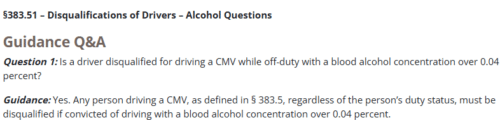
First DUI vs Multiple DUI Convictions
A first-time DUI might not permanently ruin your chances of obtaining a CDL, but multiple DUI convictions will.
- First Offense: Usually results in a one-year suspension of your CDL eligibility.
- Second Offense: Usually results in lifetime CDL disqualification under federal law (possible reinstatement after 10 years.)
This is why maintaining a clean record after a first DUI is absolutely essential.
Does a DUI Automatically Disqualify You From a CDL?
No, a DUI does not automatically disqualify you forever. However, you must complete all court-ordered requirements, serve your suspension, and re-qualify under your state’s Department of Motor Vehicles (DMV) or Motor Vehicle Commission (MVC) guidelines. Even after reinstatement, FMCSA Clearinghouse records and employer policies still affect hiring
If you’ve had a DUI and want to pursue a CDL career, feel free to contact us now.
Steps To Get A CDL After A DUI
While the specific paperwork or program names might differ, the overall steps are usually the same across the U.S. We’ll use New Jersey as an example here.
Note: CDL laws can change, so always check your state’s official licensing website (for example, NJ MVC – Commercial Driver License) for the most up-to-date information and requirements.
1.Restore Your Regular Driver’s License
You must first complete all court-ordered suspensions and pay all fines related to your DUI.
2.Complete DUI Programs or Court Requirements
Most states require DUI offenders to complete an approved alcohol education or treatment program before applying for a CDL.
3.Apply for a Commercial Learner’s Permit (CLP)
After reinstatement, apply for a CLP. You’ll need to pass a written knowledge test and meet medical certification standards.
You must undergo a DOT physical exam by a certified medical examiner to ensure you meet health and safety standards.
5.CDL Testing & Employer Screening
Once eligible, you’ll complete your skills and road tests. Employers may conduct background checks and review your driving record, so transparency about your DUI is vital.
Getting back on the road
Can You Get A CDL After A DUI?
So here comes the big money question, Can you get a CDL after a DUI?
While a DUI can be a serious roadblock, it doesn’t always end your career in commercial driving. The key factor is how long it’s been since the conviction and whether it was a repeat offense.
Can You Get A CDL After A First DUI?
Yes, after serving your disqualification period and fulfilling all legal and reinstatement requirements, you can apply for a CDL again. Most states allow reapplication one year after conviction if your regular license has been restored.
Can You Get A CDL After Multiple DUIs?
Typically, NO.
Federal law mandates a lifetime CDL disqualification after two or more DUI offenses. Some states offer rehabilitation or reinstatement programs after 10 years, but these are rare and often require extensive legal documentation.
Can You Get A CDL After A DUI In A Commercial Vehicle?
A DUI in a commercial vehicle is treated more harshly than one in a personal vehicle. Expect a minimum one-year disqualification, or three years if transporting hazardous materials at the time.
How Long After A DUI Can You Get A CDL?
The waiting period depends on both federal guidelines and your state’s specific laws.
Federal Waiting Period Requirements
Under 49 CFR § 383.51, CDL disqualifications last:
- 1 year for first DUI offense (commercial or non-commercial vehicle)
- 3 years if transporting hazardous materials
- Lifetime for a second DUI
Permanent Disqualificatin Scenarios
You may be permanently barred from holding a CDL if:
- You have two or more DUI convictions.
- You were convicted of a felony involving a commercial vehicle.
- You refused a BAC test during a commercial stop
Note: These Permanent scenarios under federal law can still mean eligible for reinstatement after 10 years, if allowed by the state.
Federal Regulations For CDL Holders With DUIs
Lifetime DisqualificatiOn Rules
Federal law (49 CFR § 383.51) permanently bans CDL drivers with two or more DUIs. This includes both personal and commercial vehicle DUIs.
Federal Regulations Around Hazmat & Background Checks
When it comes to CDL endorsements, some carry extra scrutiny — especially Hazmat (H) endorsements.
For hazardous materials, the Transportation Security Administration (TSA) requires every applicant to pass a Security Threat Assessment (STA), which includes fingerprinting and a federal background check under 49 CFR §1572.103.
A DUI is not specifically listed as a disqualifying offense under federal hazmat regulations. However, if the DUI involved felony charges, use of a commercial vehicle, or hazardous materials, it could still be reviewed as part of the broader security threat assessment.
State-by-State CDL Rules For DUI Convictions
While federal rules create a foundation, state regulations add important details.
NJ Motor Vehicle Commission (MVC):
- First Major Offense: A DUI conviction in any vehicle or a .04% BAC in a CMV results in a 1-year CDL disqualification. (Basic license suspension ranges from 3–12 months).
- Hazardous Materials: Disqualification is increased to 3 years if transporting hazmat at the time of the offense.
- Second Major Offense: Results in a permanent (lifetime) revocation of the CDL and a 2-year suspension of the basic license.
- Federal Alignment: NJ explicitly follows the federal tier system for all major commercial disqualifications.
NY Department of Motor Vehicles (DMV):
- First Major Offense: Driving with a .04% BAC in a CMV or any DUI conviction triggers a loss of CLP/CDL for at least 1 year.
- Hazmat Exception: Increased to a 3-year disqualification if the driver was hauling hazardous materials.
- Lifetime Ban: A second major offense (including refusal to take a chemical test) results in lifetime disqualification.
- Detection Rule: Any detectable amount of alcohol under .04% results in an immediate 24-hour out-of-service order.
CA Department of Motor Vehicles (DMV):
- First Major Offense: The CA Commercial Driver Handbook mandates a 1-year disqualification for a BAC ≥ .04% in a CMV, a DUI in any vehicle, or leaving the scene of an accident.
- Hazmat Exception: The ban is extended to 3 years if the offense occurred in a placardable CMV.
- Second Major Offense: Results in lifetime disqualification.
- Additional Triggers: Certain felonies and chemical test refusals also trigger these same disqualification periods.
TX Department of Public Safety (DPS):
- First Major Offense: Driving under the influence, leaving the scene of an accident, or committing a felony with a vehicle results in at least a 1-year disqualification.
- Hazmat Exception: Increased to 3 years if transporting hazardous materials.
- Subsequent Offenses: A second major offense triggers lifetime disqualification.
- Implied Consent: Texas lists a .04% BAC in a CMV and any test refusal as absolute disqualifying bases.
FL Highway Safety and Motor Vehicles (FLHSMV):
- First Major Offense: A BAL (Blood Alcohol Level) of .08% in a personal vehicle or .04% in a CMV triggers a 1-year CDL disqualification.
- Subsequent Offenses: A second major violation results in lifetime disqualification.
- Administrative Action: Florida uses “Administrative Disqualification,” meaning the CDL can be suspended based on the arrest/test refusal record before the court case is even finalized.
- Permanent Bar: Certain felonies involving a motor vehicle and controlled substances result in a permanent lifetime ban with no possibility of reinstatement.
- Major Offense (DUI/Refusal): Conviction for OVI (Operating a Vehicle Impaired) in any vehicle or a .04% BAC in a CMV results in a 1-year disqualification for a first offense.
- Hazardous Materials: If the violation occurs while hauling hazmat, the disqualification is 3 years.
- Second Offense: A second major offense triggers a lifetime disqualification.
- Immediate Action: Any detectable amount of alcohol results in a 24-hour out-of-service order.
Montana Department of Justice (MVD):
- First Major Offense: Driving any vehicle under the influence or a .04% BAC in a CMV leads to a 1-year CDL suspension.
- Hazmat Exception: Increased to 3 years if transporting placardable hazardous materials.
- Subsequent Offenses: A second major offense results in lifetime disqualification, though Montana law allows for potential reinstatement after 10 years if specific state rehabilitation requirements are met.
- General Rules: .04% BAC in a CMV or DUI in any vehicle triggers a 1-year loss of CDL/CLP (3 years for hazmat).
- Lifetime Ban: A second major offense results in a lifetime disqualification.
- School Bus Special Rule: Refusing a test or a DWI conviction in any vehicle results in a 10-year disqualification specifically from operating a school bus.
- Zero Tolerance: Any detectable alcohol under .04% results in a 24-hour out-of-service period.
Indiana Bureau of Motor Vehicles (BMV):
- First Offense: An OVWI (Operating a Vehicle While Intoxicated) conviction or a .04% BAC in a CMV results in a 1-year disqualification (3 years for hazmat).
- Second Offense: Results in a lifetime disqualification. Indiana allows a petition for reinstatement after 10 years if a state-approved rehabilitation program is completed.
- No Hardship Licenses: Indiana law explicitly prohibits “Specialized Driving Privileges” (hardship licenses) for the CDL portion of a driver’s license.
SCDMV Commercial Driver Manual:
- Standard Disqualification: DUI in any vehicle or .04% BAC in a CMV results in a 1-year suspension (3 years for hazmat).
- Second Offense: A second conviction for DUI or chemical test refusal results in a permanent (lifetime) disqualification.
- Implied Consent: Refusing a breathalyzer test in any vehicle triggers an automatic 1-year CDL suspension, regardless of whether the criminal charge is later dismissed.
- Major Offenses: Conviction for DUII (Driving Under the Influence of Intoxicants) in any vehicle or .04% BAC in a CMV leads to a 1-year disqualification.
- Diversion Prohibition: Unlike standard drivers, CDL holders are ineligible for diversion programs to avoid a DUII conviction on their record.
- Lifetime Rules: Two major offenses result in a lifetime ban. Reinstatement may be considered after 10 years, unless the offense involved a felony related to controlled substances, which carries a lifetime ban with no possibility of reinstatement.
Idaho Transportation Department (ITD):
- First Hit: DUI or a .04% BAC in a CMV results in a 1-year disqualification (3 years for hazmat).
- Second Hit: A second major offense results in lifetime disqualification.
- Reinstatement: Reinstatement after a lifetime ban (after 10 years) requires a clean driving record for the preceding 3 years and completion of specialized defensive driving and professional truck driver courses.
- First Offense: A DUI conviction or .04% BAC in a CMV triggers a 1-year disqualification (3 years if hauling hazmat).
- Aggravated DUI: Certain combinations of DUI convictions can lead to a 3-year revocation of all driving privileges.
- Lifetime Ban: Two major offenses result in a lifetime disqualification.
- Administrative Per Se: Arizona’s “Admin Per Se” law allows the MVD to suspend the CDL immediately upon a failed test or refusal, independent of the court case.
- Major Violations: DUI in any vehicle, .04% BAC in a CMV, or chemical test refusal results in a 1-year disqualification (3 years for hazmat).
- Subsequent Offenses: A second major offense triggers lifetime disqualification.
- Out-of-Service: Delaware defines a “measurable amount of alcohol” as .02% to .04%, which triggers an immediate 24-hour out-of-service order.
Factors That Affect Getting A CDL With A DUI
Several factors influence your CDL eligibility after a DUI:
- Time Since the Conviction – The older the DUI, the better your chances.
- Number of Offenses – Multiple DUIs nearly always result in disqualification.
- Vehicle Type – Commercial vehicle DUIs carry harsher penalties.
- Employer Policies – Some trucking companies have zero-tolerance policies.
- Insurance Factors – High-risk drivers face higher premiums or denials.
Frequently Asked Questions About DUI
Can trucking companies hire drivers with a DUI?
Yes, but it depends on the company’s insurance and safety policies. Many companies require at least 5 years since the DUI before hiring.
Will a DUI show on my CDL record forever?
The DUI itself may remain visible on your motor vehicle record for up to 10 years, but federal CDL disqualifications are permanent.
Can I get a hazmat endorsement after a DUI?
Possibly, DUI alone doesn’t automatically disqualify hazmat, but you usually must wait up to 7 years and pass a TSA background check.
Can I transfer my CDL to another state after a DUI?
You can, but your DUI record will transfer with you through the National Driver Register (NDR).
Getting Back on the Road Starts With Driving Academy
Rebuilding your career after a DUI takes determination, but with the right guidance and training, it’s absolutely possible. That’s where Driving Academy comes in.
At Driving Academy, we don’t just teach you how to pass your CDL test; we help you rebuild confidence and create a real path forward in the trucking industry. Our certified instructors, flexible class schedules, and hands-on training give you everything you need to return to the driver’s seat stronger than ever.
Whether you’re earning your first commercial license, or expanding your endorsements, we tailor our programs to fit your goals. With affordable payment plans, evening and weekend classes, and training available seven days a week, it’s easier than ever to move forward, no matter where you’re starting from.
And our support doesn’t stop once you pass your test. We offer lifetime job placement assistance, connecting graduates with reputable carriers that believe in second chances and value safe, responsible drivers.
If you’re ready to get back on the road the right way, with expert training, flexible scheduling, and long-term career support, Driving Academy is here to help you take the next step toward your Road to Freedom.
Learn More About Getting A CDL With A DUI
If you’re searching “top trade schools near Mercer County”, you’re probably trying to answer a practical question:
What can I train for that actually turns into a better career and bigger paycheck?
Whether you’re in Hamilton, Ewing Lawrence, Princeton or East Windsor, Mercer County has a lot of working adults who are juggling jobs, family, and bills. So the “best” trade school isn’t the fanciest one like a Princeton University or TCNJ, it’s the one that gives you hands-on training, a schedule you can actually attend, and a clear career when you graduate.
In this guide, we’ll compare nearby options, and along the way, we’ll also show you one trade path Mercer County residents often overlook that can be one of the most direct: getting a CDL.
What “Top Trade School” Really Means?
Before you pick a “top” trade school near Mercer county, you’ve got to make sure it’s actually the right fit for you: your schedule, your budget, your learning style, and the kind of job you want on the other side. These are the important criteria most people use to decide whether a vocational program is truly worth it:
- Job-aligned: training matches what employers actually hire for
- Hands-on: you practice real skills, not just sit in lectures
- Schedule-friendly: realistic for working adults (days/evenings/weekends, if available)
- Transparent on costs: clear tuition + fees + what’s included
- Well-reviewed locally: consistent feedback on instructors and training quality
We’ll use these criteria to evaluate the top 5 schools on our list below.
Top Trade Schools Near Mercer County, NJ
Driving Academy
Trenton, NJ, 08609 Website
Driving Academy was built to create a better learning environment for students who want a real career upgrade through driving. Founded by Jonathan, who grew up in a family of teachers and professional CDL drivers, this Trenton CDL school focuses on fundamental education first with a structured teaching system designed to help students get on the Road to Freedom.
Why Mercer County Students Choose Driving Academy:
- Hands-on Training : Behind-the-wheel practice + skills-based instruction so you’re training for the real test and real job and not only just classroom concepts.
- Schedule fit for working adults: Weekend and evening classes so students can train while keeping your current job.
- Affordable + transparent entry cost: $500 down to start, with payment plans available so you don’t need a huge upfront payment.
- Career-aligned outcome: A clear path to earning your CDL and moving into higher-paying driving opportunities. School also comes with free job placement.
- Well-reviewed & trusted: Rated 4.9 out of 5 on Google (based on Google reviews), which is a strong signal for training quality and student experience.
Driving Academy in Trenton checks the exact boxes mentioned above for definition of a top trade school. For people in Mercer County, NJ, getting a CDL is often one of the most direct “career change” trades. This is especially for people coming from delivery, taxi/ride-share, warehouse work, or other hourly roles.
Innovate Salon Academy
Trenton, NJ, 08609 Website

Innovate Salon Academy- Ewing is a cosmetology-focused school option that Mercer County residents often consider when they want a skill-based career working directly with clients. For the right person, beauty is a real trade: it’s hands-on, performance-based, and can grow as your skills and clientele grow.
Why Mercer County Students Choose Innovate Salon Academy:
- Hands-on environment: salon-style training and practical skill development
- Client-facing career path: a good fit if you enjoy working with people
- Licensing direction: training built around preparing for cosmetology requirements
- Local convenience: Ewing is a manageable commute for many Mercer County towns
Lincoln Tech
Paramus, NJ 07652 Website
Lincoln Tech is a well-known technical school with programs across multiple skilled trades. It’s commonly considered by students who want a structured campus environment and are choosing between fields like automotive, HVAC, electrical, welding, and more.
Why Mercer County Students Choose Innovate Salon Academy:
- Trade variety: multiple options if you’re still narrowing down a direction
- Career-focused programs: designed around job-ready technical skills
- Structured learning format: works well for students who prefer a campus-style schedule
- Long-term pathway: good for people planning to grow within a trade over time
Fortis Institute
Lawrenceville, NJ 08648 Website
Fortis Institute is a private career school that offers structured programs aimed at specific job paths. Some Mercer County residents consider it when they want a guided learning environment and a defined program format.
Why Mercer County Students Consider Fortis Institute:
- Structured program path: clear expectations and training format
- Career-focused: designed around specific career outcomes
- Private-school alternative: for students who want an option outside county-based programs
- Convenient for some schedules: depending on program timing and availability
Fortis Institute can be worth looking at if you want a nearby private career school setting and a structured pathway into a new career.
Hoffman Dental Institute
Pennington, NJ 08534 Website

Hoffman Dental Institute is a career-focused training option for students who want a practical path into healthcare through dental assisting. It’s typically considered by career changers who want a program that’s structured, skill-based, and tied to real clinic roles.
Why Mercer County Students Consider Hoffman Dental Institute:
- Healthcare career track: dental assisting is a common “entry point” into clinic work
- Hands-on skill development: built around practical tasks you’ll use in a dental office
- Clear job direction: training aimed at helping students become employable in dental practices
- Career-change friendly: a good fit for adults who want a structured, job-aligned program
Hoffman Dental Institute can be worth looking at if you want a healthcare support role with a clearer, more direct training-to-job pathway than many longer academic programs.
National Average Pay For Common Trade Paths
A smarter way to compare career paths in Central New Jersey is to look at time-to-earn: how quickly a program can realistically get you job-ready and into a role that pays better than what you’re doing now.
Here are a few common trade-school-style paths Mercer County residents consider, plus the typical jobs they lead to:
CDL Driver
HVAC
Electrical
Welding
Cosmetology
Dental
CDL Driver
Typical job title: Class A CDL Driver
National average pay: $78,621/year (ZipRecruiter)
Typical time to finish program: 3–7 weeks for full-time programs (can be longer part-time)
HVAC
Typical job title: HVAC Technician
National average pay: $59,678 (Ziprecruiter)
Typical time to finish program: 6–12 months for many certificate programs (longer for degree/apprenticeship paths)
Electrical
Typical job title: Electrician
National average pay: $61,391/year (Ziprecruiter)
Typical time to finish program: Full apprenticeships typically take 2-4 years
Welding
Typical job title: Welder
National average pay: $46,302/year (ZipRecruiter)
Typical time to finish program: 6–18 months is a common training range
Cosmetology
Typical job title: Cosmetologist
National average pay: $50,190/year (Indeed)
Typical time to finish program: Often 10 months full-time; NJ licensing commonly requires 1,200 hours
Dental
Typical job title: Dental Assistant
Average pay: $48,069/year (Indeed)
Typical time to finish program: 6–12 months for certificate/diploma programs (often longer for associate degree)
Why Trade School Is A Strong Career Move in New Jersey
Mercer County is surrounded by dense job markets:industrial, logistics, healthcare, construction, and transportation where employers value hands-on skills. In many skilled trades, the fastest way to start earning is not by collecting more degrees, but by getting trained, certified, and job-ready.
Trade programs can be attractive because they often offer:
- Faster completion (weeks to months, not years)
- Clear, practical skills that map to real jobs
- Flexible scheduling options (evenings/weekends in many programs)
- Certifications or credentials that employers recognize
If your goal is to change your career direction quickly, trade school can offer a realistic path, especially if you choose a program aligned with local hiring demand.
How To Choose The Right Trade School
Here’s the truth: most people don’t pick the “wrong” trade school because they’re lazy. They pick the wrong one because they only look at the homepage… and not the details that actually affect your day-to-day life.
So before you apply anywhere, use this simple 10-minute checklist.
1) Start with your schedule (because life doesn’t pause)
Ask yourself:
- Can you train evenings or weekends?
- Do you need a program that lets you work while you train?
- Can you realistically commute there consistently?
Pro tip: The “best” school on paper is useless if you can’t show up consistently.
2) Confirm it’s hands-on (not just theory)
This matters more than people think.
Ask:
- How much time is actual practice vs classroom?
- Will you be working with real equipment?
- What does a typical week look like?
If the answer is vague, that’s a red flag.
3) Make the cost clear (before you fall in love with the program)
Don’t just ask “How much is it?”
Ask:
- What’s included in tuition?
- Are there extra fees (testing, materials, uniforms, etc.)?
- Are payment plans available?
- What’s the upfront amount needed to start?
A good program will give you a straight answer.
4) Ask what happens after graduation
You’re not paying for training just to “finish a class.” You’re paying to level up your career.
Ask:
- Do they offer job placement support?
- Do they help with resume/interview basics?
- Do they have hiring partners or employer connections?
Even small support makes a difference.
FAQ
Can I do trade school while working full-time?
Yes,many career changers do. The key is picking a program with a schedule that matches real life (evenings/weekends) and clear attendance expectations.
If you’re looking at CDL training specifically, Driving Academy offers weekend and evening classes, which is why it’s a popular option for students who want to keep their current job while training.
What’s the fastest trade path to start earning more?
It depends on your strengths and what kind of work you want. But for many career changers who want a direct path, CDL training is one of the most straightforward routes because it’s skills-based and job-aligned.
If you’re looking for a faster timeline, Driving Academy offers top CDL education to help you become a certified truck driver in as little as 4 weeks, which is why it’s a popular option for students who want to move quickly into a higher-paying driving career.
What trade is best if I want a job with steady demand in Central Jersey?
If you’re looking for steady demand, focus on trades tied to infrastructure and logistics, things that don’t stop when the economy slows down. That includes transportation, skilled maintenance roles, and technical services. The “best” choice depends on whether you prefer.
What should I ask about cost before I enroll?
Ask for the real total cost: tuition, fees, and what’s included. Also ask what it takes to start.
If affordability is a concern, Driving Academy lets students start with $500 down and offers payment plan options, which can make training more realistic for working adults.
What happens after I finish training?
Some programs offer more support than others. Ask if they provide job placement help, hiring guidance, or employer connections.
Driving Academy includes free job placement, which is helpful if you want to finish training and move directly into job opportunities without guessing your next step.
Final Takeaway
If you’re searching for the top trade school in or near Mercer County, you’re already doing the right thing! you’re looking for a real career upgrade.
Now your job is simple:
- Pick a trade you can commit to
- Choose a program that fits your schedule and budget
- Make sure the training is hands-on
- Confirm it leads to real job outcomes
Use the checklist above, compare the five Trenton area vocational schools, and you’ll make a decision you won’t regret.
Getting your CDL is a big win. Then reality hits: who’s going to hire a brand-new driver with little or no experience?
A lot of companies want time behind the wheel before they’ll even talk to you. But there are still major carriers that hire new graduates every year, and some of them offer training, tuition payback, and home time options that can make your first year smoother.
A High-Paying Career In Trucking Is Waiting For You
Don’t Miss Out! Save $200 Off Your Tuition Today!
Learn More
What To Look For In Your First CDL Job (Before You Apply)
Picking your first trucking company is a lot like picking your first apartment. You can make almost anything work for a while, but the wrong choice can get old fast.
Before you focus on names, focus on company fit.

1) Confirm they hire new CDL grads
This sounds obvious, but it’s where many new drivers get stuck. Some jobs require a few years of experience, even if the ad feels “entry-level.”
Most job ads for companies that hire new drivers will literally say something along the lines of “no experience needed” or “new drivers welcome.” You can also sometimes find this info by looking on the company website. If they have apprentice or training programs that means they almost certainly hire drivers out of CDL school. You can also check on forums like Reddit where people will share their own hiring experiences.
2) Understand how you’ll get paid (and what that really means)
Pay isn’t one simple number. Different companies use different pay structures, and the structure changes how your week feels.
Common pay types include:
- Pay per mile: Drive more, earn more. Great for high-mile drivers, but some times you can run into slow weeks.
- Salary: One consistent paycheck. More predictable and steady work regardless of how many miles you drive.
- Hourly pay: Time-based pay is easier to understand, but it depends on steady hours. This is most often for local work.
Before you choose, try to picture your first few months. Are you okay with long miles and variable weeks, or do you want steady pay while you learn the job?
3) Compare benefits, not just the paycheck
Benefits can change the total value of a job, especially if you have a family or need coverage quickly.
Bigger companies often offer more benefits because they can afford larger packages. The tradeoff is that big carriers also tend to have more rules, systems, and structure.
Smaller companies can feel more independent and flexible, but the benefits might not be as strong.
Benefits vary widely, including:
- Health insurance and dental
- Vacation pay
- Retirement plan
- Disability and Life insurance
- Rider programs (bringing a spouse along)
- Pet policies (bringing your pet in the truck)
When do trucker benefits start
Some companies enroll you day one. Others make you wait 90 days, or even a year. That waiting period can make a big difference for some people, so ask about it early.
4) Check the company’s safety rating
Safety scores aren’t just for the company’s reputation. They can shape your day on the road.
You can look up a carrier’s safety record using the DOT’s public info. Using the DOT website and the company’s DOT number, you can find a company’s Safer score .
A low safety rating can point to two problems:
- The company may not invest much in equipment, which can lead to more violations.
- Drivers may get pulled over more often. DOT officers can look up the company DOT number, see a pattern of violations, and decide to inspect that truck more closely.
In interviews, many carriers say they have “new equipment.” A safety score gives you a way to verify how the company operates.
5) Choose local, regional, or over-the-road
Most truck driving jobs fall into one of three buckets:
- Local: Home daily, often paid hourly.
- Regional: In a set region, usually home about once a week.
- Over-the-road (OTR): Takes you across the country, home about once a month.
Each has pros and cons. The key is to decide what you can live with right now, not what sounds cool on day one.
6) Ask about bonuses and CDL school tuition payback
Bonus structures vary a lot. Sign-on bonuses can look good on paper, but you should know how they’re paid.
Some common bonus types:
- Sign-on bonus: When you join a company they may offer a set amount of money on top of your salary. Sometimes it’s paid right when you start and sometimes it’s paid in chunks.
- Stock options: Some larger companies will offer shares of stock in the company just for signing on
- Tuition reimbursement: Get paid back for CDL school. This is often paid over time as you stay with the company.
Tuition reimbursement can be an especially good deal if you paid for truck driving school yourself.
For example, if you paid $5,000 for CDL tuition and the company pays it back while you earn your normal pay, you basically get free CDL school at no cost to you!
Lifetime Job Placement Assistance
When You Train Here, We Help You Find Your Next CDL Job Until The Day You Die!
Learn More
5 Trucking Companies That Hire Brand-New CDL Drivers
Below are five trucking companies that hire truck drivers fresh out of CDL school. Each one has a different perks and company culture. These are a good starting point for new CDL drivers looking to get their first job.
1) Schneider
Schneider is hard to miss on the road with its well-known orange trucks. It’s also one of the bigger names in trucking, as a long-standing, stable company. This size and stability make it easier for them to invest in new CDL drivers.
What Schneider offers new drivers:
- Tuition reimbursement up to $7,000
- A large company structure with strong infrastructure
- Investment in equipment and safety, with high safety rankings
- Several job types and divisions
Schneider offers a range of opportunities, including:
- Intermodal (container work)
- Tanker
- Dry van
- Regional, local, and OTR options (depending on location and openings)
If you want choices later, that matters. Starting at a company with multiple divisions can give you room to move without changing employers.

2) Prime Inc.
Prime Inc. (not to be confused with Amazon Prime) is one of the largest transportation companies on the road. While it gets mixed opinions in trucking circles, its size and demand for drivers make it a top landing spot for new CDL graduates. Prime’s big selling point is training.
What Prime offers new drivers:
- An extensive 40,000-mile training program
- Orientation and time with a driver trainer before solo driving
- Modern equipment, with the company cycling out older trucks
- Multiple trailer types and freight options
The training structure is the main reason a new driver might choose Prime. If you don’t feel confident solo yet, part of their program gives you extra miles with a trainer who can help you build confidence before you’re on your own.

3) Roehl Transportation
Roehl Transportation is a strong option for drivers who care about home time flexibility, especially early in their career.
What Roehl offers new drivers:
- Sign-on bonus up to $6,000
- Flexible home time options
- Faster path to getting your own truck compared to some carriers
Roehl offers 7 days out, 4 days home. If you’re trying to balance earnings with real time off, that kind of schedule can be appealing.
4) Swift Transportation
Swift is one of the biggest carriers in the US, and size has a practical advantage — especially for rookie drivers.
What Swift offers new drivers:
- Tuition reimbursement (if you paid for your CDL)
- A huge footprint with many terminals, which can reduce downtime
- Fast, efficient hiring and onboarding
- Career growth options beyond being a solo driver
Swift’s size can help in moments that frustrate drivers at smaller companies. More terminals and infrastructure can mean less time sitting if issues come up on the road.
Training with a trainer can be up to four weeks, and once you pass the tests and the company is comfortable with your skills, you can be assigned your own truck. This company is a good fit if you want to start working quickly and have room to grow.
5) Maverick Transportation
Maverick is last on the list but certainly not least. It’s a company that might scare you. The reason is simple: flatbed work. If you’re fresh out of CDL school, you likely haven’t done much training on flatbed trailers. What’s scary is that it’s not only driving, it’s also securing the load and handling job sites.
What Maverick offers new drivers:
- Tuition reimbursement of $5,000 (paid over time)
- Flatbed specialization
- Paid experience learning flatbed tasks as a new driver
- Strong focus on safety and equipment, with top safety ratings
- A medium-sized company feel, more personal than mega carriers
Flatbed trucking can pay better because it includes more physical work and responsibility than just bumping docks. It’s a great way to become a stronger driver long-term, especially if you want specialized skills early.

Why Don’t Trucking Companies Hire New Drivers?
Many trucking companies hesitate to hire rookie drivers because of the higher risk and cost associated with inexperience.
- New drivers are statistically more likely to be involved in accidents, cargo damage incidents or safety violations
- Insurance premiums are significantly higher for carriers that hire inexperienced drivers
- Some insurers won’t even cover drivers below a certain experience threshold
- Rookie drivers require additional training, supervision, and mentoring time
For carriers, hiring a rookie driver can mean taking on risk both in safety performance and job stability. This is why many companies prefer to hire drivers with a proven track record behind the wheel.
Learn More About Getting Your First Job After Graduating CDL School
Is driving a bus a good job in 2026?
This is a question we get asked a lot, especially by career changers, newly licensed CDL holders, and people exploring their options before committing to a trucking or transportation career.
Before we can fully answer that question, it’s important to look at a few key factors: job demand, pay, work-life balance, long-term stability, and the reality of day-to-day responsibilities.
For many people, bus driving offers something their current job doesn’t: a predictable income, strong job security, and a clear career path without the need for a college degree.
In this article, we’ll break down the pros, cons and future outlook of bus driving in 2026 so you can decide if it’s the right move for you.
What Does A Bus Driver Do?
A bus driver is a professional driver responsible for safely transporting passengers along designated routes or to specific destinations. Depending on the job, this can include city streets, highways, school routes or long-distance travel.
If they work for a commuter line or municipal bus service the driver is also responsible for collecting fees.
Types of Bus Driving Jobs
Bus driving isn’t a one-size-fits-all career. Some of the most common options include:

Public Transit

School Bus

Campus Shuttle

Coach Bus
Each type of role comes with different schedules, pay structures, and lifestyle considerations.
How much do bus drivers make?
So, what does the paycheck actually look like for a CDL Class B bus driver in 2026?
For many people, the earning potential is a major appeal of this career, especially because you don’t need a college degree to qualify.
Bus driving provides a solid, stable income with opportunities for overtime, benefits and long-term financial growth. This makes it an attractive choice for career changers, new CDL holders or anyone seeking a reliable job with room to grow.
According to recent government labor data:
- Transit and intercity bus drivers average about $57,440 annually
- School bus drivers generally earn close to $49,380 per year on average
These figures can vary based on location, experience, and whether you work for a city transit system, school district or private company.
In some unionized metropolitan areas, especially on fixed routes with full hours, bus drivers can earn even more through negotiated wages, overtime pay and benefits.
Bus Driver Salary vs Other Jobs
Bus Driver
$41,600 – $62,000 / year
$20 – $30 per hour
Warehouse
$35,360 – $41,600 / year
$17 – $20 per hour
Retail
$33,280 – $39,520 / year
$16 – $19 per hour
Fast Food
$29,120 – $35,360 / year
$14 – $17 per hour
Delivery Driver
$27,040 – $45,760 / year
$13 – $22 per hour
Uber Driver
$24,960 – $31,200 / year
$12 – $15 per hour
(after expenses)
Source: bls.gov
Why Bus Driver Paychecks Are So Good
- No College Degree Required: You can step into this career with a CDL Class B and the right endorsements, without incurring the time or expense of a traditional degree program.
- Competitive Starting Pay: Bus driving typically pays better than many other non-degree entry jobs, and earnings often increase with experience, seniority, and route seniority.
- Benefits: Many public transit and school systems offer health insurance, retirement plans, paid holidays, and more. These benefits are less common in typical hourly jobs.
- Stability: You know what your work schedule will be weeks ahead of time. No waiting to see if you’re on the schedule.
- Union Labor: Most bus drivers are part of a union, meaning your job is protected from layoffs and you typically have better working conditions.
Overall, bus driving remains a solid earning career path in 2026, offering dependable middle-class wages, benefits, and steady work without the requirement of higher education. It’s no wonder becoming a bus driver is such an interesting job for those looking to earn more money.
Which Bus Drivers Earn the Most?
Public transit and motorcoach drivers in large metro areas typically earn the highest wages.
States like New Jersey, New York and California often have higher bus driver pay rates.
Pros of Driving a Bus
- Solid starting pay
- Minimal training time
- Strong job security and demand
- Benefits and pensions (public sector)
- Predictable routes and schedules
- Independence without isolation
- For school bus drivers, split shifts can allow you to work other part-time jobs
Cons of Driving a Bus
- Early mornings
- Traffic and weather conditions
- Passenger management
- Regular physicals
- Lower pay ceilings compared to other CDL jobs
How Many Bus Drivers Are There?
According to the Bureau of Labor & Statistics there are approximately 546,000 bus drivers in the United States.
Of those around 387,000 are specifically school bus drivers working in K-12 schools. The other 158,000 are charter, transit and city bus drivers.
With the average bus driver being 54 years old, the need for new drivers is growing tremendously.
Bus Driver Shortage
While that seems like a lot of bus drivers out there, the demand for bus drivers continues to be high in the United States. Public transit, school districts, charter companies, and private transportation providers are all facing driver shortages due to retirements, increased travel demand, and population growth.
In total there are an expected 81,800 openings for bus drivers each year, on average, over the next decade. Most of those openings are expected to result from the need to replace workers who switch to different occupations or retire.
The bus driver shortage has particularly hit school bus drivers. A 2023 survey from the Education Commission of the States found that 65% of school transportation leaders reported ongoing driver shortages, and earlier polls showed that 51% described their driver shortage as “severe or desperate.”
The shortfall has real impacts on students and families: districts are forced to cut or reduce routes, adjust school schedules, or require parents to find alternative transportation when drivers aren’t available.
Now Is The Best Time To Become A Bus Driver
This bus driver shortage is the best reason why now is the perfect time to get your CDL and become a bus driver.
Career Opportunities Beyond Bus Driving
It might seem like driving a bus as a career might pigeonhole you into being a bus driver for the rest of your life.
But that’s the great thing about having a CDL!
Drive Other Class B Vehicles
Box Truck
Dump Truck
School Bus
Garbage Truck
City Bus
Cement Truck
Tanker Truck
Flatbed
Snow Plow
Crane
While many drivers pursue a Class B specifically to become a bus driver, that license alone qualifies you to operate a wide range of commercial vehicles beyond buses.
With a Class B CDL, you can qualify for jobs driving straight trucks, dump trucks, cement mixers, garbage trucks and delivery box trucks, making it a great option for drivers who still want to stay close to home.
And if you want to make even more money, you can always upgrade your commercial driver’s license to a Class A CDL.
Upgrading To A Class A CDL
Tractor-Trailers
Tanker Trailers
Flatbed Trailers
Livestock Carriers
Car Transporters
With a Class A CDL license you’re able to drive tractor trailers and eighteen wheelers. That’s where the real money is. Class A drivers regularly make over $100,000 per year. And since you would already have years of experience driving, you’d be able to come into the trucking industry as a veteran and not start out with rookie rates.
Having a class B license and a few years of commercial driving experience under your belt, opens up a wide range of opportunities for you.
Is Driving A Bus The Right Job For You?
Ideal Mindset
- You find purpose in being part of people’s daily lives and helping them get where they need to go safely.
- You enjoy routine but can adapt to different routes, schedules and personalities.
- You’re comfortable sitting for extended periods and maintaining a steady, focused pace throughout the day.
A person who thrives as a bus driver is responsible, patient, and calm under pressure. They enjoy interacting with people and can balance the independence of driving with strong social skills, a safety-first mindset and dependability.
Successful bus drivers manage schedules and passengers effectively, even in stressful situations such as heavy traffic or challenging weather conditions.
How To Become A Bus Driver?
In order to drive a city bus, school bus or other passenger vehicle that holds more than 16 people, you’ll need to get a Commercial Driver’s License with a Passenger and/or School Bus add-ons called endorsements.
Eligibility Requirements To Become A Bus Driver
Before applying, you must:
- Be at least 18 years old for intrastate driving or 21 for interstate driving
- Have a valid regular driver’s license or an existing CDL license
- Have a clean or acceptable driving record
- Be legally eligible to work in the U.S.
- Pass a basic background check (For school bus drivers)
Some school districts or transit agencies may also require a high school diploma or GED, but most do not.
Obtain a Commercial Driver’s License (CDL)
Bus drivers must have a CDL
- Class B CDL (for standard buses)
- You can also have a Class A CDL license
- Passenger (P) Endorsement
- School Bus (S) Endorsement if driving a school bus
How To Get A Bus Driver CDL
Getting a CDL to become a bus driver can be summed up in 4 steps.
- Step 1) Pass the written permit exam AND pass the Passenger or School Bus endorsement knowledge tests
- Step 2) Obtain a Commercial Learner’s Permit (CLP)
- Step 3) Complete ELDT theory and behind-the-wheel training at a FMCSA approved CDL school like Driving Academy
- Step 4) Pass the 3 parts of the CDL road test in a bus or school bus
Earning your CDL is not easy, but it’s definitely much easier, faster and cheaper than going to college.
If you want to learn more about getting a CDL license we have an in-depth guide that covers everything you need to know.
Final Verdict: Is Driving a Bus a Good Job in 2026?
Yes, bus driving is still a good job in 2026 for the right people.
It offers strong job security, consistent demand, solid pay, and benefits that many other entry-level or non-degree careers simply can’t match. While it may not have the highest earning ceiling in the CDL world, it remains one of the most stable and overlooked transportation careers available today.
Next Steps Toward Becoming a Bus Driver
Getting Your CDL The Right Way Starts With Driving Academy
Choosing the right CDL school is just as important as choosing the right career path, and that’s where Driving Academy stands apart.
We don’t just help you earn your CDL Class B license; we prepare you for long-term success in the transportation industry. With certified, experienced instructors, hands-on training, and a proven curriculum, we make sure you’re confident, capable, and fully prepared to pass your exams and start working.
Driving Academy offers fast and affordable training, flexible payment plan options, and scheduling designed for real life. We’re open seven days a week, including nights and weekends, making it easier to train while working or managing family responsibilities.
Our support doesn’t stop after you pass your test either; we provide lifetime job placement assistance, helping connect you with employers long after graduation.
As a third-party testing site, we also offer training and testing for additional endorsements ( including passenger and school bus), so you can continue expanding your CDL opportunities without starting over.
If you’re ready to get your CDL the right way, with flexibility, affordability, and real career support, Driving Academy is here to help you take the next step with confidence and get on the Road To Freedom!
Learn More About How Much Bus Drivers Make
https://youtu.be/QTsjr8SdaCA

Removing The Non-Domicile Status From Your CDL Permit
To help legally authorized students convert a Non-Domiciled CDL Permit (CLP) into a Regular (Domiciled) CDL Permit, we put together these step by step instructions:
If you live here legally, work here, and have a Social Security number – you qualify for a regular CDL. ‘Non-Domicile’ only applies to people who don’t live in the U.S. full-time.
If you live here legally, work here, and have a Social Security number – you qualify for a regular CDL. ‘Non-Domicile’ only applies to people who don’t live in the U.S. full-time.
Who This Applies to
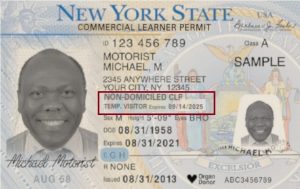
CDL Students who:
- Are legally in the U.S.
- Have work authorization (EAD or work visa)
- Hold a Social Security number
- Live full-time in the state where they’re getting their CDL
- Currently have a Non-Domiciled CDL Permit
STEP-BY-STEP:
HOW TO GET RID OF “NON-DOMICILE” CDL Permit
What’s Needed?
-2 Documents with Proof of Address- Valid Passport- Current Form I-94, Employment Authorization Document (EAD) or Work Visa- Non-Domiciled CDL Permit
Remove Non-Domicile Status From CDL Permit
Step 1: Prove You Live in the StateBring 2 proofs of address that show you live there full-time: Lease, mortgage, utility bill, pay stub, bank statement, or vehicle registration.
Step 2: Bring Proof of Legal Work AuthorizationHave your valid foreign passport, current Form I-94, Employment Authorization Document (EAD) or work visa, Social Security card, and your current Non-Domiciled CDL Permit.
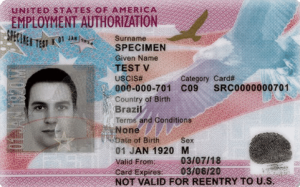
Step 3 : Go to the DMV / MVC / Licensing Agency
Tell them: “I live and work full-time in this state and would like to have my CDL permit reissued as a regular (domiciled) CDL based on my state residency.”

Step 4 : Turn In Your Old Permit
Hand in your Non-Domiciled CLP and receive a new one showing your regular state domicile. Don’t worry you’ll get an updated one.

Step 5: Keep Everything UpdatedYour new CDL will follow the normal state expiration schedule. So make sure you keep immigration and address info current.

Important Note About Expiration Dates
Your CDL permit or license may or may not expire at the same time as your work authorization. This is completely normal. You’ll just need to renew your CDL after your visa or EAD card is renewed or it could be denied. If you’re unable to renew your work authorization, you won’t be able to renew your CDL license.
2025 New Rules for Non-Domicile CDLs for Non-U.S. Residents
The U.S. Department of Transportation (DOT) found that some states were giving out commercial driver’s licenses (CDLs) to foreign drivers who weren’t supposed to get them. Because of this, Secretary of Transportation Sean Duffy announced new emergency rules to make sure licenses are given out correctly and safely.
Under these new rules, there are stricter steps for people who are not from the U.S. but want a CDL or need to renew one:
- Only people with certain work visas (H2B, H2A, or E-2) and a valid Form I-94 can get or renew a CDL.
- Applicants must also show a valid foreign passport each time they get or renew their CDL.
- Applicants must go to the office in person to renew their CDL.
- State driver’s license agencies (SDLAs) must use a federal database called SAVE to check that the applicant’s immigration and work status are correct.
- SDLAs must keep copies of all the documents for at least two years and show them to the federal government if asked.
If a state finds out, or is told by a federal agency, that a non-domicile CDL driver got a license by mistake or no longer has legal work status, then the state must take away that person’s commercial driving privileges within 30 days.
Secretary Duffy also said the DOT will keep auditing states to find those that gave out CDLs illegally.
States named so far include California, Washington, Texas, Colorado, Pennsylvania, and South Dakota. Other states are expected to run their own checks, too. If they don’t, they could lose some federal highway funding.
Immigrants CAN Get A CDL License!
As long as you legally live and work in the U.S., you are still eligible for a regular CDL license. The “Non-Domicile” label is simply a documentation issue and not a barrier to your trucking career.
If you’d like help understanding this process or want to get started on your CDL training, contact us today.
A High-Paying Career In Trucking Is Waiting For You
Don’t Miss Out! Save $200 Off Your Tuition Today!
Learn More

CDL Types: Which One Matches Your Goals?
It takes a lot of focus and dedication to be a truck driver. Whether you’re hauling goods from one end of the country to the other or just delivering furniture around town, you need the proper truck driver training to get the job done correctly and safely. You also need a Commercial Driver’s License (CDL). That’s where schools like Driving Academy come in. We help people nationwide start their journey toward this fulfilling career by giving them the knowledge and experience they need. Let’s explore the CDL types and their uses.
What Is a CDL?
A CDL is a specialized license required in the U.S. to operate certain commercial vehicles. There are different CDL types for different types of vehicles. To obtain a CDL, individuals need to pass a written exam as well as practical driving tests. The tests help prove you know how to safely operate large or heavy vehicles or those that transport hazardous materials or people.
Class A CDL
Class A represents one of the primary CDL classes. A Class A CDL is required if you operate any combination of vehicles that feature a gross vehicle weight rating (GVWR) of over 26,000 pounds and a trailer that weighs more than 10,000 pounds. A Class A CDL allows license holders to operate a variety of vehicles, including:
- Tractor-trailers
- Truck and trailer combinations
- Livestock carriers
- Tanker vehicles
- Flatbeds
A Class A CDL may also let you drive certain Class B and C vehicles if you have the endorsements.
Class B CDL
Class B CDLs are required to operate a single vehicle not hitched to a trailer, with a gross combination weight rating of over 26,000 pounds, and with no tow vehicle or one that weighs 10,000 pounds or less. A Class B CDL allows license holders to operate the following vehicles:
- Straight trucks
- Delivery trucks, furniture trucks, and other box trucks
- Dump trucks with small trailers
- Large buses
- Segmented buses
With the right endorsements, Class B CDLs may also let you operate certain Class C vehicles.
Class B+P CDL
A Class B + P CDL allows you to drive large passenger buses (26,000 pounds or more and carrying 16+ passengers) and any other Class B vehicles.
Class C CDL
Certain vehicles need special attention and therefore require a Class C license. Class C CDLs are vehicles where extra safety is necessary. This includes vehicles that transport 16 or more occupants (including the driver) and vehicles that move hazardous materials (hazmat), including:
- Passenger vans
- Small hazmat vehicles
- Any combination vehicles that Classes A and B don’t cover
Endorsements
Endorsements to your CDL allow you to operate specialized vehicles. This is a great option for those who have a specific career in mind. Endorsements require additional testing, including an exam and potentially a driving skills test to make sure candidates are qualified. Types of endorsements include:
- Passenger (P) endorsements: Vehicles carrying passengers
- Tank (T) endorsements: Vehicles containing liquid cargo
- Hazardous materials (H) endorsements: Vehicles transporting flammable liquids, radioactive substances, or explosives
- School Bus (S) endorsements: Vehicles transporting school children
The CDL Types You Can Obtain From Driving Academy
Driving Academy is dedicated to helping our students achieve success, regardless of which career path they choose. Whether you want to drive a bus throughout your city or hit the open road in a semi, we have a training program for you. We have helped over 100,000 students get CDLs and begin their careers. We offer Class A CDL training, Class B CDL training, and Class B+P CDL training.
Driving Academy also offers guaranteed training courses, providing over 100 hours of training and offering unlimited attempts to pass both written and road tests. Once you’ve completed one of our training programs, we provide lifetime job placement services to make sure you find a position you’ll love.
Enroll Today at Driving Academy
No matter which of the CDL types you’re interested in, Driving Academy has a training program for you. We provide day, night, and weekend courses for flexible scheduling to fit your needs and offer affordable payment plans to help you handle the cost. Our simulator training provides a realistic experience without needing to step outside, but we also provide hands-on training, allowing students to get behind the wheel of our trucks.
Our headquarters are in Linden, NJ, but we accept students from across the country at multiple locations, and more are coming soon. Once you pass your CDL road test at our third-party testing site, you can get your CDL in your home state. If you are interested in any of our training programs, please contact us today.

If you’re reading this, chances are you’re looking for a better career, a better paycheck and a better future.
What if I told you that you could learn a skill that could help you earn $75,000 per year without going to college for four years, and without racking up massive student debt?
Sounds too good to be true? It’s not.
It’s a profession you’ve probably heard of called truck driving, and yes, truck drivers make bank!💵💲💵💲
Truck Drivers Are the Backbone of America
Think about it. Without truck drivers, our stores would be empty, supply chains would grind to a halt and the economy would come to a standstill. Truck drivers keep America moving. And right now? There’s a massive shortage of qualified drivers.
In fact, there are currently over 200,000 open truck driving jobs across the country. That shortage is pushing companies to offer higher wages, better benefits, and more job security than ever before.
That means things like:
- Average salary of $75,000/year
401(k) plans
Health, dental, and vision insurance
Paid vacation
And most importantly, job security to support your family
Imagine a Career Where You’re Always in Demand
With the current demand for drivers, companies are practically fighting over qualified CDL holders. You’ll never have to worry about being out of work again.
Still not sure if you can handle driving a big rig?
That’s where we come in.
Driving Academy Makes It Easy (and Fun) to Learn
At Driving Academy, we’ve developed a proven, step-by-step CDL training system that makes learning to drive a truck simple and stress-free, no matter your experience level. From classroom instruction to real-world training behind the wheel, we’ll teach you everything you need to succeed.
We even have a state-of-the-art driving simulator, so you can get comfortable before ever stepping into a real truck. Our yard is our biggest classroom, where students spend hours mastering their driving skills under the guidance of certified instructors.
We’ve helped over 10,000 people, just like you, start their journey to a higher-paying career. Just ask our former truck driving student Randy:

“I was unemployed before I found Driving Academy. Now, I’m expecting to make $75,000 a year. Easy.”
-Randy
Driving Academy Graduate 2019
Flexible, Affordable, and Fast
We understand that everyone’s situation is different, which is why we offer flexible training schedules seven days a week to fit around your busy life.
Even better? Our courses are extremely affordable. They typically range from just $3,300 to $5,600, and you can get started with as little as $500 down with our 0% interest payment plan.
We even have guaranteed plans that give you unlimited tries at the road test. That means you can be 100% sure that you will get your CDL!
Compare that to a four year, $150,000 college degree that might not even land you a job, and the choice is clear.
Ready to Make the Leap?
It’s time to stop spending money on useless degrees or falling for get-rich-quick internet scams. Truck driving is a real skill, with real earning potential, and real freedom.
So what are you waiting for?
Click here or fill out the quick form below, and one of our friendly team members will give you a call to answer your questions and help you get started.
Driving Academy is here to transform your life, one mile at a time.
Watch The Video
https://www.youtube.com/watch?v=B9Q4Ox-svbY
Today, we’re diving into an important topic for anyone thinking about getting their CDL or already working in the trucking industry: how to increase your value to trucking companies.
Whether you’re just starting your journey or looking to take your career to the next level, the key is to make yourself so valuable that companies compete to hire you. Better pay, better routes, better opportunities – it’s all within reach if you put the right steps in place.
Let’s break down how to do exactly that.
1. Highlight Your Skills and Experience
When it comes to impressing a trucking company, your first opportunity is the interview. This is where they see you not just as a driver, but as a person, someone with a unique story, mindset, and skill set.
The two biggest traits you want to emphasize are:
Strong communication skills
Clear communication makes you easier to train and a better fit for team dynamics. The more effectively you speak and listen, the more confidence the employer has in your ability to operate within their system.Commitment to growth and learning
Show you’re not just looking for a job, but rather that you’re building a career. Stay current on regulations and demonstrate that you’re someone who invests in their own improvement.
2. Demonstrate a Clean Safety Record (Or Be Honest About It)
One of the fastest ways to boost your value is to show a solid safety track record. If your driving record is clean (no tickets, no accidents and definitely no DUIs) then say it proudly. That’s a huge plus.
But if there are incidents on your record, don’t try to hide them. Instead:
Be upfront.
Provide details and police reports if needed.
Show you take ownership of your mistakes and what you’ve learned from them.
Transparency builds trust, and that’s something every company values. Just make sure you’re always driving safely!
3. Advance Your Skills with Endorsements
The more you can do, the more valuable you become. Adding endorsements to your CDL is a game-changer. Here are a few worth considering:
Hazardous Materials (HazMat)
Tanker
Doubles and Triples
Passenger or School Bus, depending on the company
Choose endorsements based on the type of work you’re aiming for. For example, HazMat might not help in a school bus job, but for general freight, it could land you higher-paying loads.
4. Master Preventative Maintenance
Want to stand out from the pack? Understand your truck.
Drivers who know how to properly inspect and maintain their equipment are gold to companies. Fewer breakdowns mean:
More time on the road
Less money spent on repairs
Fewer headaches for dispatch
This all makes you more profitable. Not just for yourself, but for the company. And that’s huge for adding value! A true win-win.
5. Choose the Right CDL School
Where you train matters. Just like Harvard or Yale opens doors in the business world, Driving Academy does the same in the trucking world.
Here’s why:
We train you not just for the test, but for the real world with hands-on experience and simulator training.
We have strong partnerships with companies nationwide that hire our graduates.
You get lifetime job placement assistance whether you need your first job or a better one down the road.
Just make sure you really graduated from Driving Academy. We’ve had people falsely claim they went to our truck driving school, and companies will verify it. Don’t get caught in a lie. Earn it the right way, and the opportunities will be endless.
6. Show Consistency and Loyalty
One of the most overlooked ways to increase your value? Staying loyal and consistent.
Truckers who:
Show up on time
Keep their word
Stick with the same company for years
…are extremely rare. And that makes them extremely valuable.
If you stay with a company for 5, 10, or even 20 years, and then decide to move on, two things will happen:
New companies will want you immediately, offering better pay and perks.
Your current employer will fight to keep you, giving raises or bonuses.
You’ll be in the driver’s seat, literally and professionally.
Ready to Get Started?
If you don’t have your CDL yet, Driving Academy is your best first step. We’re opening locations nationwide, and we can help students from all across the country.
Find a trucking school near you to learn more. If there isn’t a location near you, check out our Linden, NJ location, we can still help no matter where you’re from.
Watch The Video
Trucking enthusiasts, gear up! CDL Driving Academy is bringing you the most exciting head-to-head competition in the trucking world—March Truck Madness! For the entire month of March, we’re putting the top semi-truck manufacturers in a battle to see which big rig reigns supreme.
As the best truck driving school in New Jersey, Florida, Idaho, Oregon, heck across the entire USA, we always strive to find the best in trucking. As such we felt it crucial to present to you a competition to find the best truck. So instead of the regular boring college basketball March Madness, we’re bringing you the greatest show on asphalt, March Truck Madness where we’ll find out who truly is the favorite truck maker in the industry.
The Ultimate Truck Bracket Challenge
From Freightliner to Kenworth, Peterbilt to Volvo, and beyond—these industry titans are about to go head-to-head in a March Madness-style bracket. But the best part? YOU have the power to decide the winner!
Each week, two top-tier manufacturers will compete based on design, performance, comfort, and features. We’ll showcase each truck’s strengths through in-depth comparisons, and then you get to vote on your favorite!
This is more than just a competition; it’s a celebration of the trucking industry! Whether you’re a truck driver, an enthusiast, or just someone who appreciates the power and precision of these rigs, this contest is for you.
How to Vote
Voting is simple—we’ll have the polls right here on the Driving Academy blog or follow us on social media to cast your vote. We’ll put polls up allowing you to cast your vote.
The competition will be fierce, and the bracket will be updated weekly as we inch closer to crowning the ultimate semi-truck champion!
Not only will you get to vote, but you can also engage with fellow truck fans in discussions, share your favorite truck moments, and participate in exclusive giveaways throughout the event. Make sure to stay connected and follow along for surprises along the way!
Meet the Contenders


Each truck selected represents the best of its brand. Here’s a look at the heavyweights going head-to-head:
- Freightliner Cascadia – Known for its advanced aerodynamics, Detroit powertrains, and top-tier driver-assist features, this truck is one of North America’s favorites.
- Peterbilt Model 579 – A premium long-haul truck with sleek aerodynamics, a spacious sleeper cab, and cutting-edge PACCAR MX engine technology.
- Kenworth T680 – Designed for efficiency and comfort, with a PACCAR powertrain and a digital dashboard that maximizes driver productivity.
- Volvo VNL – A modern, fuel-efficient semi with a focus on safety, aerodynamics, and Volvo’s proprietary I-Shift transmission.
- Mack Anthem – A rugged and bold truck built for durability and driver comfort in both regional and long-haul applications.
- Western Star 57X – A stylish yet tough truck featuring Daimler’s latest technology and a lightweight, durable chassis.
- International LT Series – Built for long-haul efficiency, featuring aerodynamic enhancements, an A26 engine, and advanced connectivity options.
- Tesla Semi – The fully electric game-changer with fast acceleration, a 500-mile range, and cutting-edge autonomous driving technology.
The Road to Victory
Every vote counts, and each week, one truck will move closer to the championship title. Will it be the tried-and-true classics or the innovative newcomers that take the crown?
We will also be sharing exclusive interviews with truckers, industry experts, and mechanics who will weigh in on what makes each truck stand out. You’ll get to hear real-world insights and expert opinions to help you make your decision.
And for the vocational truck fans—stay tuned! A Class B CDL bracket is coming soon, so make sure you’re subscribed to catch all the action.
Join the Madness!
It’s time to let your voice be heard! Cast your votes, follow the weekly updates, and join the conversation on social media. Who will claim the title of the ultimate big rig? Only YOU can decide!
Plus, don’t forget to tune in for weekly video breakdowns of each showdown, behind-the-scenes content, and reactions from truck lovers just like you.
Vote now at CDLDrivingAcademy.com and let the March Truck Madness begin!